Dinosaur games for kids – loud fun and thrilling adventures

Your kid roars, stomps across the kitchen, and announces they are now a T-Rex. Congratulations, you're playing a dinosaur game. No setup required, no rulebook, and apparently no off switch either.
Table of contents
- Key Takeaways
- Why kids get obsessed with dinosaurs
- Screen-free dinosaur games
- Dinosaur games for toddlers
- Dinosaur games for kids ages 4–6
- Dinosaur games for kindergarten
- Classic dinosaur board games
- A quieter way to play
- Dinosaur games online
- Dinosaur educational games
- How to prepare for dinosaur fun
- Tips for keeping dinosaur play going

Dinosaur games are pretend-play and movement activities built around prehistoric creatures: stomping, digging up toy fossils, sorting plastic dinosaurs by type, that kind of thing. Kids don't need convincing. If anything the problem is getting them to play something else for five minutes. Below is a full rundown by age, plus named board games, a coloring option for when the house needs to be quiet, and the research on why this obsession is actually doing your kid some good.
Key takeaways
- Childrens dinosaur games build memory, language, and motor skills through pretend play. Your kid stomping around as a T-Rex is gross motor practice. They don't need to know that.
- Toddlers want simple imitation and sensory play (digging, stomping). Preschool and kindergarten age can handle quests, role-play, and a bit of math.
- For a kindergarten classroom, skip one-on-one games and go for whole-group formats: circle time, a dramatic play corner, bingo.
- You don't need a screen for any of this. Most of the learning happens through movement and sorting and making up stories, not apps.
- A few named board games (Dinosaur Escape, Monopoly Junior: Dinosaur Edition) and Keiki's free coloring pages round things out for the quieter moments.
Why kids get obsessed with dinosaurs
Ask a four-year-old why they love dinosaurs and you'll get either total silence or a twenty-minute lecture on the Cretaceous period. There's no in between.
Turns out this isn't random. A 2008 study from Indiana University and the University of Wisconsin found that somewhere between 30 and 50 percent of preschoolers develop one of these "intense interests" at some point, and dinosaurs are consistently near the top of the list. The kids who stick with an interest like this for a while end up with better memory, longer attention spans, more persistence, and stronger language skills than kids who never latch onto one thing. So no, you don't need to redirect them toward something quieter. Let them have their dinosaur era.
A few concrete things it's doing for them:
- Memory and reasoning. Names, diets, habitats — feels like trivia, works like memory training.
- Vocabulary. Tyrannosaurus Rex. Paleontologist. Mesozoic Era. Kids use these words because they want to sound like they know something adults don't.
- Motor skills. Digging builds fine motor control. Stomping and roaring builds gross motor control.
- Curiosity in general. A dinosaur phase has a habit of turning into a biology phase, or a geology phase, or just an endless stream of "why" questions you can't always answer.
Help your child
grow with Keiki
We’ll help you turn everyday screen time
into real learning progress.
Screen-free dinosaur games for home or outdoors
Not every dinosaur game for kids needs batteries or a rulebook. Some of the best ones use whatever's already lying around the house or yard, which makes them the easiest default when you need something to happen in the next thirty seconds.
Dinosaur obstacle course
Couch cushions to stomp over, a table to crawl under, a pile of pillows to call a volcano. Build a path, let them roar their way through it. Rebuild it tomorrow with whatever's lying around.
Backyard dinosaur carnival
Two or three stations is plenty — throw a ball at a target, toss bean bags into a bucket, run a short obstacle lap. Small prizes for finishing each one. An hour of setup buys you an afternoon of entertained kid.
Dinosaur egg hunt
Hide plastic eggs or foil-wrapped toy dinosaurs around the yard. Sort them by color before the hunt if you want a bit of math snuck in, or just let the finding be the whole point.
Dinosaur games for toddlers (1–3 years)
Keep it short and repeatable. Toddlers aren't after complexity, they're after doing the same fun thing nine times in a row.
Dinosaur roar and stomp
Copy a dinosaur's sound and walk. T-Rex stomping is the crowd favorite, every time. Gross motor skills, sound imitation, zero setup, works for months without getting old.
Dinosaur hide and seek
Hide a few toy dinosaurs around a room, send your toddler hunting. Teaches them to actually listen to an instruction, and buys you several genuinely quiet minutes if your hiding spots are good.
Dinosaur excavation
Bury small dinosaur toys in a bin of rice, dry beans, or sand, hand over a scoop. Kids under three go wild for new textures. Budget time for cleanup — this one gets everywhere.
Dino sorting
Sort toy or paper dinosaurs by color, size, or type. Early math, basically, dressed up as play. Printed cutouts work fine if you're short on actual toys.
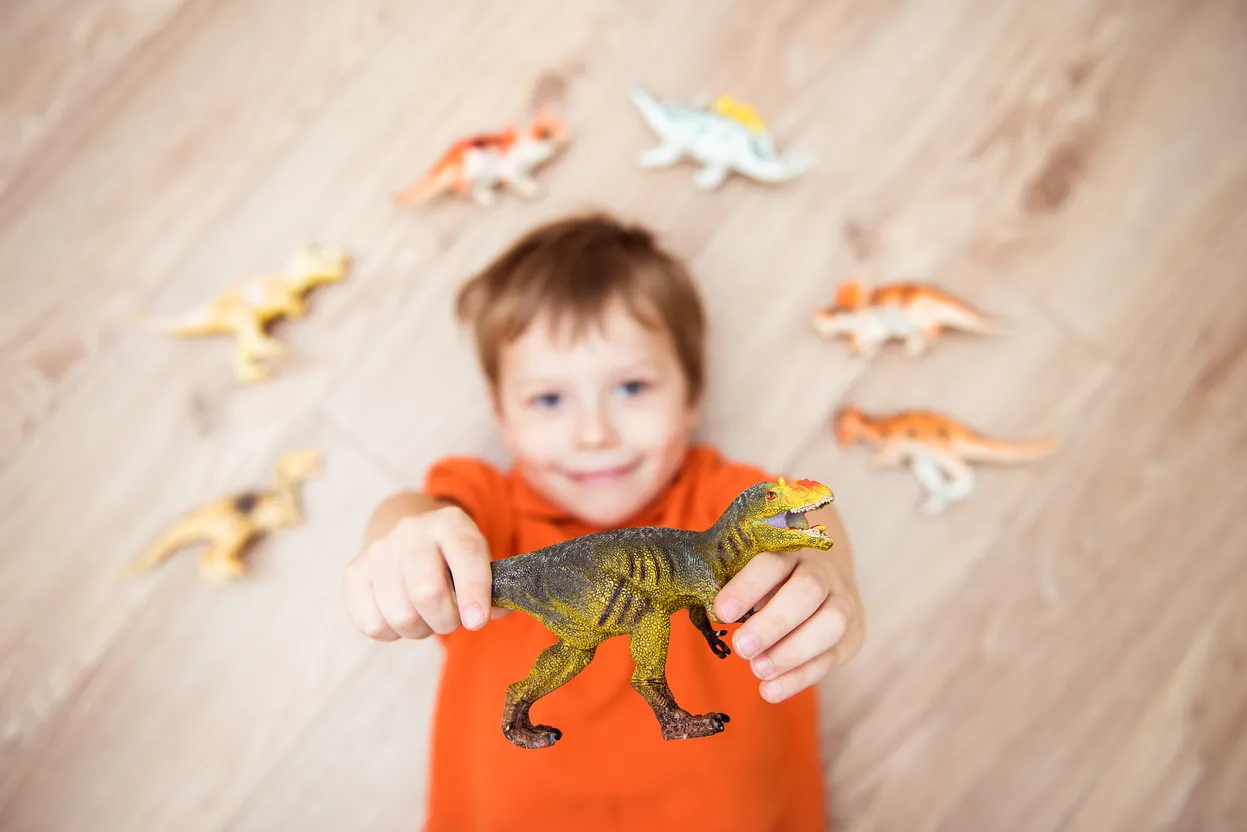
Dinosaur games for kids ages 4–6
Same basic ideas as the toddler list, just with more plot. Preschoolers and kindergartners can handle a quest, a bit of competition, more moving pieces.
Dinosaur hunt
Draw a map, hide clues, let your kid solve each one to find a hidden fossil or toy. Tack on a small prize at the end for a proper finish line.
Freeze like a dinosaur
Play music, dance, freeze into a dinosaur pose the second it stops. Works for two kids or twenty. Good for coordination, good for making everyone laugh at each other's poses.
Prehistoric world builders
Blankets, pillows, blocks. Build caves and mountains for a set of toy dinosaurs. It's basically fort-building with a theme attached, which is probably why it never fails.
Dino story chain
Start a dinosaur story, one sentence each, taking turns. By round four someone's dinosaur is driving a bus. Great for storytelling logic, and for the sheer nonsense of it.
Dinosaur games for kindergarten and classroom groups
A classroom needs dinosaur themed games the whole room can play at once, not just a pair of kids in a corner.
Dinosaur circle time
Pass a "fossil" (literally any small object) around a seated circle while music plays. Whoever's holding it when the music stops names a dinosaur fact. No prep, works at any class size.
Dramatic play corner
Toys, books, dress-up props, one corner of the room. Small groups rotate through on their own. This is a staple in early-years classrooms for a reason — it runs itself.
Dinosaur bingo
Pictures instead of numbers on the cards, so nobody needs to read to play. Good for mixed-age or mixed-ability groups.
Class dinosaur museum
Hide dinosaur "fossils" (toys, printouts, whatever) around the room with a fact attached to each. Kids find them, then present what they found to the class. Light public speaking, dressed up as a treasure hunt.
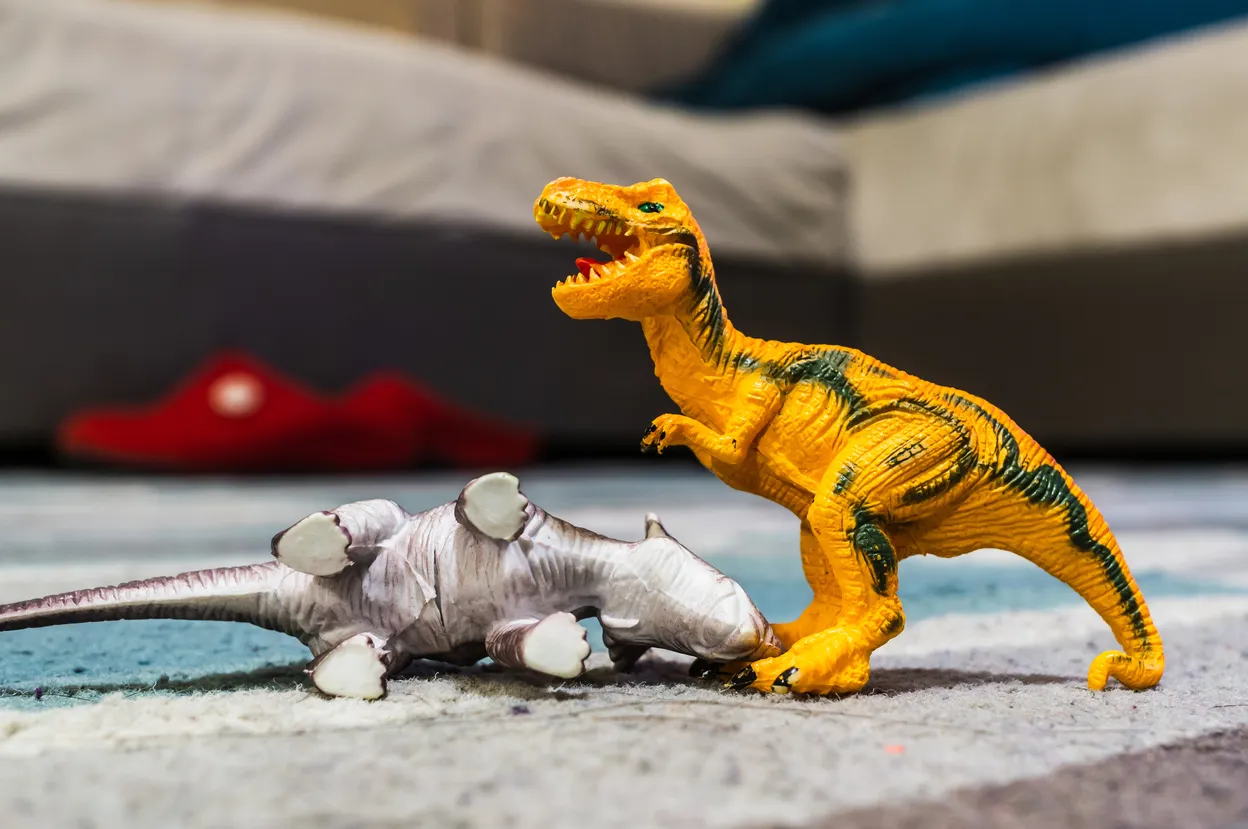
Classic dinosaur board games for kids
Sometimes you want a sit-down game, not another round of roaring through the living room. A few real, actual products worth knowing about:
Dinosaur Escape
Made by Peaceable Kingdom, for 2-4 players, ages 4 and up. It's cooperative: everyone works together to uncover matching dinosaurs hidden under fern tokens and get them to safety before a cardboard volcano "erupts." Nobody loses individually, which matters a lot for a kid who melts down over a bad dice roll.
Monopoly Junior: Dinosaur Edition
Hasbro's take, for 2-4 players, ages 5 and up. Feed dinosaurs leafy banknotes instead of buying real estate. The board spells dinosaur names out phonetically, so you get a little pronunciation practice folded into the counting and trading.
Dinosaur Snakes and Ladders
Several toy brands make a version of this. All you need is counting and taking turns, which makes it a solid first board game — usually fine from age 4 up.
Whack-A-Dinosaur
Pure reaction game. A dinosaur pops up, you whack it, repeat. No rules to remember, which makes it a better fit than most board games for kids who aren't ready for turns and strategy yet.
A quieter way to play: dinosaur coloring pages
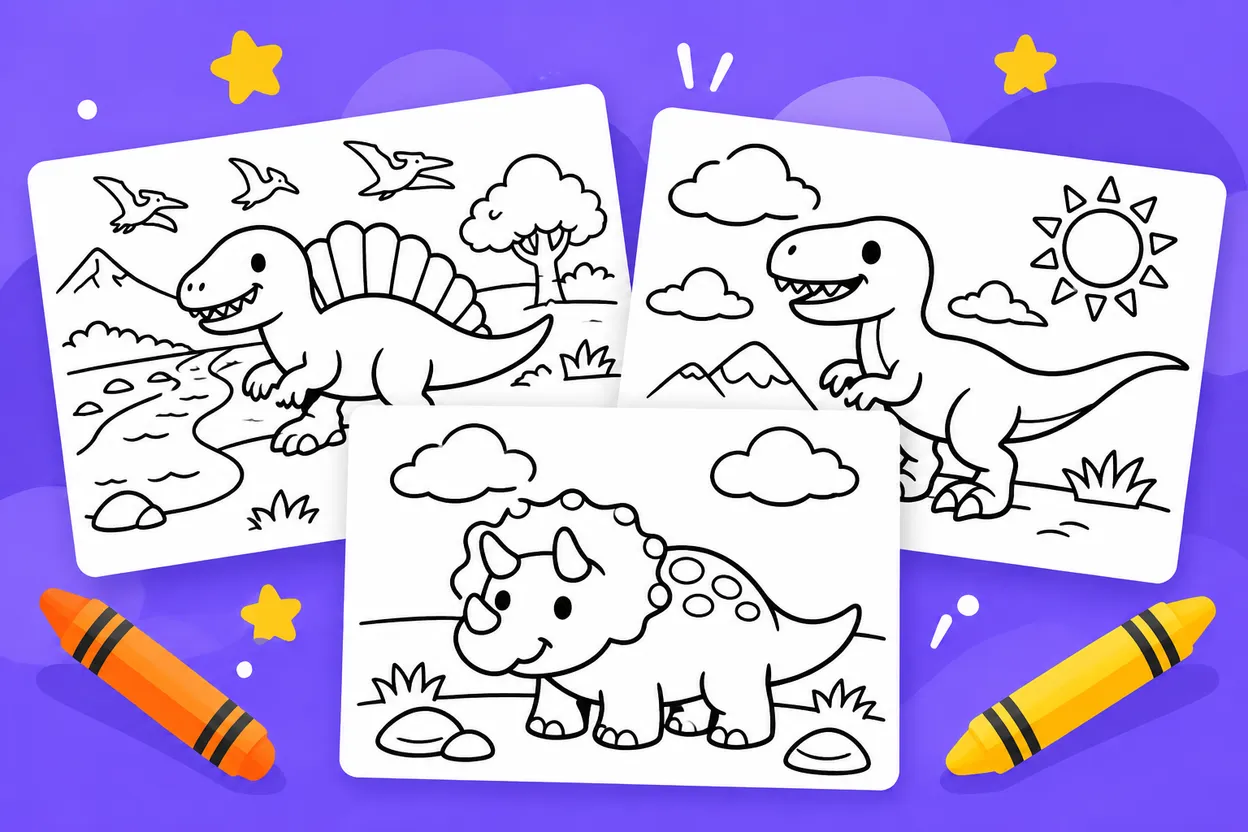
Sometimes your kid needs a break from stomping around roaring, and that's where Keiki's dinosaur coloring pages come in: more than 40 free, printable designs for ages 2-5, no login or app download needed. Pick a favorite and stick with it, or work through the whole set — there are pages for Spinosaurus, Triceratops, Stegosaurus, Velociraptor, and Tyrannosaurus Rex.
Coloring isn't just quiet time, either. It's real hand-control practice, the kind that sets kids up for writing later. And honestly, it's a decent way for a cautious kid to defang something scary — once your child's drawn a T-Rex in purple with pink polka dots, it stops being quite so terrifying. The pages are free and ad-free, so it's an easy reach when the stomping needs to pause but you're not ready to hand over a screen.
Dinosaur games online
Screens earn their keep here when the app is actually built around a skill, not just noise and animation. Keiki does a few things worth mentioning.
Interactive stories
Animated, voiced dinosaur stories that teach reading and memorization without feeling like a reading lesson. Part of Keiki's wider reading learning games.
Puzzles and matching games
Dinosaur-themed puzzles for logic and spatial thinking, on a screen instead of a living room floor. Covers similar ground to physical sorting games, just portable.
Flashcards for kids
Keiki's flashcards for kids include a dinosaur set, good for kids who like naming (and re-naming, and re-naming again) their favorites. Runs offline, no ads, decent for long car rides.
Build real skills through fun, educational games for your child
Try KeikiDinosaur educational games for structured learning
A step more academic than pure pretend play. Good once a kid's ready to pair the fun with actual facts.
Dinosaur fact match
Match dinosaur image cards to fact cards (diet, size, habitat). Matching sticks better than just reading facts out loud once and hoping they land.
Dinosaurs on a timeline
Which dinosaur lived first? Lay them out in rough order and find out. Small first step into thinking about history as a sequence instead of one giant blur called "a long time ago."
Dino counting and sorting
Count dinosaurs instead of blocks. Same math, somehow way more interesting to a five-year-old.
Creating a dinosaur habitat
Draw or build a home for one specific dinosaur — swamp for a Spinosaurus, open plains for a Triceratops — and talk through why. Sneaks in biology and geography in one sitting.
Related Games in Keiki App

How to prepare for dinosaur fun
Not much to it, honestly:
- Have a few dinosaurs on hand. Mixed sizes and types give sorting and storytelling games more to work with.
- Pick a mess-allowed zone. One corner where nobody panics about sand or crumbs saves everyone a headache.
- Charge the tablet ahead of time if digital play is on the table. A dead battery mid-quest is its own kind of tragedy.
- Keep a dinosaur book within reach for the questions you can't answer off the top of your head.
- Let your kid run the game. The best rule changes usually come from them, not from you.
Tips for keeping dinosaur play going without losing your patience
Switch things up — active one minute, calm and quiet the next, screens occasionally. It keeps the whole thing from tipping into chaos. Expect a mess from the sandbox and excavation games; that's just part of how they work. Join in when you can. Kids notice, and honestly it's more fun for you too. On the days you don't have it in you for active play, a dinosaur documentary covers similar ground with a lot less setup.