23 Farm Games for Kids – Fun and Creativity in a Natural Environment

Here's the good news: your kid does not need an actual farm to have the time of their life pretending to be one. A few plastic animals, a cardboard box "barn," and twenty free minutes is basically all it takes. Farm games for kids turn animal sounds, harvest baskets, and barnyard chores into some of the easiest, most satisfying pretend play out there — no petting zoo membership required.
This guide is 23 farm games and farm activities for kids, sorted by age and setting so you're not scrolling past fifty ideas that don't fit your situation: 4 for toddlers, 5 for preschoolers, 8 loud and active farm animal outdoor games for parties and groups, and 6 that genuinely work in a kindergarten classroom. Every single one tells you exactly how to play — no vague "use your imagination" cop-outs — plus a few screen-free tips and a quick note on where digital farm games fit in when you honestly just need the ten minutes back.
Birthday party, classroom center, or a plain old rainy Tuesday with a toddler — there's a farm game idea in here for it.
Key Takeaways
- Farm games for kids combine animal sounds, pretend chores, and simple sorting tasks that build fine motor skills, vocabulary, and early science smarts — no real farm visit required.
- Farm animal outdoor games like Barnyard Tag and Wheelbarrow Races are made for groups of four or more, and need almost nothing beyond open space.
- Screen-free farm games — pouring, sorting, building a barn out of couch cushions — give kids the same hands-on learning a real farm trip would.
- Digital farm games are a solid rainy-day or travel backup. Not a replacement for the messy, hands-on stuff — just a good understudy.
- Real farm visits bring their own lineup — petting zoos, hayrides, u-pick harvests — and they pair naturally with the games in this guide.
What Are Farm Games for Kids?
Farm games for kids are pretend-play scenarios, simple tasks, or full-on games built around farm animals, tools, and routines that teach children where food comes from while sneaking in real developmental skills. A game can be as low-key as mooing back and forth on the couch, or as elaborate as running a pretend farmer's market complete with toy cash register. What ties it all together is the farm theme: animals, harvesting, planting, and the everyday rhythm of a working farm, shrunk down to something a toddler or a room full of kindergarteners can actually pull off.
Why Farm Games Matter for Child Development
Farm games do a lot more than kill twenty minutes before nap time — the farm theme happens to line up almost perfectly with the skills kids are working on at exactly this age.
Fine motor skills and coordination. Pouring sand, collecting toy vegetables, or feeding plastic animals is the same finger-and-hand workout kids will later need for writing and drawing. They just don't know it yet.
Real-world knowledge. Kids learn that pigs oink, cows moo, chickens lay eggs, and cows give milk — the basics of where food actually comes from and how the whole growing cycle works. These educational farm games build the kind of curiosity that sticks around.
Role-play and creativity. Kids take on the role of farmer, vet, or tractor driver, and invent an entire crisis where a lamb has gone missing or the barn needs rebuilding immediately. That's imagination, empathy, and problem-solving, all wrapped up in one very dramatic storyline.
Vocabulary. Farm games for kids hand over new words tied to animals, tools, and farming — tractor, barn, harvest, coop — that stick a lot better attached to a game than to a flashcard.
Cause and effect. Fun farm games about planting and harvesting show kids that actions have consequences: seeds need water and time before there's anything to pick. It's an early, hands-on lesson in patience, which, let's be honest, most of us could still use.
Screen-free play is doing most of the heavy lifting here, and it turns out kids are already leaning that way. A 2025 study of Vancouver-area early learning centers, published in Scientific Reports, found children were already engaged in active play for roughly 80% of their outdoor time. Farm games just slot into that habit instead of fighting it, which is why almost everything below is screen-free first, with a digital option saved for when you genuinely need one.
Help your child
grow with Keiki
We’ll help you turn everyday screen time
into real learning progress.
Farm Games for Toddlers (1-3 years)
Farm games for toddlers work best when they're dead simple and endlessly repeatable — yes, again, that same sound, one more time — because repetition is exactly what's strengthening those little neural connections.
Animal Sounds
Make an animal sound — a big dramatic "moo-oo" works great — and have the toddler guess who it is, then swap roles. Small game, big payoff: memory, listening skills, and the kind of imitation that speech development runs on.
Treasure Hunt
Bury toy animals in a sandbox or garden bed and send the toddler digging. Each find gets named out loud, sound effects included, which quietly works fine motor skills, coordination, and patience all at once.
Find the Animal
Rainy day, no yard, everyone's stuck inside? Hide a handful of toy animals around a room and send your toddler off to find and name each one. Quick, easy, and it buys you five actual minutes.
Harvest Collection
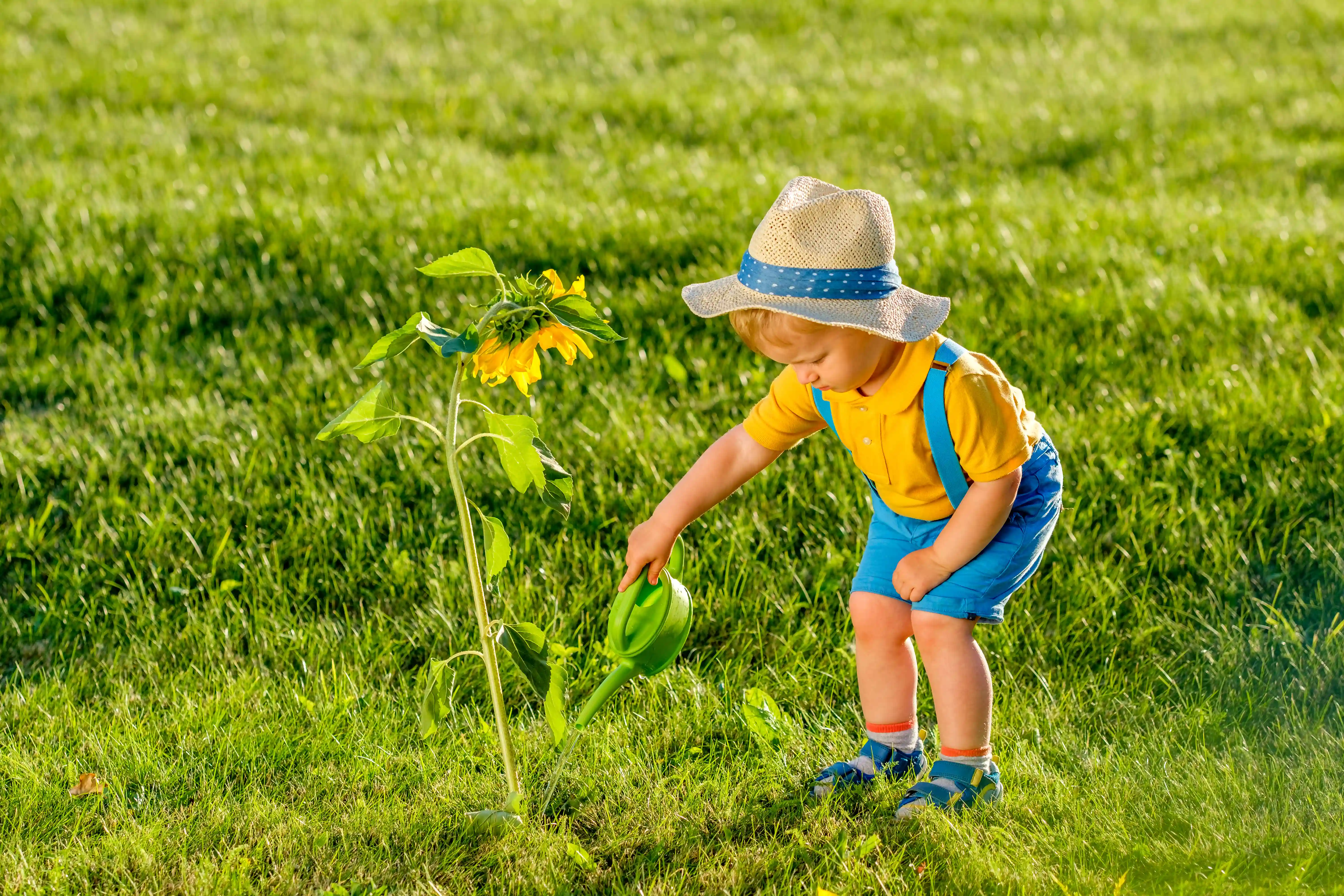
Partly bury carrots or beets (leave the tops showing) in a garden bed and let your toddler yank them out, or tie apples and pears to a low branch within reach. These creative farm games are always a hit with curious toddlers — and hey, dinner's half-made.
Farm Games for Preschoolers (4-6 years)
Preschoolers can handle more structure and a little real role-play, which opens the door to a wider set of farm activities for kids at this age.
Farm Relay
Run a relay with farm-themed legs: carry a potato on a spoon, weave through a straw maze, or hop to the barn like a frog. Gross motor skills, teamwork, and rule-following, all disguised as chaos.
Farmer Says
A farm-flavored "Simon Says" — "Farmer says clap your hands," "Farmer says crow like a rooster," "Farmer says walk like a duck." Genuinely funny to watch, and it sneaks in listening and instruction-following without anyone noticing they're being taught something.
Farm Bingo
Print cards with farm animal pictures and check off whatever you spot on a farm visit, or honestly even at the zoo. Solid way to lock in animal names while keeping little eyes busy.
Farmer's Market
Set up a mini market with real or toy produce, and let your kid run it while you play the customer. Toss in some toy money and it doubles as an early counting game, plus a vocabulary boost for produce names.
Building a Barn
Every kid who's ever built a blanket fort is already qualified for this one. Blankets and chairs indoors, boards and crates outdoors — let the "barn" get as over-the-top as attention span allows.
Related Games in Keiki App


Fun Outdoor & Active Farm Animal Outdoor Games
Farm animal outdoor games are the ones built for a crowd — a birthday party, a scout meeting, a backyard suddenly full of cousins. These eight just need open space, a few household props, and kids roughly ages 4 to 10 willing to get a little loud.
Barnyard Tag
Give each player a farm animal, then play regular tag with a twist: whoever's "it" has to make that animal's sound the whole time they're chasing. Same game, way funnier.
Pin the Tail on the Piglet
The birthday-party classic, farm edition — a blindfolded kid tries to pin a curly pig's tail as close to the right spot as they can manage.
Cowboy Hat Ring Toss
Flip a cowboy hat (or a bucket, no judgment) upside down and toss rings or bean bags at it. Dead simple, and it scales up or down for any group size.
Chicken Egg Relay
Carry a plastic egg on a spoon across a relay course without dropping it — the classic egg-and-spoon race, just wearing overalls.
Wheelbarrow Race
One kid walks on their hands while a partner holds their ankles, wheelbarrow-style, racing to the finish. Great for upper body strength, teamwork, and a good laugh when someone face-plants (gently).
Sack Race to the Barn
Hop in a sack, or honestly a pillowcase, from the start line to a "barn" marker. Zero setup, works for a crowd, over in two minutes.
Scarecrow Dress-Up Race
Split into teams, hand each one a pile of old clothes and a stuffed "scarecrow" stand-in (a chair does the job). First team to fully dress their scarecrow wins bragging rights.
Stable Round-Up
Scatter toy horses or farm animals around the yard, set a timer, and let kids "round them up" into a bucket or hula-hoop "stable" before time's up.
For more group games that go beyond the farm theme, our full guide to outdoor games for kids (keiki.app/blog/outdoor-games-for-kids-guide) has active party games sorted by age and how much space you've got.
Farm Activities for Kindergarten Classrooms
Farm activities for kindergarten need to work for a group of 20-plus kids inside a fixed class period, which rules out most of the messier home versions above (sorry, no digging in the classroom).
Farm Animal Charades
One kid acts out a farm animal — walk, sound, the works — while everyone else guesses. Zero props, and it fills a five-minute gap between lessons without breaking a sweat.
Alphabet Barnyard Round
Going around the circle, each kid names a farm animal, tool, or crop starting with the next letter of the alphabet. Early phonics practice, disguised as a game nobody realizes is educational.
Class Farm Mural
Give each kid one section of a giant paper "field" to draw an animal, crop, or building on, then piece it all together into one big classroom farm scene.
Farm Vocabulary Circle Time
Pass around a bag of farm-themed picture cards (tractor, coop, silo, trough) and have each kid pull one and use it in a sentence.
Weather and Harvest Journal
Keep a simple daily log of weather and a pretend "harvest count" using drawings or tally marks, then look back at the week's pattern together.
Farm Animal Sorting Center
Set out a bin of farm animal figures and let kids sort by size, number of legs, or the sound they make — a hands-on classification task that doubles as an early science lesson.
Looking for more classroom-friendly ideas at this age? Our guide to activities for 5-year-olds (keiki.app/blog/activities-for-5-year-olds) rounds up literacy, math, and movement ideas that pair nicely with a farm unit.
Real Farm Visit Activities for Kids
A real farm visit gives kids a handful of hands-on moments no backyard game can quite fake — the animals, the smells, the sheer scale of the place are the real deal. These six are what most family farms and petting zoos actually offer, and any two or three make for a solid day out.
Petting Zoo Time
Getting close enough to actually touch a goat, sheep, or rabbit is usually the first stop, and often the one kids won't stop talking about on the drive home.
Hayride or Tractor Ride
A slow loop around the property, pulled by an actual tractor, gives kids a sense of scale a backyard just can't compete with.
U-Pick Harvest
Picking your own strawberries, pumpkins, or apples (depending on the season) turns "this is where food comes from" into something your kid did with their own two hands.
Animal Feeding or Milking Demo
Bottle-feeding a lamb or watching a milking demo puts an actual face on where milk and eggs come from — way more memorable than a picture book.
Corn Maze
A seasonal maze adds a light navigation challenge that works across a pretty wide age range at once.
Egg Collecting
Gathering eggs from a henhouse is simple, hands-on, and usually the one activity toddlers immediately want to do again.
Mix a couple of these in with a game or two from above for a day that's part structured play, part real, messy, hands-on farm experience.
Farm Animal Games to Play with Keiki
Looking for farm animal games your kid can actually play, not just real-world ideas? Keiki World's digital library covers that too: Farm Adventures for color-sorting quests with chickens and rabbits, a Fruits & Vegetables harvest game, and Flash Cards covering farm animals, fruits, and vegetables for vocabulary practice. With 12M+ installs across 170+ countries, it's a pretty low-guilt way to hand over a screen for ten minutes between rounds of outdoor games — not a replacement for them, just a solid backup.
How to Prepare for Farm Games?
Preparing for farm games mostly comes down to a few simple props and setting expectations before playtime kicks off, whether that's farm crafts at home, an actual farm visit, or games running in a classroom.
- Gather a farmer's kit. Small buckets, shovels, toy animal figures, and a mini tractor make almost any farm game instantly more fun.
- Download apps and print worksheets ahead of time. Wi-Fi isn't guaranteed wherever you're headed, so it's worth having backups loaded before you leave the driveway.
- Pack wet wipes, hand sanitizer, and bug spray. Farms, gardens, and backyards are a blast — hygiene still matters, especially with little hands that touch everything.
- Talk through farm etiquette before a real visit. A quick reminder to move slowly and stay calm around animals keeps farm animals for kids a good experience for everyone involved, animals included.
- Dress for mess. Comfortable clothes and shoes you genuinely don't mind ruining make the whole outing a lot less stressful.
Help your child thrive with playful learning
Turn screen time into real growth with Keiki's educational games.
Try KeikiTips for Keeping Kids Engaged (and Keeping Your Sanity)
DIY farm games are beneficial and diverse, but a few more simple tips won't hurt to help you maintain interest and avoid overexertion.
- Alternate activity types. Switch things up every 20-30 minutes, and mix active games with something calmer, like drawing or a short app session.
- Mix solo and group tasks. Group games teach kids to work with others; solo tasks build independence. Rotate through both.
- Recruit older siblings. Got more than one kid? Let the older one help the younger with a game — it builds responsibility on one side and confidence on the other, and buys you a few quiet minutes.
- Keep snacks and water on hand. Farm games run a lot longer when nobody's mid-meltdown over a missed snack break.
- Stay flexible. If a kid's tired or just plain done, let the plan change. The whole point is the fun, not checking every item off a list.