37 Best Ice Breaker Games: Fun Ideas to Make New Friends

Walk into any classroom, camp cabin, or birthday party on day one, and you'll see the same thing: a room full of kids who don't quite know what to do with each other yet. Ice breaker games are how you fix that fast. They're short group activities — a quick question, a silly movement game, a bit of drawing — that get kids talking, laughing, and finding things in common within a few minutes.

We put together 37 of them here, sorted into five groups so you can grab what fits the moment: 10 easy no-prep icebreakers, 8 active games for when kids need to move, 7 creative icebreaker activities for the artsy ones, 6 get-to-know-you games built around real conversation, and 6 made specifically for kindergarteners. Every game includes exactly how to play it — no hunting for extra instructions.
These work for classrooms, camps, clubs, birthday parties, or literally any time a group of kids is meeting for the first time and needs a nudge to warm up to each other.
Key Takeaways
- Ice breaker games help kids get past that first-day awkwardness and start feeling comfortable with a new group, fast.
- This guide includes 37 ice breaker games across 5 categories: 10 easy/no-prep, 8 active, 7 creative, 6 get-to-know-you, and 6 built just for kindergarteners.
- Most ice breaker games take 5-15 minutes and use things you already have — yarn, paper, a soft ball, or sometimes nothing at all.
- Icebreakers for kindergarteners work best kept under 10 minutes, with rules simple enough to explain in one sentence.
- The point of an ice breaker game is connection, not competition — a good one never leaves anyone feeling like they “lost.”
What are Ice Breaker Games?
Ice breaker games are games built for one specific moment: when a group of kids first comes together and nobody's quite comfortable yet. The goal isn't winning — it's melting that initial awkwardness so kids can start talking, laughing, and finding common ground. That's really the whole difference between an ice breaker and a regular game: a regular game is about competition or entertainment, while an ice breaker exists purely to get strangers past that first hurdle together.
Why Bother With Ice Breaker Games
Ice breaker games aren't just a fun five minutes to fill time before the "real" activity starts — kids actually walk away with something.
1. They take the edge off. — A structured, low-pressure activity means kids don't have to figure out how to start a conversation on their own.
2. They make talking easier. — Taking turns in a game format is a lot less intimidating than open-ended small talk for a lot of kids.
3. They build real connection. — Finding out a classmate has the same favorite food, or a pet with a funny name, creates an actual point of connection — small, but real.
4. They boost confidence. — Everyone gets a turn to speak and be heard, which matters most for the shy kid or the new kid in the room.
5. They quietly work the brain, too. — Games that ask kids to remember names or facts — Name Web, Memory Chain — sneak in some memory and attention practice without it feeling like work.
Help your child
grow with Keiki
We’ll help you turn everyday screen time
into real learning progress.
Easy Ice Breaker Games for Kids (No-Prep)
Sometimes you need something right now, with zero setup. Easy ice breaker games for kids like these 10 need nothing but the kids already in the room.
1. Two Truths and a Lie — Each child says three facts about themselves: two true, one made up. Everyone else has to guess which one's the lie.
2. Name and Action — Kids say their name plus an action or word, and the group repeats the whole growing chain from the start every time someone new is added.
3. Find Someone Who — Give kids a short list of statements ("has a pet," "was born in summer") and have them find a match for each one, writing down the name.
4. Dream Island — Ask each child what three things they'd bring to a deserted island, then have them explain their choices to the group.
5. Would You Rather — Toss out a fun either/or question — pizza or tacos? — and have kids vote with their feet or a raised hand, then share why.
6. This or That — Same idea, faster: call two options, kids point or shout their pick. Great as a quick warm-up before something longer.
7. Four Corners — Assign each corner of the room a different answer to a question (favorite season, favorite animal), and let kids walk to the one that fits them.
8. Stand Up, Sit Down If — Read out statements like "stand up if you have a sibling." It's a simple, visual way for kids to see what they have in common without saying a word.
9. Common Ground Circle — Small groups of 3-4 hunt for one thing every single person in the group shares, then report it back to the class.
10. Emoji Introductions — Each kid picks one emoji that matches how they're feeling right now and explains the choice in a sentence. Simple, but it opens the door to real talk fast.
Fun Ice Breaker Games for Kids (Active & Energetic)
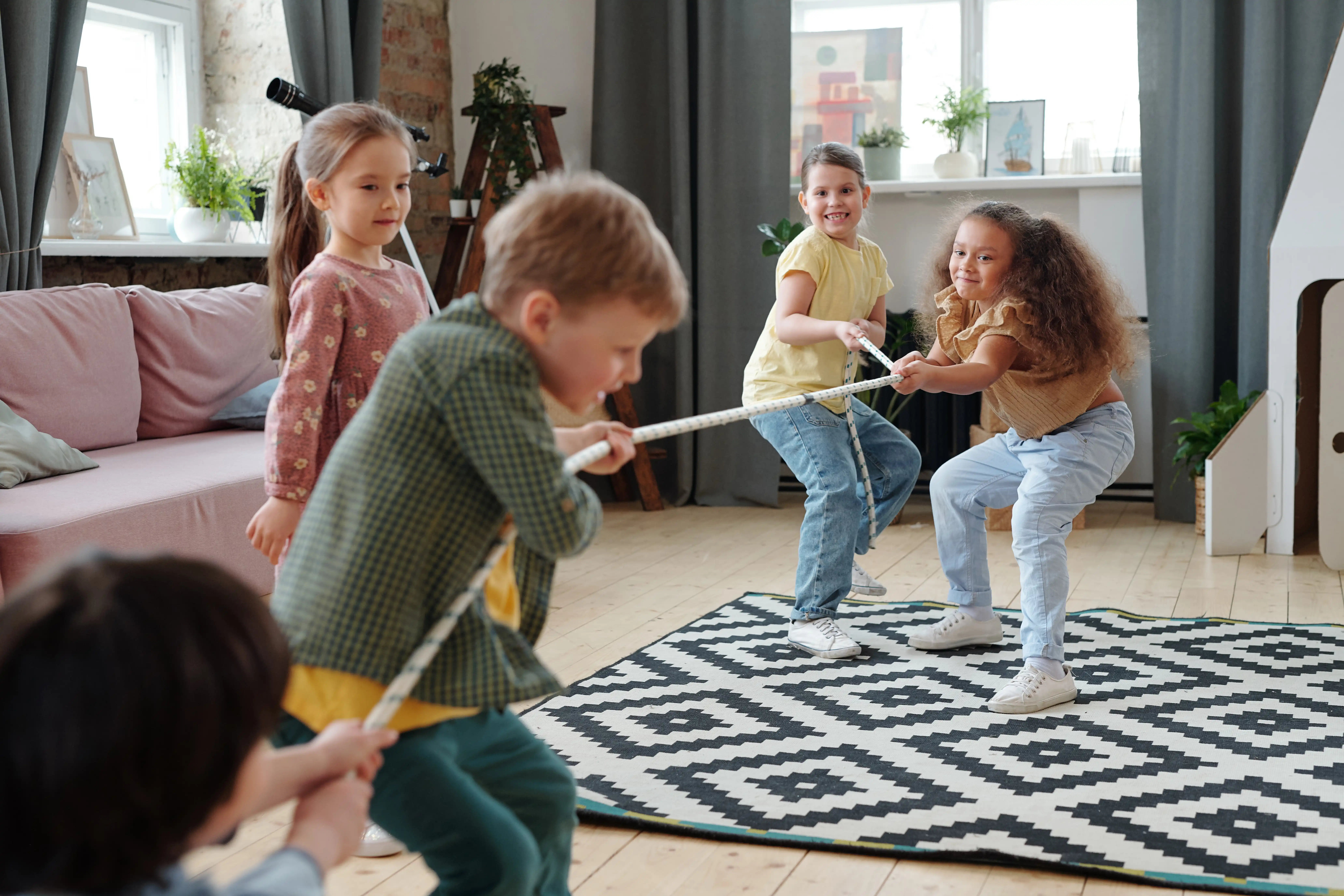
When a group has too much pent-up energy to sit still and talk, physical play breaks the ice faster than conversation ever could. These 8 fun ice breaker games for kids get everyone moving first and thinking about "fitting in" second.
1. Name Web — Kids sit in a circle, and one holds a ball of yarn. They say their name and toss it to someone else while holding their piece of the string — by the end, the whole group is connected by a visible web.
2. Human Knot — Everyone stands in a tight circle, grabs two different hands across from them, and the whole group has to untangle itself without letting go.
3. Musical Questions — Musical chairs, but instead of racing for a seat, kids answer a quick question about themselves whenever the music stops.
4. Fruit Basket — Give everyone a fruit name. Call one out, and those kids swap seats — call "fruit basket" and the whole group scrambles at once.
5. Zip Zap Zop — Standing in a circle, kids point at each other and shout "zip," "zap," or "zop" in order, as fast as they can, trying not to break the chain.
6. Silent Line-Up — No talking allowed. Kids have to arrange themselves in a line by height, birthday month, or alphabetical name using gestures only.
7. Name Chase — A Duck, Duck, Goose twist: instead of "duck," the child who's "it" taps heads while calling out actual names, which sneaks in some real name recognition.
8. A Great Wind Blows — Everyone stands in a circle, and whenever a statement applies to them ("the wind blows for anyone wearing sneakers"), they scramble for a new spot — there's always one fewer spot than players, so someone's left in the middle.
Help your child thrive with playful learning
Turn screen time into real growth with Keiki's educational games.
Try KeikiCreative Ice Breaker Activities for Kids
Not every kid wants to talk right away, and that's fine — these 7 icebreaker activities lean on drawing, storytelling, and a bit of craft instead of direct questions. All you really need is paper and something to color with.
1. One Common Thread — Each child shares one unique thing about themselves, and the group works together to spot something two or more of them have in common.
2. Collective Story — One kid starts a story with a single sentence, the next adds one more, and it keeps building all the way around the circle.
3. Draw Your Day — Kids draw one event from their day without naming it, and everyone else tries to guess what's happening in the picture.
4. Show and Tell, Then Guess — A child brings (or describes) a personal item without explaining what it is or why it matters — the group guesses before the owner reveals the answer.
5. Design Your Flag — Kids draw a small flag with three symbols representing their favorite things, then explain each one to the group.
6. Compliment Chain — Sitting in a circle, each child gives the person next to them one specific, genuine compliment, all the way around so everyone gives and gets one.
7. The 'I' Museum — Each kid brings (or draws) one small item that says something about who they are, sets up a mini "exhibit," and walks a partner through it.
Related Games in Keiki App



Get to Know You Games and Activities for Kids
These get to know you activities skip the physical play and go straight for real conversation — favorites, opinions, quick personal stories. They're a great fit for a classroom or small group that's going to be together for weeks or months, not just an afternoon. None of the 6 below take more than about 15 minutes.
1. Speed Chats — Pair kids up for 60-90 seconds to answer one quick prompt (favorite movie, best vacation ever), then rotate partners a couple times.
2. Candy Color Questions — Hand out colored candy (or colored tokens, sugar-free version) and assign a different question to each color, so whatever color a kid grabs decides what they share.
3. Who Am I? — Stick a sticky note with someone else's fun fact on each child's back, and have them ask yes/no questions around the room until they figure out whose fact is theirs.
4. Get-to-Know-Me Bag — Kids bring a small bag with 2-3 items that say something about their interests and share them one at a time.
5. Interview Partners — Pair kids up with a handful of simple questions to ask each other, then have each one introduce their partner to the group.
6. Beach Ball Toss Questions — Write a get-to-know-you question in each panel of an inflatable beach ball. Whoever catches it answers whatever question lands closest to their right thumb.
Icebreakers for Kindergarteners
Icebreakers for kindergarteners need a different pace than the ones built for older kids — kids this age have shorter attention spans and are still figuring out how groups even work. Keep these under 10 minutes, keep instructions to one step, and don't overthink materials — most of these need almost none.
1. Barnyard Animal Sounds — Give each child a slip with an animal picture on it. Everyone makes that sound at the same time, and kids find their "herd" just by listening.
2. Alphabet Name Game — Kids pair their name with a word starting with the same letter — "Bouncy Ben," "Jumping Jenny" — which doubles nicely as early phonics practice.
3. Bippity Boppity Bumblebee — The whole group chants a name-and-rhythm pattern together, and a chosen child has to say a classmate's name in rhythm before the beat comes back around.
4. Which Friend Is Missing? — Kids close their eyes while one child quietly steps out of the room, then open their eyes and try to guess who's gone.
5. I Went to Market — The first child says "I went to market and bought an apple," the next repeats it and adds something new, and the memory chain grows around the circle.
6. Stuffed Animal Circle — Each child introduces a stuffed animal to the group instead of themselves — a small thing, but it gives shy kids a comfortable stand-in for talking.
Play and Learn More with Keiki
Once the group's warmed up, Keiki can help keep that momentum going — it's an app packed with learning games, puzzles, and parenting hacks for kids ages 1 to 6, plus more than 300 printable worksheets covering things like school prep and creativity-boosting activities.
Tips for Parents and Organizers
A few things that make the difference between an icebreaker that flops and one that actually works:
1. Match the game to the group. — A room of shy 5-year-olds and a rowdy group of 10-year-olds need completely different energy — don't run the same game for both.
2. Keep the rules short and visual. — If you can't explain it in one or two sentences and a quick demo, it's probably too complicated.
3. Make it safe to opt out. — Never force a kid to participate — give the reluctant ones a smaller role, like holding the yarn instead of speaking.
4. Switch games before boredom sets in. — The moment energy starts dropping, move on. Don't push an activity past its natural end.
5. Adjust up or down for age. — A kindergarten game like Barnyard Animal Sounds gets more fun for older kids with a memory or speed twist added — and it works the other way too.
6. Bring snacks. — Seriously — a shared snack afterward gives kids a relaxed, low-pressure moment to keep the conversation going once the structured part ends.
At the end of the day, none of this is about winning. It's about helping kids feel comfortable enough to find common ground with people they just met.