

About this collection
Print-ready rectangle coloring pages for kids — instant download and print
Rectangle coloring pages with rectangle shapes, tracing and boxes to color and enjoy. Hand-picked designs that keep little artists happily busy.
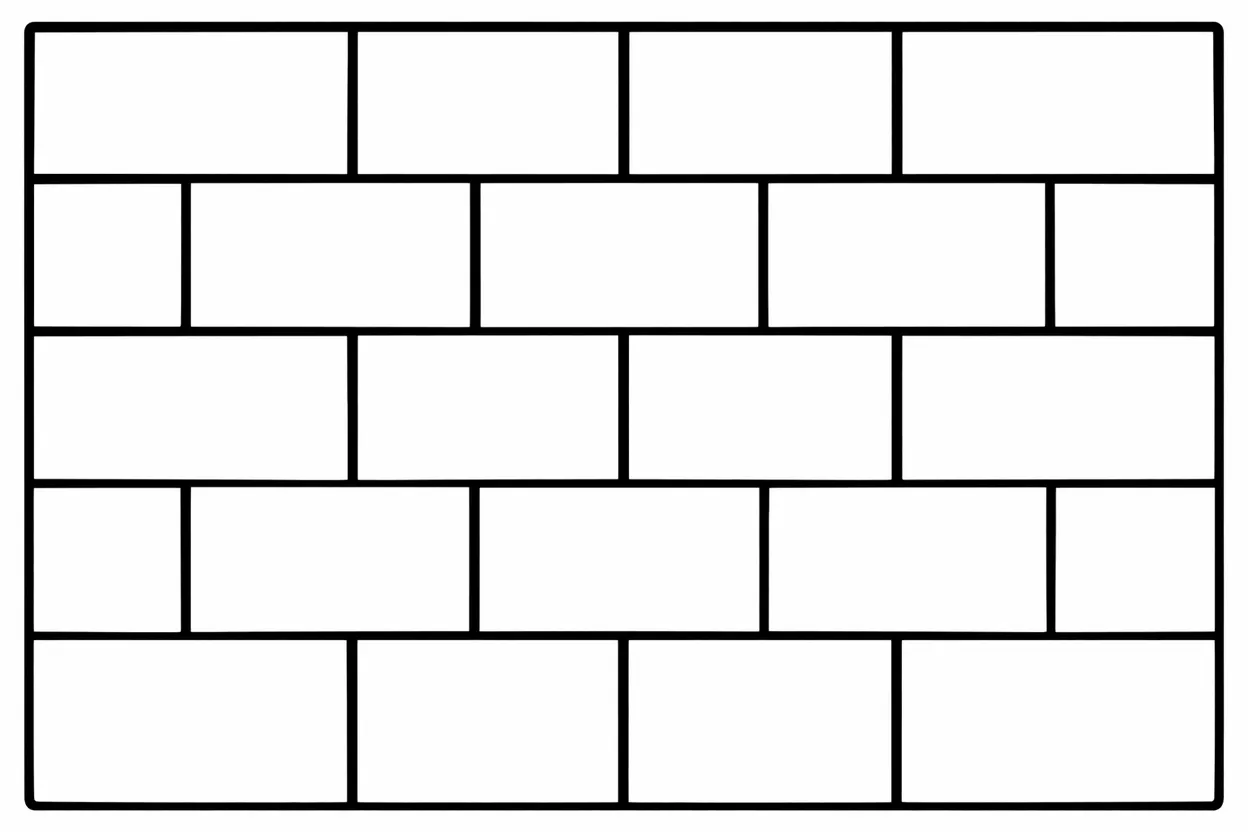

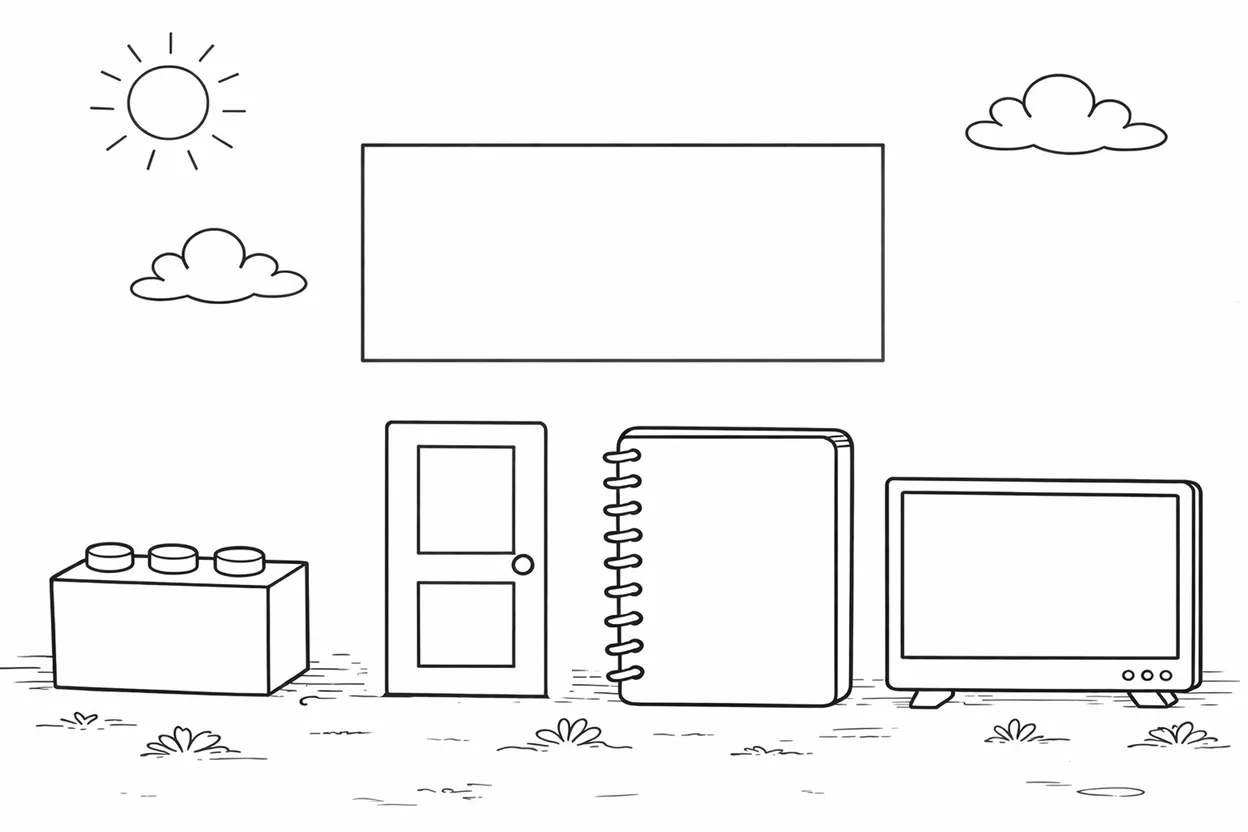
Rectangle coloring page – A Basic Shape for the Base of Development
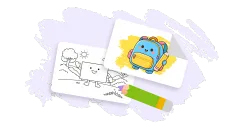
At first glance, a rectangle coloring page is just an elongated square, but for a child's motor skills, it is a completely new challenge. Long straight lines require endurance, and right angles require precise control. At the same time, the rectangle is one of the basic shapes that a child masters during their development. This is a normal part of learning that happens gradually, as important images are hidden behind abstract shapes. Coloring is a simple way to develop a child's imagination and skills.
Not Just Geometry: What’s Hiding Behind the Corners?
At ages 2–5, abstract thinking is working at its peak. For an adult, an empty rectangle coloring sheet is just a frame on a white background. But for a child, it is a clean building block.
The shape provides an excellent framework that eliminates the "fear of the blank page." What to fill it with is up to the young artist. Add a couple of circles to the bottom of the rectangle – and you have a school bus or a fire truck ready. Draw a fine grid inside – and it becomes a multi-story house with windows. And if you color it with a wood texture and add a small circle on the side – out comes a door to a fairy-tale castle.
Why is Coloring a Rectangle Difficult but Useful?
While in a square all sides are equal and predictable, here the little one has to change their movements on the fly. Long sides require a strong, confident, and sweeping stroke (to avoid coloring the shape in small chunks and getting tired), while short sides require quick movements.
The motions are constantly changing; the wrist doesn't get tired, but instead develops harmoniously and gets used to different techniques. Plus, one must "brake" before the corners so the pencil doesn't fly past the boundary of the drawing. The child learns to distribute their strength and control the marker over different distances.
Cutting, Gluing, and Building
In Keiki, you have access to more than just online coloring, which brings more mobility and convenience to life. You can also print a rectangle coloring page for greater variety and traditional coloring.
Rectangular coloring pages are simply made for being cut with scissors. Print several pictures of different sizes, let the child color them however they wish, and then suggest cutting them out. From these colored blocks, you can assemble an entire city on the floor, glue together a long freight train, or create a giant transformer robot on a sheet of poster board. The flat drawing comes to life and allows the child to express their imagination to the fullest.
People often ask
Yes, this is intuitive parallel shading. Children often follow the longest line of the contour; it’s easier for the hand to catch the rhythm that way. This is a sign that the little one understands the proportions of the figure.
Use the "visual fence" method. First, trace the contour with your child using a thick, bright marker. This bold line will serve as a visual barrier where the hand will naturally start to slow down.
You can introduce basic geometry as early as 2.5–3 years old. At this age, the plot is not as important to them as the process of filling a large empty space with bright color.
It is the perfect tool for such a task. Offer the toddler two pictures: one elongated vertically, the other horizontally. While coloring them, say: "This house is tall and narrow, and this garage is low and wide.
Make the coloring page a "little secret." While the child isn't looking, draw a tiny fish in the center of the rectangle or put a small sticker there. Then suggest imagining that it’s a swimming pool that needs to be filled with blue water so the fish has a place to swim.