16+ Best Gym Games for Kids

Gym games for kids aren't just about burning off energy before nap time — research links gross motor play directly to cognitive development, including spatial thinking, concentration, and the fine motor control kids need before they can write. This guide collects 16+ gym games for kids ages 2-6, organized into five categories so you can pick the right activity for the moment: coordination and balance, team building, speed and reaction, ball and target skills, and quiet focus games.
Every game here works as an indoor gym activity — in a living room, a daycare gym, a classroom, or a backyard — and most need only items you already have at home: bean bags, a rope, hula hoops, a soft ball, or a balloon.
Key Takeaways
- Gym games for kids ages 2-6 build more than physical fitness — obstacle courses and balance activities are linked to spatial thinking, concentration, and early writing readiness.
- Active games for toddlers should stay short and playful — 20-30 minutes of daily active play works better for preschoolers than one long weekly session.
- Coordination games for toddlers like the obstacle course and balance beam walk are safe starting points from age 2, since they need no competition or strict rules.
- Team building games for kids, like the parachute and mini tug of war, work best from about age 3, once kids can follow a shared goal with a partner or group.
What Are Gym Games for Kids?
Gym games for kids are structured, active play activities — usually indoors — that build gross motor skills like balance, coordination, speed, and strength through movement rather than direct instruction. Unlike free play, gym games have a simple goal or rule (freeze when the music stops, keep the balloon off the floor, cross the river without touching the water), which is what makes them double as physical education for toddlers and preschoolers rather than just unstructured running around.
Research indicates that developing gross motor skills connects directly to cognitive abilities: obstacle courses require the kind of complex planning that supports spatial thinking, and the coordination built through games like the tightrope walker or balancing egg feeds into the hand-eye control kids later need to hold a pencil. New movements also form new neural connections — balance and spinning activities in particular improve sensory processing and emotional regulation, alongside the more obvious benefits of strengthening the skeletal and muscular systems and building lifelong activity habits.
Why Gym Games Matter for Development
Gym games matter for development because they build four specific skills at once, not just general fitness.
1. Cognitive development. — Gross motor games correlate with measurable cognitive progress — an obstacle course, for example, requires a child to plan a sequence of moves before executing it.
2. Spatial thinking. — Indoor gym activities help children understand body boundaries and spatial relationships, which is foundational for later math and geometry skills.
3. Neural connections and sensory integration. — New movements create new synapses, and balance- or spin-based games improve sensory processing and emotional stability.
4. Health and long-term habits. — Regular physical activity prevents inactivity, strengthens the skeletal and muscular systems, and establishes healthy movement habits that carry into later childhood.
Coordination and Balance Games for Kids
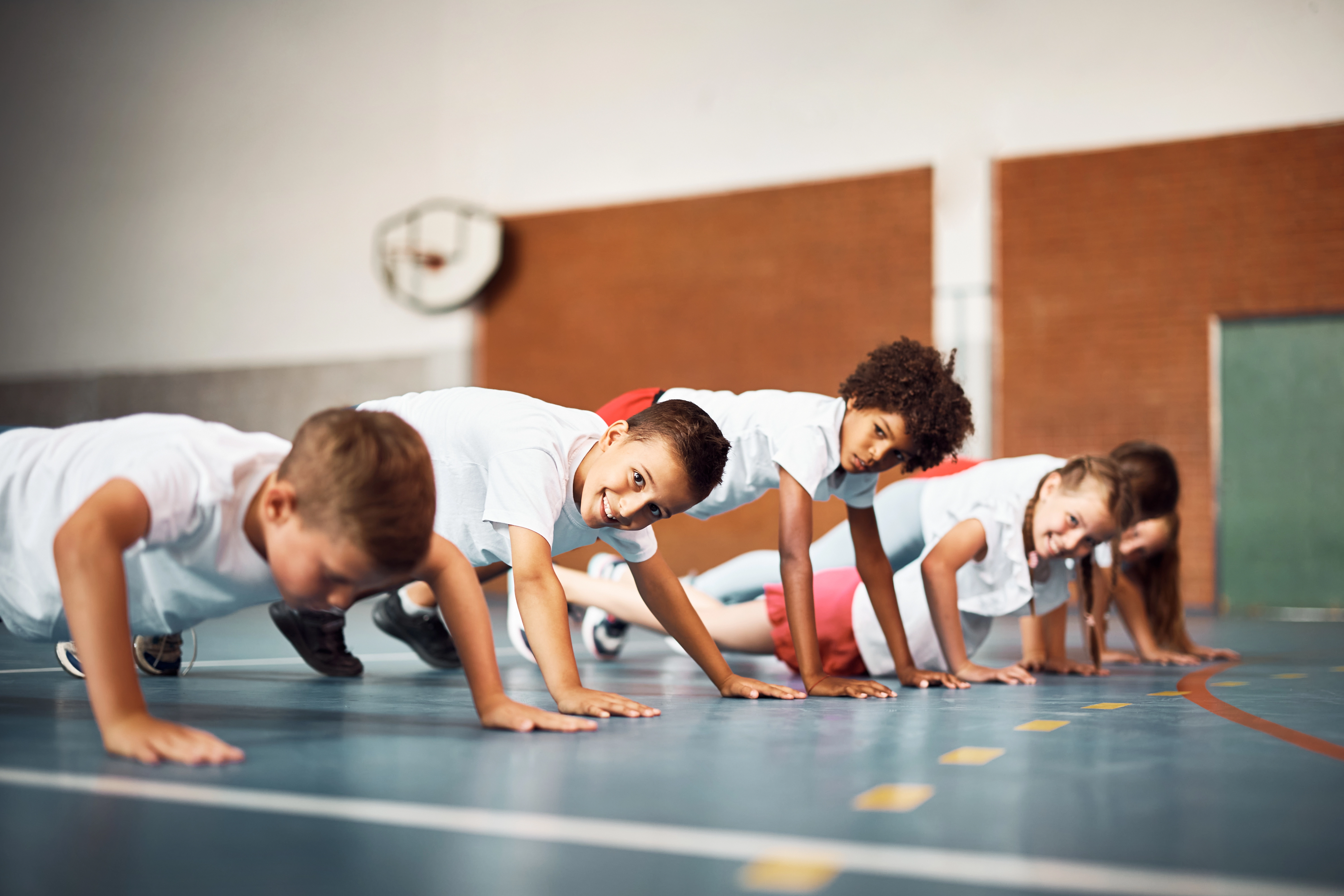
Coordination games for toddlers and preschoolers build the vestibular sense and hand-eye control kids need well before they're ready for organized sports. These 8 games are safe starting points from age 2 since none of them involve competition or strict rules.
1. Obstacle course — Use mats, benches, hoops, and tunnels, or swap in household items like cushions and dining chairs; kids crawl, climb, and balance their way through in sequence.
2. Tightrope walker — Lay a rope or a strip of tape on the floor and have your child walk along it without "falling"; a simple, safe way to develop the vestibular system.
3. Freeze dance — Kids run and dance while music plays and freeze completely the instant it stops, which trains the nervous system's ability to inhibit movement on cue.
4. Crossing the river — Set out "stepping stones" (cushions or floor circles) across the room and have kids cross without stepping into the "water" in between.
5. Balancing egg — Balance a lightweight ball on a tennis racket and carry it across the room without dropping it, which sharpens hand-eye coordination.
6. Bean bag balance — Balance a bean bag on the head, shoulder, or open palm while walking a straight line or a low balance beam; if it falls, pick it up and keep going.
7. Hula hoop hop — Lay several hula hoops on the floor and have kids hop from hoop to hoop landing on both feet, without touching the plastic rim.
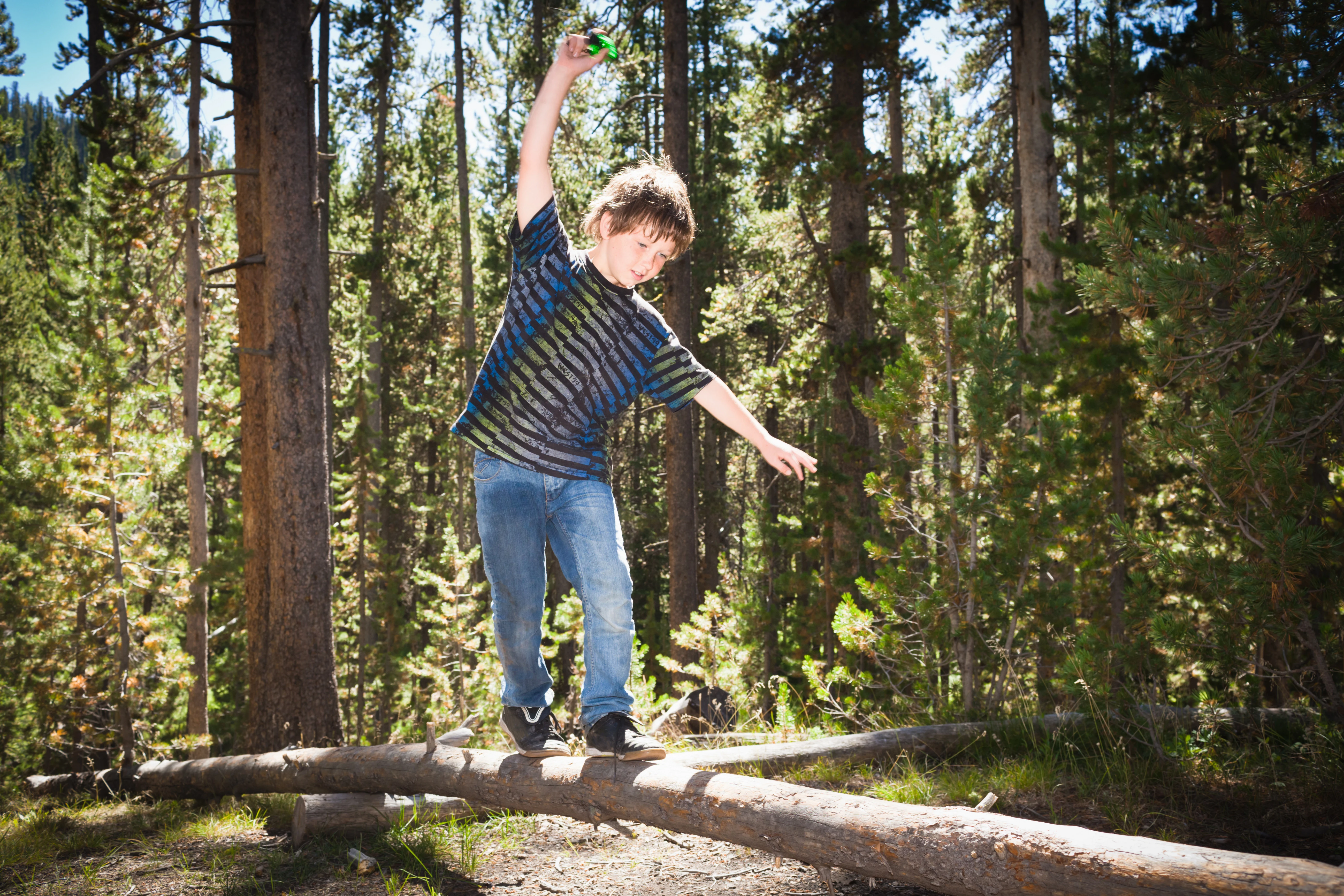
8. Balance beam walk — Walk heel-to-toe along a low balance beam or a strip of tape, arms out to the sides for balance, then try it backward once the forward version feels easy.
Team Games for Social Development
Team building games for kids work best from around age 3, once a child can hold onto a shared goal with a partner or group instead of playing solo. These 6 games teach turn-taking, cooperation, and reading a group's rhythm.
1. Parachute — Everyone holds the edges of a large parachute, tossing balls into the air or billowing the fabric up into a dome.
2. Dragon catches its tail — Kids form a line holding the waist of the person in front; the child at the head of the line tries to catch the child at the tail without the line breaking.
3. Pass the ball — Seated kids pass a ball overhead or between their legs down the line, which builds group rhythm and timing.
4. Builders and destroyers — Split the group in half: one half sets plastic pins upright while the other knocks them down, then swap roles after a minute.
5. Musical spots — A gentler take on musical chairs: lay floor spots or paper circles instead of chairs, and remove one spot each round as kids move to music; no chairs to bump into makes it safer for younger toddlers.
6. Mini tug of war — Two small teams gently pull opposite ends of a soft rope, adult-supervised, with the goal of pulling a marker past a line — a simple, low-risk way to build teamwork and gross motor strength together.
Help your child
grow with Keiki
We’ll help you turn everyday screen time
into real learning progress.
Speed and Reaction Games for Kids
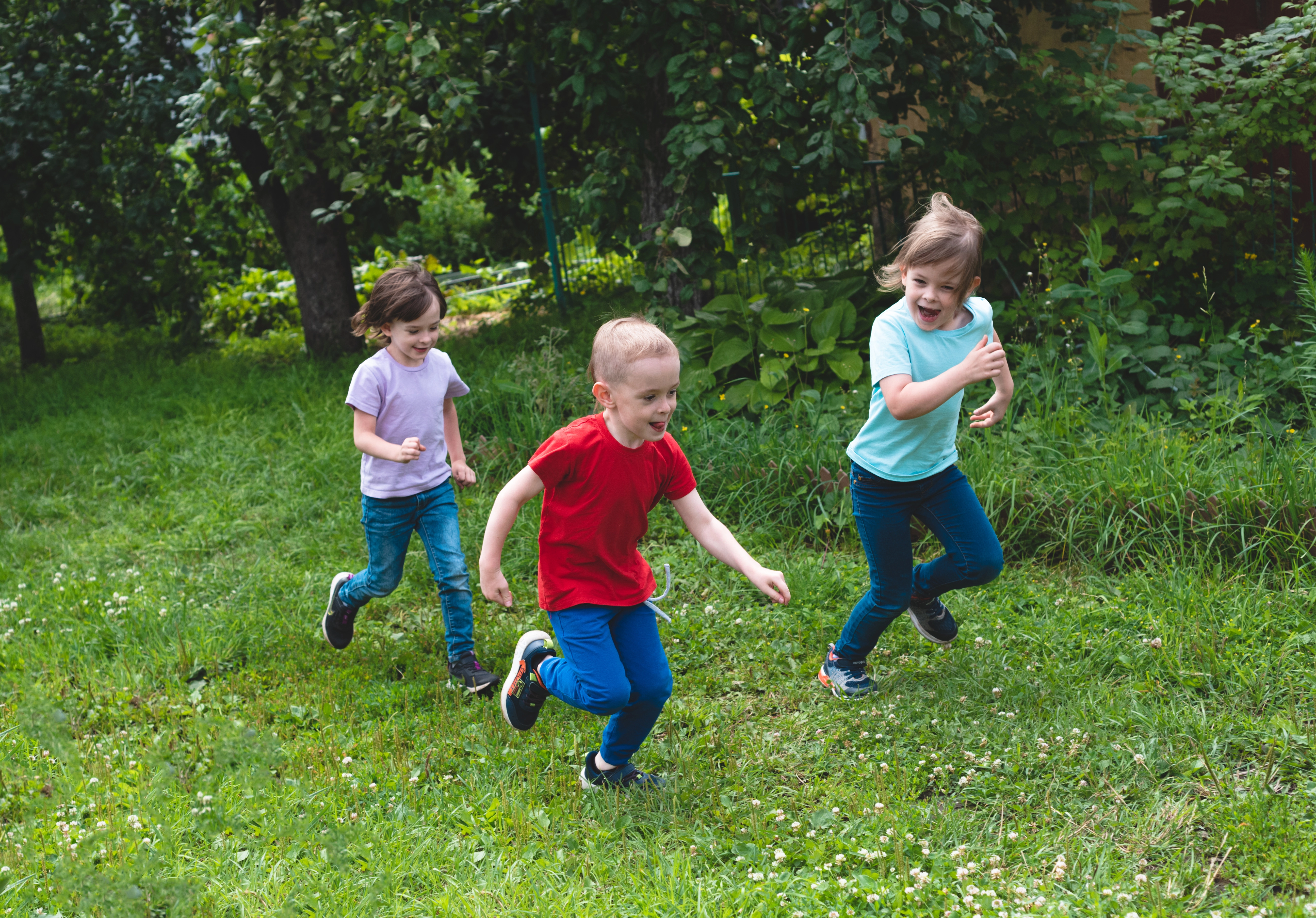
Active games that train speed and reaction time work well from about age 3, once kids can reliably stop and start on a verbal cue. These 6 chasing and listening games sharpen both.
1. Red light, green light — The leader stands with their back turned; everyone runs on "green light" and freezes on "red light," and anyone caught moving returns to the start line.
2. Rabbit tail — Each child tucks a ribbon "tail" into their waistband and tries to collect as many other tails as possible while keeping their own.
3. Shark and fish — "Fish" run across the gym trying not to get tagged by the "shark" patrolling the middle.
4. Color houses — Scatter hoops of different colors around the room; call out a color, and everyone races to stand in a hoop of that color, which trains both speed and color recognition.
5. Simon says — The leader calls out movement instructions, but kids should only follow the ones that start with "Simon says" — anyone who moves on a command without it sits out that round.
6. Animal hop race — Mark a start and finish line and have kids race across using an animal move — bunny hops, frog jumps, crab walks — switching animals each round.
Quiet Gym Games — Focus and Relaxation
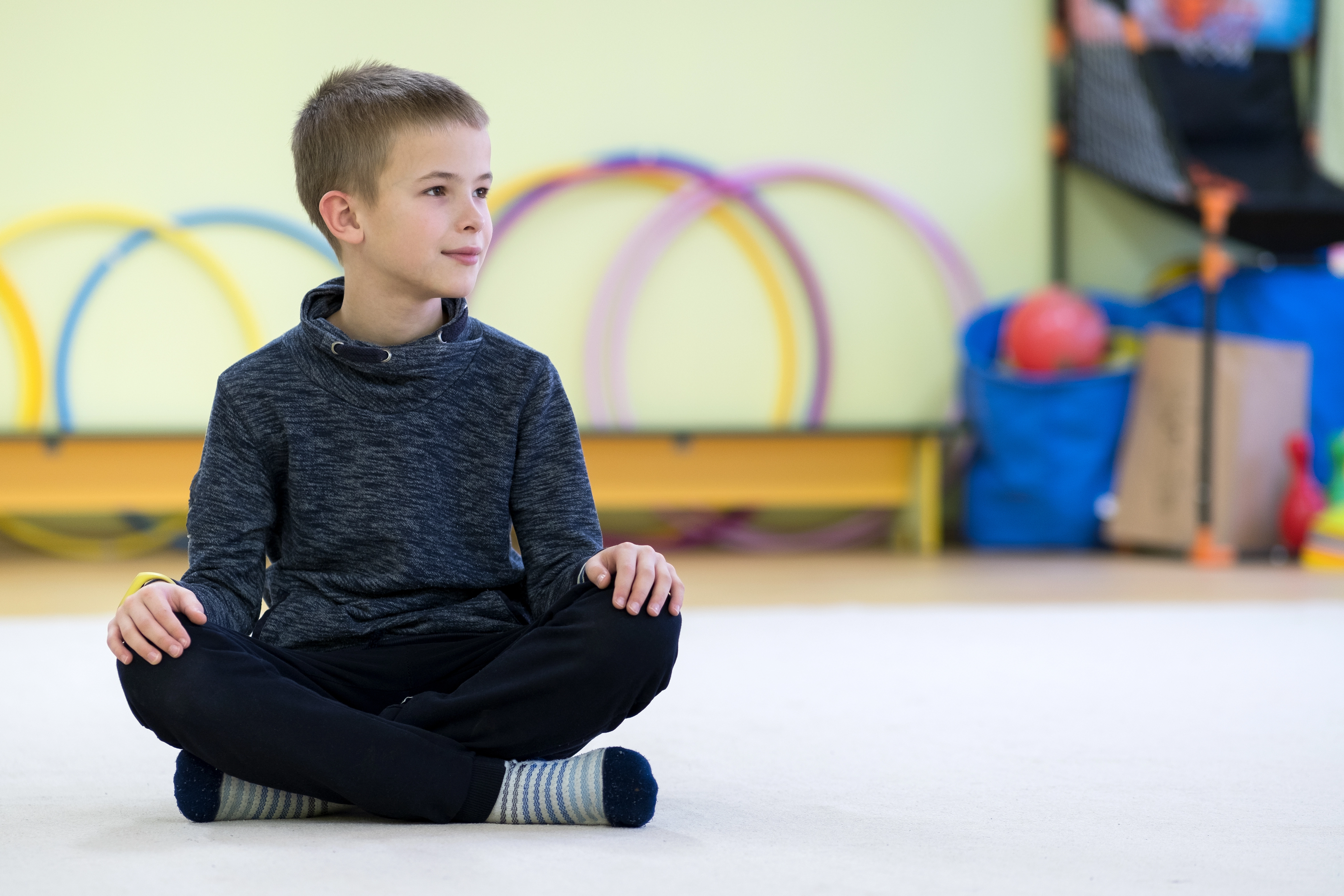
Quiet gym games slow the pace down after an active stretch, building focus and body control instead of speed. These 5 work well indoors or right before a calmer transition, like naptime or circle time.
1. Copy the pose — A coach or parent demonstrates a yoga or animal pose, and kids replicate it as accurately as they can.
2. Sharp eye — Hide a small object somewhere in the room, and have kids search for it while moving as quietly as possible, "like mice."
3. Giant breathing — Inhale deeply with arms raised overhead, then exhale loudly while bending down; repeat 15-20 times, pausing if a child feels dizzy.
4. Animal yoga cards — Pull a card showing an animal pose — frog, cobra, cat — and hold that pose for a slow count of ten breaths.
5. Whisper walk — Walk very slowly and silently across the room, like sneaking past a sleeping giant, which builds body control and concentration without any equipment at all.
Ball and Target Games for Kids
Ball and target games are some of the most common indoor gym activities because they build aim, throwing control, and hand-eye coordination without needing much space. These 5 use soft, safe equipment throughout.
1. Bean bag toss — Throw soft bean bags into hoops or baskets set at a few different distances to build aim and arm control.
2. Balloon volleyball — Bat a balloon back and forth over a low rope or between two players, trying to keep it from touching the ground; the slow float of a balloon gives young kids time to react.
3. Bowling relay — Roll a soft ball to knock down plastic cups or pins set up bowling-style, then race back to tag the next teammate.
4. Basket toss race — Carry soft balls one at a time in a relay and toss each one into a basket or bucket before tagging the next player.
5. Ring toss — Toss small rings or hoops onto upright cones from a short distance, moving the cones farther back as aim improves.
Digital Games and Physical Activity
It may seem that a tablet and a gym are opposites. However, with the right approach, an app like Keiki can become a complementary tool for rest after activity.
- Visualization. In the kids' app, the child sees how characters jump, run, and perform exercises. This creates a visual pattern that the little one subconsciously copies in reality.
- Logical warm-up. Between active sets in the gym, you can offer the child a short puzzle in Keiki. The brain quickly switches between physical and intellectual loads.
- Tracing shapes. The logic is simple – first, you train fine motor skills with writing exercises (tracing shapes is the first step), then develop gross motor skills through active tasks. Such activities for 2 year olds are simple but produce comprehensive results.
- Motivation. Use the app as a reward after a successful session. 15 minutes of interactive learning for active kids is a great way to end an active day.
Help your child thrive with playful learning
Turn screen time into real growth with Keiki's educational games.
Try KeikiSafety and Comfort Checklist
A handful of basics keep gym games for kids safe and comfortable, indoors or out.
1. Equipment. — Sports shoes with non-slip soles are a minimum; add sport-specific gear when a game calls for it.
2. Hydration. — Offer small sips of water every 15 minutes of active play.
3. Sun protection. — For outdoor sessions, use shade, hats, and sunscreen.
4. Warm-up. — Start every session with simple movements — head rotations, shoulder rolls, light jumps — before moving into the games themselves.
5. Positive feedback. — Praise effort over results; gym games for kids work best when nobody feels like they're being judged on performance.