Games about nutrition for children – how to learn healthy eating in a fun way?

Nutrition games make learning about healthy food fun and interactive for kids. Through play, children explore ingredients, meals, and habits that support balanced eating while building curiosity, independence, and positive attitudes toward nutrition.
How nutrition games help kids build healthy eating habits?
Every parent knows how difficult it can be to feed a child. Persuasion, compromises and long conversations at the dinner table can turn mealtime into a real battle that drains both you and the child. However, nutrition is not only about food, but also about development, curiosity and exploration. Nutrition games for kids are a way to turn food from a source of conflict into an exciting adventure with no persuasion or pressure. It is a path to a healthy relationship with a wide variety of foods from early childhood.
Healthy food is not boring. On the contrary, it is a bright, tasty and diverse world that you can explore with your child. Fruits and vegetables are like treasures to discover and study, and healthy habits are like superpowers that make us stronger and more energetic. The purpose of this article is to show you how to make nutrition a fun part of life, teaching young explorers to listen to their bodies and love healthy foods without any coercion.
Benefits of playing with food: food is fun!
Adults at the table follow hundreds of rules, they know everything about benefits and how to behave with cutlery. But for a child, this is an entirely new world. What parents may consider mischief or bad behavior is actually exploration and the first test of their own preferences. Healthy eating games work on several levels, forming the foundation for lifelong healthy habits:
- Expanding taste horizons. Many children instinctively fear trying new foods. Games help overcome this fear, as they remove pressure and make the exploration process interesting. When a child chooses which “magical” fruit to “cast a spell on”, they are more willing to taste it.
- Understanding how the body works. Nutrition games help children understand how food affects their bodies. For example, explaining that “green food” makes muscles strong and “orange food” helps with good vision is much easier in a playful form. This helps the child understand that food is not just pleasure, but a source of energy and health.
- Developing curiosity and exploration. Kids cooking games turn food into an object of exploration rather than a routine duty. A child begins to wonder where foods come from, how they grow, what they look like inside and why they taste different.
- Developing sensory perception. Food is not only taste. Games teach using all senses to study products: touching them, smelling them, looking at their color and shape, listening to crunchiness. This helps children better understand and accept food.
- Forming responsibility. Involving the child in cooking and choosing products in the store makes them more responsible and aware. They feel like part of an important process and are more willing to eat what they chose and prepared themselves.
Food games for kids – the plate as a key to development
Even a plate and simple foods can become a development tool. This is not just tastes and habits, but true exploration of the world through a whole palette of foods. Below we collected ideas for various situations.
Help your child
grow with Keiki
We’ll help you turn everyday screen time
into real learning progress.
Kitchen games
The kitchen is also a whole field for experiments and discoveries. We collected fussy eater games and activities for those who are just discovering the world of flavors.
Rainbow plate
The goal of the game is to collect foods of all colors of the rainbow on a plate (for example, red pepper, orange carrot, yellow banana, green lettuce, blue grapes, purple onion). This is an excellent way to introduce a child to a wide variety of fruits and vegetables. The game stimulates curiosity and helps form the habit of eating diverse foods.
Sorting foods
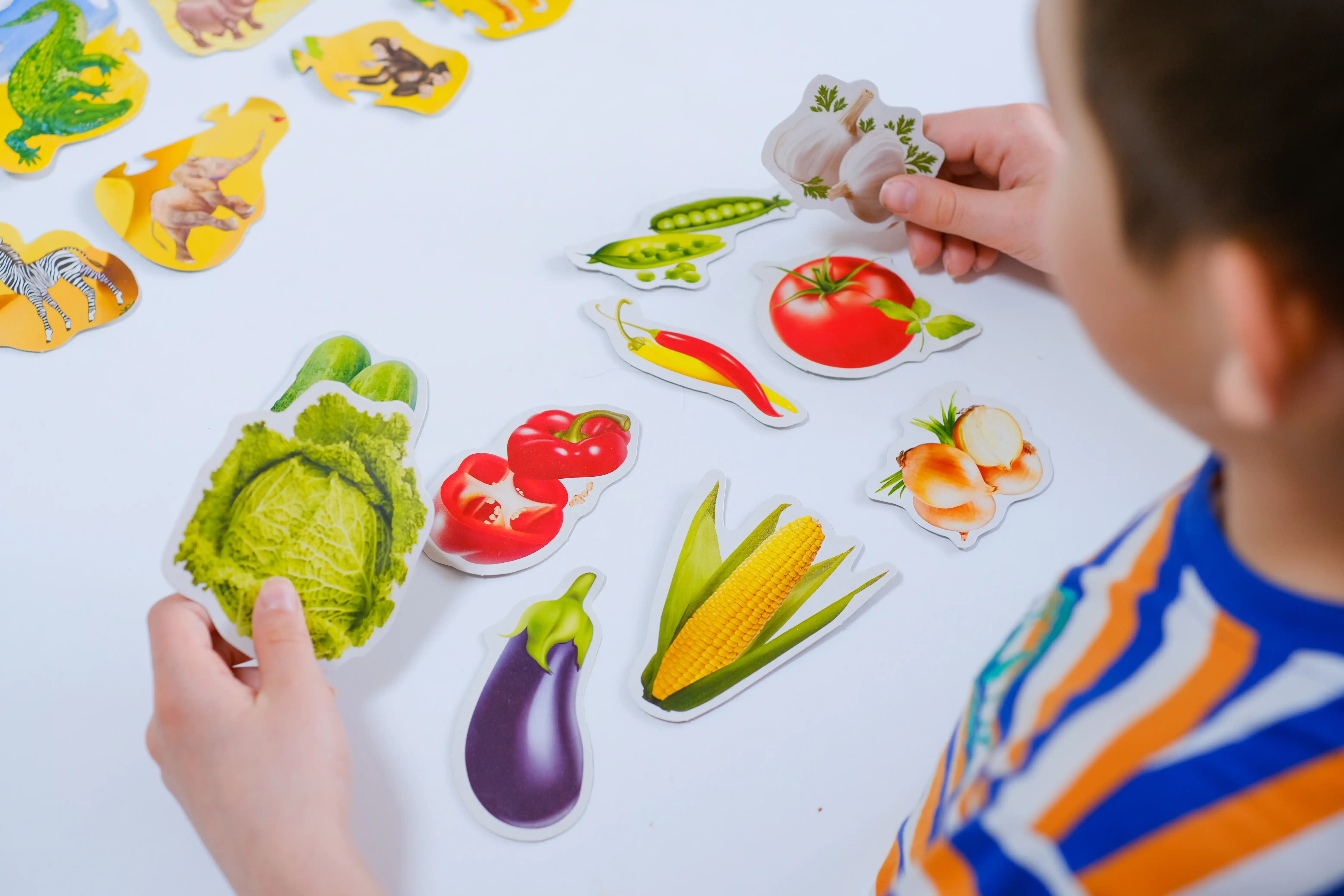
Lay out foods and ask the child to sort them by categories (fruits, vegetables, dairy products). You can use small baskets or simply lay them out on the table. This game develops logical thinking and teaches the child to classify objects.
Young chef
Let the child help in cooking. Let them wash vegetables, mix salad or decorate a dish. Give them small, safe tasks they can complete. Participation in the cooking process makes the child more responsible. They feel that their contribution is important and are more willing to taste what they prepared themselves.
Guess by smell
Blindfold the child and offer them to guess the product by smell (for example, mint, lemon, banana). Such fun ways to teach kids about healthy food develop sensory perception, attention and smell.
Magic soup
Invent a “magical soup” and add ingredients while telling what superpowers they give (for example, spinach – for strength, carrot – for vision, onion – for protection from germs). This game teaches the child about the beneficial properties of foods in a fun and engaging way.
Exploration games – for all curious and interested
Food exploration activities for kids help children learn more about foods in a playful way, discover new tastes and even develop new habits.
Food detective
Give the child a magnifying glass and offer to examine a food (for example, broccoli or strawberries) and find all its “secrets”. You can find trees on broccoli or seeds on strawberries. Benefit: This game turns food into an exploration object, stimulates curiosity and teaches noticing details.
Guess by touch
Place several fruits and vegetables in a bag and ask the child to guess them by touch without looking. Such sensory food activities for toddlers develop tactile perception and help memorize the shapes of different foods.
Taste journey
Try some exotic fruit (for example, kiwi or mango) and tell where it comes from and how it grows there. With this approach, you can expand the child’s worldview and make food more interesting.
Where is it from?
Show foods and ask where they came from (from the garden, from the farm, from the store). You can draw a diagram on a board or show pictures. This game teaches the child to understand the origins of foods and appreciate the work of people who grow them.
Royal tasting
Arrange a tasting of different foods (for example, different types of apples or cheese) and ask the child to describe how they differ. Tasting games for kids develop taste receptors and teach describing sensations.
Build real skills through fun, educational games for your child
Try KeikiStory games – engaging imagination
Behind every food, behind every dish on the table, there is a story. Even familiar things can be used for creative and engaging activities.
Superhero foods
Invent a story about superheroes where each food has its own superpower. For example, banana – super-strong, carrot – super-vision. This is an excellent way to explain how different foods affect the body and to foster love for healthy eating.
Journey of a seed
Tell a story about how a tiny seed grew into a big vegetable or fruit. Nutrition activities for toddlers help explain the life cycle of plants and the value of natural foods. They also suit preschoolers, who can receive information in a more complex form.
Fairy-tale salad
Invent a story about a salad where each vegetable is a fairy-tale character. For example, cucumber is a prince and tomato is a princess. This stimulates imagination and makes salad more appealing.
Musical fruits
Invent a song about favorite fruits. You can sing to a familiar melody, simply changing the words. This is a great way to reinforce fruit knowledge and develop memory.
Bring food to life
Draw funny faces on foods (for example, on broccoli or a tomato) and invent a story about them. The game makes food friendlier and more interesting for the child.
How to make healthy eating a fun habit?
Healthy eating for preschoolers or a menu for toddlers is a real challenge for many parents. With our tips, you can simplify this area of life:
- Create a positive atmosphere. The table must be a place of joy, not a battlefield. Never force the child to eat, do not threaten or beg. A calm attitude toward food is key to success.
- Be a role model. The best way to teach a child to eat healthy food is to eat it yourself. Sit at the table together, eat the same foods and show how much you enjoy them.
- Involve them in the process. Take children with you to the store, let them choose foods. Let them wash vegetables, mix salad or decorate dishes.
- Do not use food as a reward. This creates a wrong association with nutrition, where “healthy” is punishment and “unhealthy” is reward.
- Offer but do not insist. If the child refuses a new food, do not be upset. Just offer it again in a few days. Repetition is the key to success.
- Use creativity. Beautiful presentation, interesting shapes cut from vegetables, playing with colors – all this makes food more appealing.
Related Games in Keiki App
Help from apps – add interactivity
When it comes to introducing food, many parents worry about the mess: spilled juice, scattered flour, berry stains on clothes. But what if we say that children can experiment with food without any mess? The Keiki app is the perfect helper. It allows children to study foods, practice counting and develop logic in a playful form without leaving a single stain. You can be dealing with a child who won't eat with the help of such games:
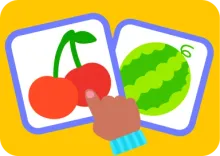
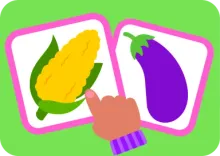
- Food names. In this game, your child will learn the names of various foods. They will see bright pictures of fruits, vegetables and other foods, and a pleasant voice will pronounce their names, helping the child memorize new words. One by one, you can prepare an interactive dish together.
- Counting. Here you can count different foods and desserts. For example, the child must count how many cupcakes or strawberries the little helper sells. This is also a game that teaches basic math, meaning you solve two problems at once.
- Fruits and vegetables. In the matching game, the child can collect harvest from trees and garden beds, and then make juice. This is a fun way to learn how fruits grow and what can be made from them. The game helps develop fine motor skills and logical thinking.
These tasks also help learn how to handle picky eating. Keiki has no ads, making the game safe and comfortable, and every aspect of the app is developed together with child psychologists to make learning as effective as possible.