16 Fun Weather Activities for Kids to Learn and Play

You have likely noticed that for a young child, the surrounding world is one giant, unexplored laboratory. One of the most frequent and natural triggers for children's questions is right outside our window. Why does it rain? Where does the sun hide in the evenings? Where does the wind come from if we can't see it?
Key Takeaways
- Engaging in weather activities for kids helps children understand complex natural phenomena through hands-on play.
- Daily weather activities for toddlers stimulate sensory integration and build essential cause-and-effect logic.
- Using a weather activity for preschool or kindergarten develops long-term observation skills and scientific curiosity.
Weather is something a toddler encounters daily: it is not just a background, but an inexhaustible source of curiosity. Therefore, well-chosen weather activities for kids are more than just a way to keep a child busy for half an hour on a rainy day. They provide a unique opportunity to develop their observation skills, logic, vocabulary, and even emotional intelligence.
In this article, we have gathered a large-scale collection of ideas: from the simplest sensory games for toddlers to fascinating scientific experiments for older preschoolers. If you want to turn every day into an exciting adventure, these weather for kids activities will be your best assistant. We will look at various approaches and formats so you can find the perfect option for your child, combining utility, development, and sincere joy.
Why is Studying Nature So Important for the Developing Brain?
Children think in concrete, tangible images. For them, abstract concepts like the "water cycle in nature" or "atmospheric pressure" make no sense until they see with their own eyes how a puddle dries up after the rain or feel the wind pushing them in the back. Every weather activity for kids is built on visualization and practical experience.
First, such activities form an understanding of cause-and-effect relationships. When a child sees dark, heavy clouds, they suddenly realize it will rain soon. A picture literally forms in their head, followed by other thoughts, such as what to wear for such weather or whether the evening walk in the park will happen.
Secondly, kids weather activities help develop sensory integration. Touching cold snow, listening to the sound of howling wind, feeling the warmth of the spring sun on their cheeks – all of this stimulates new neural connections responsible for processing sensory information. This is crucial for the preschool age.
Thirdly, weather related activities for kids are an excellent way to develop independence and vital life skills. The child gradually learns to understand what clothes to choose depending on what they see outside. This is why weather activities for children should be regular, natural, and diverse.

Help your child
grow with Keiki
We’ll help you turn everyday screen time
into real learning progress.
Weather Activities for Toddlers (1–3)
Between the ages of one and three, toddlers learn about this world through touch, sound, and basic visual images. Any activities and games at this stage should be as simple, safe, and tactile as possible. You don’t need to go into complex meteorological explanations – it is enough to show, let them touch, and name the phenomenon.
Parents often ask on forums: what's the weather activities for toddlers?. Where should you even start immersing them in this topic? Start with sensory bins and simple daily observations.
1. Sensory Bin "Winter Wonderland"
For the youngest researchers, especially when looking for weather activities for 2 year olds, nothing beats sensory play. Pour artificial snow into a deep plastic container (easily made by mixing baking soda and shaving foam), and add a few drops of blue food coloring or scent to enhance the sensory experience, or simply put ice cubes from the freezer. Add small figures of penguins, polar bears, and walruses, and include dried pasta as another tactile material for sensory exploration. Such weather toddler activities brilliantly develop fine motor skills and provide a first physical understanding of the concepts of “cold” and “melting”.
2. Sunbeams and Shadow Catching
On a clear day, choose a sunny spot and use a small mirror to cast sunbeams on the walls of the room, letting the toddler try to chase and catch them with their palm. This is a fun weather activity for toddlers that develops eye-hand coordination, spatial thinking, and reaction speed. You can also use chalk during a walk to trace the shadows of favorite toys on the pavement.
3. Rain from a Home Pipette
Take a tray, place a regular kitchen sponge on it (this will be our “cloud”), and give the child a pipette or a small syringe without a needle filled with water. For a different sensory experience, you can fill the pipette with a few drops of cold water. You can also slightly tint the water with blue food coloring for added realism. The child draws water and drips it onto the sponge until it overflows and begins to release moisture – that’s when the rain starts. Weather activities toddlers absolutely love, as any water play always brings joy while simultaneously training the pincer grasp important for future writing.
4. Morning Weather Window
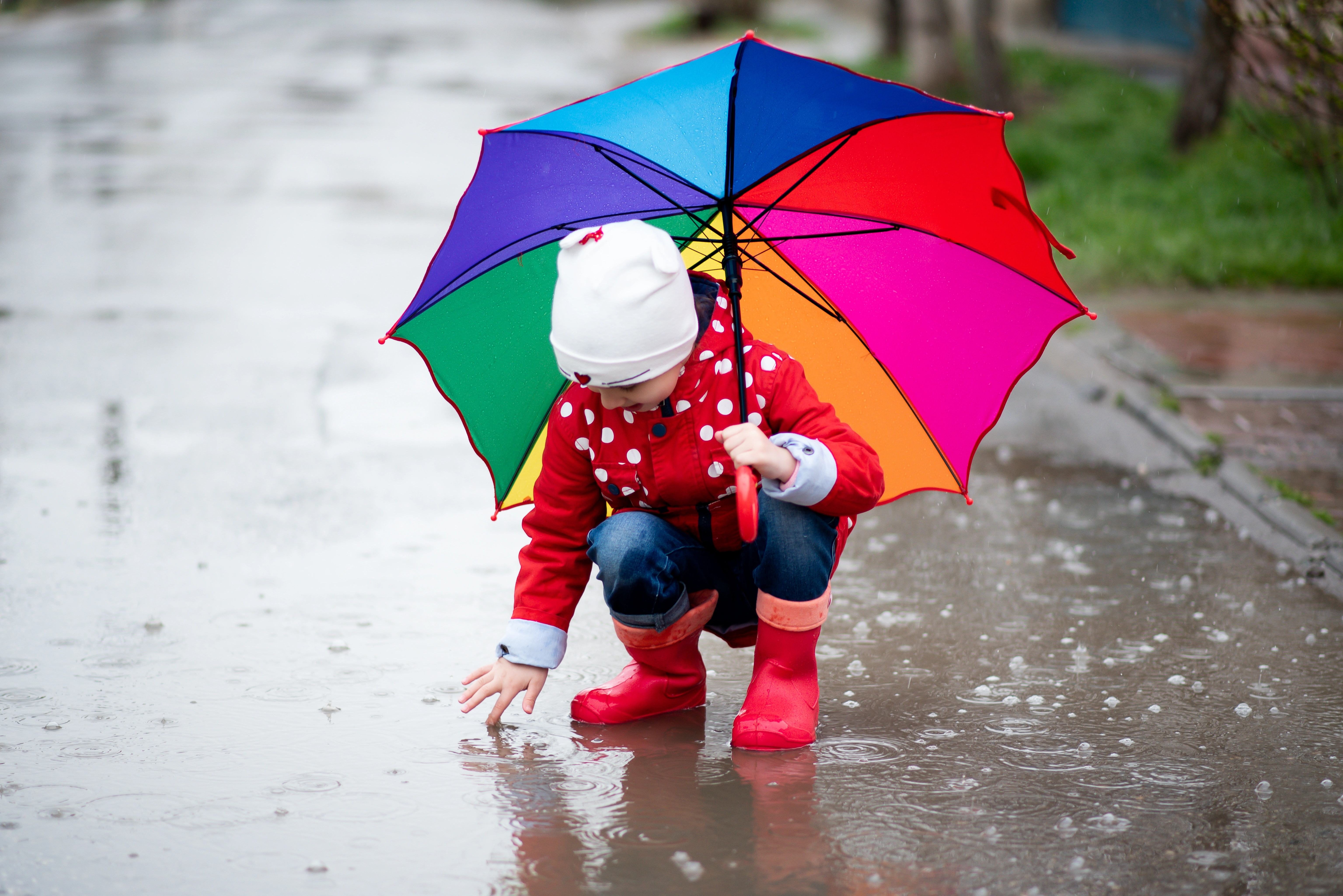
Make a simple frame out of thick cardboard and bring the toddler to the window every morning, looking through it like a television. Clearly and emotionally narrate what you see. To reinforce the result, use weather themed activities for toddlers: pre-print and laminate pictures of the sun, a gloomy cloud, rain, and snow, or use weather cards for this activity. Let the child choose and stick the picture or weather card that matches the conditions outside onto the glass. This is also a great opportunity to introduce and reinforce weather-related vocabulary words, helping children recognize and describe different weather conditions.
Weather Activities for Preschool (Ages 3-5)
At ages 3-5, children become true explorers whose stream of "why" questions is as powerful as a May thunderstorm. Their imagination is limitless, and their vocabulary already allows them to ask thousands of questions about how the universe works. It is important to give them tasks involving elements of creativity, construction, and their first simple scientific experiments.
5. Weather Wheel
An absolute classic and a must-have when talking about preschool weather activities. Cut a large circle from thick cardboard or use a paper plate as the base, divide it into sectors (sunny, partly cloudy, rain, thunderstorm, snow, strong wind), and have the child brightly color each sector with markers. Attach a movable arrow to the center. Start every morning by having the child look out the window and set the arrow to the correct sector themselves. Such weather preschool activities build a sense of routine, time, and responsibility.
6. Magic Cloud in a Jar
If you are looking for truly spectacular weather activities for preschoolers, this experiment is exactly what you need. Fill a transparent glass jar almost to the top with warm water, or try using cold water to compare how temperature affects the experiment. Squirt a fluffy layer of shaving foam on top (this is our cumulus cloud). Then suggest the child carefully use a pipette to drip a few drops of highly concentrated blue water directly onto the foam. When the foam becomes saturated with moisture, heavy blue drops will begin to fall beautifully to the bottom of the jar, mimicking a real downpour. This weather activity for preschool visually explains the complex mechanism of precipitation formation.
7. Musical Wind Catcher
Among preschool weather activities and crafts, those that can be actively interacted with outdoors hold a special place. Make a simple wind catcher from a cardboard paper towel tube: paint it and glue long, light ribbons of corrugated paper, fabric, or strips cut from a plastic bag to the bottom edge. You can also use other materials like pipe cleaners or ribbon as options for decorating your wind catcher. Use a hole punch to create holes for stringing the ribbons, plastic bag strips, or attaching additional decorations. Go out to the park and observe.
You can make these weather theme activities for preschool even more effective by tying coins, shells, or bells to the ribbons. Then the wind will literally create new sounds. Children can also make wind chimes using similar materials, assembling musical hanging decorations that produce sounds when moved by the wind.
8. Seasonal Sensory Bottles
Create four plastic bottles representing the four seasons and different weather types. In the winter one, add water, clear glycerin, and silver glitter (this creates a beautiful slow-motion snowfall effect when shaken). In the autumn one, add water, a little oil, and small plastic leaves. For spring and summer, you can add flowers and leaves. For this weather activity preschool, you can use jars instead of bottles; the main thing is to have a tight lid. Any of these bottles can also serve as a tool to calm a child’s nervous system before a nap or bedtime.
Another creative way to explore the four seasons is by making sun prints, using sunlight to create artistic impressions with objects placed on paper.
9. Seasonal Clothing Sort
Print out a large paper doll and various types of seasonal clothing. To make the activity more interactive, create or use weather cards that show different weather conditions. Propose a game scenario: “Look, it’s raining hard outside and a cold wind is blowing, what should we put on our doll?” Have your child pick the matching weather card and then choose the appropriate clothing for the doll. These weather activities preschool carry practical value for your daily life. You can combine different climate scenarios and weather cards to keep the games diverse. By involving the child in such preschool activities for weather, you can eliminate long morning arguments and tantrums about why they can’t wear their favorite summer shorts to daycare in the winter.

Weather Activities for Kindergarten (Ages 5-6)
Older preschoolers are ready for analysis, data comparison, and long-term observations. For them, activities reach a new level and become almost real scientific projects requiring high concentration, perseverance, and logic. These children can even begin to make conscious forecasts.
10. Real Weather Diary
Start a beautiful notebook or journal where the child will draw the daily weather every evening, and students write their daily weather observations and measurements, such as recording the temperature (teach them how to look at a real outdoor thermometer) and wind strength. These kindergarten weather activities teach systemization and patience. At the end of the month, you can summarize the results graphically: how many sunny days there were versus rainy ones. It may seem like a small thing, but this is where a love for math and finding patterns begins.
11. Tornado in a Plastic Bottle
Connect two identical plastic bottles by their necks (using a special adapter from a store or strong tape), having filled one of them two-thirds full with water. For an added scientific twist, try using cold water to observe how temperature affects the vortex formation. Flip the construction and swirl the water vigorously in a circular motion. The water will pour into the lower bottle in the form of a beautiful spinning vortex. This experiment is a great way to introduce kids to extreme weather phenomena, such as tornadoes, in a safe and engaging way.
12. Measuring Precipitation
Take a straight-sided plastic bottle, cut off the top part with the neck, and insert it back in upside down (to create a funnel). On the wall of the bottle, use a permanent marker to draw a clear scale with divisions in centimeters. Place your rain gauge in an open area outside. After each rain, check with the child how many millimeters of water have collected – even if it's only a few drops, it's still valuable data to observe and record. Looking for the ideal kindergarten weather activity? This is it. It is suitable for both kindergarten and home use, combining nature study with basic math.
13. Constructing a Weather Vane
Construct a working weather vane using a pencil with an eraser, a push pin, a drinking straw, and cardboard arrows. For the tail or indicator, you can also use a plastic bag cut into a strip, which will catch the wind and make the direction easier to see. Take it to an open area and determine which way the wind is blowing. To increase the difficulty, you can even use a real compass! If you are looking for weather kindergarten activities that can be used for a large-scale project in kindergarten or even school, this is a great option.
Active Games – Fun Weather Activities for Kids
Research is important, but balanced learning for preschoolers cannot happen without movement. Physical activity boosts circulation and helps the brain absorb new, complex information much better; therefore, dynamic weather games for kids must be part of your parenting arsenal.
14. Sun and Rain
These are the classic weather games for kindergarten that absolutely all children adore. When you loudly announce "Sun!", the children run, jump high, dance, and have fun on the playground. When the sharp command "Rain!" sounds , they must orient themselves as quickly as possible and hide under an improvised umbrella (a large blanket held by an adult or reaching a specific "safety mat" in the room).
15. Jumping Over Deep Puddles
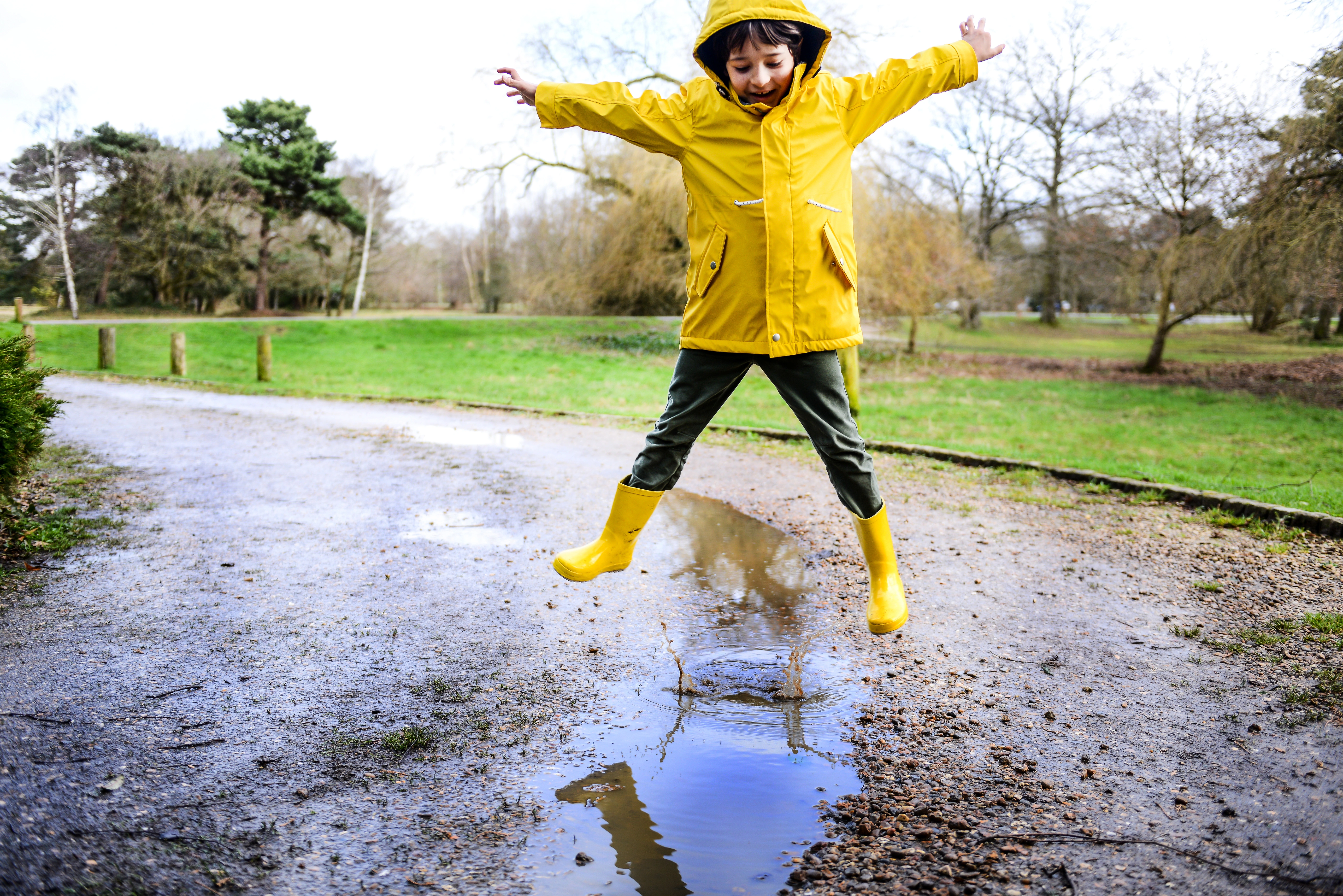
Cut out blobs of different sizes and shapes from thick blue paper and spread them randomly across the floor. The child's task is to carefully or quickly jump from puddle to puddle without stepping on the "dry" floor. To create the right atmosphere, play an audio recording of a thunderstorm and heavy rain in the background. You can adapt this weather activity for kindergarten for the outdoors by drawing the blobs with chalk. This task develops general coordination, balance, and gross motor skills.
16. Wind and Light Snowflakes
Turn on some beautiful classical music (Vivaldi works great). The children are light, fluffy snowflakes drifting and spinning gracefully around the room. You are the wind in this game. When the wind blows hard (you blow loudly or wave a large fan intensely), the “snowflakes” fly very fast and chaotically. When the wind dies down, they slowly and gracefully lower themselves to the floor and freeze.
For a creative twist, after the game, let the kids make their own decorative snowflakes using dried pasta. Provide different types of dried pasta so they can glue them together into unique snowflake shapes and decorate them.
Choose weather games for preschoolers like this if you want to harmoniously develop a child’s sense of musical rhythm, imagination, and the vital ability to consciously control their body in space.
How Technology Helps Study Weather?
We live in a modern digital world, and the reasonable, measured use of technology makes a child's development richer and more complete. After playing hide-and-seek with shadows outside and conducting experiments with colored water, it’s time to reinforce the material in a calm setting. Here, high-quality apps become an excellent supplement to your outdoor games.
The point is that your weather kids activities can naturally continue on a tablet screen, but at a completely different, more relaxed pace. In the Keiki educational app, children can find useful sorting games (similar to clothing sorts but with other objects and themes), interactive puzzles featuring natural phenomena, and themed coloring pages. These activities gently develop logic and fine motor skills.
The advantage of Keiki is its safety: it contains no ads or third-party links, yet it has a section with printable materials for home use. A smart combination of offline weather games kids and interactive online tasks yields the deepest results while preserving parental energy and providing some well-deserved free time.
Help your child thrive with playful learning
Turn screen time into real growth with Keiki's educational games.
Try KeikiConclusion
Exploring the world through weather activities for kids turns everyday observations into a powerful developmental tool. By moving from simple sensory play like "Winter Wonderland" bins to scientific projects like building a weather vane, children gain more than just knowledge about the atmosphere; they build the foundations of logical thinking, emotional resilience against fears of the unknown, and a genuine love for learning.
Whether you are engaging in weather activities for toddlers at home or setting up a rain gauge for a kindergarten weather activity, the goal is to bridge the gap between abstract concepts and the real world. Combining these physical experiences with safe digital tools creates a comprehensive learning environment that satisfies a child's natural curiosity while giving parents creative, easy-to-implement ways to connect with their little ones.