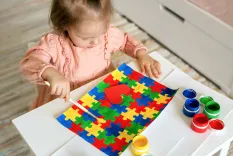
25+ Building Games for Kids: Creative Construction for Every Age

Hand your kid a pile of blocks and walk away for five minutes, and you'll come back to either a wobbly tower, a full-blown "city," or a pile of blocks that got knocked over on purpose — and honestly, all three are a win. Children's building games are basically your kid's first engineering class, minus the homework: every stacked block, every collapsed fort, and every "why won't this stay up" moment is quietly teaching balance, planning, and patience.
Table of contents
- Key Takeaways
- Why Building Games for Kids Matter
- How Building Games Change with Age
- How building games change with age
- Building Games for Kids with Blocks
- Building Games for Kids at Home
- Building Games with Natural Materials
- Adapting Building Games for Every Kid
- Best Materials for Building Games
- Tips for Parents
- Build Real Skills with Keiki
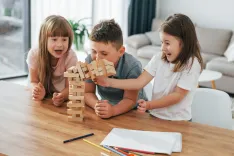
Key Takeaways
- Building games for kids develop spatial thinking, fine and gross motor skills, planning, and patience — all through play that needs zero explanation to get a kid interested.
- According to NAEYC, "blocks enhance children's problem-solving abilities, mathematics skills, and language and literacy abilities" — block play isn't just quiet time, it's genuine skill-building.
- How your kid builds changes a lot with age: 1-2 year olds are mostly interested in knocking things down, 3-5 year olds start building with a purpose, and 6+ year olds start thinking like real engineers.
- A collapsing tower isn't a failed activity — it's often the most useful part, since figuring out why it fell is where the real problem-solving happens.
Why Building Games for Kids Matter
Building games for kids matter because stacking, balancing, and constructing something out of nothing works several parts of a child's development at once, not just one. When a tower keeps toppling, your kid has to notice why — was the base too narrow, was one block crooked — and that's logic and cause-and-effect reasoning in action, dressed up as play.
According to NAEYC, "blocks enhance children's problem-solving abilities, mathematics skills, and language and literacy abilities," and block play "engages spatial sense and motor abilities" whether a kid builds alone or with friends. That spatial sense — understanding how shapes, sizes, and distances relate to each other — is the same skill that later shows up in geometry, map-reading, and even packing a suitcase efficiently.
Building games for kids check off a few more boxes than most people expect:
- Logic and critical thinking. A tower that won't stay up is a puzzle your kid has to solve in real time — understanding balance, weight, and shape by trial and error, not by being told the answer.
- Spatial thinking. Seeing space in three dimensions, judging size and distance, and figuring out how pieces connect is the foundation for math, engineering, and even reading a map years down the road.
- Fine and gross motor skills. Snapping small pieces together builds the same hand strength your kid will need for writing later, while hauling couch cushions and boxes works the bigger muscles.
- Creativity and imagination. There's no instruction manual for "build whatever you want" — your kid is the architect, and a cardboard box can become a castle, a rocket, or a very determined robot.
- Patience and perseverance. A tower that falls apart for the third time in a row is a genuine test of patience, and sticking with it anyway is a muscle that gets stronger every time it's used.
How Building Games Change with Age
Building games for kids look completely different at 18 months than at 7 years old, and knowing roughly where your kid sits on that curve helps you set expectations instead of getting frustrated when a "tower" is really just a pile.
Ages 1-2: the era of chaos (and that's fine). At this age, building is mostly sensory — putting blocks in a box, dumping them out, banging two together just to hear the sound, and knocking down whatever gets stacked. There's no real goal yet beyond exploring how objects behave, and that's exactly what this stage is supposed to look like.
Ages 3-5: building with a purpose. A specific idea shows up now — a little house for a toy, a garage for a car, a long winding road. Structures get more stable and start actually resembling what your kid says they're building. This is the sweet spot for introducing easy building games for toddlers who are just past the knock-it-down phase.
Ages 6 and up: early engineering thinking. Kids at this age start handling more complex builds and storylines — bridges with real supports, magnetic constructors, basic mechanisms. Building games for preschoolers give way to genuinely engineering-flavored challenges, and this is where a kid starts asking "why" a structure works, not just "what" to build next.

Help your child
grow with Keiki
We’ll help you turn everyday screen time
into real learning progress.
Building Games for Kids with Blocks and Constructors
These 5 building games for kids use classic blocks, LEGO-style pieces, or anything stackable, and they work as a go-to building game for kids whenever you need an activity that needs almost no setup.
The Tallest Tower
Challenge your kid to build the tallest tower that won't fall, using blocks, LEGO pieces, or even plastic cups if that's what's on hand. The one rule — it has to actually stay standing — is what turns simple stacking into a real balance-and-weight problem, and a race against a sibling or a timer makes it even more motivating.
Build Your City
Hand your kid blocks, small figures, and toy cars, and invite them to build an entire city — houses, roads, bridges, parks, whatever they want. This is one of the best open-ended building games for kids because there's no single "correct" city, so a shy first attempt and an ambitious ten-building metropolis are both equally right.
Bridge Over the River
Lay down a "river" on the floor — a blue towel or rug works fine — and challenge your kid to build a bridge sturdy enough for a toy car to drive across. Figuring out how long and how tall the bridge needs to be forces real measurement and spatial reasoning, and testing it with an actual car makes success (or failure) immediately obvious.
Build for a Toy
Pick your kid's favorite stuffed animal or figure and ask them to build it a house, a bed, or even a whole palace. Building for someone else — even a toy — adds a layer of purpose that a generic "build something" prompt doesn't have, and kids tend to get noticeably more invested when there's a specific resident to build for.
Speed Building
Set a timer for 3-5 minutes and challenge your kid to build something — anything — before it runs out. The time pressure trains quick decision-making instead of overthinking every placement, and it's a genuinely good option for those afternoons when patience for a slow, careful build just isn't there.
Building Games for Kids at Home with Household Materials
These 5 building games for kids skip the toy bin entirely and use pillows, boxes, and furniture you already have lying around the house.
Fortress of Pillows and Blankets
The classic. Build a real castle or hideout using couch cushions, blankets, and chairs, and let your kid direct exactly where each piece goes. It's a genuinely great spatial-thinking exercise disguised as an excuse to wreck the living room for an hour, and it teaches creative problem-solving when the "walls" keep sliding down.
Box Castle
Cardboard boxes in different sizes become a fortress, a robot, or an entire city — tape them together or just stack them, no instructions required. This is one of the most accessible building games for kids since it costs nothing and any box headed for the recycling bin gets one more use first.
Chair Tunnel
Line up chairs and drape blankets over them to create a tunnel your kid can crawl through. Beyond being genuinely fun, crawling through a tight, low space builds gross motor skills and coordination in a way that standing-up building games don't really touch.
Book Maze
Build a maze on the floor out of books, then have your kid roll a small ball or toy car through it without hitting the "walls." This one is quieter than most building games for kids on this list, which makes it a solid pick for a rainy afternoon when the energy in the house needs to come down a notch, not up.
Dollhouse from Furniture
Turn a small box or basket into an instant dollhouse, then let your kid arrange furniture, figures, and tiny household items inside to create rooms. It's a smaller-scale building project that leans more into storytelling and organization than balance and stacking, which makes it a nice change of pace from the tower-focused games above.
Build real skills through fun, educational games for your child
Try KeikiBuilding Games for Kids with Natural Materials
Taking building games for kids outside adds real, uneven, unpredictable materials — and these 5 turn a backyard or a park into a construction site.
Stone Towers
Find flat stones of different sizes and challenge your kid to stack the tallest tower they can. Unlike uniform blocks, real stones are never perfectly flat, so this version trains balance and fine motor control at a noticeably harder level than the indoor tower game.
House for Bugs
Gather sticks, leaves, and moss to build a small shelter for insects. It's a gentle way to connect building skills with caring for nature, and even if no actual bug ever moves in, your kid gets genuinely invested in making it "just right."
Stone Pond
Trace a circle in the dirt and line it with stones to create a pretend pond, then populate it with leaves or twigs as "fish" or "lily pads." This one is low-key and a little meditative, and it works well as a calmer activity to slot in between more physical building games.
Sandcastle
A sandbox and a bucket are all it takes to build castles, towers, and moats — the classic for a reason. Sand behaves completely differently from blocks or boxes, so your kid has to learn an entirely different set of building rules, like how wet sand holds a shape and dry sand just doesn't.
Bird's Nest
Collect twigs, feathers, moss, and leaves and challenge your kid to weave together a nest cozy enough for a bird — or, realistically, a toy one. It's unlikely a real bird moves in, but the fine motor work of weaving small materials together is worth the activity on its own.
Adapting Building Games for Every Kid
Building games for kids work for children with a wide range of motor, sensory, and developmental needs — they just sometimes need a small adjustment, not a completely different activity.
For a kid with fine motor delays, oversized foam blocks or cardboard boxes are easier to grip and stack than small LEGO-style pieces, so the win comes faster and frustration stays lower. A kid with sensory sensitivities might do better with smooth wooden blocks over textured natural materials like moss or sand, or with noise-canceling headphones nearby if a collapsing tower's crash is genuinely startling rather than fun. For a child who gets anxious about a structure failing, starting with something forgiving — pillows and blankets instead of a precarious block tower — keeps the activity about creativity rather than about the fear of it falling apart. And for a kid who needs more repetition to feel confident, sticking with one familiar building game for a few sessions in a row before introducing a new one is completely fine — building games for kids don't need to rotate constantly to stay useful.
Best Materials for Building Games
Choosing materials isn't just about which toy is on sale — different materials build different skills, so it's worth rotating through a few instead of sticking with just one.
- Wooden blocks. A classic for a reason — their simplicity lets your kid focus entirely on shape, weight, and balance without any extra rules to remember.
- LEGO and similar sets. These teach following instructions alongside free building, and they reward fine motor skill and patience with genuinely detailed results.
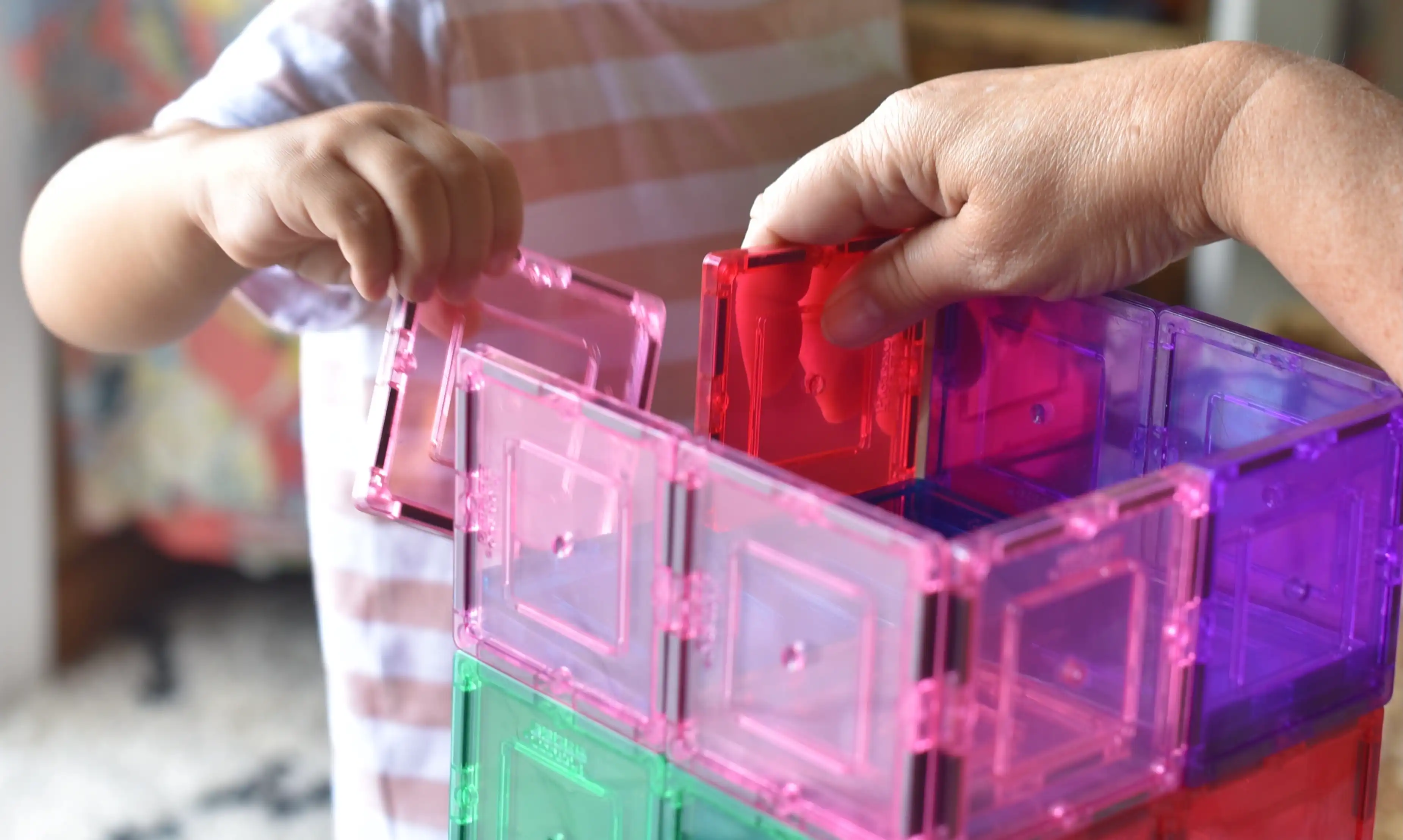
- Magnetic constructors. A great first taste of physics, since your kid can feel magnetic attraction and repulsion while building shapes that regular blocks can't hold.
- Cardboard boxes. The most accessible material there is — free, endlessly reusable, and about as open-ended as building materials get.
- Natural materials. Stones, sticks, and leaves force your kid to work with uneven, imperfect shapes, which is a genuinely different — and harder — problem-solving skill than uniform blocks.
Related Games in Keiki App



Tips for Parents Running Building Games at Home
A few small habits make building games for kids go more smoothly, whether it's the first tower of the day or the tenth.
- Ask questions instead of giving instructions. Swap "put this block here" for "what do you think happens if you put it there?" — it keeps your kid doing the thinking instead of just following orders.
- Play alongside, don't take over. Hand pieces or steady a wobbling structure if asked, but let your kid stay the architect — a "fixed" tower that you built isn't really their win.
- Set up a building corner. A dedicated box or shelf for blocks, boxes, and building bits means less searching and more actual building.
- Praise the process, not just the result. "I love how you kept trying different bases" lands better than "great tower," and it keeps your kid focused on effort instead of perfection.
- Don't fear the collapse. A tower falling over is part of the activity, not a failed attempt — it's often the moment your kid learns the most.
- Mix up the materials. Rotating between blocks, cardboard, and natural materials keeps building games for kids feeling fresh and builds a wider range of skills than sticking to one material ever could.
Build Real Skills with Keiki
The same spatial and problem-solving thinking your kid practices while stacking blocks or bridging a "river" out of cardboard also shows up in Keiki World's Tetris Party, where kids place shapes to fit them all together, and in Fun Puzzles, which trains the same shape-and-space reasoning digitally. Keiki offers 1,500+ interactive games and lessons that adapt to a child's own pace, so on days when a physical building session isn't happening, the same spatial-thinking muscle still gets a workout.