30 Math Activities for Preschoolers That Turn Everyday Play Into Early Learning

Your child is already doing math. Every time they sort their socks by colour, count the stairs on the way up to bed, or line up their toy cars from smallest to biggest – that's mathematical thinking in action. The good news? You don't need a classroom, a curriculum, or a special kit. The best math activities for preschoolers happen in the living room, the kitchen, and the backyard, using things you already own.

Key Takeaways
- Play is the most effective vehicle for early math – no flashcards or worksheets required
- Preschool math covers 5 key areas: counting, shapes, patterns, measurement, and sorting
- Research shows early math ability is one of the strongest predictors of future academic success
- Most math activities for preschoolers use things you already have at home
- Even a few minutes a day – at snack time, in the bath, on a walk – counts as real learning
This guide gives you 30 hands-on ideas organised by skill area, so you can dip in wherever your child is right now and make every day a little more mathematically rich – without it ever feeling like a lesson.
Why Math Activities for Preschoolers Matter More Than You Think
It's easy to assume early math is just about counting to 10. But the foundations built during the preschool years – number sense, pattern recognition, spatial reasoning – support how children think and problem-solve for the rest of their lives. Introducing preschool math activities through play isn't jumping ahead; it's giving your child's brain the input it's naturally ready for.
What the Research Actually Says About Early Math Skills
The evidence here is striking. Research consistently shows that early mathematical ability is one of the strongest predictors of future academic success – stronger, in some studies, than early reading or attention skills. Studies have found that babies as young as 3 months show sensitivity to differences in quantity, which means the foundation for numeracy begins long before preschool even starts.
Perhaps most importantly, play-based math supports healthy cognitive development and makes children from all backgrounds and learning styles more likely to stay engaged with math throughout their school years. That's a long-term payoff from a game of hopscotch or a bowl of sorted pasta.
What Math Should a Preschooler Know?
This is one of the most common questions parents ask – and the honest answer is: less than you might think, and more than you might realise. There's no rigid checklist, but by the time children reach kindergarten, most will have developed a feel for the following:
- Counting and number recognition up to 10 (and often beyond)
- One-to-one correspondence – understanding that each object gets one count
- Basic shapes and where to spot them in the real world
- Sorting and classifying by colour, size, or type
- Simple patterns – what comes next in a sequence
- Comparison concepts – bigger, smaller, more, fewer, heavier, lighter
None of these require a workbook. All of them can be explored through everyday pre k math activities at home.
Help your child
grow with Keiki
We’ll help you turn everyday screen time
into real learning progress.
Counting and Number Recognition Activities
Counting is the first bridge between the abstract world of numbers and real, touchable objects. Making that connection physical – touching each item, moving it, pointing to it – is what turns rote recitation into genuine number sense. These math activities for preschoolers bring counting to life using things you already have.
1. Snack-Time Counting
Hand your child a small pile of crackers, raisins, or grapes and ask them to count each one before eating it. Increase the quantity as their skills grow. This quietly builds one-to-one correspondence – the understanding that each object gets exactly one count – while making maths feel like a treat.
2. Hopscotch Number Line
Draw a hopscotch grid with chalk outdoors (or use masking tape inside). As your child hops, they say each number aloud. This gets them moving, reinforces number sequence, and helps them see that 7 is closer to 9 than it is to 1 – an early spatial understanding of number relationships.
3. Sensory Bin Number Hunt
Fill a container with rice, dry pasta, or sand and hide numbered cards or plastic digits inside. Give your child a "key" – numbers written on a piece of card – and ask them to find and match each one. The sensory element keeps little ones absorbed for longer than you'd expect.
4. Dice Roll and Build
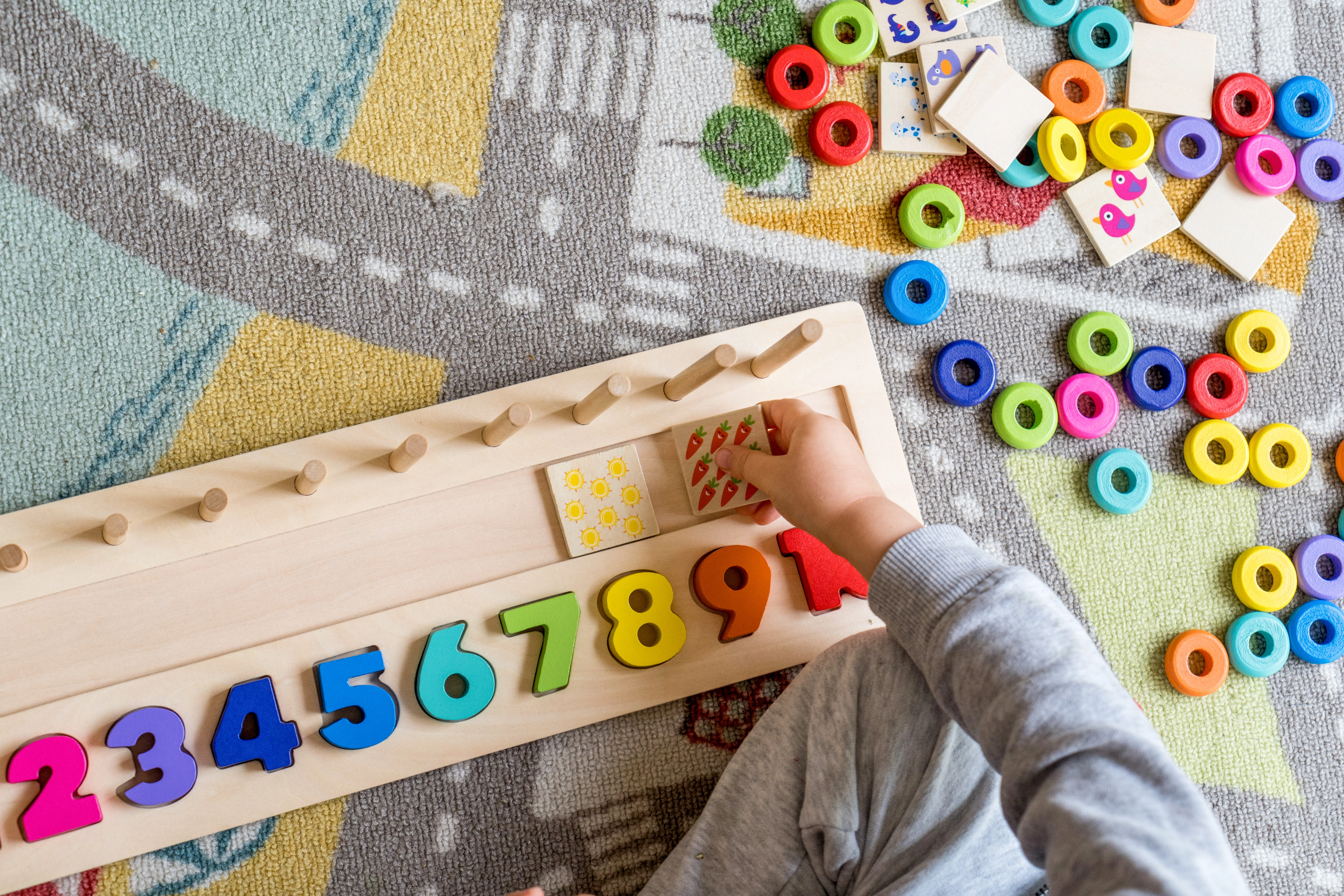
Roll a die, count the dots, then stack that many blocks into a tower. Once you have two or three towers, push them together and count the total. This is a gentle, playful introduction to addition – long before your child is ready for the word.
5. Tag the Number
Write numbers on sticky notes and place them around the room. Call out a number and have your child run to find and tap it. It's active, it's silly, and it builds number recognition in a completely different way than sitting still ever could.
6. Counting Bears Sorting and Counting
Use small counting bears (or any small objects in different colours) and ask your child to sort them into groups by colour, then count each group. This doubles as a sorting activity and connects colour recognition with early number skills – two skills for the price of one.
Shape and Spatial Awareness Activities
Shapes are everywhere once you start looking for them. These math preschool activities help little ones name what they see, describe where things are, and begin to understand how objects relate to each other in space – a skill set that feeds into geometry, reading maps, and even early writing.
7. Shape Safari
Go on a "shape safari" around your home or garden. Can your child find a circle? A rectangle? A triangle? Bring a notebook and draw each one you find. Add a challenge: "Let's see how many squares live in the kitchen." Discovery-based hunts like this create natural, child-led engagement that no worksheet can replicate.
8. DIY Shape Sorter
Cut different shapes out of the lid of a cardboard box and collect Tupperware lids or other household objects of matching shapes. Your child sorts each object through the correct hole. Making it yourself together adds an extra layer of engagement – and costs nothing.
9. Playdough Shape Stamping
Roll out playdough and use household objects to stamp shapes into the surface: a coin for circles, a block for squares, a folded piece of card for triangles. Ask your child to name each one, then try to find the same shapes in the room. You can explore interactive shape games for toddlers to extend this into digital play too.
10. Block Building with Spatial Language
Build a simple structure with blocks and narrate as you go: "I'm putting the long block on top of the small one. Now I'm placing this one next to it." Ask your child to copy your structure or add to it. Spatial language – above, below, beside, inside – is a core part of early geometry and something many children don't hear enough of.
11. Giant Shape Match
Trace the outlines of large household objects (books, boxes, cushions) onto kraft paper or newspaper. Invite your child to match the real object to its outline. This builds visual discrimination and shape awareness at the same time.
12. I Spy Shapes
Play a round of I Spy using shape clues instead of colours: "I spy with my little eye… something shaped like a rectangle." It works anywhere – at the dinner table, in the car, in the waiting room. No materials needed.
Sorting and Classifying Activities
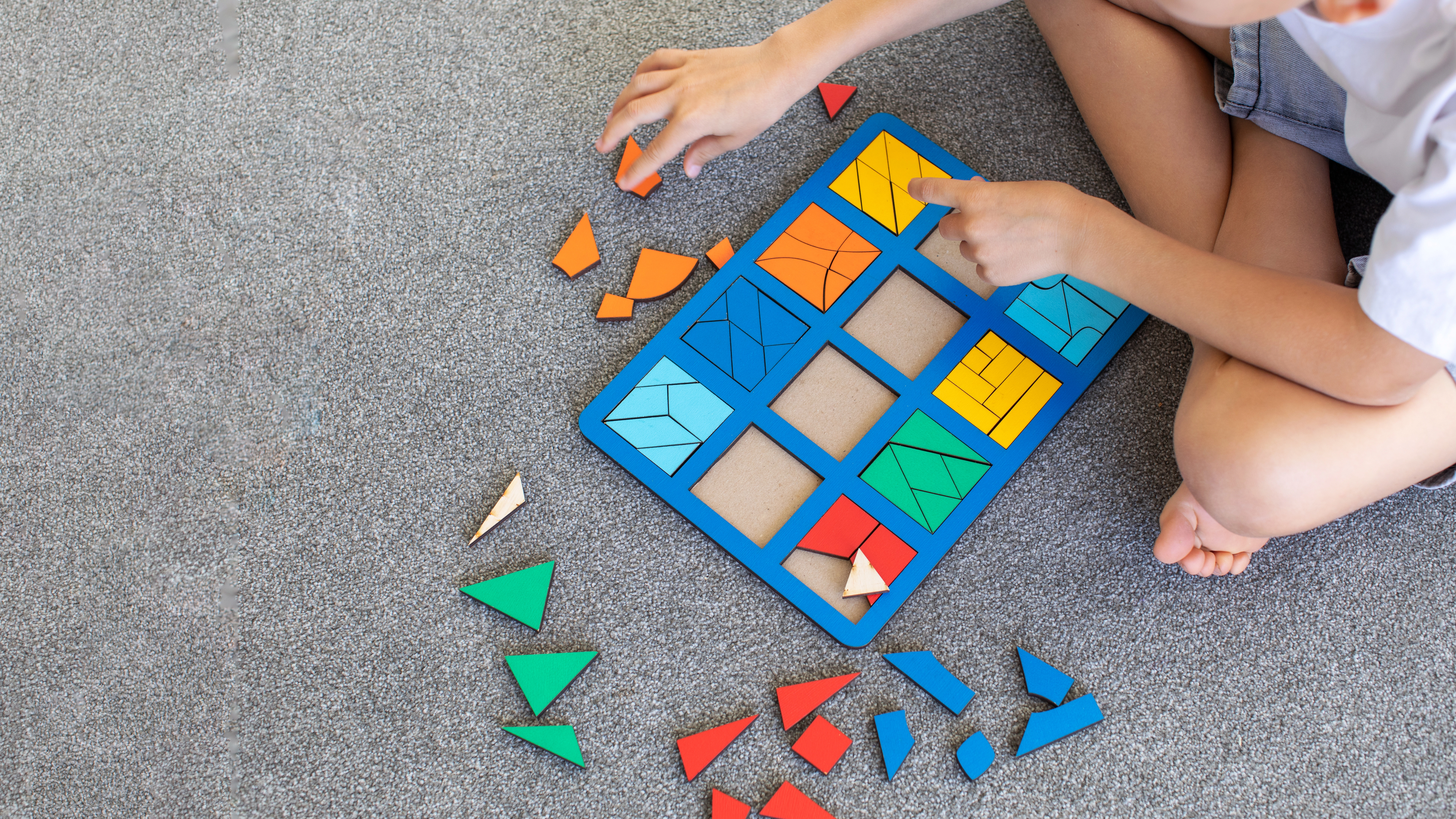
Sorting is how young children begin to impose order on the world – and it's one of the core pre k math activities that quietly builds early data skills. When your child groups toys by colour or separates big blocks from small ones, they're practising classification, which underpins logical thinking for years to come.
13. Sock Match-Up
Turn clean laundry into a maths lesson. Give your child a pile of unmatched socks and ask them to find the pairs. Start with socks that are obviously different, then gradually make it trickier. This builds sorting, matching, and visual discrimination – and it's genuinely useful. Win-win.
14. Toy Lightning Sort
Set a timer for 60 seconds. Ask your child to sort their toys into groups as fast as they can – by size, by colour, by type. Change the sorting rule each round. This matching and classifying play strengthens flexible thinking, not just pattern recognition.
15. Mealtime Colour Sort
At snack or mealtimes, ask your child to sort their food by colour before eating it. How many orange pieces? How many green? Which group has more? Simple comparison questions like "which group is biggest?" introduce the idea of quantity comparison in the most relaxed setting imaginable.
16. Nature Sort Walk
Collect leaves, pebbles, sticks, and pinecones on a walk outside. Back home, ask your child to sort them however they like – by size, colour, texture, or type. There's no wrong answer, which makes this a wonderful confidence-builder as well as a maths activity.
17. Button or Bead Sort
Pour a mix of buttons or beads into a tray and ask your child to sort them into groups. Once sorted, count each group together. For a challenge, ask: "Can you sort them a different way?" Children who can re-sort the same objects using a new rule are developing strong flexible classification skills.
18. Sorting by More or Fewer
Give your child two small containers and a pile of objects. Ask them to put "more" in one container and "fewer" in the other – then count both groups to check. You can also try matching games for 4-year-olds to extend sorting into digital play with more variety.
Pattern Activities
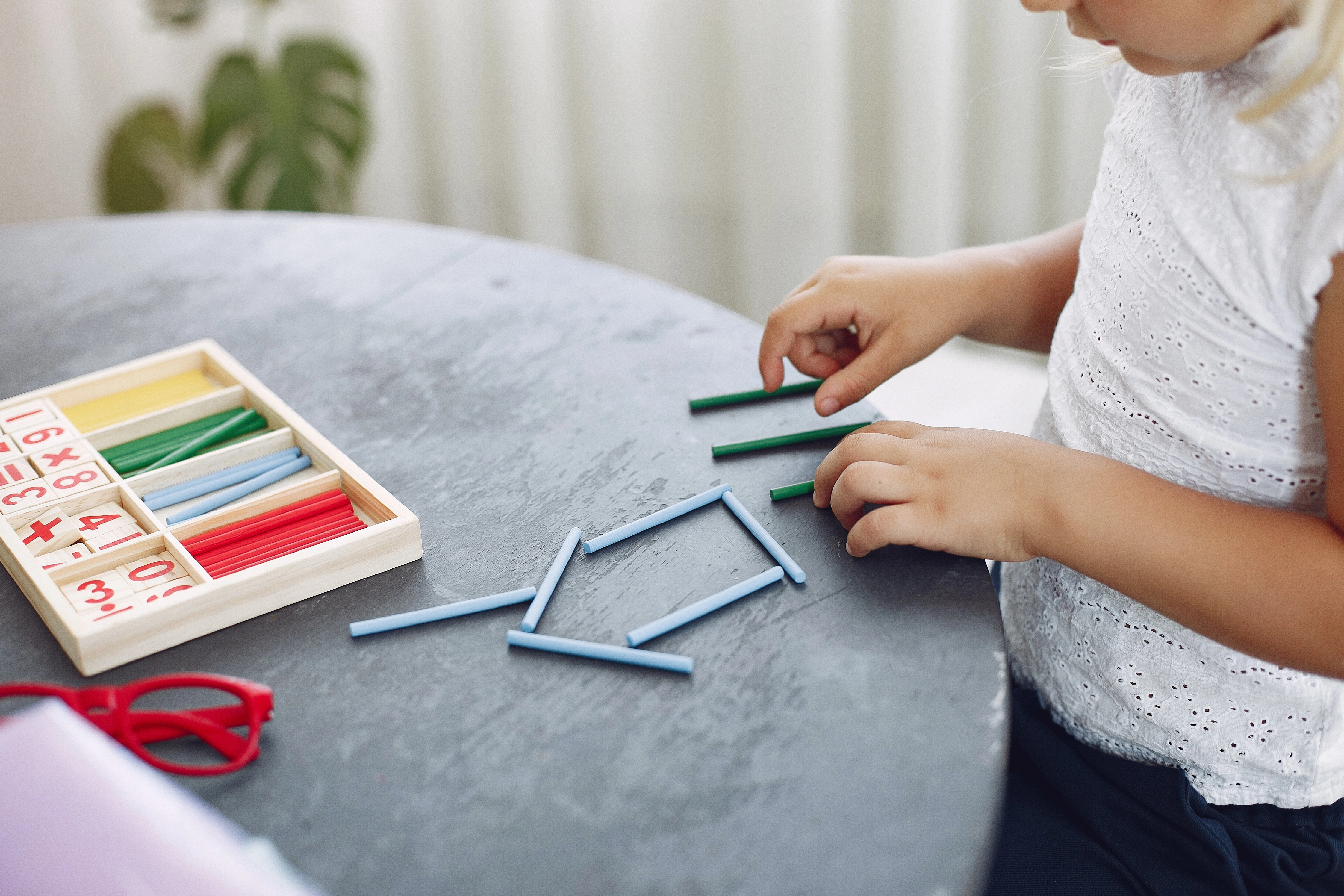
Patterns are the quiet backbone of mathematical thinking. Recognising what comes next – and why – is the foundation of sequencing, logic, and eventually algebra. These math ideas for preschoolers introduce pattern-making in ways that feel creative, physical, and satisfying.
19. Nature Pattern Trays
Head outside together and collect leaves, flowers, pebbles, and sticks. Back home, start a simple pattern on a tray or flat surface: leaf, flower, leaf, flower. Ask your child to continue it. Then let them make their own and challenge you to carry it on.
20. Block Colour Patterns
Use coloured blocks or any objects in two or three colours. Build the beginning of a pattern – red, blue, red, blue – and ask your child what comes next. Gradually introduce three-element patterns (red, blue, yellow, red, blue, yellow) as confidence grows.
21. Clapping and Movement Patterns
Clap a rhythm and ask your child to copy it, then extend it. Stomp, clap, stomp, clap – what comes next? Embodied pattern work like this builds sequencing skills through the whole body, not just the hands.
22. Snack Patterns
Thread fruit pieces, cereal loops, or crackers onto a skewer (with supervision) or lay them in a line on a plate in a pattern. Edible patterns are particularly motivating, and the "eating the answer" payoff at the end is hard to beat.
23. Dot Marker Pattern Strips
Draw simple repeating patterns on strips of paper – circle, square, circle, square – and ask your child to colour them using dot markers or stickers. Once they've completed a few, ask them to create their own strip for you to continue. For more pattern play, Keiki's Follow the Pattern game lets children practise sequencing interactively at their own pace.
24. Mirror Symmetry Play
Fold a piece of paper in half and paint or stamp one side, then press together to reveal a symmetrical image. Talk about what's the same on both sides. Symmetry is an early geometry concept, but it lives naturally in the world of patterns too.
Help your child thrive with playful learning
Turn screen time into real growth with Keiki's educational games.
Try KeikiMeasurement and Comparison Activities
Long before rulers and centimetres, children can explore bigger, smaller, heavier, lighter, taller, and shorter through direct hands-on comparison. These activities lay the groundwork for measurement concepts in the most concrete way possible – using real objects in real situations.
25. Kitchen Measuring Cups in the Bath or Sandbox
Give your child a set of measuring cups and a container of water or sand. Let them pour and compare freely. Ask: "Which cup holds more? How many small cups fill the big one?" Concepts of volume, capacity, and comparison emerge naturally through unstructured pouring play.
26. Straw or Block Height Comparison
Cut straws to different lengths (or use sticks of varying heights) and ask your child to line them up from shortest to tallest. Add comparisons: "Which is the tallest? Which is shorter than this one?" This introduces ordering, a key pre-measurement skill.
27. Hand and Foot Tracing Comparison
Trace your hand and your child's hand on paper. Cut them out and compare. Whose is bigger? By how much? You can also do this with feet, then line them up together. This makes measurement personal and endlessly interesting to young children who are fascinated by how "big" they're getting.
28. Non-Standard Measurement with Blocks
Place different lengths of tape on the floor. Ask your child to measure each piece using Unifix cubes or small blocks placed end-to-end. Count how many cubes it takes. This introduces the concept that measurement is about counting units – the same idea behind every ruler ever made.
29. "Which Is More?" Estimation Game
Fill two transparent containers with different amounts of small objects (buttons, blocks, pasta). Ask your child: "Which has more? Which has fewer? Can you guess without counting?" Then count together to check. Estimation – taking an educated guess – is a genuine mathematical skill, and preschoolers love the drama of finding out if they were right.
30. Big and Small Toy Sort
Ask your child to find 5 things in the house that are "big" and 5 things that are "small" – then arrange them from smallest to largest. This activity builds comparative language (bigger than, smaller than, the biggest of all) alongside the concept of ordering, which is the bridge between sorting and true measurement.
Related Games in Keiki App

Conclusion
The 30 math activities for preschoolers in this guide share one thing in common: none of them require your child to sit still at a table and stare at a page. They happen in motion, in conversation, at mealtimes and bath times and on the way to the park. That's intentional.
Research is clear that hands-on, playful engagement with math ideas in the early years builds the kind of deep number sense that supports children all the way through school – not just in maths lessons, but in reading, reasoning, and problem-solving too. Your job isn't to teach your child mathematics. It's to notice the mathematics already happening in your day, and invite your child into it.
Every snack sorted, every stair counted, every pattern spotted is doing real work. If your child loves numbers and wants more structured practice, Keiki's maths games for preschoolers keep early numeracy skills growing between everyday play sessions – interactive, age-appropriate, and genuinely fun.