Recycling and ecology game: how to turn waste sorting into a fun activity?

Recycling games help kids understand waste, sorting, and reuse through hands-on play. Try these simple activities to build eco-friendly habits while practicing matching, categorizing, and everyday responsibility.
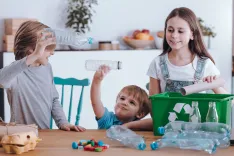
Recycling games for kids that teach sorting and sustainability
Protecting our planet begins with small steps, and the best time to learn them is childhood. Teaching a child to develop an eco-conscious attitude toward nature can and should be done from an early age. However, lectures about climate and pollution can be boring for a little one. Recycling games for kids come to the rescue – a magical way to turn waste sorting into a fun adventure that teaches careful treatment of the world. In this article, we will show how, with simple ideas, you can turn a routine task into an engaging game. And even apps can help in this challenging but noble task.
Why are recycling games so useful for development?
It seems that waste sorting is just a duty. But in reality, it is a powerful tool for developing a whole range of skills that will benefit a child in the future. The benefits of ecology games are as follows:
- Forming ecological awareness. When a child sorts waste, they begin to understand that their actions affect the environment. They see that each item has its place and that it can be reused rather than simply thrown away. This forms a sense of responsibility for our planet.
- Developing responsibility and independence. Participating in a shared task makes a child feel meaningful. They feel that their contribution to the well-being of the family and the environment is important, which builds a sense of responsibility.
- Improving cognitive skills. Sorting is excellent training for the brain. The child learns to classify, recognize shapes and colors, and decide which category an item belongs to. This develops logical thinking and attention to detail.
- Developing fine and gross motor skills. Handling different objects (crumpling paper, sorting small caps, or carrying bottles) strengthens hand muscles, improves coordination, and increases agility.
- Learning teamwork. A shared goal brings people together. Sorting waste together teaches a child cooperation and mutual support. They see how their efforts contribute to the overall result, which strengthens their sense of being part of a team.
Games for turning recycling into an adventure
Simple and engaging kids recycling games are the path to teaching children awareness from an early age. Being eco-friendly is easier than it seems, and the ideas we’ve gathered prove it.
Help your child
grow with Keiki
We’ll help you turn everyday screen time
into real learning progress.
Sorting and classification games
These games add a competitive element and teach sorting waste. Sorting and understanding the basics of ecology is the foundation on which more global and complex knowledge and skills will later be built.
Sorting race
Place different colored containers (for example, one for paper, another for plastic, and a third for glass). Set a timer for 5 minutes and start a competition: who can sort the treasures from the shared pile faster and more accurately.
Trash darts
Create targets on the wall labeled with categories (plastic, paper, glass). Invite the child to throw crumpled paper balls or small plastic bottles at them while shouting the category name.
Color containers
Place containers of different colors (for example, blue for paper, green for glass) and ask the child to throw items into them, naming the color and material. This helps reinforce knowledge about types of waste. Such active fun ways to teach kids about recycling are well remembered and add a factor of fun.

Creative upcycling ideas for kids
These games engage imagination and creativity. On a deeper level, they help the child understand the importance of consumer responsibility and mindful use of things. Today, when mass-market products, toys, and even food are easily available, it is important to understand one’s own desires, resist marketing influence, and realize that even old things can serve another purpose.
Art from trash
Use plastic bottles, boxes, caps, and paper to create crafts – robots, castles, or animals. The child must think of how to give old things a new life. Such eco friendly activities for kids develop imagination and can also produce cool crafts.
The construction of the century
From large cardboard boxes, you can build a fortress, a spaceship, or even an entire city. This develops imagination and teaches using recyclables as building materials.
Jewelry workshop
Make necklaces out of buttons, bracelets out of caps, or other accessories. This is a fun way to develop fine motor skills and creative thinking.
Build real skills through fun, educational games for your child
Try KeikiHow to talk to a child about recycling: tips for parents
Games are only part of the process. To form ecological awareness in a child, it is important to present information correctly. You can plan fun recycling projects for kindergarten, organize eco-friendly days at home, and include children in the routine – there are many ways to increase awareness from an early age. These tips help:
- Explain simply. Tell where waste goes and why sorting is important. Use metaphors and examples that will be understandable (for example, “Paper is trees, and we must protect them so birds have homes”).
- Lead by example. Instead of constantly asking how to make recycling fun for kids, simply… do it yourselves! Children learn by imitating adults. Show how you sort waste yourself. Explain what and why you throw into one container or another.
- Include the child in the process. Allow them to independently throw sorted waste into containers outside. This gives a sense of control and responsibility.
- Make ecology a routine. Set days when you will definitely sort waste, take the child to recycling points, create a reward system for recycling.
Kids chores recycling should become part of your everyday life but should not turn into moralizing or boring lectures.
Related Games in Keiki App
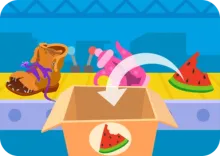



Help from apps – online recycling games for kids
It may seem that screen time will not help children and hardly increase their mindful consumption, but that is not true. Educational apps for toddlers and preschoolers contain stories about nature for kids, important ecological information in game format, and even tasks that build useful habits. And this is especially relevant when talking about Keiki – an app that contains useful and engaging games for children ages 1 to 6, without advertising, excessive sensory overload, or irritating elements. It even includes games to teach environmental responsibility and eco-themed tasks:
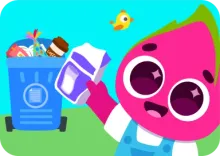
- Waste sorting. Simple, clear, and understandable! In this game, children are directly involved in the sorting process; it is also an example of matching and sorting games where they must also demonstrate reaction speed, attentiveness, and logic.
- Green habits. Keiki also has a game that playfully teaches responsibility and understanding that cleanliness and ecology start with each of us. In a fun format, children go through familiar scenarios and care for nature and the environment.
- Farm adventures. The impact of ecology and waste recycling is felt most on a farm. This task not only lets children feel the atmosphere of rural life but is also a comprehensive brain-development game.
With recycling games for kids, you can entertain and teach your child to care for nature. These tasks help them develop ecological awareness, responsibility, and creative skills. Turn caring for the planet into a fun and useful ritual, and the Keiki app will help you do this.