When Do Kids Learn to Read? Age-by-Age Guide for Parents

You're at bedtime, book in hand, and your 4-year-old points to a word and says "I know that one!" – or maybe your child is 6 and still not showing much interest, and you've started to quietly wonder if something's wrong. Both of those moments are completely normal. But when you're in the middle of them, it can be hard to know what to expect.

Key Takeaways
- Most children become fluent readers between ages 6 and 7 – but the reading journey starts in infancy
- Pre-reading skills like recognising sounds, handling books, and knowing the alphabet are the real foundation
- There's a wide "normal" range; early readers don't necessarily stay ahead, and later readers do catch up
- 5 clear signs can tell you when your child is getting ready to read
- Simple daily habits at home – reading aloud, playing with sounds, spotting letters together – make a measurable difference
Learning to read isn't a single event that happens at one specific age. It's a long process that starts long before your child ever sits down with a beginner reader, and it unfolds differently for every child. This guide walks you through what age do kids learn to read, what milestones to look for at each age, the signs that your child is getting ready, and the simple things you can do at home to help them along.
When Do Kids Start Reading? The Short Answer
According to the U.S. Department of Education, most children learn to read at around age 6 or 7 – typically during first or second grade. Some children start reading as early as 4 or 5, and others aren't fully fluent until 8. All of that falls within the broad range that child development experts consider typical.
Formal reading instruction usually begins in kindergarten, around age 5. But the skills that make reading possible – understanding that words are made of sounds, knowing letters have names, recognising that print carries meaning – start developing much, much earlier.
The key thing to hold onto is this: reading is not a single skill your child suddenly acquires. It builds gradually, in layers, over years.
Is it normal if my child isn't reading by age 5?
Absolutely. Kindergarten is where most children begin formal reading instruction, not where they complete it. A child who isn't reading independently at 5 is not behind – they're right on time.
Reading specialists consistently note that children who start reading later often catch up entirely. One reading specialist quoted in US News shared that children who learn to read at very different ages typically reach the same level by age 12 or 13 – because when they're ready, everything clicks into place.
What matters far more than the exact age is whether your child is building the pre-reading foundations that make reading possible.
Reading Milestones by Age – From Baby to Early Reader
Every child reaches reading milestones at their own pace, but there's a general arc that most follow. Knowing what to expect at each stage helps you support your child without pressure. Here's what the journey typically looks like.
Birth to 12 months – absorbing language before words
It may surprise you, but your child's reading journey starts here. Babies are soaking up language from day one – the rhythm of your voice, the sounds of words, the back-and-forth of conversation. Research suggests that reading aloud to babies as young as 9 months has measurable benefits for language development.
At this stage, board books with bold illustrations, simple patterns, and repetition are perfect. Don't worry about "teaching" anything. The goal is building warmth around books and filling your child's ears with language.
The American Academy of Pediatrics notes that between 6 and 12 months, babies begin pointing at pictures, handing books to caregivers to read, and even recognising when a book is upside down – a quietly important early step toward print awareness.
Ages 1–3 – print awareness and book love begin
Toddlers become active participants with books. They turn pages (sometimes several at once!), point to pictures, ask for the same story again and again, and start to understand that those squiggles on the page mean something.
This stage is about building what researchers call print awareness – the understanding that text carries meaning, that books are read left to right, and that words are separate from pictures. None of this requires formal teaching. Reading together daily, pointing to words as you say them, and letting your child handle books freely does the job.
Ages 3–4 – letters, sounds, and the alphabet
This is where things start to feel more like "reading prep." Most 3 and 4-year-olds can learn to sing the alphabet, begin recognising letters – especially the ones in their own name – and start noticing that letters have sounds attached to them.
This is also when phonological awareness (the ability to hear and play with the sounds in spoken language) starts to develop. Rhyming games, silly songs, clapping out syllables – these aren't just fun. They're building the exact skills your child needs to decode words later.
Keiki's reading games for 3-year-olds are designed to make this stage feel like play, not practice.
Help your child
grow with Keiki
We’ll help you turn everyday screen time
into real learning progress.
Ages 5–6 (Kindergarten) – decoding begins
Kindergarten is typically when children start connecting letters to sounds in a more formal way. They learn that the letter b makes a /b/ sound, that you can blend sounds together to make words, and that some words appear so often they're worth recognising on sight.
By the end of kindergarten, many children can read simple words in isolation, recognise common sight words like the, and, and is, and understand that print is read from left to right. Some will be reading simple sentences independently; others will still be piecing it together. Both are fine.
For children at this stage, reading games for 5-year-olds can reinforce the phonics and sight word skills being introduced in the classroom through play.
Ages 6–7 (Grades 1–2) – fluency takes hold
This is the stage where most children consolidate everything and start reading with real fluency. The mechanics of decoding – sounding out letters, blending them into words – become more automatic, which frees up mental energy to focus on meaning and comprehension.
By the end of second grade, most children can read simple books independently, understand what they've read, and even start reading for pleasure. This is the window the U.S. Department of Education often refers to as the target for foundational reading skills – because by third grade, children begin "reading to learn" rather than learning to read.
5 Signs Your Child Is Ready to Start Reading
Not every child is ready to read at the same time – and that's completely normal. But there are some consistent early signals that suggest a child's brain is primed and ready to start making sense of print. If you're seeing a few of these in your child, it's a good sign.
They can rhyme and play with sounds
Rhyming is one of the earliest and most reliable indicators that a child is developing phonological awareness – the ability to hear and manipulate sounds in spoken language. The National Reading Panel identifies phonological awareness as the strongest predictor of future reading fluency. If your child loves rhyming games, makes up silly nonsense words, or claps along to the syllables in words, they're building a critical foundation.
They recognise letters – especially in their own name
Before children can connect letters to sounds, they need to know that letters exist as distinct symbols with names. Most children begin recognising the letters in their own name first. Spotting a familiar letter on a cereal box or street sign and calling it out with delight? That's a genuine milestone.
They handle books correctly and show print awareness
When your child picks up a book right-side up, opens it at the front, and turns pages one at a time, they're demonstrating print awareness – the understanding that text has structure and direction. They may also start pointing to words as they "read" a memorised story, which shows they understand that spoken words correspond to printed ones.
They show curiosity about words and letters in the world
A child who asks "What does that say?" when they see a sign, or who tries to write their name unprompted, is showing that they're making the connection between print and meaning. This curiosity is a powerful signal.
What is "reading readiness" and why does it matter?
Reading readiness is the term used to describe the cluster of skills and understandings a child needs before formal reading instruction will stick. It includes phonological awareness, alphabet knowledge, print awareness, and a basic understanding that spoken words are made of individual sounds.
Research shows that strong phonemic and phonological awareness in early childhood is one of the most reliable predictors of future reading success. The good news: most of these skills develop naturally through reading together, playing with language, and everyday conversation – long before school begins.
What Helps Kids Learn to Read? Simple Things You Can Do at Home
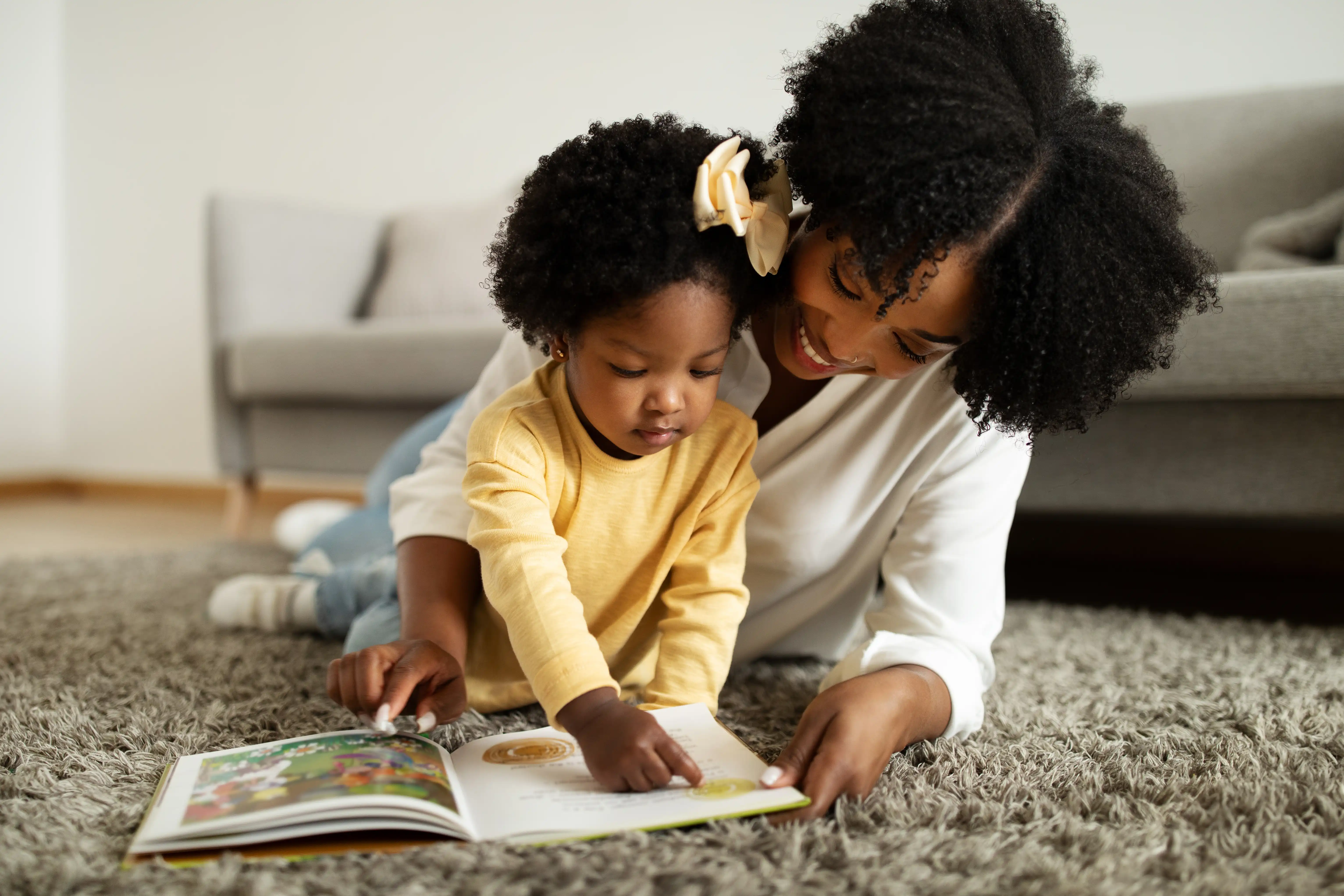
You don't need a curriculum, flashcards, or a structured lesson plan. The most effective reading support happens in small, everyday moments – and most of it you're probably already doing. Here are the habits that make the biggest difference.
Read aloud together every day
This is the single highest-impact thing you can do. Daily read-aloud time builds vocabulary, comprehension, a love of stories, and familiarity with how written language sounds and flows. Reading Rockets, which is backed by the U.S. Department of Education, recommends making it a warm, cosy routine – cuddle up, use different voices, and follow your child's interest in the story.
You don't need a dedicated "learning session." Ten minutes at bedtime, or a picture book over breakfast, is genuinely enough.
Play with sounds – not just letters
Because phonological awareness is so foundational, playing with the sounds of language matters just as much as teaching letters. Rhyming games, tongue twisters, clapping syllables in names, "I spy something that starts with /s/" – these build the auditory skills that make phonics click.
Keiki's speech games for kids are a great way to work on sound awareness without it feeling like a lesson.
Bring words into everyday life
You don't need flashcards. Point out letters on cereal boxes. Read street signs aloud on the way to school. Let your child see you reading – a recipe, a shopping list, a book – so they understand that reading is something people do all the time, for real reasons.
When you're reading together, run your finger under the words occasionally. This simple habit reinforces that print moves left to right and that spoken words match printed ones.
How much time should I spend on reading activities each day?
Not much – and that's genuinely good news. Research consistently shows that short, frequent, playful exposure beats long structured sessions. Fifteen minutes of daily reading together, plus the occasional word game or letter-spotting moment during the day, is plenty for most preschool and early school-age children.
The most important ingredient isn't time – it's consistency and warmth. A child who associates books and reading with closeness and fun is far more motivated to learn.

What If My Child Is Behind – Or Way Ahead?
Reading development doesn't follow a perfectly straight line, and children at both ends of the spectrum can leave parents with questions. Whether your child seems to be racing ahead or taking longer than expected, here's what's worth knowing.
Early readers: does a head start last?
Some children read confidently at 4 or 5, and it can feel like they've won a race. In reality, research suggests that early reading ability tends to level out as children progress through school. A child reading chapter books at 5 and a child who started reading at 7 are often at very similar levels by the time they reach upper primary school.
That doesn't mean early reading is meaningless – a love of books and a strong vocabulary carry real long-term benefits. But it does mean you don't need to worry if your child's classmates seem further ahead right now.
Build real skills through fun, educational games for your child
Try KeikiLate readers: when to watch, when to act
If your child is 7 or 8 and still finding reading very difficult despite consistent exposure and instruction, it's worth a conversation with their teacher or a reading specialist. Challenges with reading don't always mean a problem – some children simply need a different approach, more time, or targeted support with specific skills like phonics.
Early support matters. The earlier a reading difficulty is identified, the easier it is to address. If you have concerns, trust your instincts and ask for an assessment – there's no downside to getting more information.
Conclusion
When do kids learn to read? Most children reach fluency between ages 6 and 7 – but the real answer is that they've been getting ready since long before that, through every book you read together, every rhyming game, every time they spotted a letter in their name on a birthday cake.
Your job isn't to accelerate the timeline. It's to build the conditions where reading feels natural, joyful, and worth doing. Daily reading, playful language, and a home full of words are the most powerful tools you have.
If you're looking for more ways to weave early literacy into your child's day, try Keiki's reading and phonics games, designed to build foundational skills through the kind of play your child already loves.