

About this collection
Easy seahorse coloring pages for kids — print at home today
These seahorse coloring pages bring tiny seahorses, ocean creatures and coral to life. Download free, grab the crayons and let creativity flow.
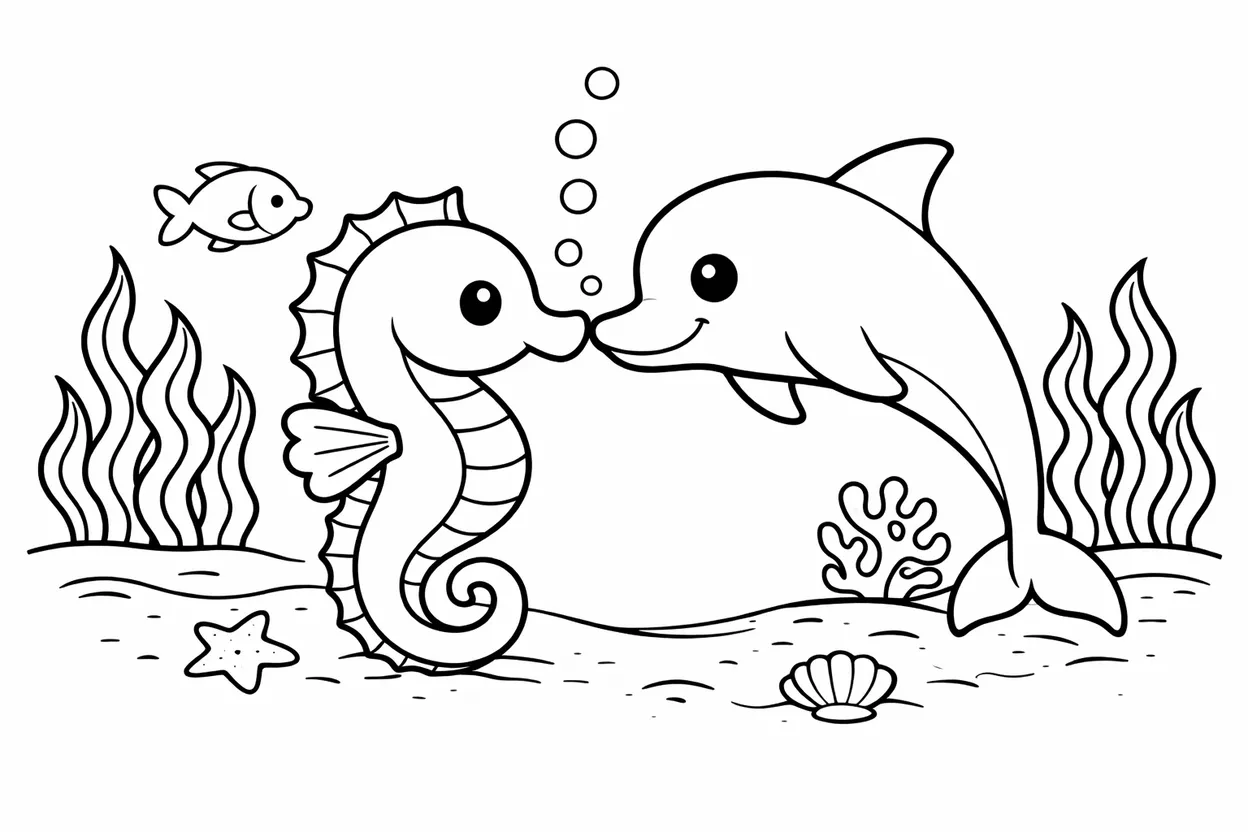

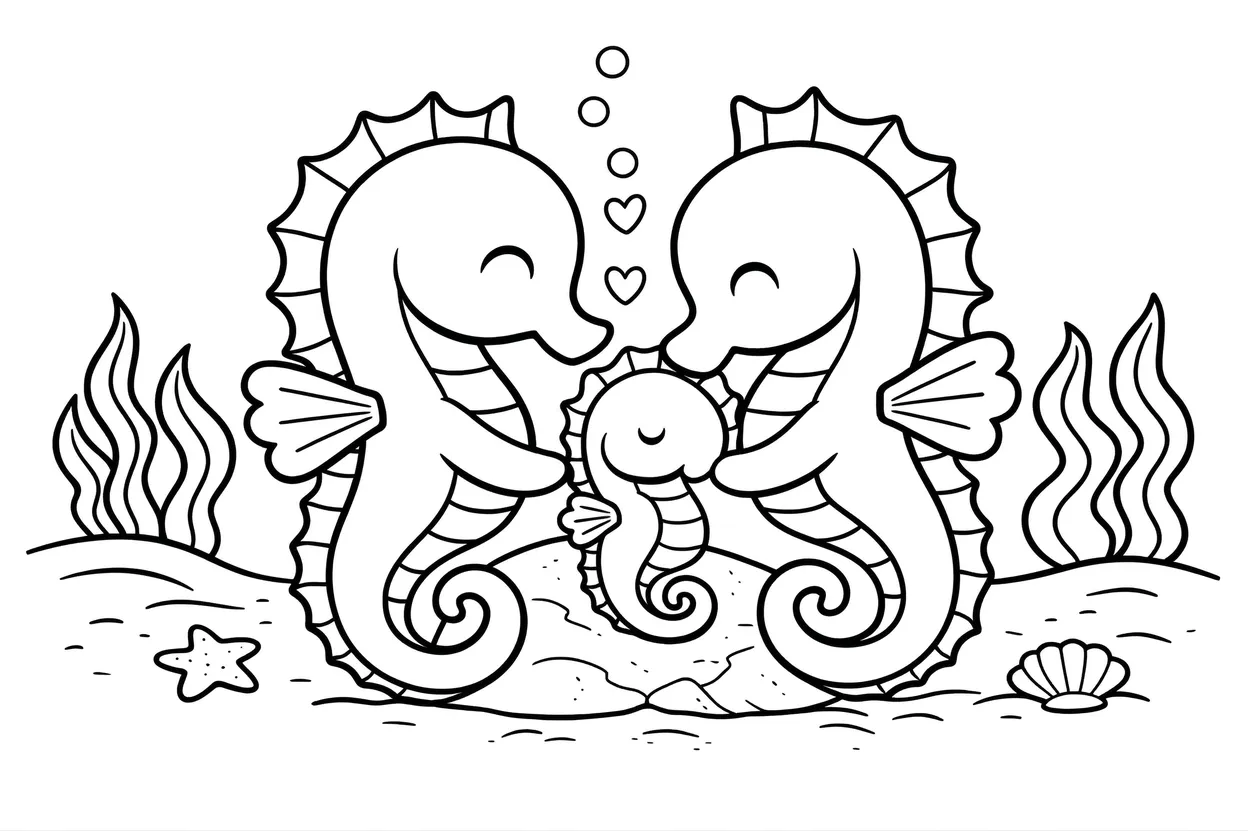
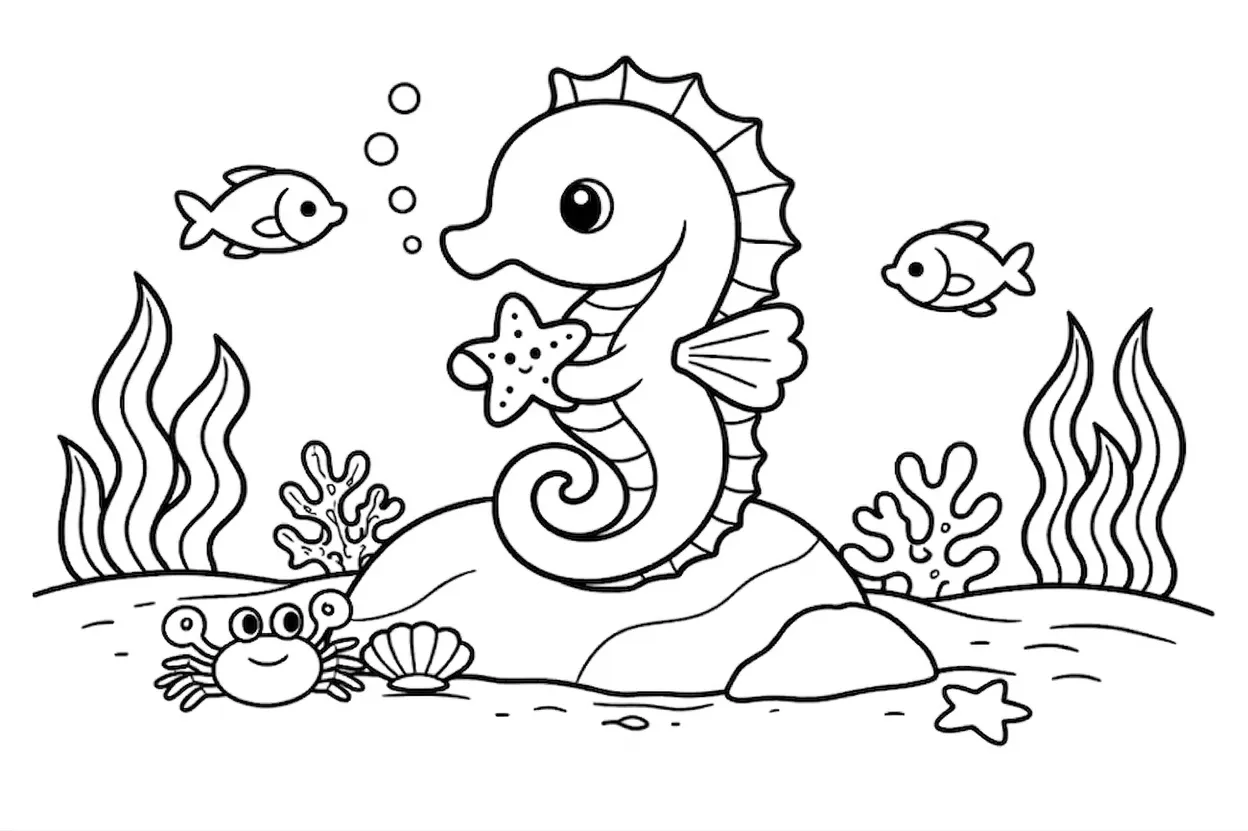
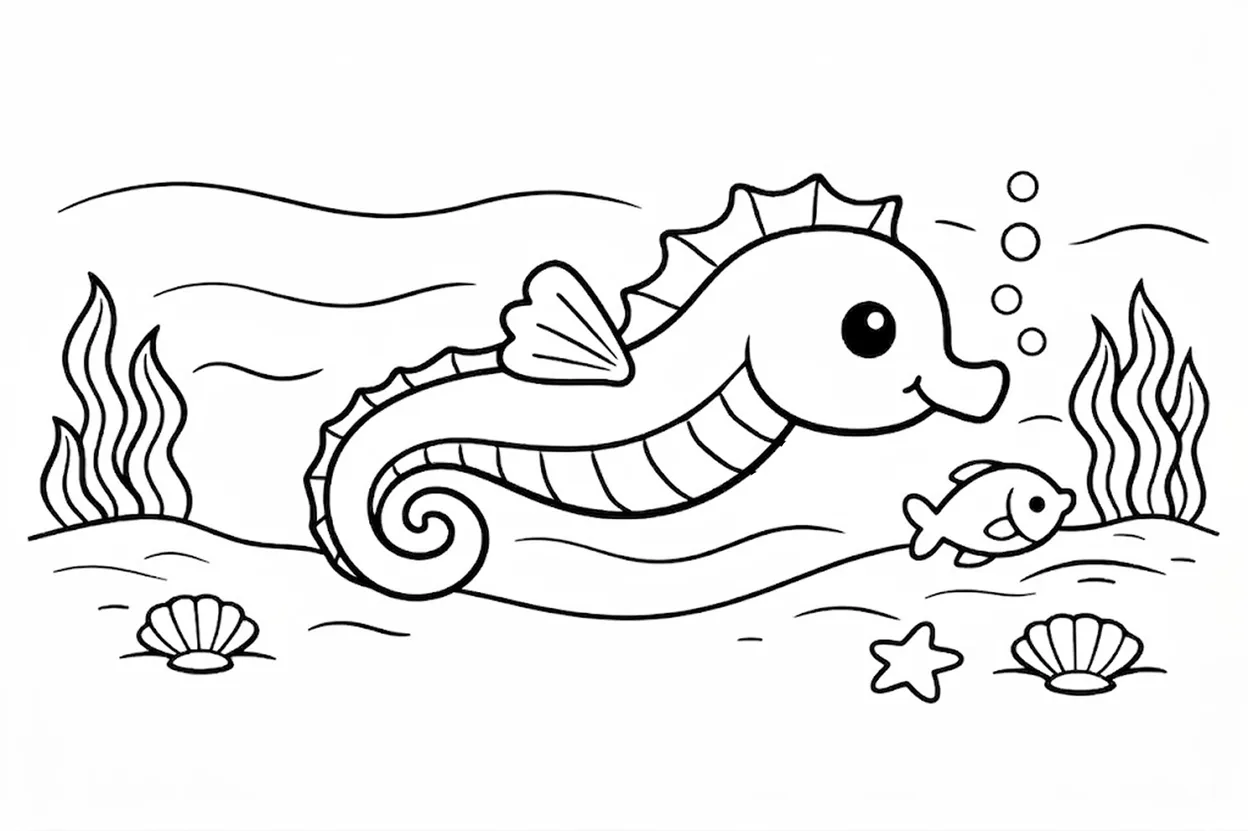
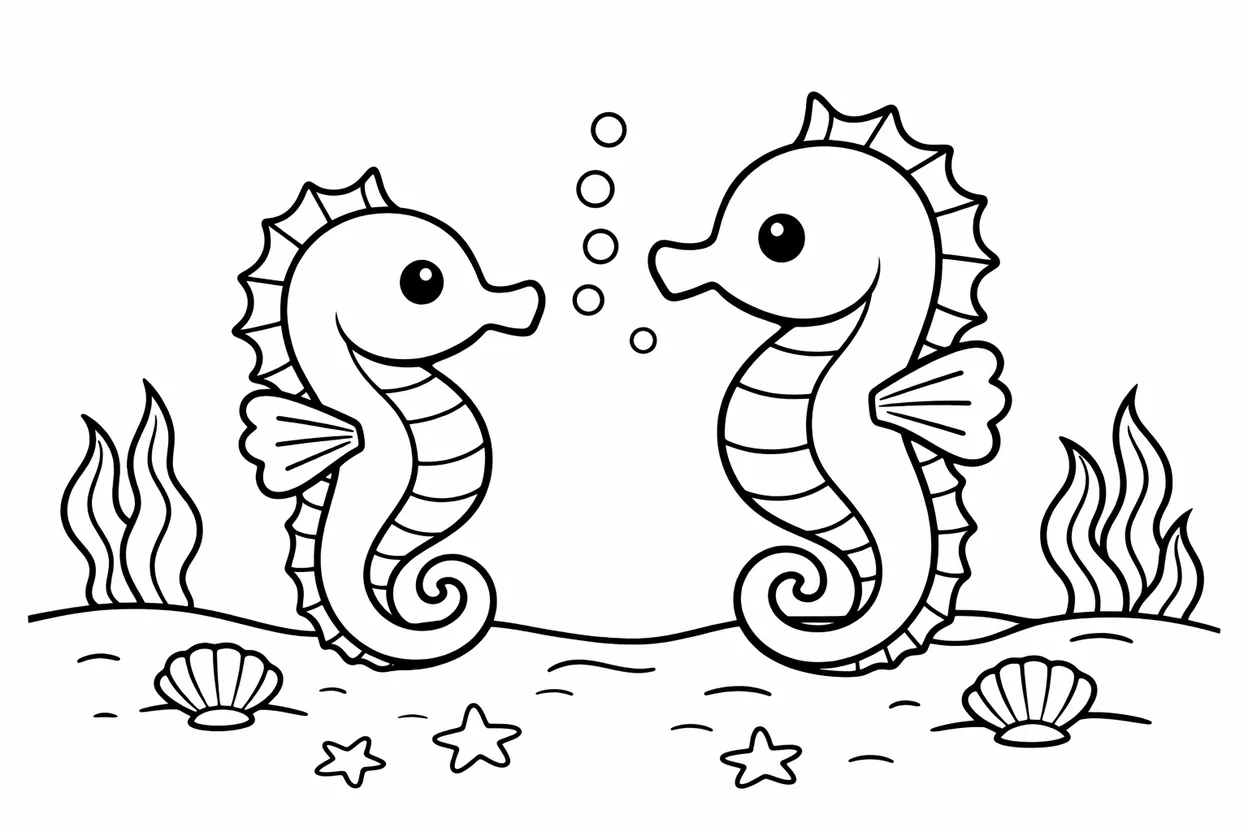
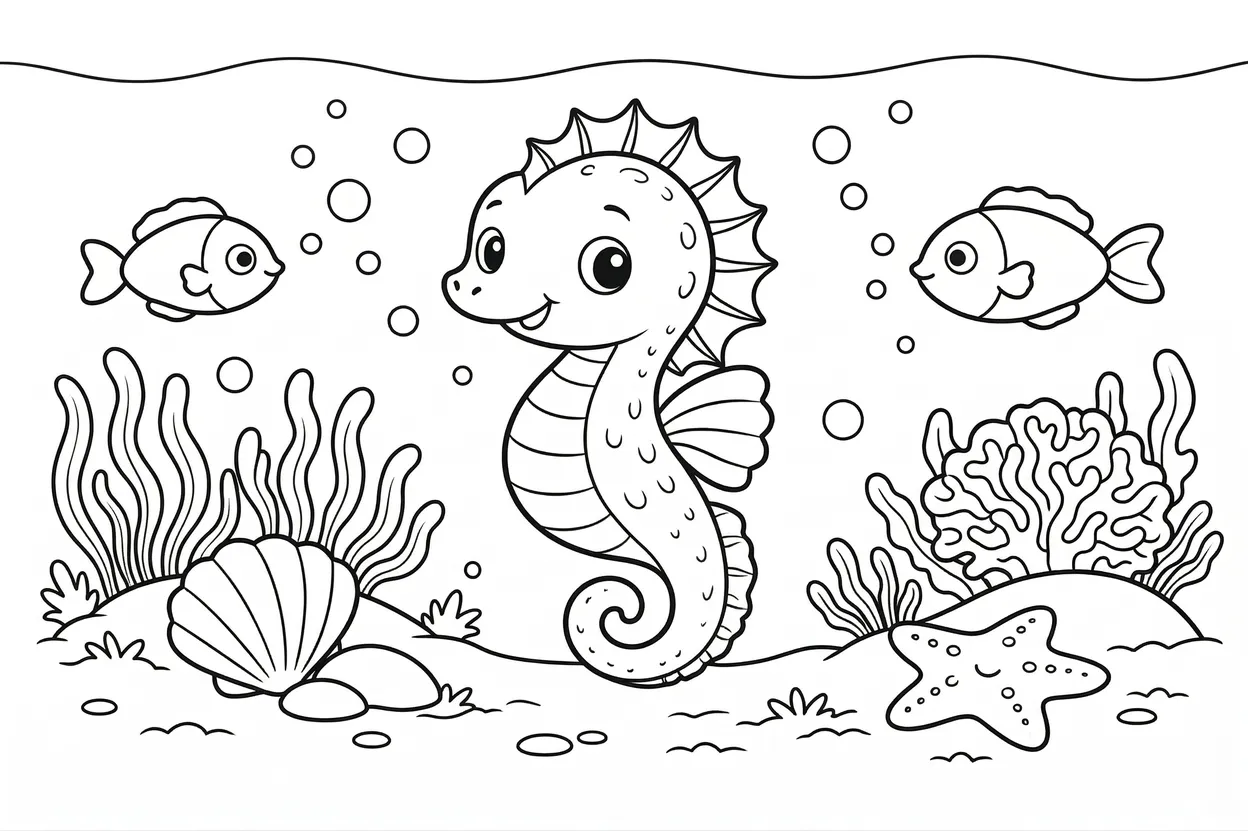
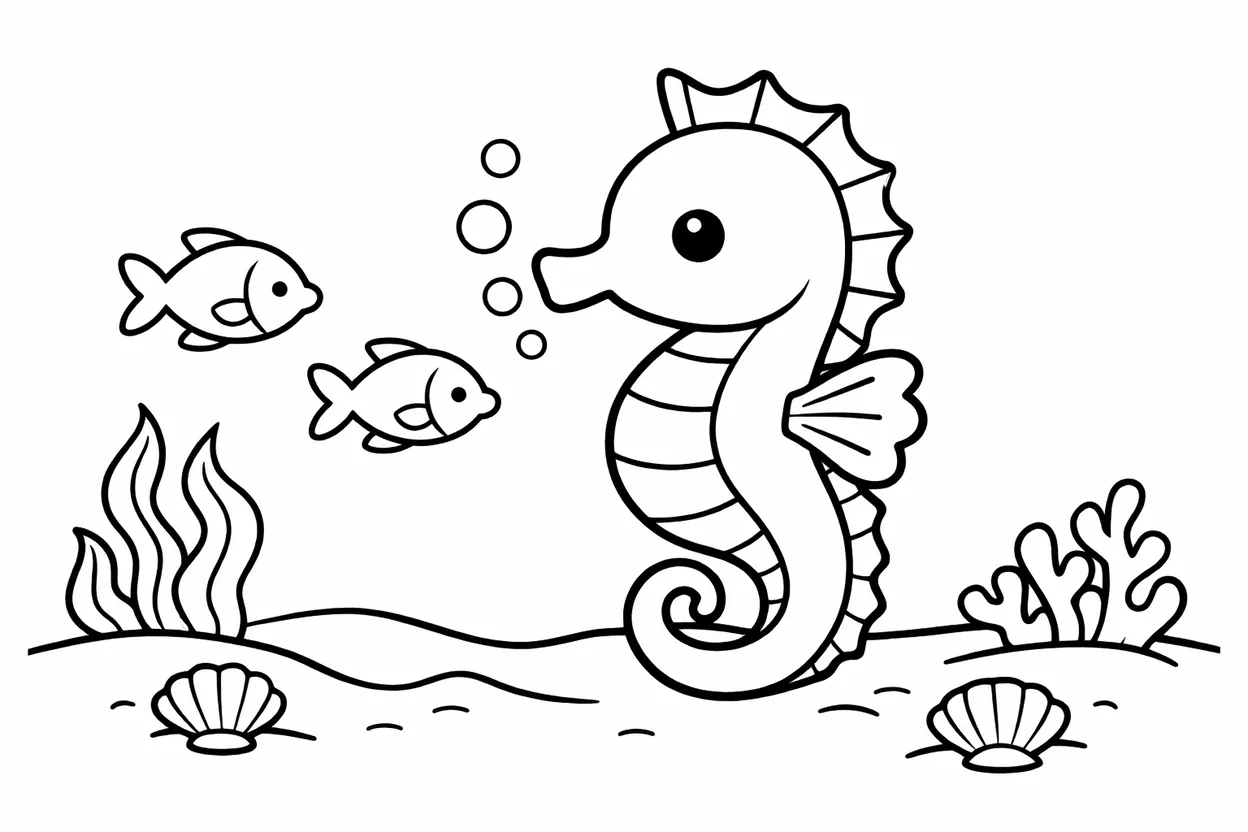
Seahorse coloring pages – the magic of the deep sea
Just imagine: a child is told about a "horse," but it's a marine one. In reality, it doesn't look like a horse at all, and it's quite far from a typical fish. It has a curled tail, a unique snout, and looks as if it swam out of a fairy tale. A seahorse coloring page allows children to get a closer look at these amazing creatures. Creativity combined with new themes and discoveries is the best tool for developing imagination and flexible thinking. Additionally, sea horses move slowly and with a special grace, which is very relaxing and sets a calm mood.
Why are seahorse coloring pages useful?
At any age, from 1 to 6 years old, seahorse coloring is an endless source of inspiration and skill development. It helps focus on things like:
- Creative development. Each seahorse coloring sheet is literally a flight of fancy multiplied by flexible thinking. Sea horses are the most unusual fish in the world; coloring them is inherently interesting. The process itself allows for creative expression, which is beneficial for the developing brain.
- Understanding directions. Sea horses are unusual fish that swim vertically. This is a great opportunity to teach your little one directions like up and down, vertical and horizontal, as well as right and left.
- Fine motor skills training. A sea horse's appearance is not just a reason for delight, but a great base for a preschooler's development. The elongated body, many small spines, and the famous spiral tail on a seahorse coloring sheet hold powerful potential for fine motor training.
- Concentration. To color well, one needs to be patient. This happens naturally because children enjoy the process. You will notice how your child can gradually focus on one task for longer and longer periods.
Furthermore, seahorse coloring is a pleasant, relaxing activity that soothes and relieves stress. The smooth outlines of the fish and marine landscapes always have a calming effect on children.
Seahorse coloring pages for fine motor skills
We already mentioned that sea horses are an ideal trainer for fine motor skills. But why? This is due to several factors:
- Spiral practice. That very curly tail on a seahorse coloring page is a classic element from preschool handwriting workbooks! By tracing and coloring this detail, the toddler learns smooth circular wrist movements, which will help them master writing in the future.
- Working with textures. Sea horses have very interesting, textured skin. If a child chooses a realistic seahorse coloring page, they can practice conveying this texture: drawing small dots with a marker, light hatching with a pencil, or using a "stippling" method with a stiff brush.
- Seahorse camouflage. These fish are true masters of disguise. Print a seahorse coloring page printable and suggest a game: have the child color the sea horse so that it becomes invisible against the background of corals and seaweed. This is a great way to practice logic at the same time.
People often ask
This is a wonderful opportunity for a first biology lesson. Tell the child an amazing fact: in sea horses, it is the dad who carries the eggs in a special pouch on his belly! While the child colors the seahorse coloring page, suggest they draw a whole school of tiny babies around the big sea horse.
In Keiki, the content is designed for different ages. For toddlers aged 2–3, choose simple seahorse coloring pages with thick outlines and no background. For older preschoolers aged 4–6, a realistic seahorse coloring page with detailed scales and corals is perfect—it helps train fine motor skills before school.
Yes, Keiki is a 100% safe digital environment. While the child is busy coloring, they will not encounter intrusive ad banners, accidental redirects to third-party sites, or hidden in-app purchases.
The online seahorse coloring format is an ideal solution for travel, car rides, or waiting in line when it's inconvenient to take out pencils. Additionally, in the app, a child can easily undo any action, change colors, and recolor the picture an unlimited number of times without worrying about ruining the sheet.
Yes, working with small details and curved lines requires high concentration. This monotonous activity perfectly shifts attention and lowers the level of overstimulation.