

About this collection
Free printable zoo animals coloring pages for kids — download, print and color
Print zoo animal coloring pages filled with lions, giraffes and elephants. Loved by parents and teachers for calm, creative playtime.
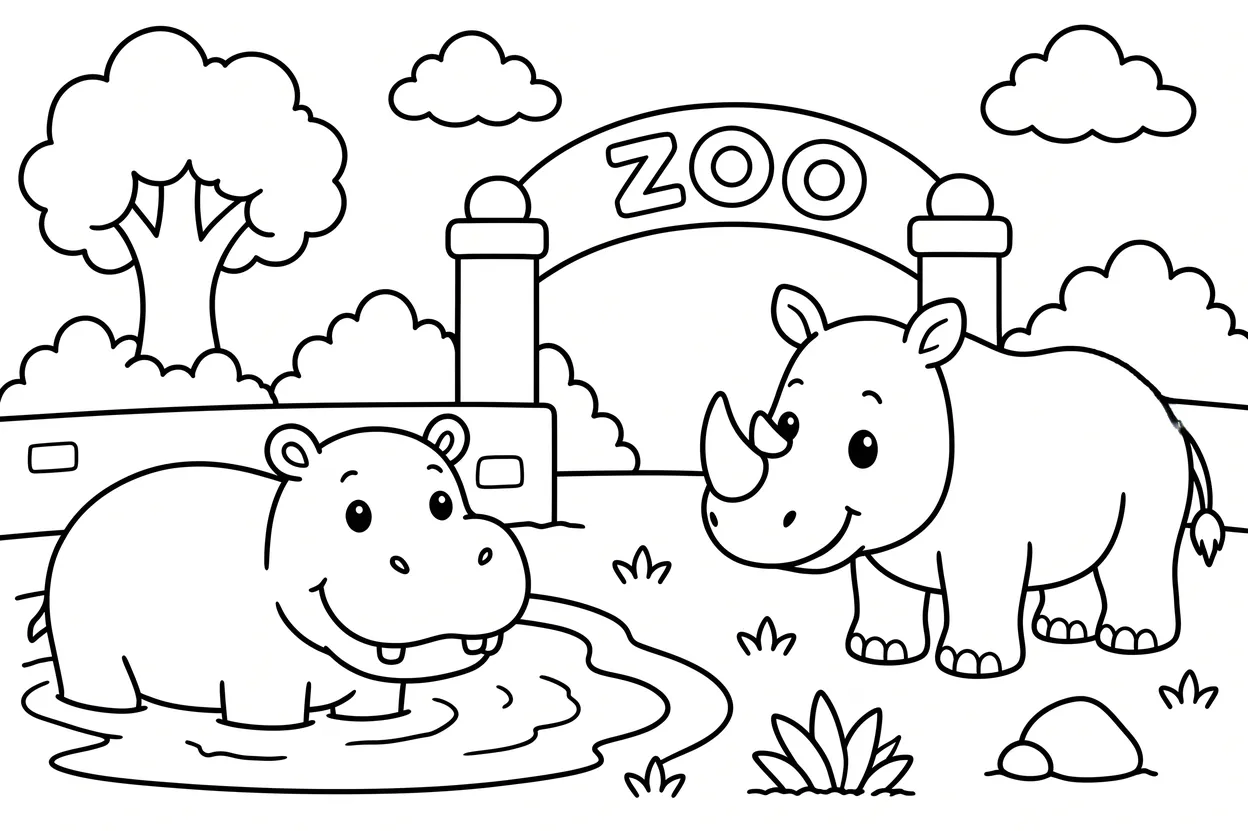

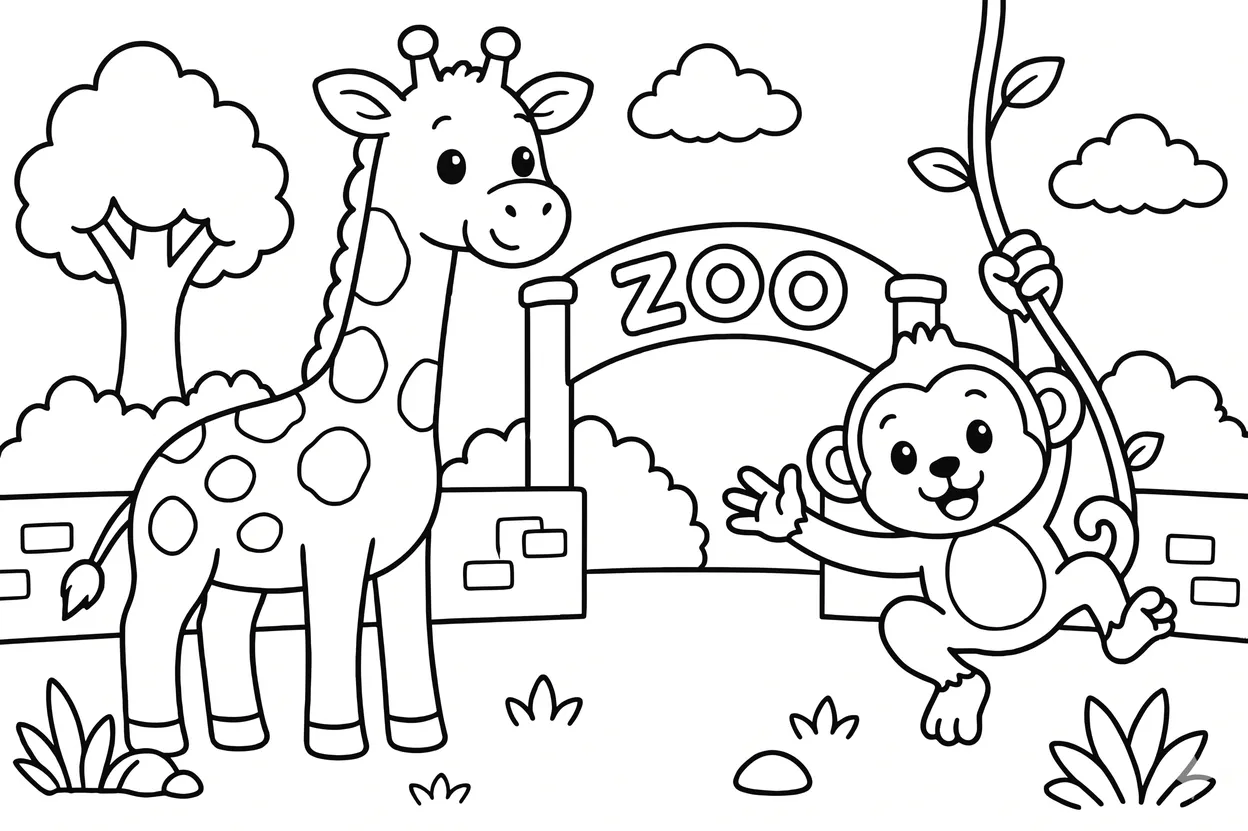
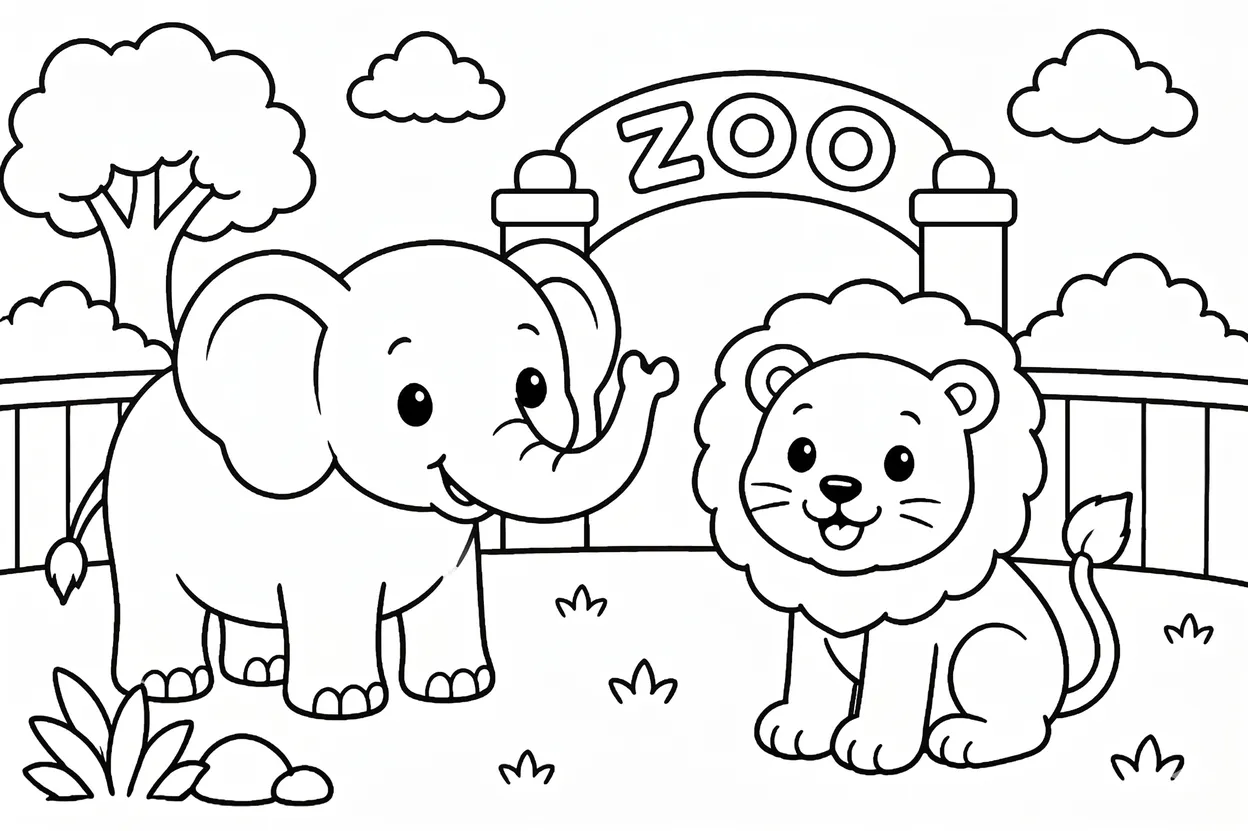
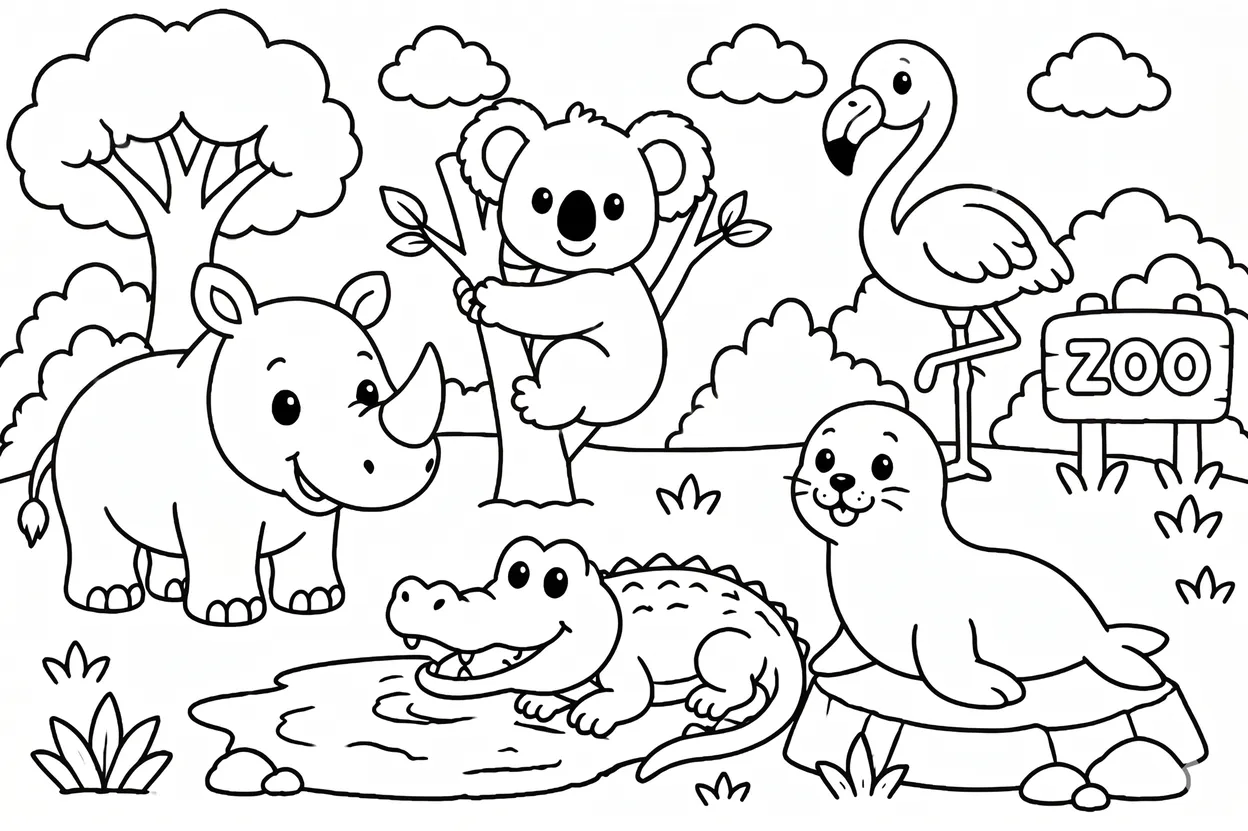
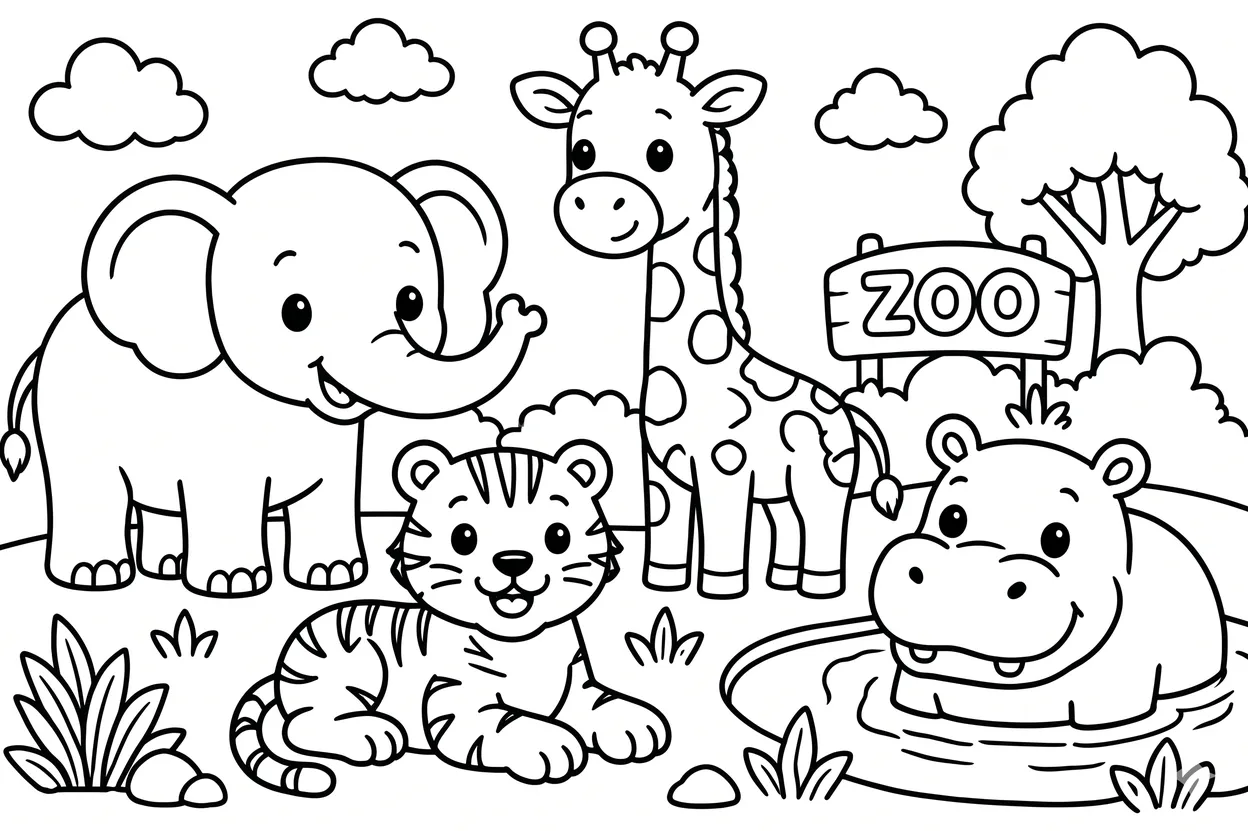
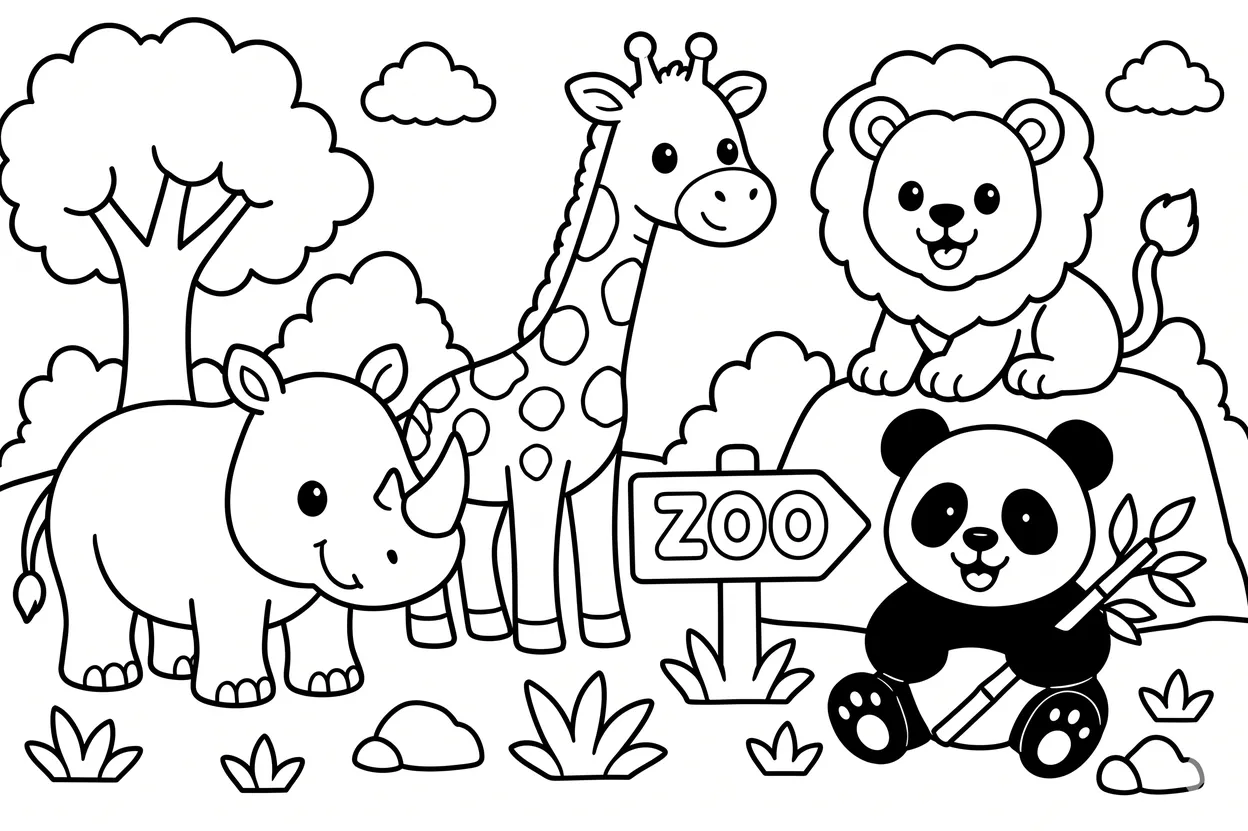
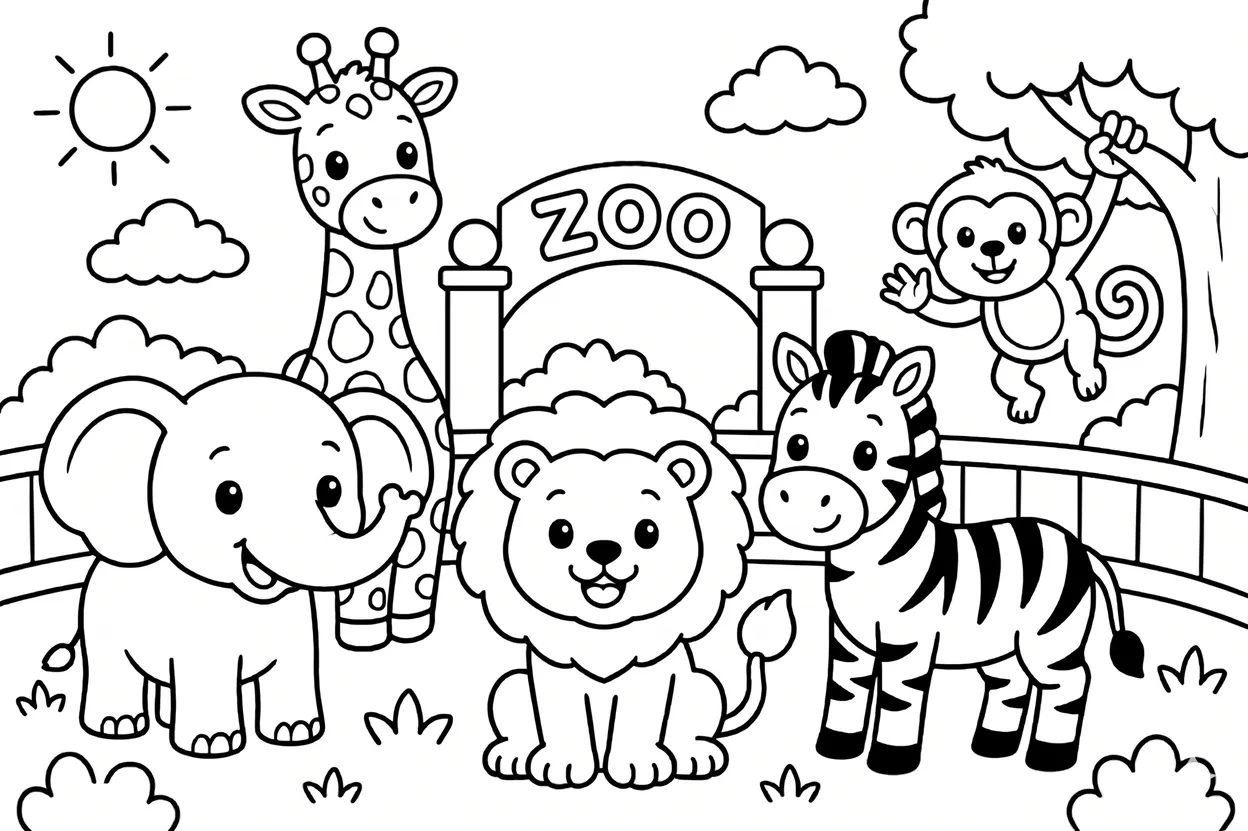
Zoo Animals Coloring Pages for Curious Toddlers
Let’s face the truth: a real trip to the animal enclosures is an endurance test. Tired legs, sticky cotton candy on clothes, crowds at the glass, and a yawning hippo that turned a side to the public that wasn't exactly what everyone expected. But a zoo animal coloring page is that same zoo, just with the added bonus of silence and a clean floor. Just pick up a coloring page, and exotic animals are already here, right at home. No ticket lines – only a calm process that can engage a child without visual noise.
Why Is Coloring Beneficial?
Modern children are often overloaded with flashing, shouting content. That’s why at Keiki, we focus on healthy, low-stimulation aesthetics inspired by high-quality classic animation. No neon colors or exaggerated, scary proportions. When a zoo animals coloring page lies before a child, they see clear, friendly, and aesthetic outlines.
This format is the perfect foundation for "slow leisure." The process of zoo animals coloring requires concentration, teaches preschoolers to focus attention on a single task, and helps the nervous system find balance after a busy day.
What to Do with the Pictures?
Any zoo animal coloring sheet is not just an outline for filling in, but an excellent training ground for expanding horizons. A zoo brings together animals from different continents, which opens up great opportunities for conversation:
- Studying Geography: Lay out the zoo animal coloring sheets and ask your child to sort them: Who lives in the cold ice (penguin, polar bear), and who loves the hot savannah (giraffe, lion)?
- Comparing Sizes: Use coloring pages zoo animals to practice the concepts of "big vs. small." An elephant is huge and heavy, while a monkey is small and agile.
- Analyzing the Menu: Who here is a predator, and who prefers to chew on leaves? Using free printable zoo animals coloring pages, you can even draw lunch for each animal on the picture.
Screen or Good Old Printer?
The app saves the day in "field conditions" – in a line, in the car, or when you just need 15 minutes of silence for an important call. But if you need the heavy artillery for the weekend, good old paper comes to the rescue. Keiki has an entire arsenal of free zoo animal coloring pages that you can download and print later.
Moreover, all zoo animal coloring pages pdf files will be in excellent resolution, without blurry outlines or pixels. A huge plus of this format is that printed drawings forgive any mistakes. Even if a child ruins a drawing, you can print another one. But it’s even easier to use the app, where an image can be cleared with literally one click.
People often ask
For paper masterpieces, it’s always better to use zoo animal coloring pages pdf. This format preserves perfect line clarity, and even when printing on A4, the outlines won't turn into pixels, staying smooth and easy to color.
Don’t scold them – give the little one a chance for self-expression. Leave strict biology for school textbooks. Zoo animals coloring pages unlock creative potential and act as a field for experiments. If a child colors pictures this way, it means their abstract thinking and creativity are working great.
Choose those with a massive body and minimal small details. An elephant or a hippo on a zoo animal coloring sheet are ideal candidates. It will be easy for the toddler to color large areas without getting upset because a marker accidentally slipped past the thin outline of an ear or tail.
They are great for training attention switching. When a giraffe, a macaque, and a tiger sit next to each other on one zoo animal coloring page, the child has to constantly change colors and shading techniques, adapting to different textures (spots, fur, stripes) within a single sheet.
Turn drawing into an interview. While the child is coloring, ask questions: "Do you think this bear is growling or yawning right now?", "What are these two monkeys talking about?". This stimulates the imagination and forces the child to formulate detailed answers rather than just humming in response.