

About this collection
Easy square coloring pages for kids — print at home today
Grab square coloring pages bursting with square shapes, boxes and tracing squares. Simple designs help build fine motor skills while kids have fun.


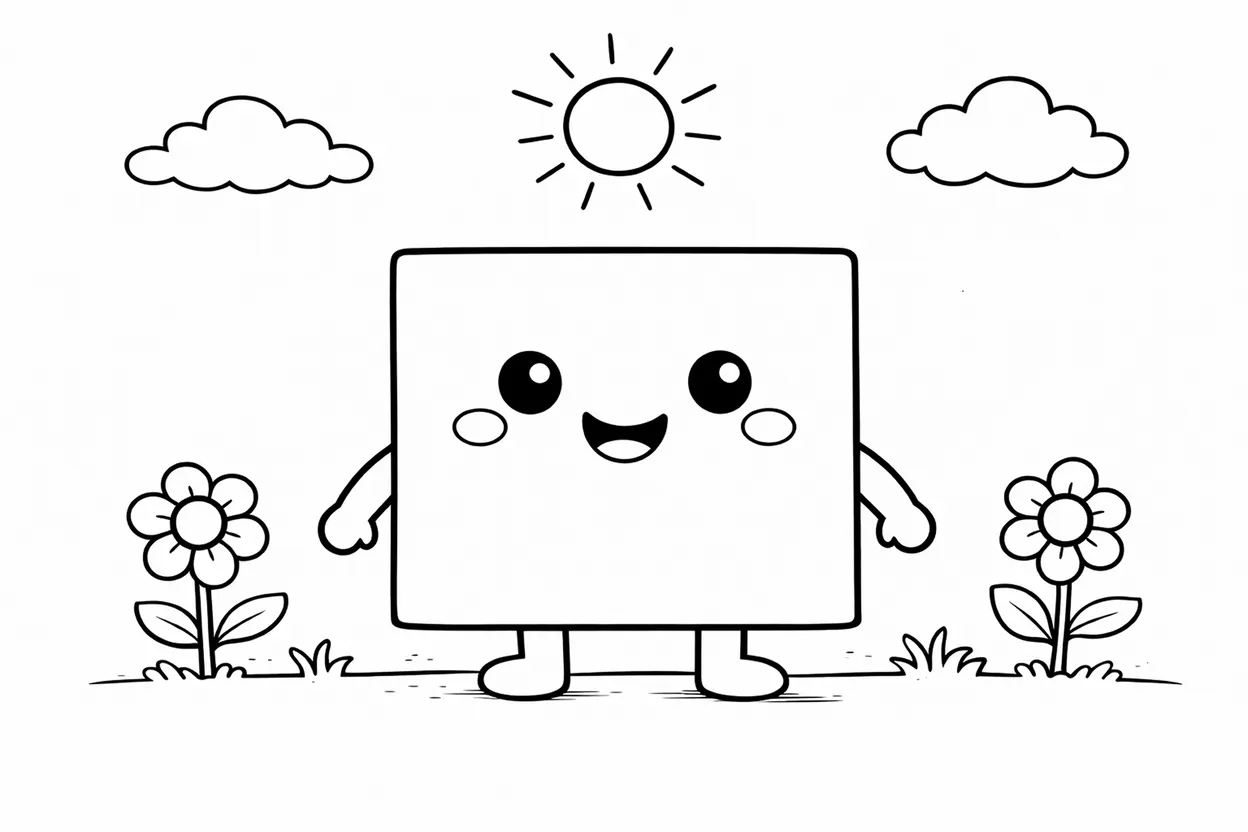
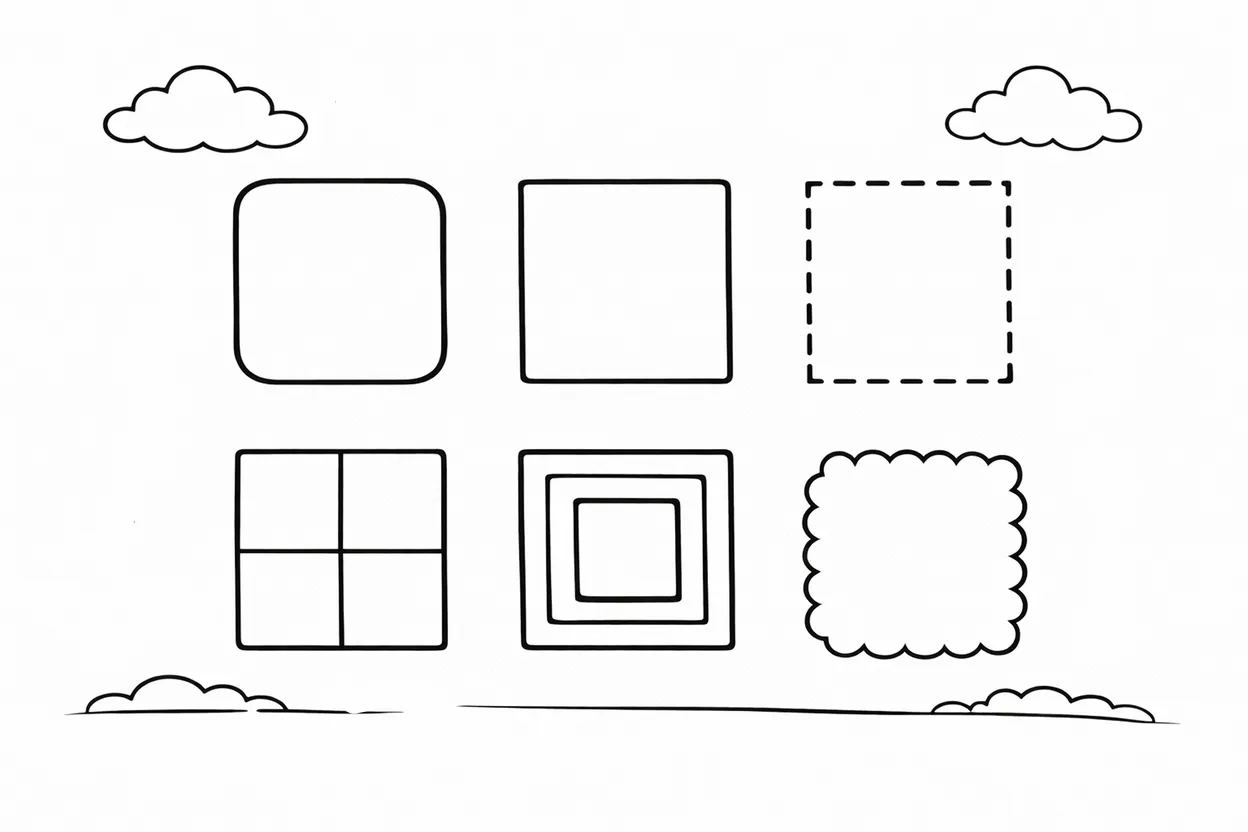
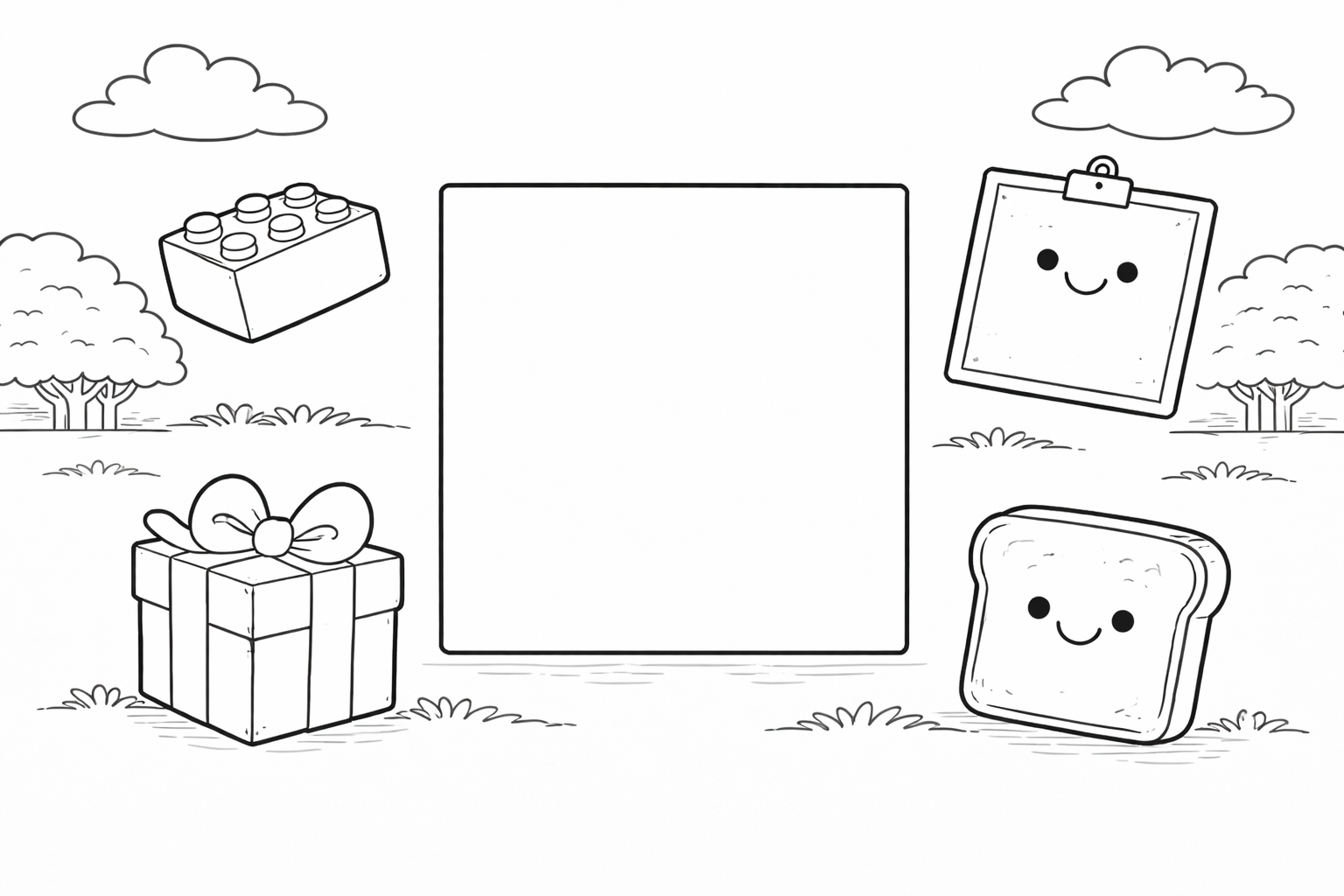
Square coloring pages – The Foundation of Foundations
The square is a symbol of stability. Even a child senses this. No sudden turns – just four right angles and equal sides. To some, it might seem too predictable, but for a child's psyche, this geometry works as an excellent grounding anchor. With a square coloring page, a child encounters clear, understandable boundaries already visualized in the drawing. The symmetry of the square has a calming effect, and the images associated with it are accessible even for very young children.
Why is Coloring a Square Useful?
At two, three, and even four years old, a child's hand is just learning to maneuver confidently on the page. First comes the "circle stage," where all drawings boil down to sweeping, fluid movements. But as skills grow, the toddler "grows up" to the square and its strict rules. Working with a square coloring page is one of the first trainers for motor control:
- Stopping before an obstacle. Upon reaching a corner, the child must physically brake the pencil, pause, and change direction by 90 degrees to avoid going outside the line.
- Block shading. The equal sides of the figure teach the child to divide space into sectors and fill them in evenly, from edge to edge, leaving no white gaps.
- A base for construction and imagination. The square is a classic building brick. During the process of coloring a square, this form becomes especially noticeable, helping the preschooler lay the foundation for future spatial thinking.
A Base for Cozy and Useful Plots
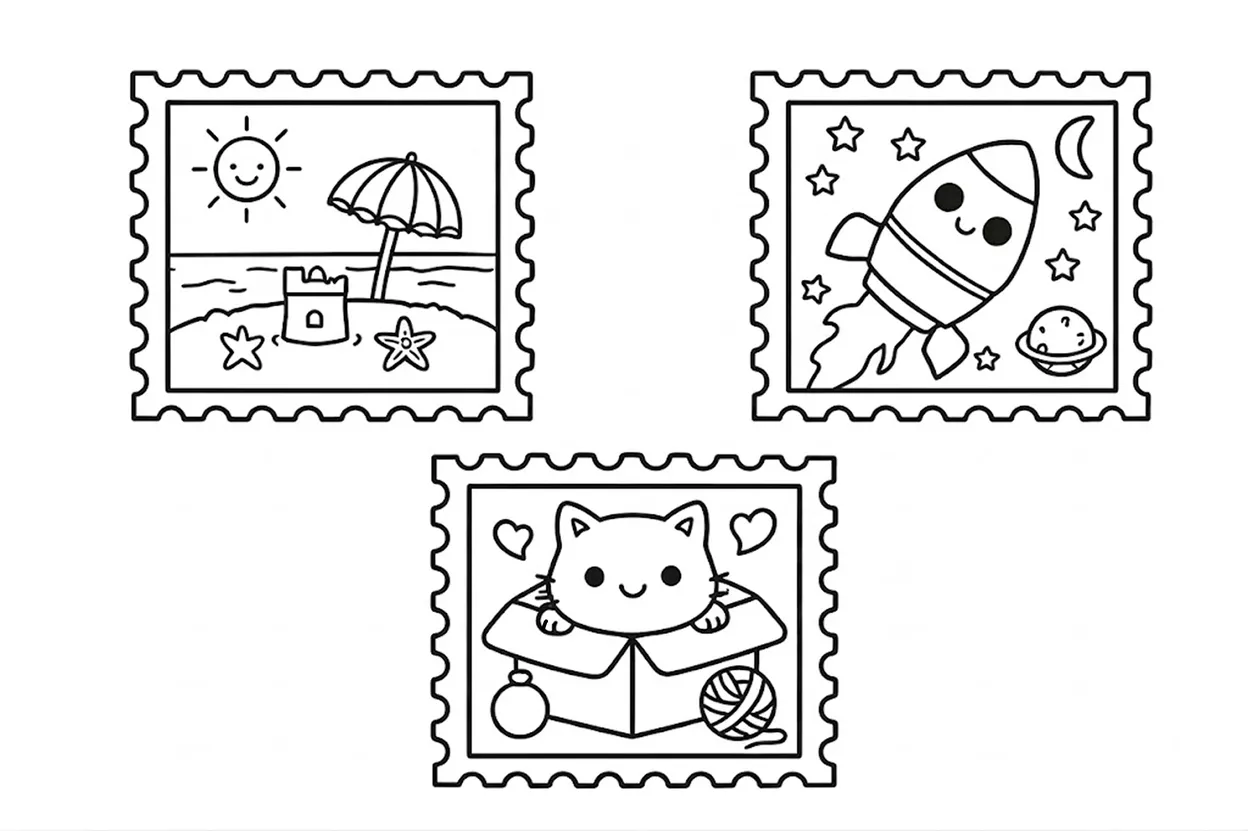
What is a square at its core? Merely a boring shape with strict right angles. But it is a foundation for something more – an ideal template for a child's imagination to manifest in all its strength and beauty. Add a few details, and it transforms into a window revealing a peaceful landscape, like in cartoons and books: drifting clouds, an old tiled roof, or a starry night sky. Or perhaps it’s a mysterious box? Who knows what is hidden inside, or whose ears are peeking over the edges. These additions make the coloring process deep and meaningful, developing fantasy without unnecessary nervous overload.
Coloring in Keiki – A Comfortable Environment for Development
On a tablet or smartphone, coloring pages are ideal for quick training in color perception and neat filling. They allow the child to change the mood of the picture in a couple of taps without chaos or mess on the table. You can color pages in various ways using just a finger, adding more originality and interest to the process. In Keiki, every drawing is a well-thought-out plot that develops the child without causing overstimulation.
However, you also have the option to download and print any square coloring sheet to unlock the magic of fine motor skill development on paper. With this approach, the toddler gets the chance to physically feel those four corners, trace them with a wax crayon using strong pressure, or cut out the finished shape with scissors, providing a powerful boost to eye-hand coordination.
People often ask
This is a normal stage of motor development. Drawing a smooth arc is physiologically much easier than abruptly stopping the hand before a right angle. Over time, by practicing regularly on a square coloring page, the child will learn to control this process, and their strokes will become straight.
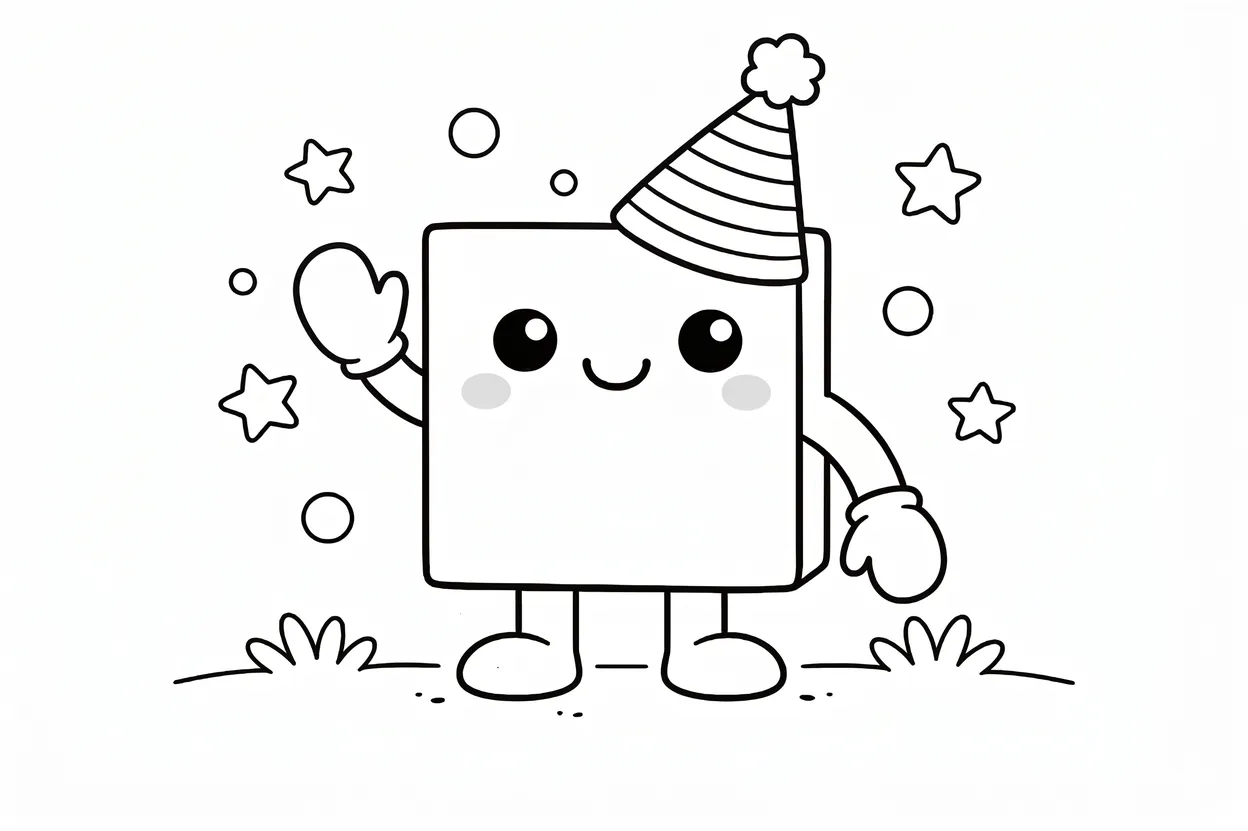
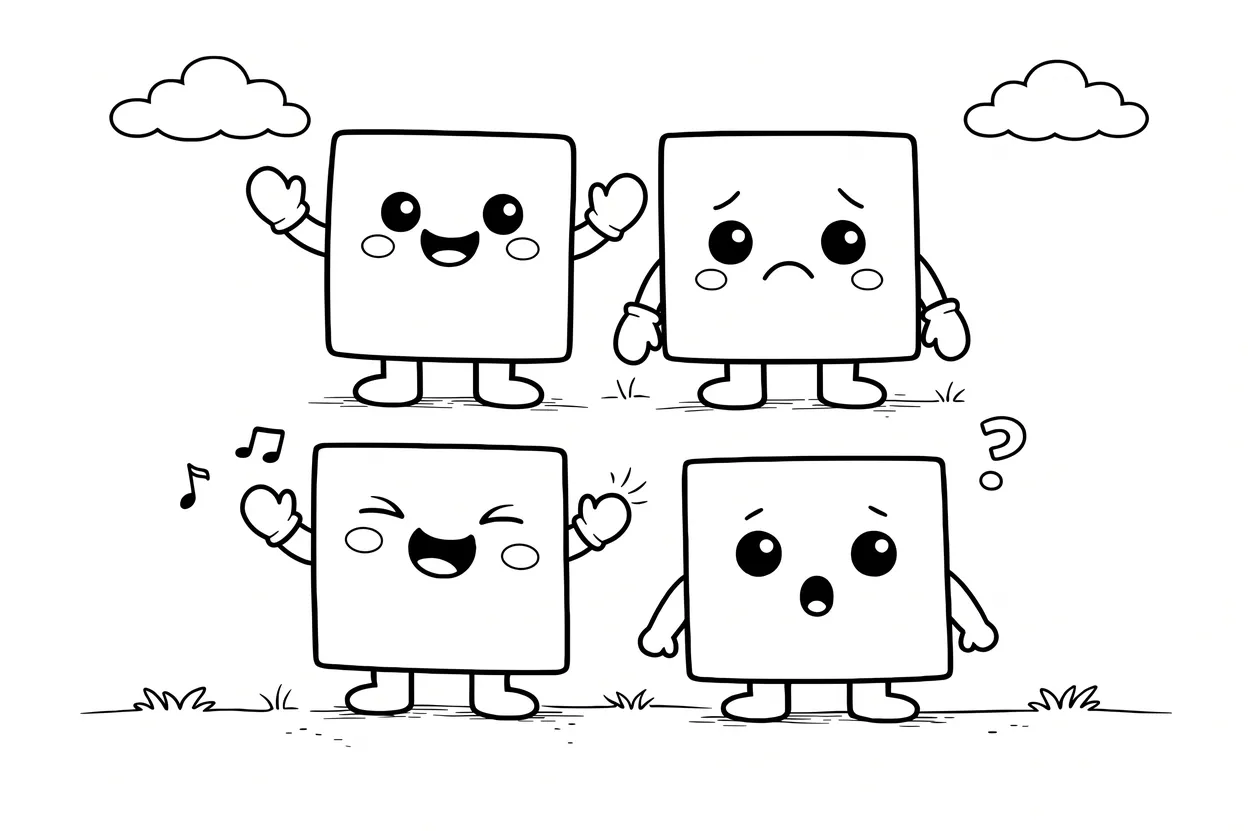
Give the shape some character. Turn coloring a square into the process of creating a funny character: draw eyes, short legs, and an emotion. Or tell them it’s an ice cube that needs to be colored quickly with "cold" blue markers.
Fine-tip markers or well-sharpened pencils are great for practicing clear boundaries. They require more precision than thick, soft crayons and teach the child to carefully work through the most difficult joint areas of the figure.
Absolutely. Print several square coloring pages, let the child color them, and then cut them out together. You can glue these bright colored blocks into a great paper house, build a tower, or assemble a large-scale pixel mosaic on a sheet of poster board.
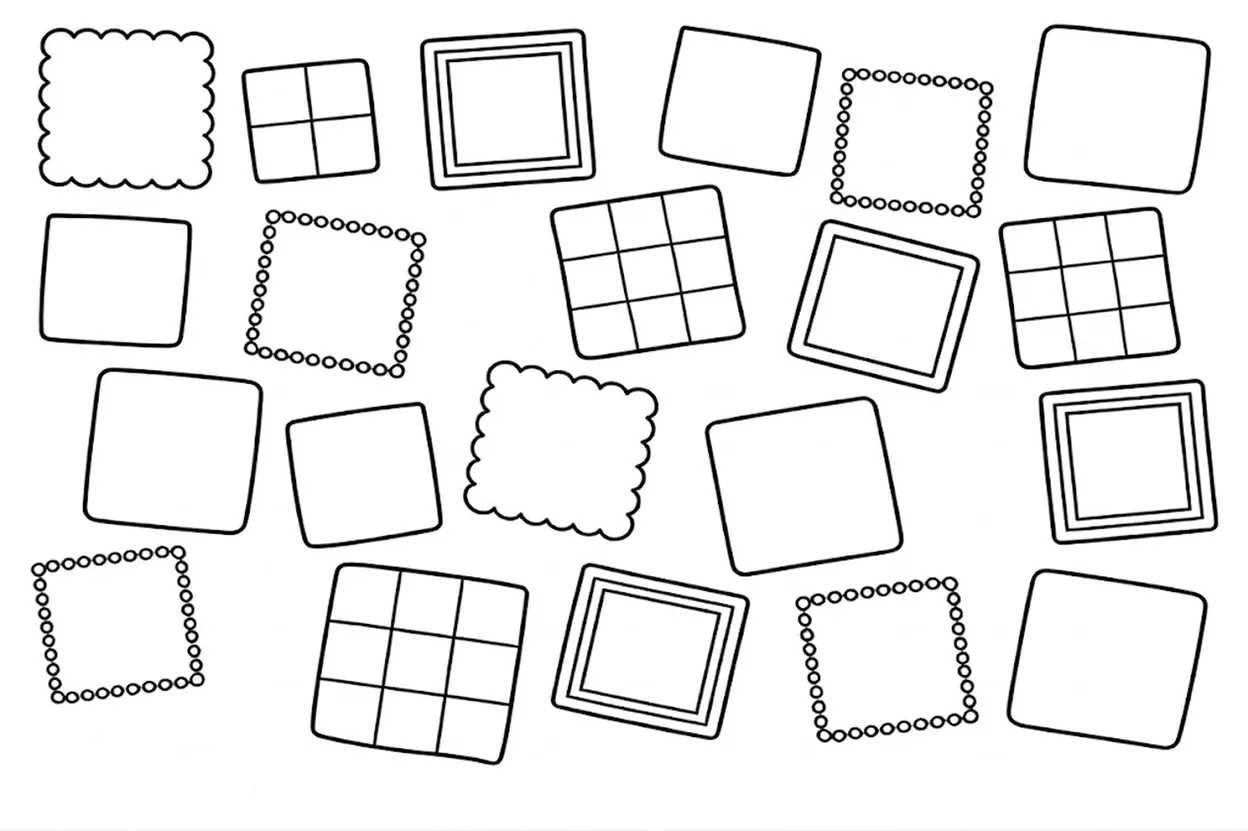
Yes. Once children have mastered the basic simple square, you can move on to more detailed square coloring pages that resemble ceramic tile patterns, geometric mandalas, or patchwork quilts.