

About this collection
Adorable star coloring pages for kids — print instantly
Star coloring pages featuring five-point stars, shapes and tracing stars kids adore. Loved by parents and teachers for calm, creative playtime.

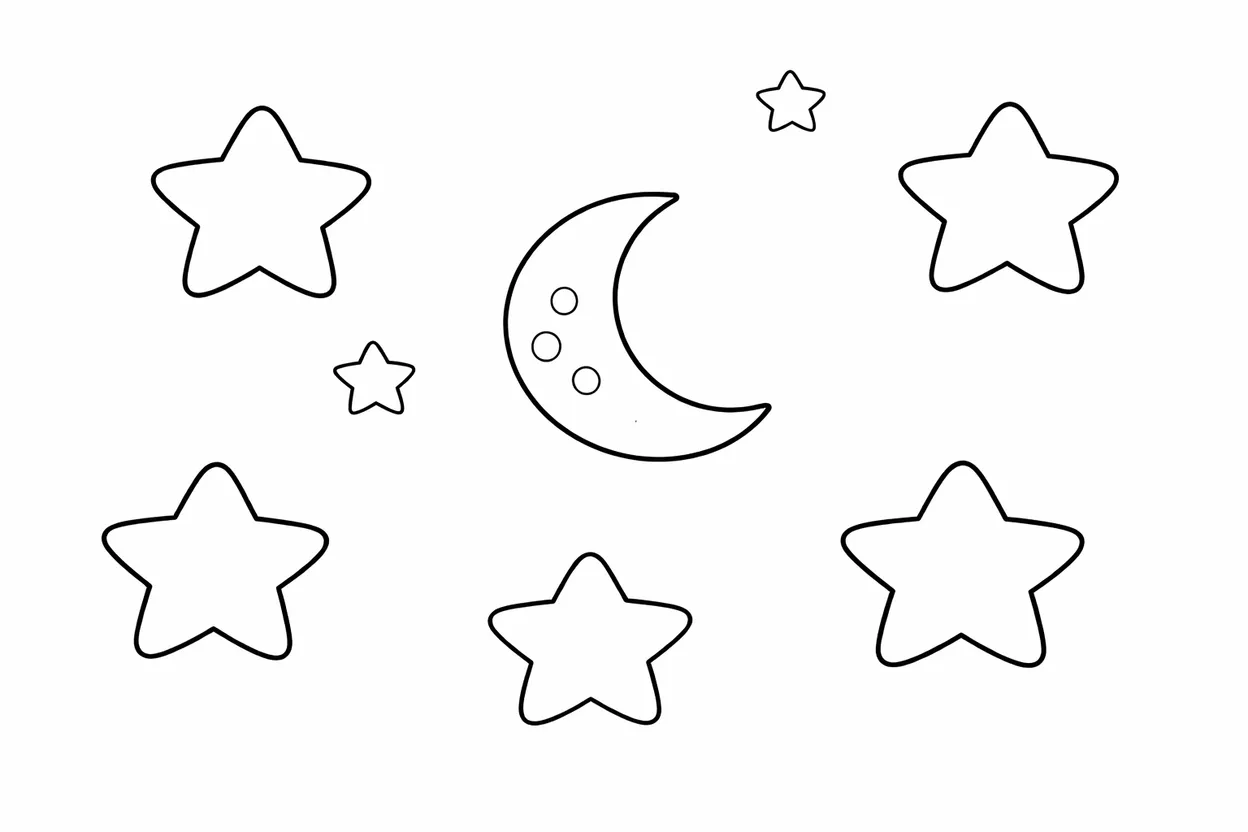
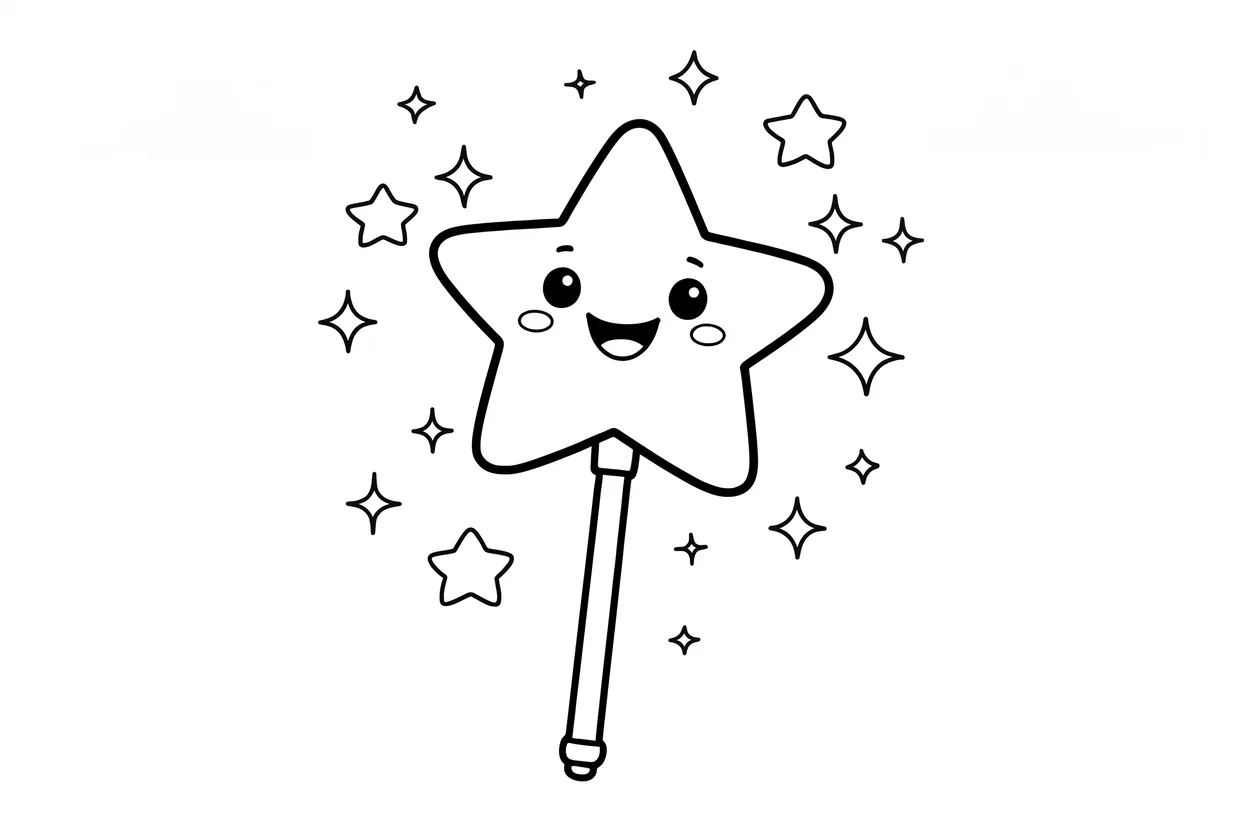
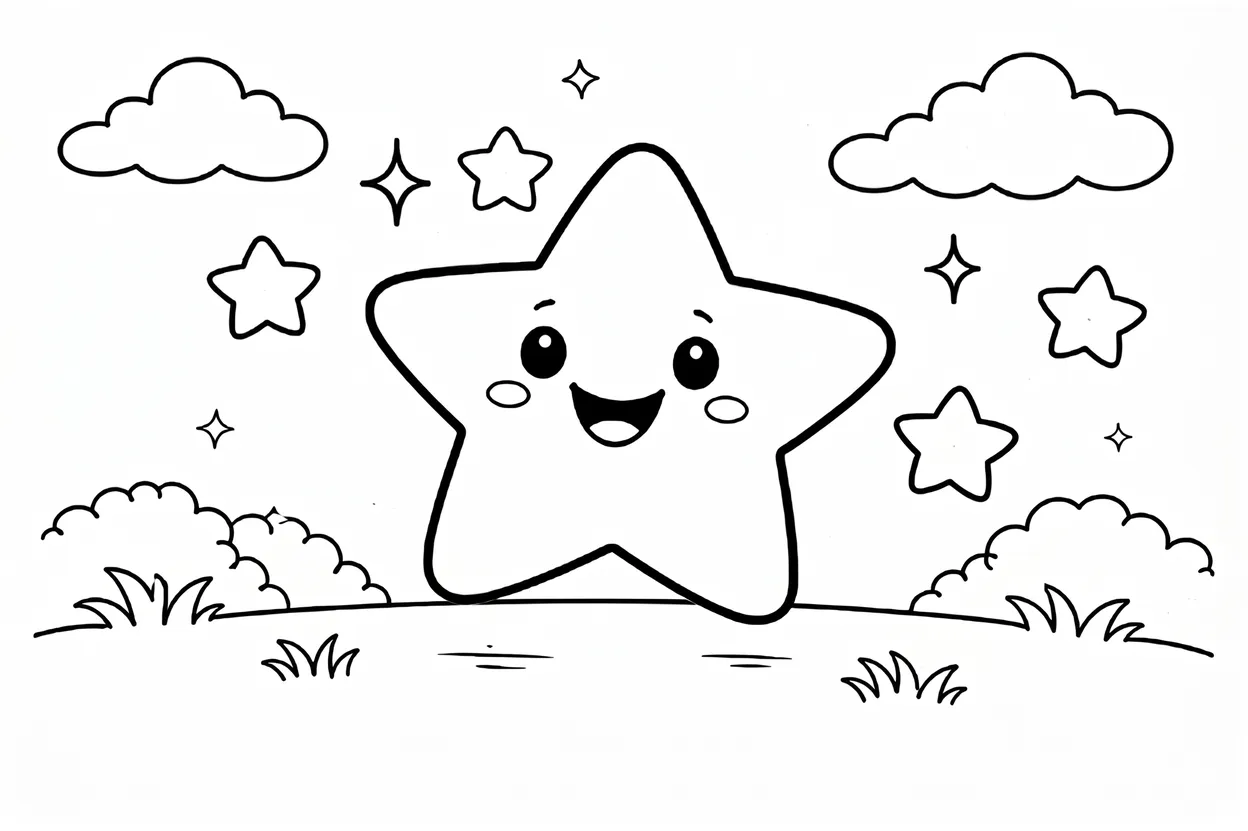
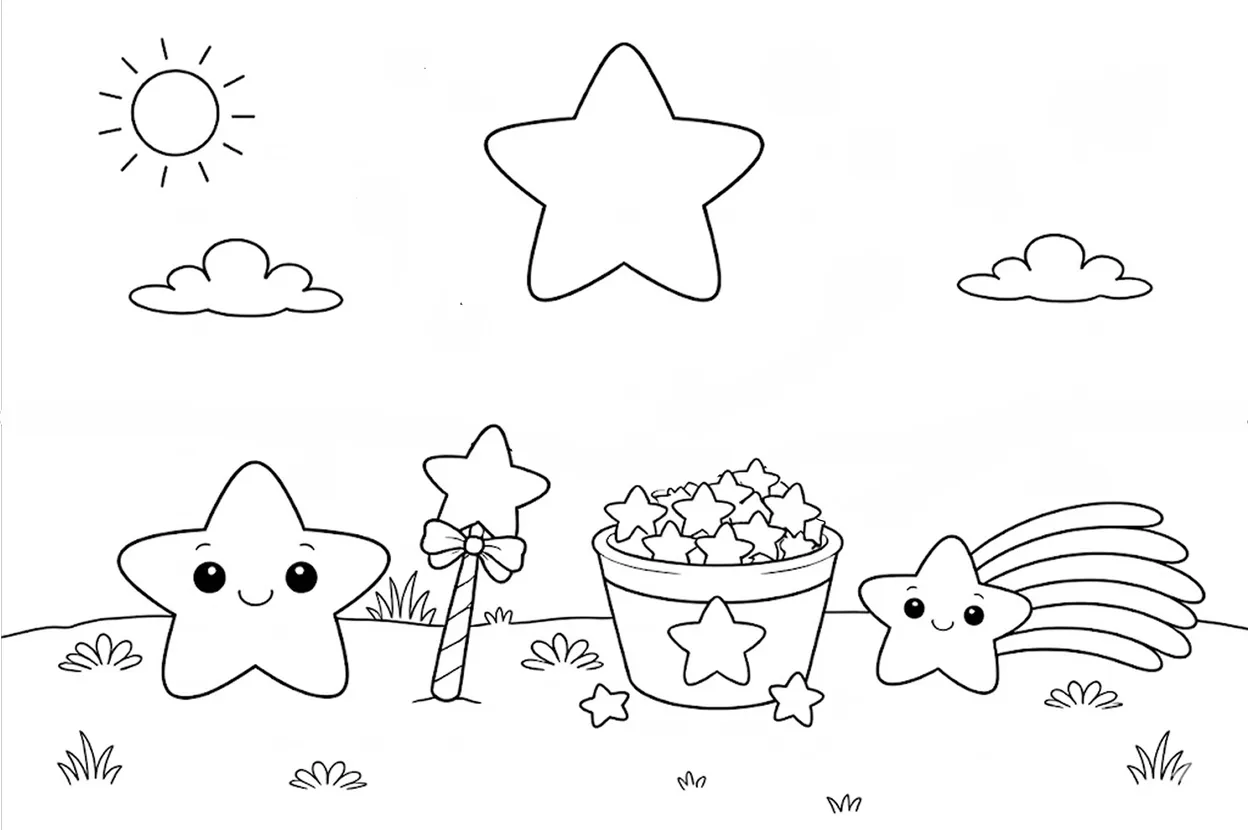
Lighting the Spark of Creativity with Star Coloring Pages
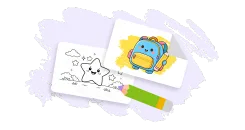
Five points, perfect symmetry, a recognizable image – even though a star is a complex object, it’s incredibly interesting! In childhood, learning to draw a star is like completing a major challenge. It shows that a child has mastered abstract forms enough to move on to tougher tasks. Many kids look for tricks and schemes to draw that five-pointed figure, but you can simply use a star coloring page. This way, the skill builds itself naturally while boosting creative skills along the way.
Geometry Meets Creativity
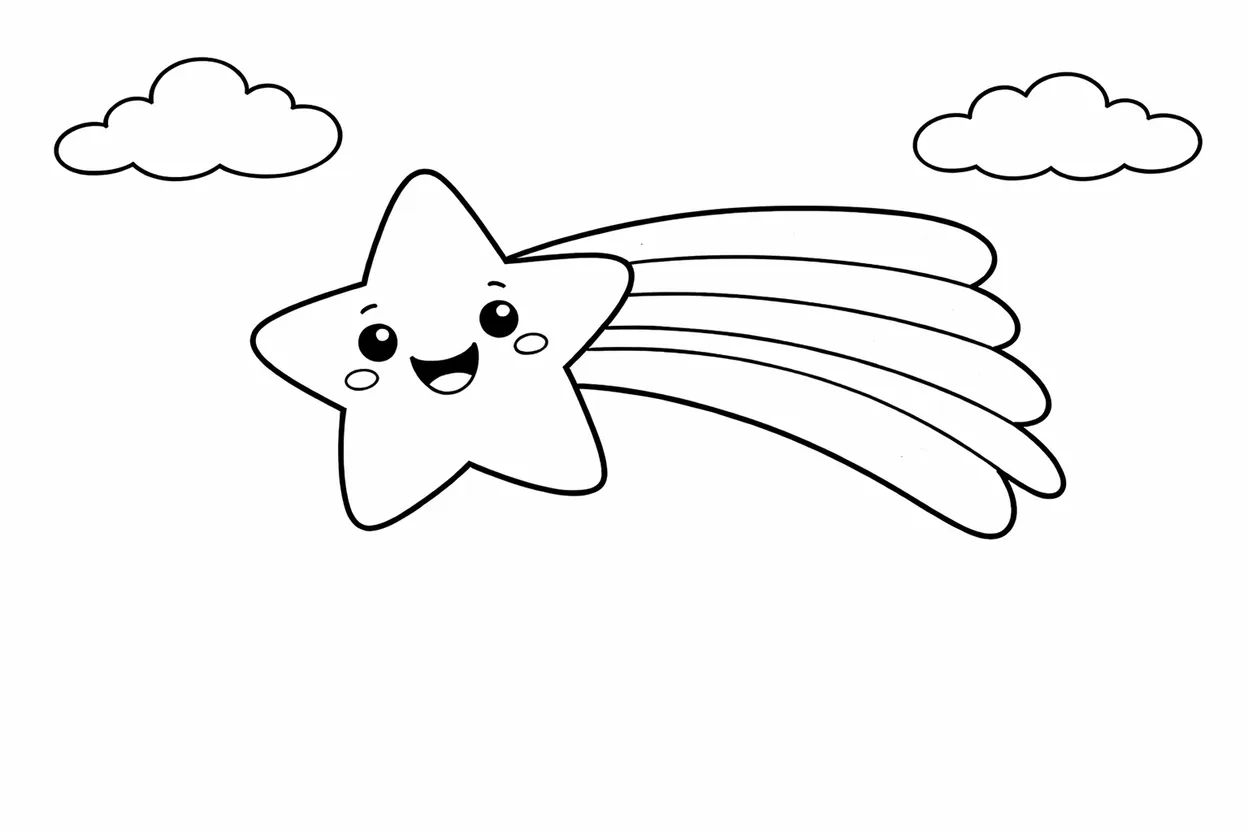
At first, it’s just a shape. But the beauty of star coloring sheets is that a strict form easily adapts to any scenario or age. For a two-year-old, it’s just a funny multi-pointed blob to fill with color. Older kids start giving objects a personality: the Keiki collection includes cute star coloring pages with eyes and unique emotions. These are great for developing emotional intelligence – the child chooses a color based on whether the character is sad or happy. Meanwhile, a classic stars coloring sheet without extra details acts like a metronome, helping the nervous system stay calm and focused.
Difficulty Levels: Choosing the Right Outline
We know that motor skills develop gradually. You can’t just skip important stages, even if they seem simple to adults. That’s why our stars coloring pages are divided into several types:
- Basic Silhouettes: The ideal star for coloring for the youngest artists. One large geometric object in the center of the screen keeps the focus on keeping color inside complex borders.
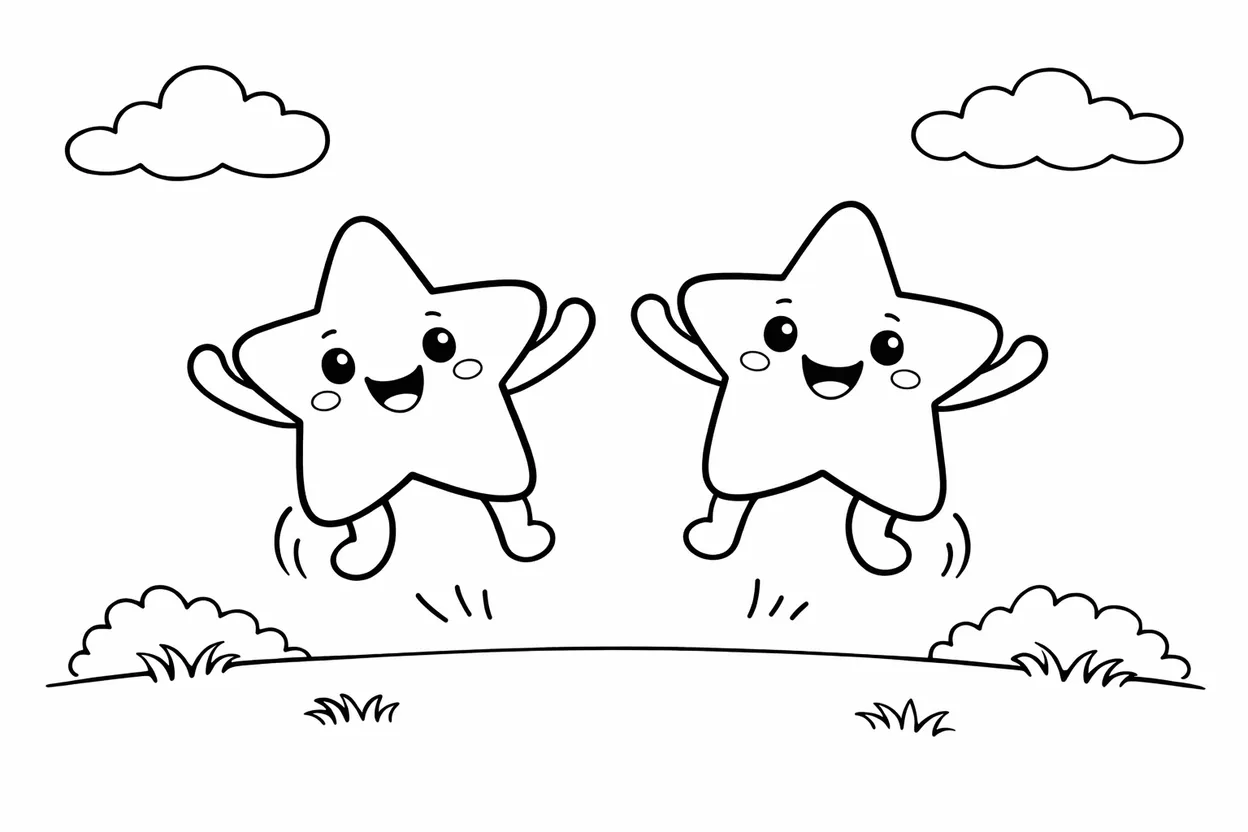
- Story Patterns: The shape becomes part of a larger scene. This is a full-scale stars coloring page where a toddler works with multiple elements of different sizes, training their eye and patience.
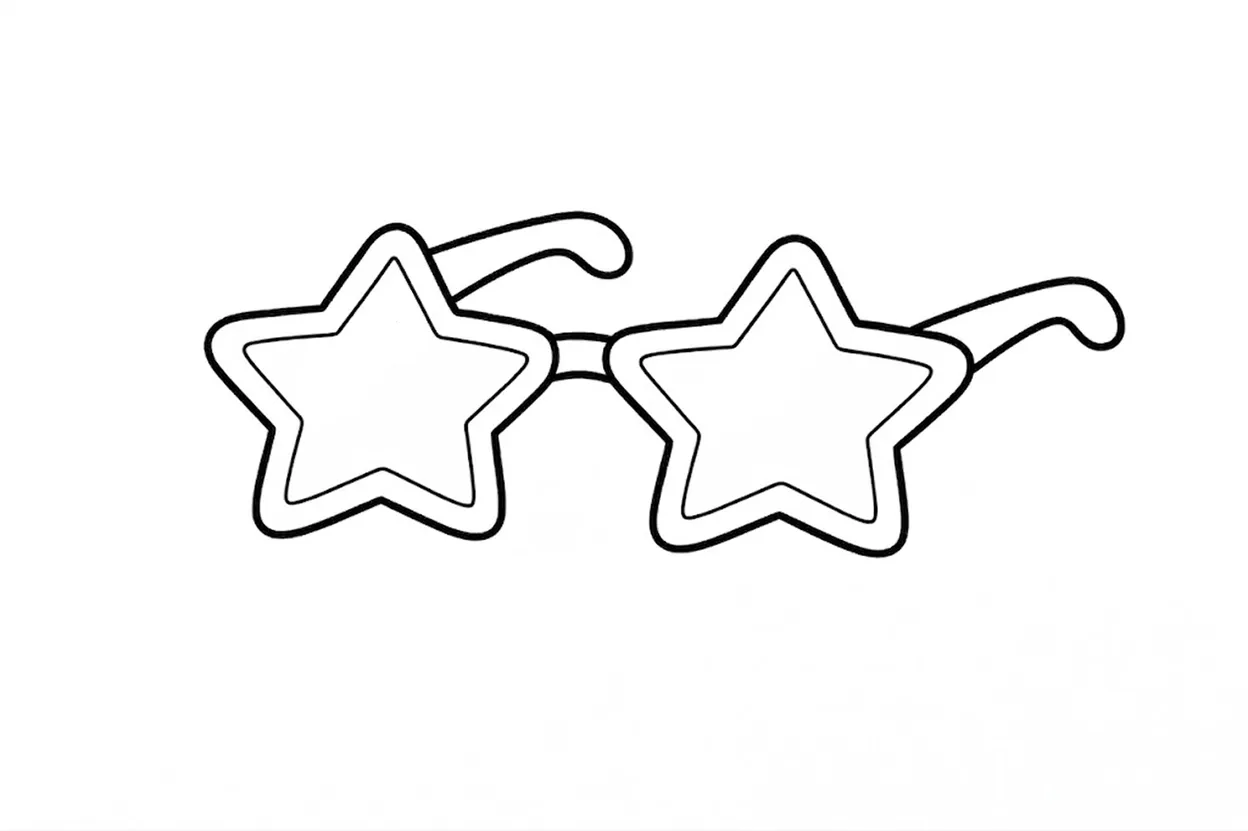
- Advanced Designs: For older preschoolers, we have fancy star coloring pages with internal patterns, sections, and intersecting lines. This requires precision and planning which color comes next.
Paper or Screen? Getting the Best of Both Worlds
An app's digital format gives a child the right to make mistakes – a stray stroke is easy to undo, and if they don't like a color, they can restart with one click. This removes the fear of "ruining" a drawing. However, for practicing a proper pencil grip, physical paper is best.
That’s why we don't limit you to just a tablet. You can easily find free printable star coloring pages online to bring digital skills into the real world. By picking a star coloring page printable, you let your little one feel the texture of the paper and the pressure of the crayon.
Having star coloring pages printable ready is a great backup for quiet evenings or when gadgets are out of battery. Star coloring with actual pencils, markers, or paints feels completely different from digital filling, as it engages different hand muscles. At Keiki, we always recommend using star coloring pages printable alongside the app.
The Practical Benefit of Sharp Angles
When we offer kids star coloring sheets, we are solving specific neuro-psychological tasks. A star with its rays is a universal development tool. While coloring it, a child learns to move from the center to the edges and stop their hand exactly at the sharp point. Even a single well-chosen coloring page star can keep a preschooler busy if you give them a creative task – like filling the shape with strokes instead of solid color. Regular stars coloring gives a child a clear understanding of boundaries and prepares the hand for writing.
People often ask
It’s all about physiology. Kids find it easier to make circular or broad sweeping motions. To color a sharp corner without going outside the lines, they have to change the hand's direction at exactly the right time. This skill (motor inhibition) usually develops around age 3.5–4, so going outside the lines is totally normal.
Any color you like! If the goal is learning the shape, the color is secondary. Using "unnatural" colors like green or purple is actually helpful: the child stops associating the star only with the sky and starts seeing it as an abstract polygon.
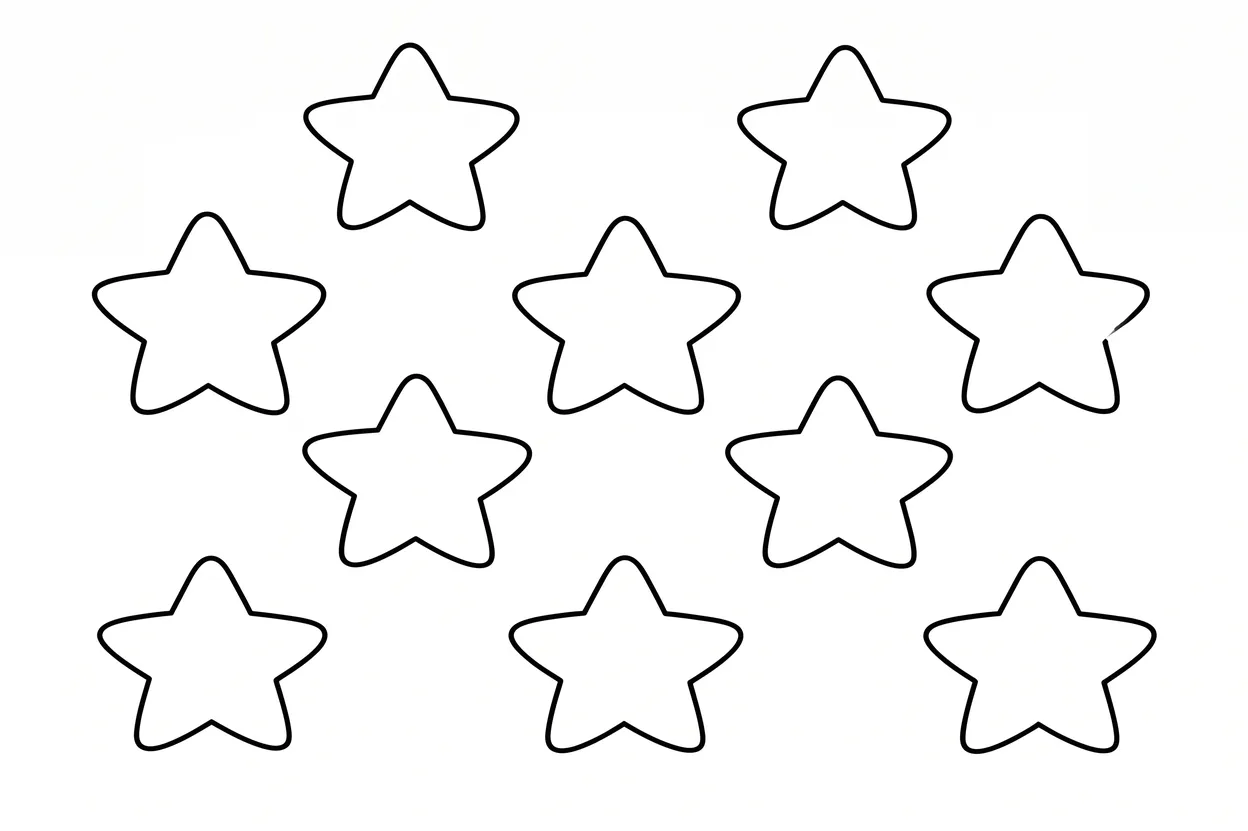
Yes, it’s a great method. You can count the points together; even young children can master counting to five this way. For older kids, print a sheet with many small stars and give a task: “Color three stars red and two stars blue.”
Drawing a star is a complex test of skill maturity. Usually, kids master this closer to age 5 or 6. Until then, tracing dots and coloring ready-made outlines is the best training.
Lower the pressure. Offer a thicker tool (a wax crayon or a thick brush in the app) – it fills the space faster and gives instant results. You can also show them that a stray mark can be turned into a "glow" around the star. The mistake becomes a creative choice!