

About this collection
Easy Kwanzaa coloring pages for kids — print at home today
Discover Kwanzaa coloring pages packed with kinara, candles and corn. Simple outlines that turn a blank page into proud artwork.

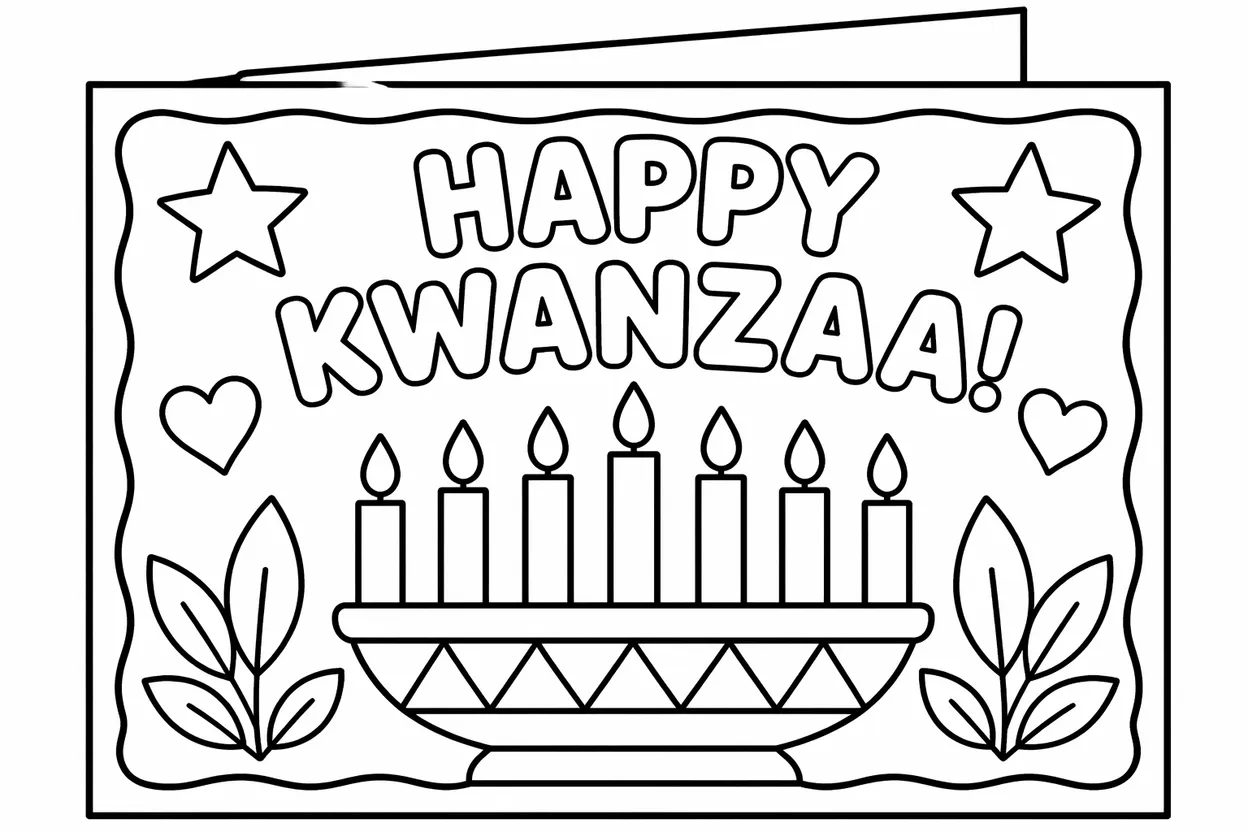
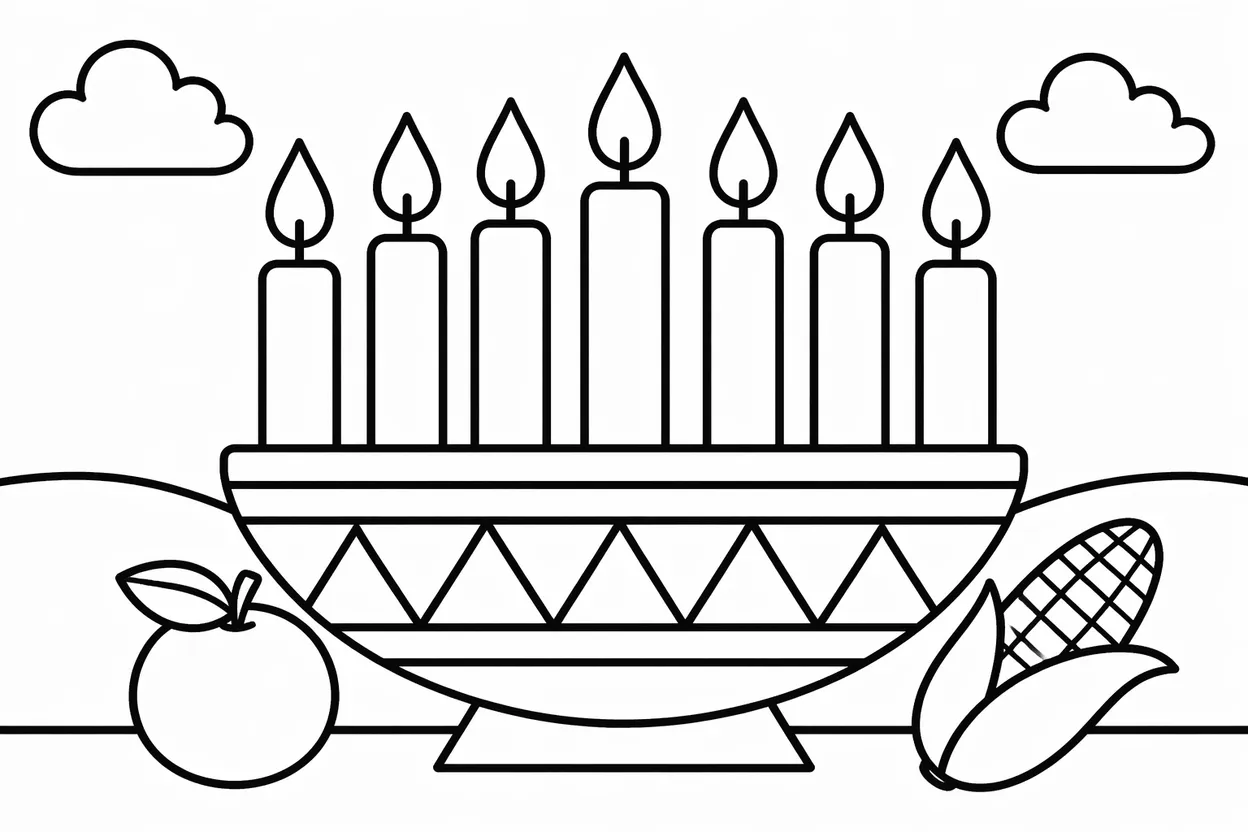
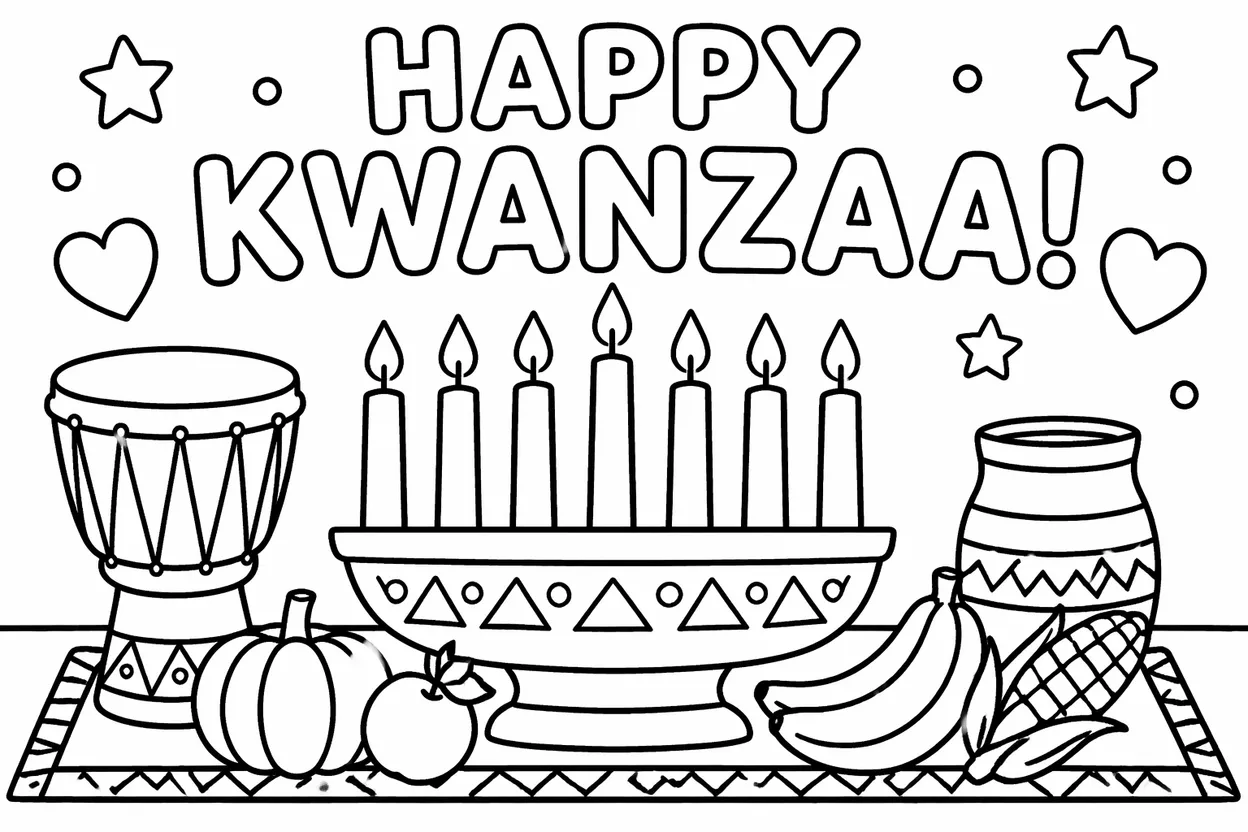
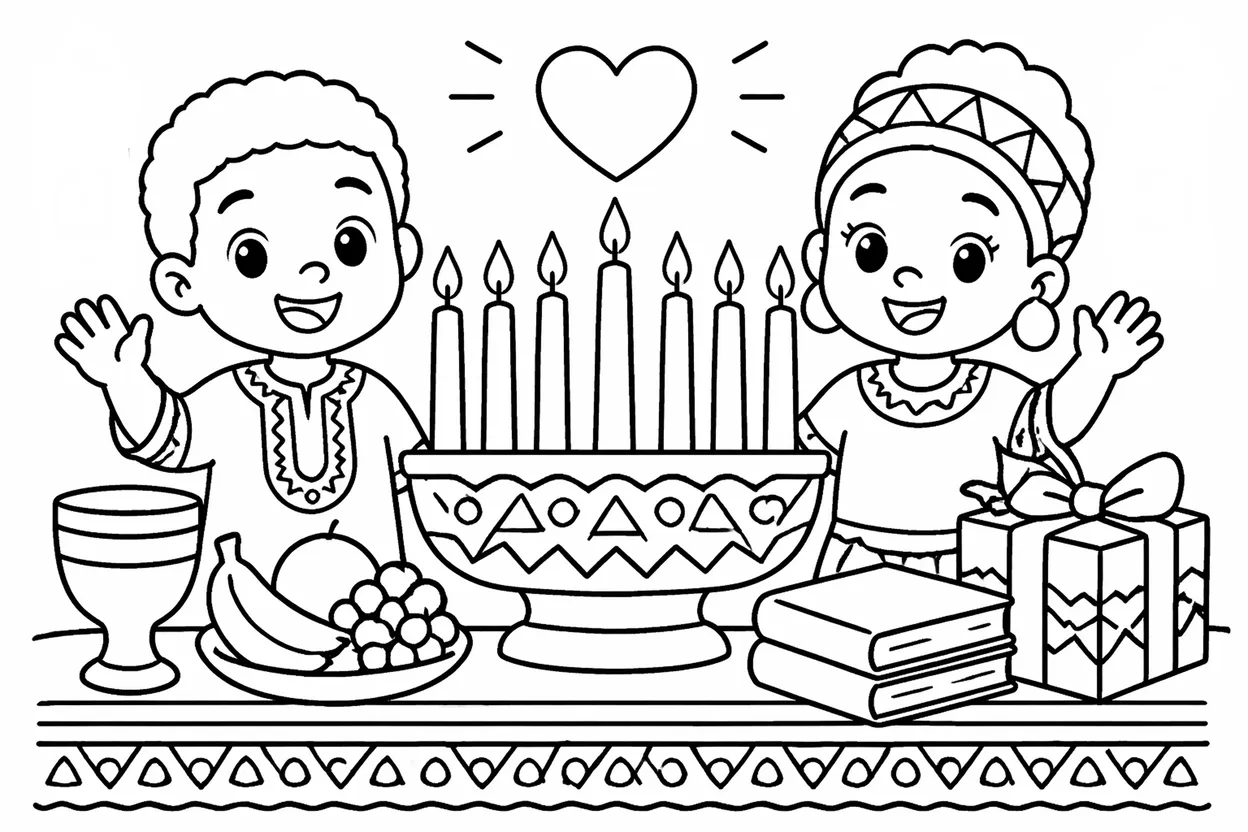
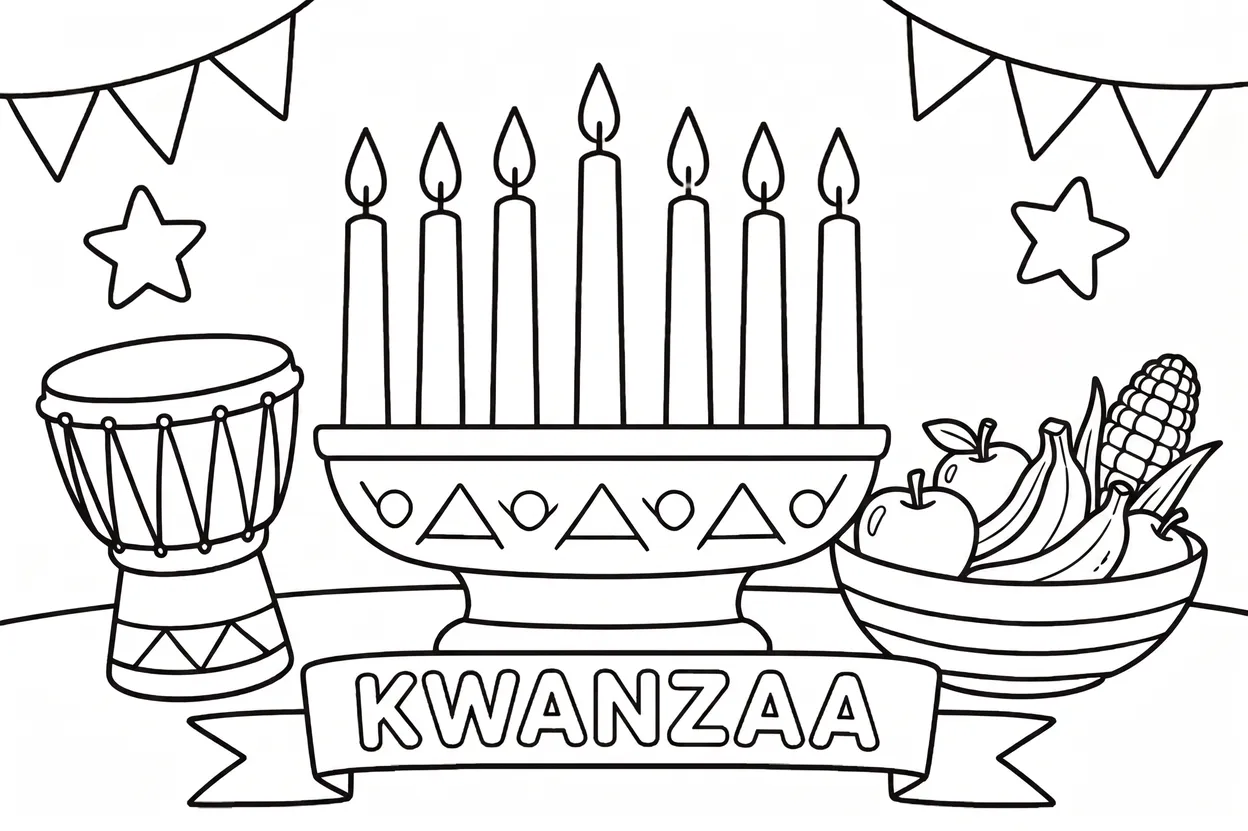
Inspiration with African Roots – Kwanzaa coloring pages
Children are open to studying the diversity of our world. Different traditions and holidays represent more than just respect and the ability to learn something new; they offer a chance to look at the world with fresh eyes and adopt a sense of beauty and inspiration. This is the benefit of Kwanzaa coloring pages, beyond the obvious opportunity to spend leisure time educationally, calmly, and creatively. If you celebrate this holiday, coloring pages can reveal its meaning and serve as a conversation starter. If you don't celebrate it, they are a reason to learn about a new culture.
Recognizable Symbols and Colors
The Kwanzaa holiday has a recognizable color palette: red, black, and green. The colors are bright and contrasting, sometimes even including yellow, which provides even more variety in combinations. Nevertheless, this is a set palette that children must learn to work with, demonstrating flexibility and trying different options. This is very beneficial for a child's logic and creative thinking.
When a local preschooler colors a traditional candlestick (Kinara) or a flag, they are essentially following a specific algorithm. It’s not just about choosing a favorite color, but remembering and repeating the correct sequence. This approach improves visual memory, which is particularly useful later in school. But that's not all! Attentiveness and self-control also develop, turning an ordinary Kwanzaa coloring sheet into a concentration test.
Geometry of Traditional Patterns
In addition to candles and fruit, the aesthetics of this holiday are closely linked to national fabrics, where strict geometric patterns prevail. For older preschoolers aged 4–6, detailed Kwanzaa coloring sheets work as a trainer for fine motor skills and the rapid development of hand movement precision. Believe me, in the future, this will have a very positive effect on the ability to master writing quickly and without problems.
Attempting to neatly color small diamonds, repeating zigzags, and triangles on the characters' clothing prepares the hand for school copybooks. This is painstaking work that calms the nervous system and teaches the child to focus on the rhythm and symmetry of the drawing. All these patterns in the app vary by difficulty level so that even young children can enjoy coloring them.
Coloring Formats to Complement Your Ideas
Coloring pages in the app provide mobility, simplicity, and developmental benefits. However, we shouldn't dismiss the good old-fashioned pictures that can be colored by hand. In Keiki, you will find Kwanzaa coloring pages printable, which effectively develop fine motor skills and can serve as a basis for crafts:
- Sensory Applications: Pictures often depict corn – a symbol of the holiday. Apply glue to the outline of the cob and suggest the child stick on real grains or yellow peas.
- Imitation Weaving: Traditional mats on printouts can be more than just shaded with pencils; they can be covered with thin strips of craft paper in a cross-wise fashion.
- Fabric Work: Cut out pieces of bright fabric with geometric patterns and use them in your drawings.
People often ask
Keep everything down to simple, basic things. There is no need for history lectures. Say that it is a holiday where the whole family gathers together, lights beautiful candles, gives thanks for delicious food, and gives each other gifts.
If you want to follow tradition: the center candle is always black. To the left of it are three red candles, and to the right are three green candles. Coloring the Kinara according to these rules is an excellent game for sorting and logic.
Yes, the Kinara (a candlestick with 7 candles) is your opportunity to count candles up to seven. You can count the candles from left to right during the coloring process or ask the child to find and color a specific candle by number.
Markers or felt-tip pens are ideal for sharp geometric patterns. They provide a dense, smooth, and bright color that makes the diamonds and zigzags on paper as contrasting and expressive as possible. Pencils might seem too pale to a child for such a task.
Turn drawing into a team project. In Kwanzaa, there is an important principle called "Ujima," which means collective work. Print out one illustration and agree to color it as a whole family. Let someone be responsible for the background, someone for the ornaments, and the child for the main characters.