

About this collection
Free printable January coloring pages for kids — download and print
January coloring pages featuring snowflakes, winter fun and new year kids adore. Ideal for classrooms, parties and cozy afternoons at home.
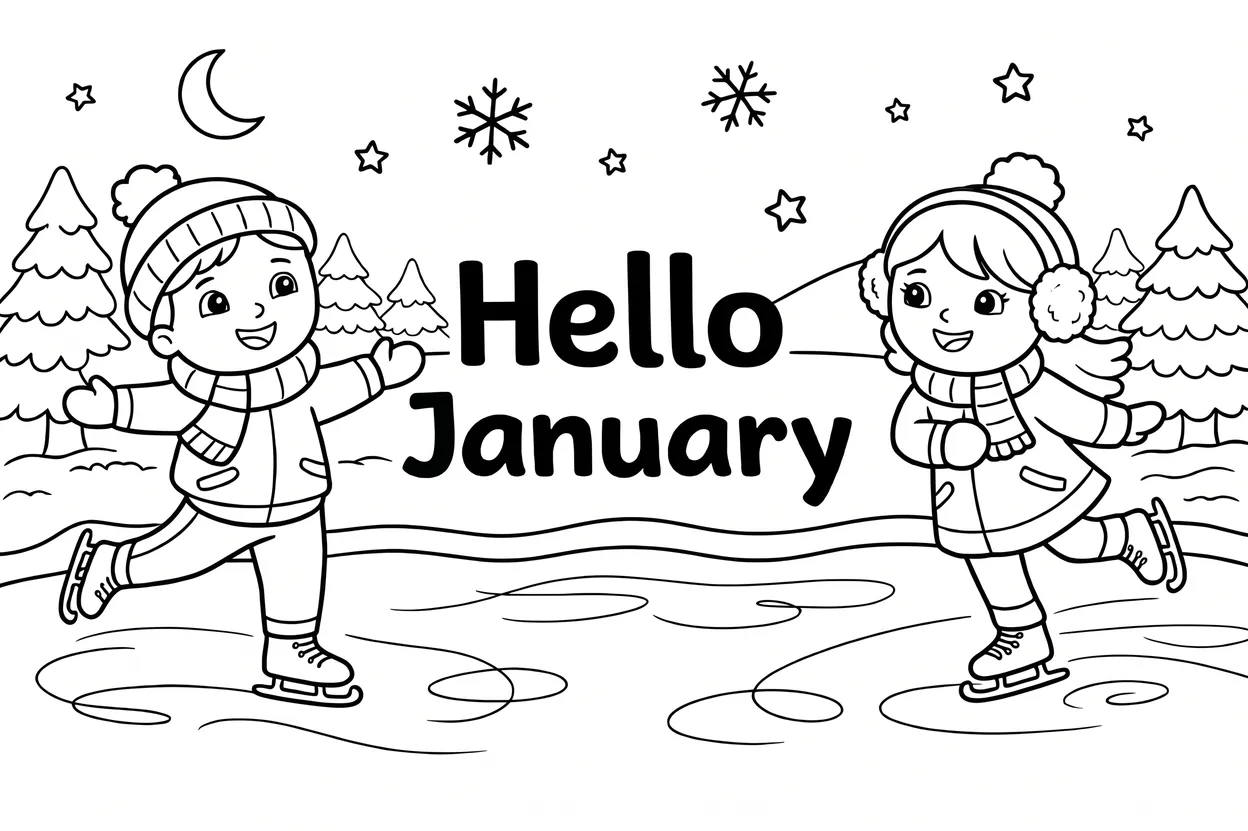


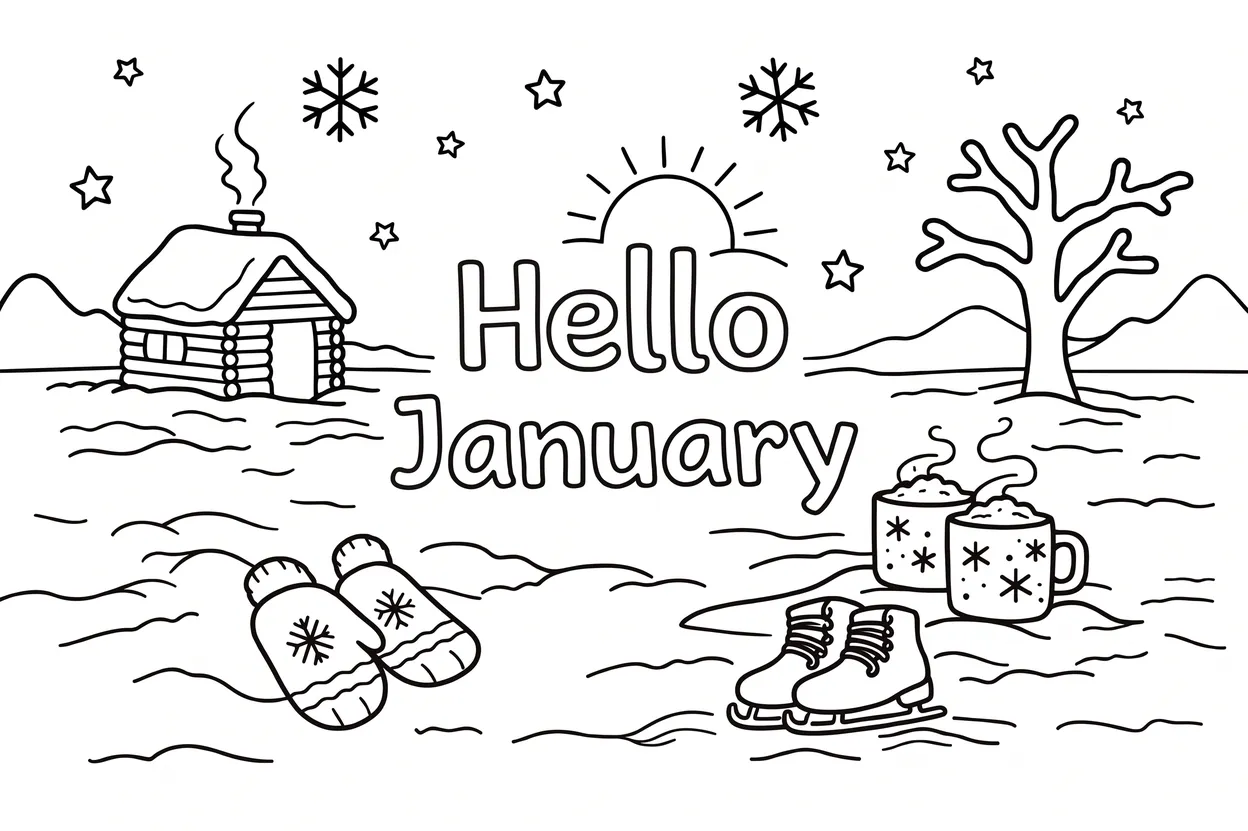

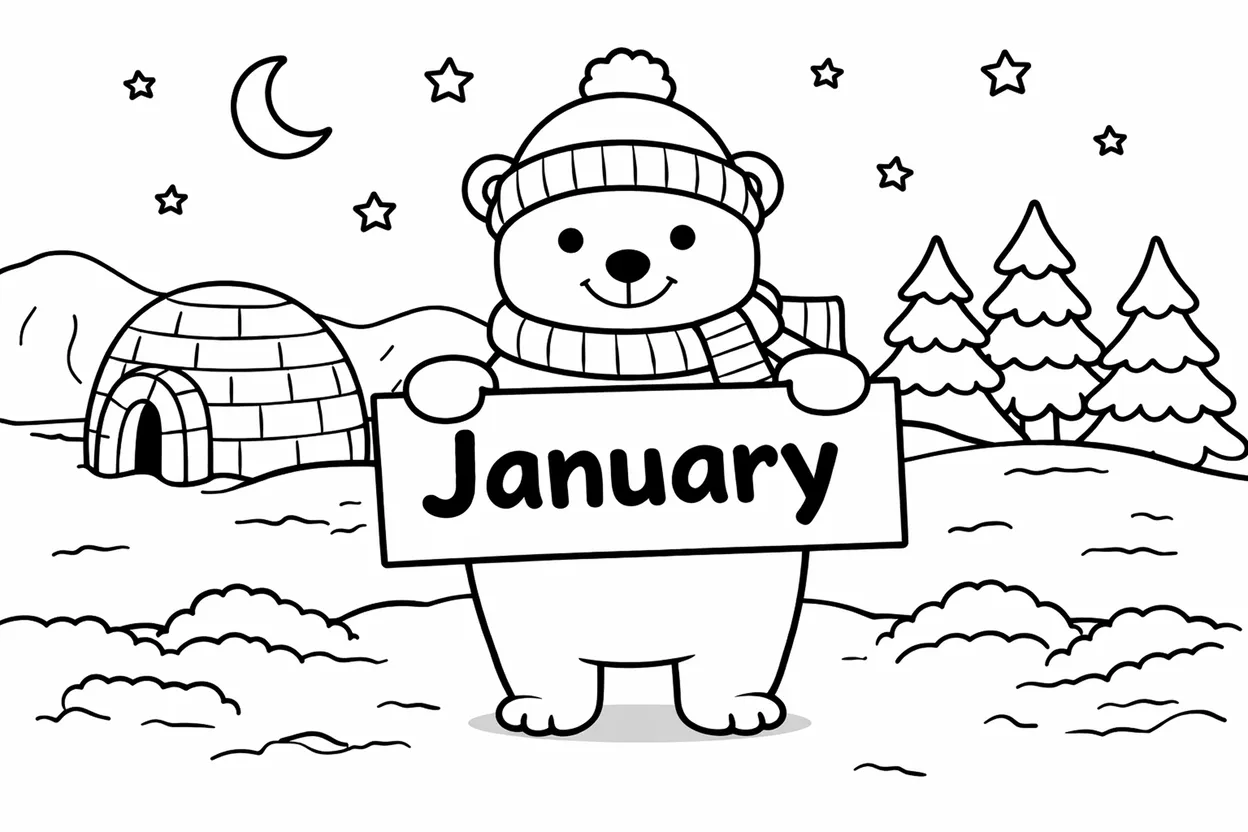
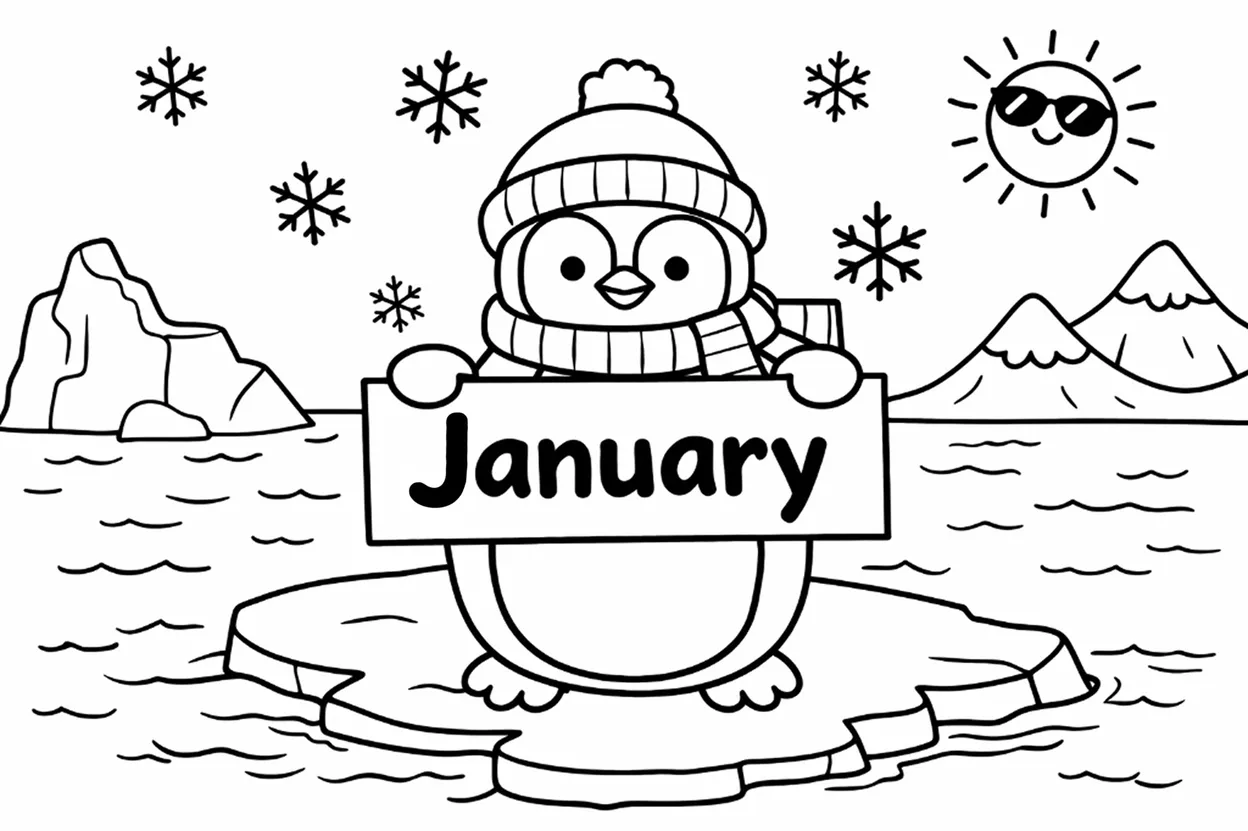

January coloring pages – the charm of calm winter days
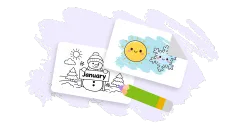
Winter aesthetics are more than just Christmas. The tree is taken down, the gifts are opened, and ahead lies a quiet routine of cold days, when spring is not yet in the air but daylight is slowly returning. For these long weeks, when outdoor play is limited but a child still needs engaging activities, january coloring sheets are the perfect solution. With them, children do not just swipe across a screen – they bring frosty patterns to life. By coloring snowdrifts, a child builds focus, learns about seasons and months, and begins to appreciate winter.
Learning the calendar through coloring
Winter months often blend into one endless white stretch for a child. But an atmospheric january coloring page helps make this month stand out and appreciate its quiet beauty. When you offer a january coloring sheet, you create a foundation for understanding time, seasons, and even individual months. Young children find it difficult to grasp the concept of time cycles, and coloring can become a natural starting point. Explain that January is the very first month of the year, the beginning of the calendar.
At Keiki, coloring pages january include recognizable markers: snow-covered fir trees, frosty windows, and thick knitted scarves. Regular use of january coloring pages for kids helps a child build a clear sequence: snowy January comes first, followed by stormy February, and then spring arrives. Abstract calendars may confuse, but visual seasonal examples make understanding much easier.
Winter palette – the magic of cool tones
Winter is often associated with white snow or gray skies, which can seem boring to children, especially those who prefer bright and warm colors. But coloring pages for january are a great opportunity to show the depth and beauty of cool tones, proving they are anything but dull:
- Frosty gradient. Show how to blend dark blue and light blue to create a deep winter sky over a forest or city.
- Dimensional white. Snow is not flat. On free january coloring pages, use light gray or soft purple shadows to make snowdrifts look full and realistic.
- Warm light in the cold. On an icy background, any warm light becomes more expressive. Yellow lanterns, glowing windows, or festive lights teach children about contrast.
Frosty patterns – online and on paper
Online cute january coloring pages allow children to dive into creativity anywhere, without preparation. The Keiki app provides all the tools needed, and any mistake can be cleared instantly.
At the same time, january coloring pages printable are perfect for long winter evenings at home, when going outside is not an option but energy still needs an outlet. Offline creativity supports fine motor development and prepares the hand for writing.
January coloring pages free printable offer endless opportunities for experimentation. They become a reliable source of creative ideas when a blizzard forces everyone to stay home and their usual toys lose their appeal.
Ideas for a winter paper story
Printable january coloring pages should not stay unused. Any finished page can turn into winter decor for a child’s room:
- Icy stained glass. Paint the page with watercolor and lightly coat it with vegetable oil to make it semi-transparent. On a window, it will catch soft winter light.
- Sensory snow. Use glue and coarse salt to create sparkling, textured snowdrifts on the page. Once dry, they feel fluffy to the touch and look realistic.
- Memory garland. Cut out the best elements and string them together to create a decorative story of the winter season.
People often ask
After their first conscious winter experience, usually around 2–2.5 years old. If a child has touched snow or seen ice, they will recognize these elements easily.
In addition to the salt technique, you can use toothpaste or shaving foam mixed with glue (1:1). It dries into soft, fluffy snowdrifts.
Yes. Working with blue, light blue, and white tones has a calming effect on the nervous system, unlike stimulating red or orange shades.
Turn the picture into a story prompt. Ask where the footprints lead or who lives in a snowy house. Creating stories together develops imagination and language skills.