

About this collection
Printable sledding coloring pages for kids — instant download and print
Discover sledding coloring pages packed with sleds, snowy hills and winter fun. Great for quiet time, rainy days and screen-free creativity.
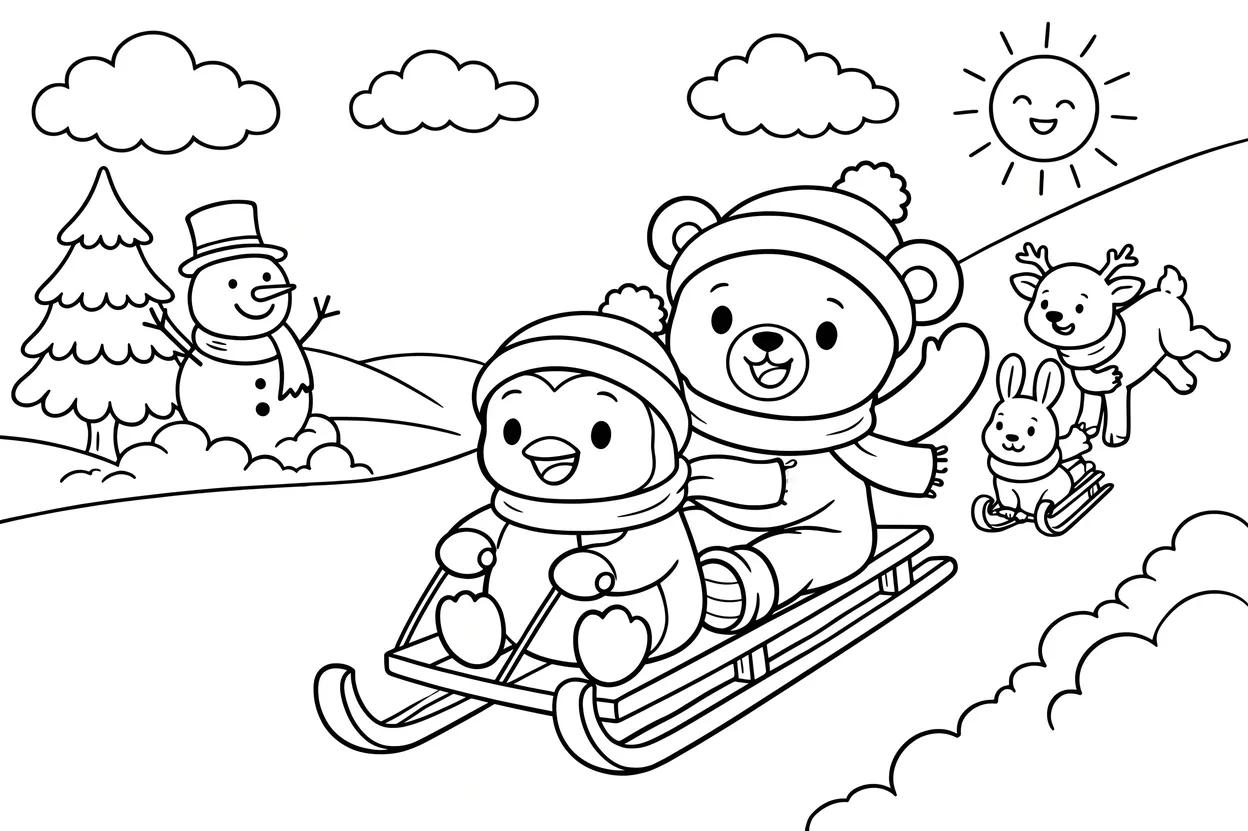

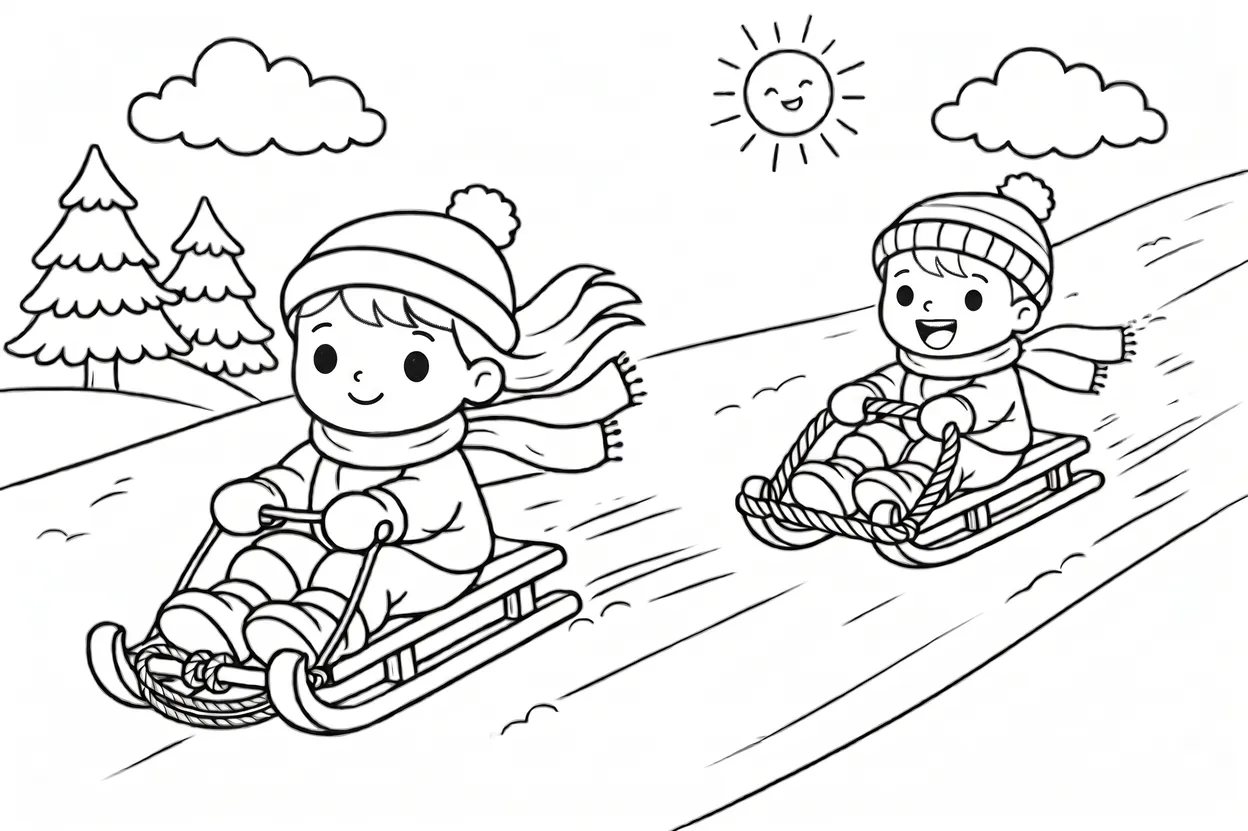
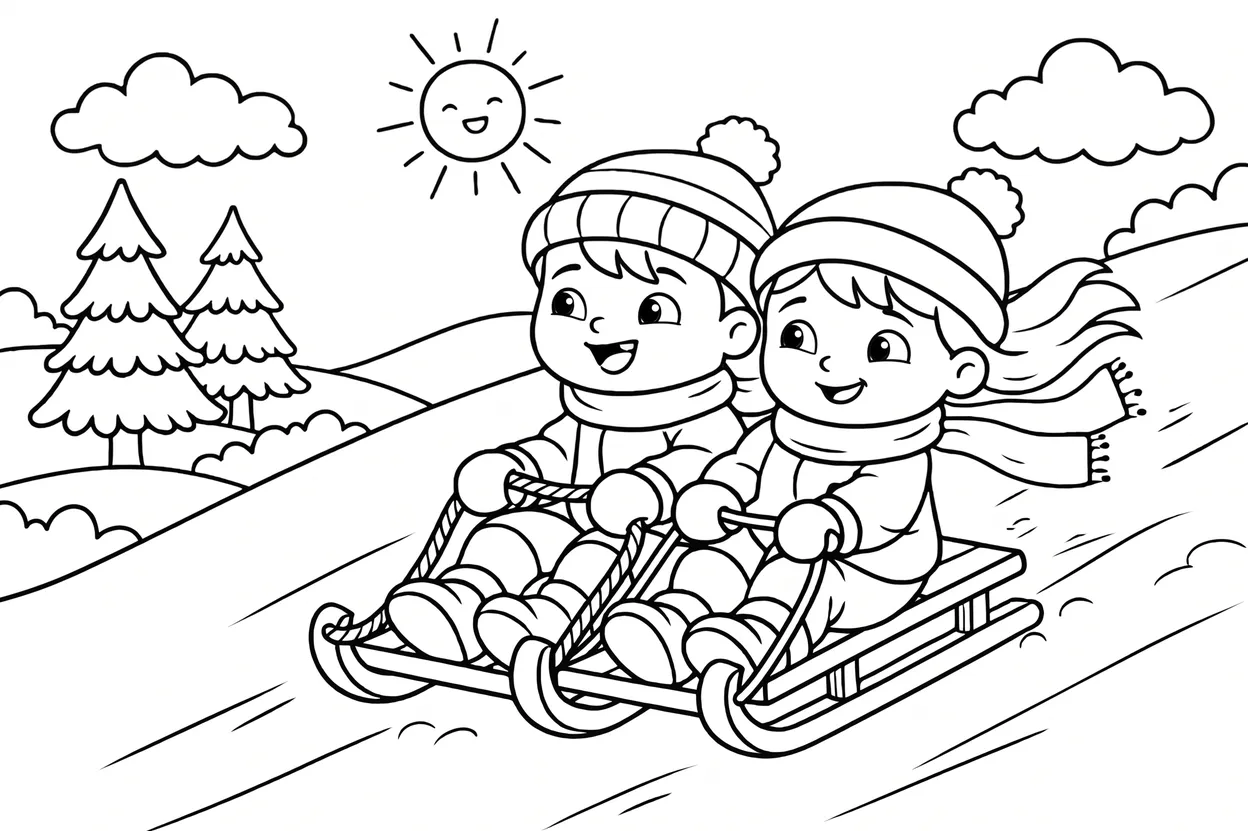
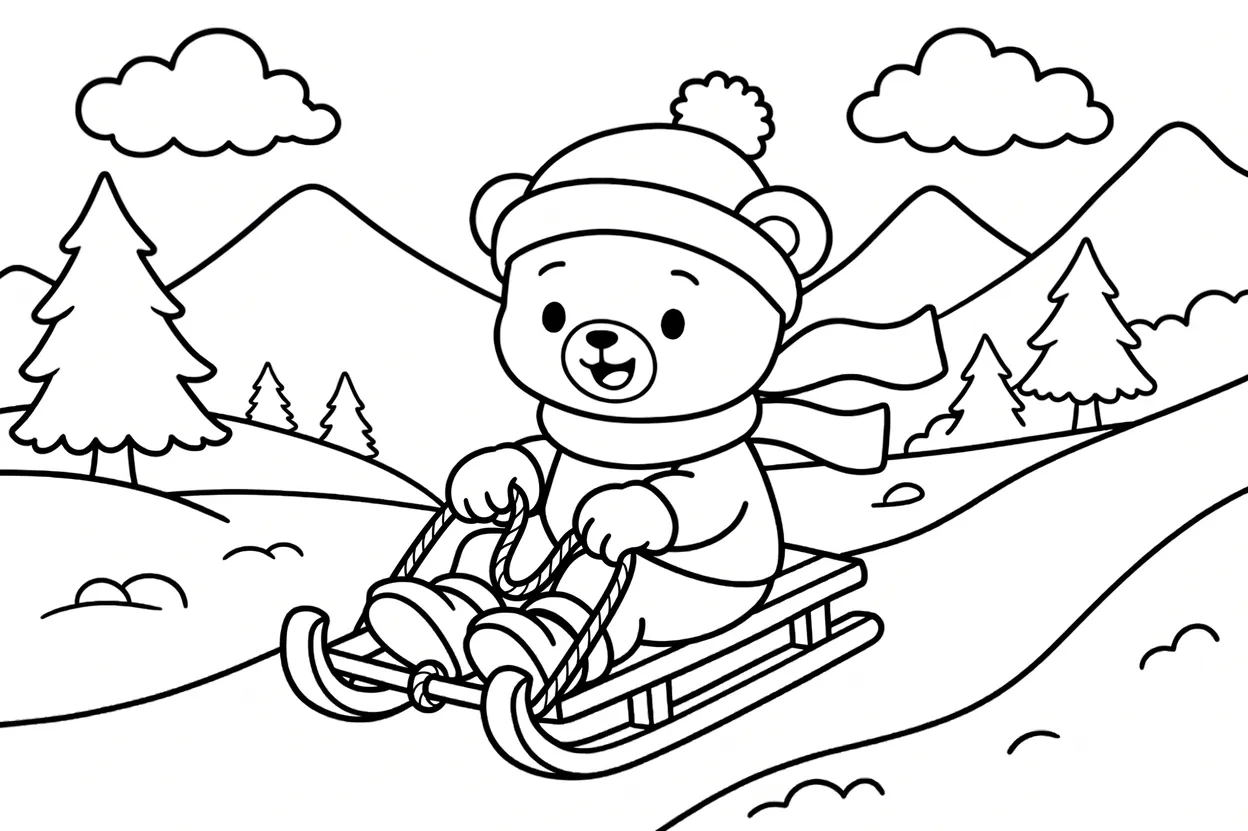
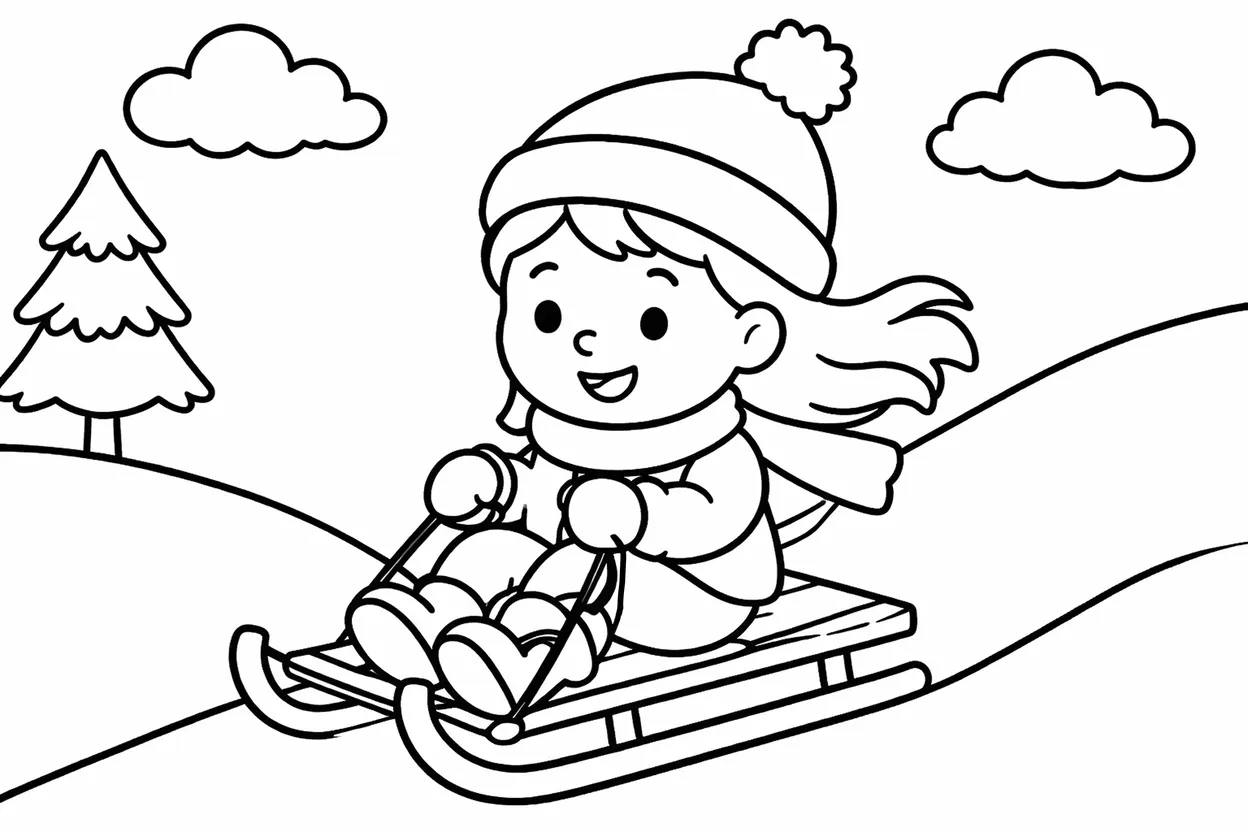
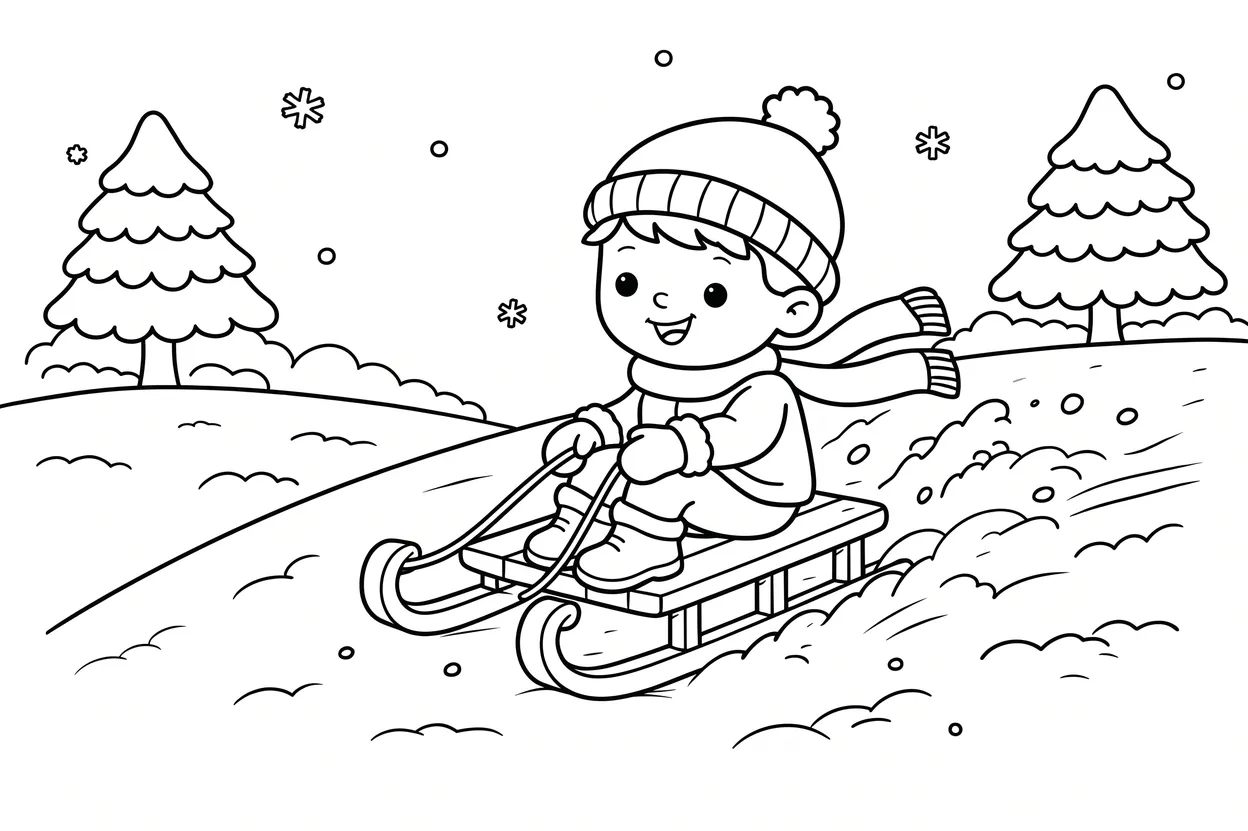
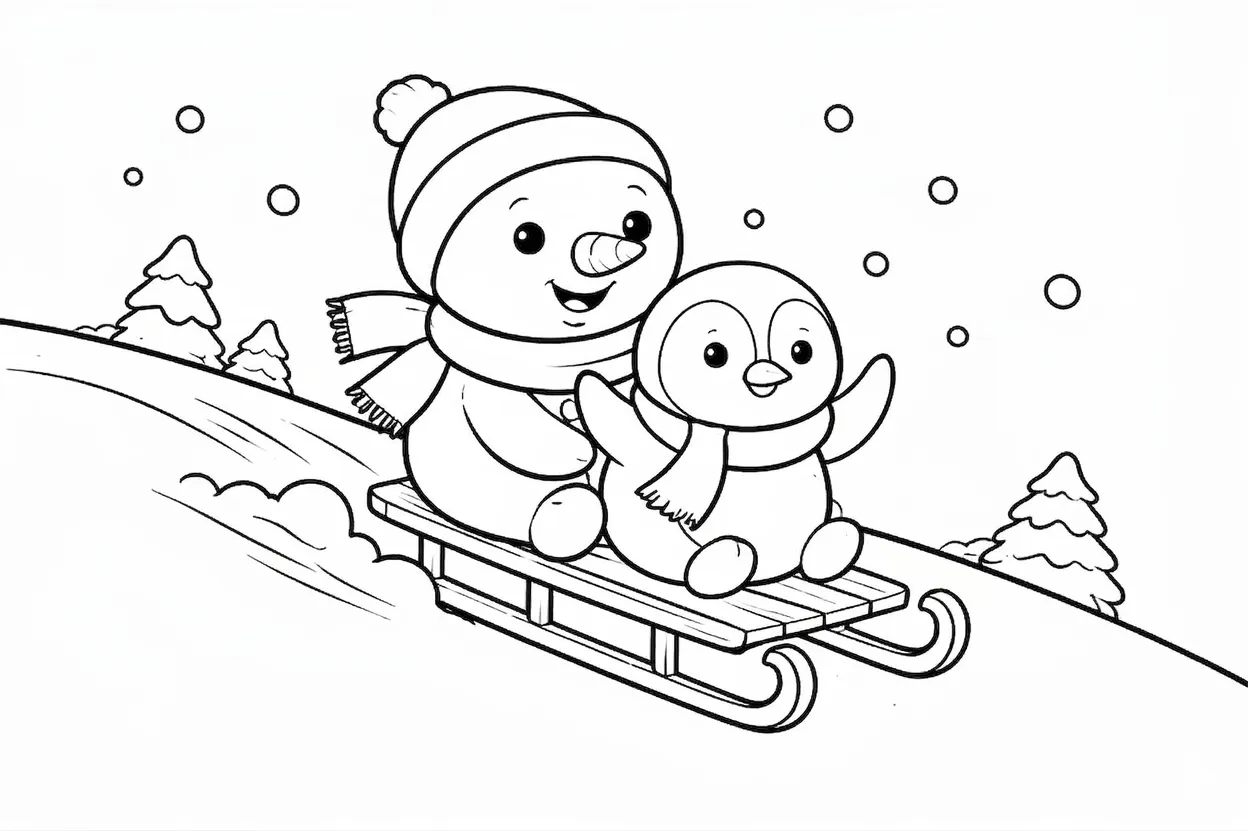
Children's Favorite Winter Fun with Sledding Coloring Page
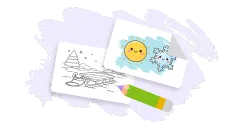
Winter scenes should be exciting. Winter is not a time for boredom, although it seems that way to many. But where the frost scares some, it inspires others – not only for creativity but also for winter activities. Breathing fresh air, moving, and hardening the body with sledding is a pure benefit. However, no matter how you look at it, moderation is needed here; otherwise, snowy adventures will quickly end with a sore throat and wet feet. But moderation is not needed in creativity, as any sled coloring page proves. Relax after a walk with benefits for development.
The Benefits of Winter Action
It might seem like a picture of a sled is just fun and games. But from the perspective of neuropsychology, working on such a plot covers several important developmental tasks:
- Development of fine motor skills. Carefully coloring the thin metal runners of a sled or a long fluttering scarf is a task that is not so easy for children. The child learns to control pressure and not go beyond the narrow boundaries of the outline.
- Patience training. Descending a mountain happens in seconds, but for a sledding coloring page to turn out beautiful, patience is required. The child concentrates on details, mentally living through this descent again, but in a comfortable, slowed-down pace.
- Unlocking creative potential. The snow around is white, but the characters' clothes and the sleds themselves can be any color. Movement and fantasy merge together, giving the toddler room for experimentation.
How to Color Speed?
Sledding is pure dynamics. When children color such scenes, they become familiar not only with the concept of safe sledding but also with how an image can convey movement. The tilt of the character's body, a hood thrown back, clumps of snow flying from under the runners – all these details make the drawing come alive.
Emotions and Rosy Cheeks
Any descent from a mountain is adrenaline and pure joy. This is conveyed by a sled coloring page, drawing attention to the characters' faces. By coloring wide smiles, eyes squinted from the oncoming wind, and the characteristic frosty flush, a toddler boosts their emotional intelligence.
You can suggest the child enhance this effect. For example, make the hero's cheeks even redder or add thick white strokes imitating steam from the mouth in severe frost. Attention to detail helps children better understand their own emotions and transfer the delight experienced outside directly onto the sheet or screen.
People often ask
Approximately by age 3–4. Before this age, children simply fill voids with color, but later they begin to read the context: they understand that the tilt of the sled means movement, and a fluttering scarf means wind.
Definitely yes. In psychology, this works as a safe immersion into a scary situation. With a sledding coloring page, the child adopts the characters' emotions and gradually reduces the level of their own anxiety before real winter action.
You can talk about shadows and contrast. Suggest the toddler lightly outline the sled's contour with gray, blue, or purple. This way, the object immediately becomes voluminous and stops merging with the background. Also, the sled does not have to be white.
If you printed the picture, the ideal option is the splatter technique. Dip an old toothbrush into white gouache and run your finger over the bristles above the sheet.
Turn on "co-author" mode. Suggest the child take a thick pencil and boldly draw a diagonal line right under the runners. One simple action, and a flat picture instantly gains a massive slope and a cool plot.