Tennis Games for Kids – 15 Ideas for Active and Educational Play

You may know nothing about tennis except that it requires rackets. Or you may love the sport, watch Grand Slam tournaments, and dream of stepping onto the court with your child one day. Whatever your perspective, it is hard to deny that tennis is healthy, educational, and engaging for children. Especially for children. Yet this is where adults often make their biggest mistake.
We try to impose adult rules on preschoolers. Children do not need perfect serving technique. They need fun. If you want to introduce your child to this wonderful sport without tears and frustration, you need adapted tennis games for kids. In this detailed article, we have collected plenty of exciting ideas. We will show you how to use balloons, frying pans, and cardboard plates to turn an ordinary practice session into a celebration.
Why Tennis Games Are Great for Young Kids
Tennis is one of the most balanced sports for child development. When we remove strict rules and turn practice into fun tennis games for kids, children gain enormous benefits for both body and mind:
- Development of coordination. Following a fast-moving yellow ball with the eyes while positioning the body for a shot is an incredibly complex task for the brain.
- The magic of footwork and agility. Tennis is a sport played with the feet. The ability to start quickly, change direction, move sideways, and stop suddenly builds overall athleticism.
- Concentration and focus. It is impossible to play tennis while thinking about something else. Children learn to focus completely on the present moment.
- A safe active environment. Tennis involves no direct physical contact with an opponent. Each player stays on their side of the court, reducing the risk of accidental collisions and injuries.
Help your child
grow with Keiki
We’ll help you turn everyday screen time
into real learning progress.
Tennis Games for Toddlers and Preschoolers
Children aged 3–5 are not yet ready to hit real tennis balls. Their wrists are still weak, and their visual reaction speed cannot keep up with the bounce. That is why our tennis games for little kids focus on racket control and understanding movement principles.
1. Balloon Tennis
What you need: Paper plates, wooden popsicle sticks (glued to the plates as handles), and a regular balloon.
How to play: Inflate the balloon and give children their homemade plate rackets. The goal is to hit the balloon back and forth or simply keep it in the air without letting it touch the floor. The balloon falls slowly, ensuring success and plenty of laughter.
2. Walk the Dog
What you need: A lightweight children's racket and a foam ball.
How to play: Tell your child the ball is their puppy and needs a walk. The child guides the ball along the floor using only the racket, navigating around cones or furniture. The ball must stay on the ground.
3. Racket Balance
What you need: A racket and a beanbag or foam ball.
How to play: Place the object on the racket strings. The toddler's task is to walk from one end of the room to the other while balancing it, like a waiter carrying a tray. Add obstacles for extra challenge.
4. Hungry Crocodile
What you need: Lots of soft balls and a basket (or a racket cover).
How to play: The parent becomes a Crocodile with an open mouth (the basket). Roll balls toward the child, who must use the racket to guide each ball into the crocodile's mouth. This teaches control of shot power.
5. Catch the Egg
What you need: A very soft ball.
How to play: Stand a few steps away and gently toss the ball in an arc. The child should not hit it. Instead, they must catch the ball on the racket strings so softly that the "egg" does not break or bounce away. This develops touch and control.
6. Floor Rally
What you need: Two players with rackets and a ball.
How to play: Children sit on the floor a few feet apart with their legs spread. They roll the ball back and forth using only their rackets. This introduces the concept of a rally without complicated footwork.
7. Sticky Tennis
What you need: Sticky paddles and a fuzzy ball.
How to play: Instead of hitting the ball, preschoolers try to catch it on the sticky surface. This removes the stress of missing because once the ball touches the racket, it stays there.
Tennis Ball Games to Play at Home Without a Court
You do not need a sports club to practice. A hallway, garage, or backyard can become the perfect training space. If you are looking for tennis games to play with kids at home, these activities are ideal.
8. Wall Target Practice
What you need: Painter's tape and a foam ball.
How to play: Tape several squares of different sizes onto a wall and assign point values to each one. The child throws or hits the ball toward the targets. This develops accuracy, a key skill for serving.
9. Up-and-Down Taps
What you need: A racket and a tennis ball.
How to play: Ask the child to bounce the ball upward off the racket strings without letting it hit the ground. Once that becomes easy, switch to bouncing the ball on the floor like a basketball. Who can keep it going the longest?
10. The Frying Pan
What you need: A racket and a ball.
How to play: The child holds the racket like a frying pan. They place the ball on the strings, toss it upward, quickly flip the racket, and catch the ball on the other side. "Flipping pancakes" teaches quick grip changes and adaptation.
11. Hallway Tennis
What you need: Painter's tape and a foam ball.
How to play: On a rainy day, place a strip of tape across a hallway as a net. Use rackets – or even sturdy books – and rally a foam ball over the net, allowing it to bounce off the walls.
12. Slalom Dribble
What you need: A racket, a ball, and cones (or plastic bottles).
How to play: Arrange the bottles in a line. The child weaves through them while guiding the ball along the floor with the racket, similar to hockey. If the ball escapes, start again. Excellent for practicing small controlled steps.
13. The River Jump
What you need: Two ropes or jump ropes.
How to play: Place the ropes parallel to each other on the floor to create a river. Toss balls so the child must jump or lunge across the river to return them.
14. Red Light, Green Light
What you need: A racket and a ball for each player.
How to play: Children start while tapping the ball upward on their rackets. The leader faces away and calls "Green light!" Players move forward while continuing to tap the ball. When the leader calls "Red light!", everyone freezes and balances the ball on the racket. Anyone who drops the ball returns to the start.
15. Catch and Trap
What you need: A racket and a ball.
How to play: The parent tosses the ball so it bounces once. The child does not hit it. Instead, they must trap the ball under the racket immediately after the first bounce. This teaches moving toward the ball instead of waiting for it.
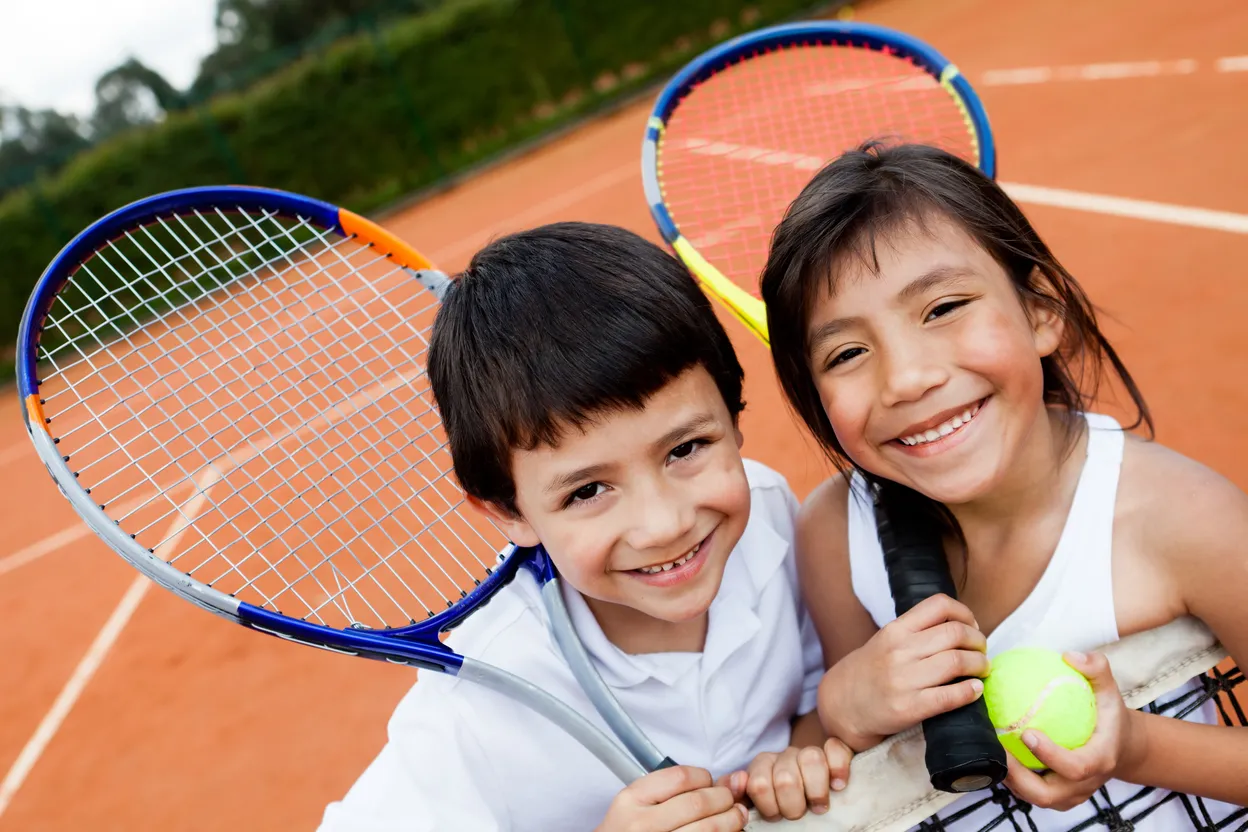
Tips for Introducing Tennis to Young Beginners
To make kids tennis games enjoyable, prepare both the equipment and your attitude correctly:
- The right size matters. Never give a preschooler an adult racket. It is too heavy and can damage technique. Children aged 4–5 need rackets that are 17–19 inches long.
- Forget yellow balls. Standard balls bounce too high and too fast. Use red balls, which are 75% slower and larger, or foam balls that are perfect for beginners.
- Do not correct the grip every five seconds. At ages 4–6, developing a love for the game matters more than technique. If a child holds the racket with two hands and still manages to hit the ball, praise the effort. Technique can come later with a coach.
And, of course, take breaks. Tennis requires a lot of energy, and children may not notice when they become tired.
Help Your Child Stay Active and Learn with Keiki
Tennis is demanding. Jumping, constant visual focus, and running can drain even the most energetic child in half an hour. You may notice your child holding the racket less confidently or becoming distracted. When that happens, it is time for a change of pace.
The brain and nervous system need calm, focused activities. The Keiki app serves as the perfect bridge between active play and rest. Helpful activities include:
- Puzzles and flashcards – excellent for fine motor skills, hand–eye coordination, attention, and reaction speed.
- Brain-development games – focused on logic, resourcefulness, and quick thinking.
- Coloring activities – great for preparing the hand not only for writing but also for confidently holding a racket.
Alternate active tennis ball games for kids with calmer educational activities to support balanced development and prevent boredom.
Build real skills through fun, educational games for your child
Try KeikiConclusion
Raising a future Wimbledon champion is an ambitious goal. But it is far more important to raise a healthy, coordinated, and happy child who is not afraid to try new things.
Tennis does not have to be an elite sport hidden behind club doors. Your tennis activities for kids can begin right now in your living room with a paper plate and a balloon. Laugh at missed shots, invent your own rules, and celebrate every successful hit. Use these ideas to show your child that sports are fun.