Best Activities for 3 Year Olds

Activities for 3-year-olds help build language, motor skills, and confidence through play. These simple ideas support learning and movement with quick setups that fit preschooler energy and attention.

Activities for 3-year-olds to build skills through play
Your toddler has gained a lot of knowledge once they turn 3. Their development is seen through emotional, physical, and mental changes. The important thing here is to continue to help your kid enhance their skills and abilities by implementing different exercises appropriate for their needs. In this article, we’ll explore useful activities for 3 year olds to keep your toddler engaged during the learning process.
The best pastimes for toddlers are those that include the play element. It remains the main channel of how they learn. Play provides children with many sensory, physical, and cognitive experiences. Consequently, it strengthens brain connections, allowing them to develop physically, intellectually, socially, and emotionally. So, let’s learn more about different exercises designed to improve those skills and abilities.
Cognitive Development Activities
At 3, kids are endlessly curious – communicating more clearly, noticing opposites and similarities, building memory, and starting to count. Here are activities that help channel that energy into growth:
Puzzles
Simple jigsaw puzzles with large, colorful images are perfect for this age. As your toddler figures out which pieces connect, they practice problem-solving, patience, and attention to detail. Start with 4-6 piece puzzles and gradually increase the challenge as they gain confidence.
Memory Matching Cards
Place pairs of cards face down and take turns flipping two at a time to find a match. It sounds simple, but this game quietly builds concentration, visual recognition, and short-term memory. You can start with just 5-6 pairs and add more as your child gets the hang of it.
Storytelling and Reading
Pick a picture book and read it together – but make it interactive. Pause and ask what they think will happen next, or invite them to retell the story in their own words after you finish. This back-and-forth strengthens vocabulary, comprehension, and imaginative thinking all at once.
Help your child
grow with Keiki
We’ll help you turn everyday screen time
into real learning progress.
Motor Skills Activities
Fine motor control – using hands and fingers with precision – sets kids up for real independence: buttoning shirts, tying shoes, feeding themselves. These activities make that development feel like play:
Playdough
Rolling, squeezing, pinching, and shaping playdough gives little hands a genuine workout. Encourage your child to make animals, food, or whatever they imagine – the freer the play, the more engaged they'll stay. Even just poking and flattening it builds the hand strength they need for writing later on.
Building Blocks
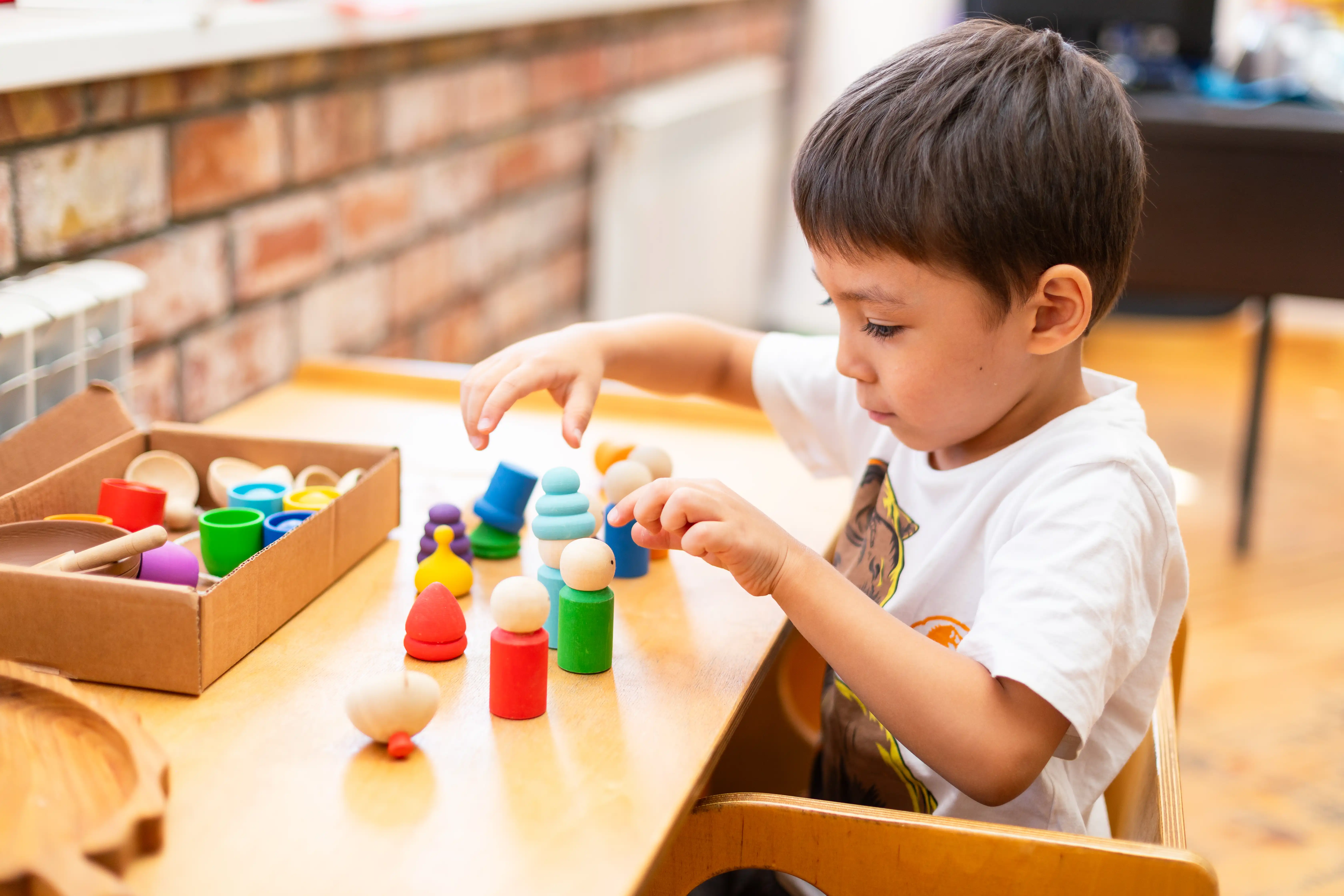
Stacking and arranging blocks requires the kind of careful, deliberate hand movements that directly train fine motor control. As your toddler tries to balance one block on another without the tower falling, they're also quietly developing focus and spatial reasoning – a lot happening in a simple game.
Sorting
Give your child a mix of colorful objects – buttons, toys, shapes – and ask them to group them by color, size, or form. Picking up and placing small items one by one refines grip and hand control, while the sorting itself builds early categorization thinking and concentration.
Social and Emotional Development Activities
By 3, kids are becoming more self-aware – recognizing emotions in themselves and others, reacting to how people around them behave, and showing real affection. Supporting that growth now builds the foundation for healthy relationships and emotional resilience. Here are some activities that help:
Role-Play Games
Dress-up, pretend cooking, playing doctor – whatever captures your child's imagination. Role-play naturally puts kids in other people's shoes, helping them understand social roles and start noticing how others might feel. You don't need much: a few props and a willing play partner (that's you) are enough.
Creating Art Together
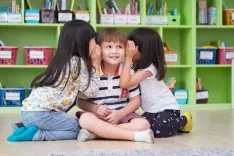
Drawing or painting side by side – with a parent, sibling, or friend – teaches kids how to share space, materials, and attention. The conversation that happens naturally during art ("what are you making?", "can I use the blue?") builds communication and cooperation without any structured lesson required.
On-the-Spot and Circle Time Discussions
When your child is playing with others, gently narrate what you observe: "Do you think she wants to join in?" or "How do you think he felt when that happened?" At home, create a simple daily ritual of taking turns sharing how the day went – a few minutes of back-and-forth that builds listening, empathy, and the ability to put feelings into words.
Educational Games: Fun Things to Do with a 3 Year Old
80% of a child’s brain develops during the first three years of life. The more you stimulate its activity, the more responsive it’ll be later. That’s why engaging your toddler in learning games is important. Due to the unique needs of this age, every exercise must combine play and educational features. The following are fun activities to do with a 3 year old, perfect for entertainment and learning.
Board Games
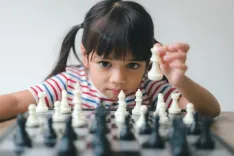
These classic and simple games are incredibly beneficial for your kid’s development. The set consists of colorful boards and large pieces created with children’s age needs in mind. Each focuses on promoting basic skills, including color recognition, turn-taking, counting, and memory.
With numerous designs and themes, you can find a suitable option for any taste. Whether you’re looking for 3 year old boy activities that involve puzzles or pizza making for a 3-year-old girl – there’s a myriad of different choices to engage your little one.
Word Flashcards
Incorporating the play element, educational games with word flashcards are both productive and fun. Focus on sets that include the basic names of animals, colors, shapes, body parts, numbers, family members, and common objects. The best part of these cards is that they have corresponding pictures that those names refer to. In this way, your toddler will have fun by looking at the colorful images and learning new words at the same time.
Listening Games
How to entertain a 3 year old and enhance their listening abilities? Introduce them to thrilling games that focus on providing an enjoyable time and an educational aspect. The main benefit is that you can play these games wherever you are. For instance, when walking in the park, ask your kid to shut their eyes and listen to the sounds around them. Remember about the classic option – Musical Chairs, a great exercise to build listening and focus skills through play.
Build real skills through fun, educational games for your child
Try KeikiTips for Engaging Your Toddler in 3 Year Old Activities
Encouraging your kid to participate in useful exercises may be a tricky task. They may reject your proposals for many reasons, including boredom, tantrums, etc. At these moments, it’s essential to support your little one in every possible way and stick to proven recommendations.
Setting Up a Routine
Similar to meal and sleep schedules, parents must establish a definite time for each learning session. Discuss this rule with your kid and plan the activities in a structured form. For starters, begin with interactive playtime that involves simple exercises and move on to more complex ones. It’s important to keep activities short and enjoyable, aligning with your toddler’s interests.
Balancing Fun and Learning
When engaging your kid in educational activities, you need to maintain the play and learning features. This is important for ensuring your toddler has a blast while exploring new concepts and ideas. Sorting colors, solving puzzles, and matching shapes are great examples of the required balance. As a result, your child will be eager to take on new challenges and play simultaneously.
Related Games in Keiki App





Keiki World: Fun and Educational Activities for 3 Year Old
Prepare your toddler for an engaging journey to an enjoyable experience while learning. The Keiki App offers valuable content to help 3-year-olds strengthen their abilities in essential developmental areas:
- Staying on track. The materials focus on getting your kid ready for kindergarten.
- Homeschooling ideas. You can find a daily schedule for your child’s independent learning.
- Preschool worksheets. There are 300+ sheets for little learners to perform different tasks.
- Child brain development. This section includes fun brain-boosting activities.
- Speech practices. Simple speech exercises are meticulously designed for the 3-age needs and requirements.
Learning games, cartoons, printable worksheets, and skills enhancement are all available in the Keiki App. The list of recommended packs for 3-year-olds includes Toddler Calm Kit, Family Playdate Kit, Child Brain Development, Counting Basics, Creativity Boost, Dino Learning, and Speech Development Starter.
The app offers flexible subscription plans of 1, 3, and 6 months, so you can conveniently pick the most suitable option. In addition, screen time is set at one hour per day, according to the recommended guidelines for 3-year-olds. So, you can have peace of mind when your kid engages with the Keiki’s learning content.
Conclusion
How to play with 3 year old to encourage their development and eagerness to learn? Find a balance between fun and education, introducing your toddlers to engaging activities. With a myriad of choices, you can quickly pick a suitable exercise and tweak it according to your child’s abilities. As a result, you’ll promote the necessary skill enhancement and help them learn more about this world.