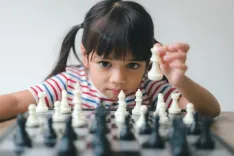
Concentration games for kids – developing attention through fun activities

"Wait, what was I doing?" isn't just an adult problem. If your kid can retell every detail of a cartoon but can't remember where they put their shoes thirty seconds ago, you already know how selective a child's focus can be. The good news: concentration isn't something kids are just born with or without — it's a skill, and like any skill, it grows with practice.
Table of contents
- Key Takeaways
- What Are Concentration Games
- Why Concentration Games Matter
- Memory Games for Kids
- Visual Attention Games for Kids
- Auditory Focus Activities for Kids
- Strategy Games to Improve Focus
- Build Focus with Keiki
- What Causes Poor Concentration
- When Should You See a Specialist
- Tips for Parents Building Focus
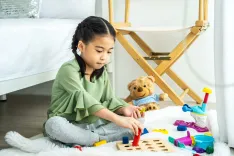
Most of these children's concentration games use stuff you already have at home: paper, a deck of cards, your own voice. No prep, no props to buy, no pressure.
Key Takeaways
- Concentration games for kids work because they turn an abstract skill ("pay attention!") into something concrete a child can practice, fail at, and try again.
- Kids can typically sustain focused attention on an adult-directed task for about 2 to 3 minutes per year of their age — a 4-year-old managing 8-12 minutes is right on track, not falling behind.
- The best focus activities for kids mix four skill types: memory, visual attention to detail, auditory listening, and movement-based self-control.
- A short attention span at age 3 or 4 is developmentally normal; the warning signs worth watching for are consistency and severity, not the occasional wandering mind.
- Quiet games (puzzles, "what's missing") and active games (Red Light, Green Light, balance challenges) build the same focus muscle through different routes — kids benefit from both.
- Concentration exercises for kids with ADHD tend to work best with clear rules and fast feedback, not longer or vaguer activities.
What Are Concentration Games for Kids?
A concentration game is any activity built around sustained attention — remembering, noticing, listening, or waiting — dressed up as play instead of practice. The classic card-matching game that's literally named "Concentration" (flip two cards, find the pair) is where the phrase "games of concentration" comes from, but honestly, the category is way bigger than one card game. It covers memory challenges, spot-the-difference puzzles, listening games, and even movement games like Red Light, Green Light.
What ties them together is the mechanic, not the format: every one of them asks a child to hold their attention on something — a card position, a sound, a sequence of instructions — for longer than feels automatic to a brain that would rather think about literally anything else. That repeated rep is what builds the skill. No child is naturally thrilled about it at first; that's exactly why it has to be disguised as play.
Why Concentration Games Matter for Kids
Kids concentration games aren't just a way to buy ten quiet minutes (although, fair, that's a nice bonus). They're genuine training for a handful of skills that follow a child well past playtime — here's what's actually happening under the hood while they're flipping cards or hunting for the missing object.
- Brain development and neural connections. Concentration draws on the prefrontal cortex, the brain region responsible for planning and attention. Every time a child focuses on a task, those neural pathways get a little stronger and faster — basically, a workout for the part of the brain that's still very much under construction.
- Better academic performance. A kid who can actually listen through a lesson without drifting off to think about dinosaurs picks up new material faster — concentration is the quiet foundation under almost every other classroom skill.
- Stronger self-regulation. Games that require waiting a turn or holding still teach impulse management along the way, which shows up later as fewer meltdowns over small frustrations (your future self at the grocery store checkout line says thank you).
- Sharper problem-solving. A child who can hold a whole problem in mind instead of getting distracted mid-task can actually break it into steps and work through it, instead of giving up three seconds in.
- A real sense of "being here now." Fully engaged play is a child's first practical experience of mindfulness — useful for managing distraction long before anyone hands them that word.
Childhood development experts generally use a rule of thumb for what's realistic at each age: roughly 2 to 3 minutes of sustained, adult-directed focus per year of a child's age. So a 5-year-old holding attention for 10-15 minutes on a structured task is squarely normal — and these games are how you build toward the next stretch of that range.
Help your child
grow with Keiki
We’ll help you turn everyday screen time
into real learning progress.
Memory Games for Kids: Why Memory Is the Foundation
Memory and attention are basically two sides of the same coin — a child who can't hold information in mind for a few seconds can't really concentrate on it either. These memory games for kids train exactly that, and the payoff shows up later in reading, spelling, and math, even though right now it just looks like flipping cards on the living room floor.
- Memory (Find the Pair). Lay a set of paired cards face down and have your child flip two at a time, trying to remember where each one is to find a match. It's the original "game of concentration," and Keiki's interactive flashcards work well for the same purpose if you want a digital version on hand.
- What's Changed? Set out several small objects, let your child study them, then have them close their eyes while you remove one. They open their eyes and guess what's missing — a simple but genuinely tricky visual memory test.
- Chain of Words. One player says a word, the next repeats it and adds one more ("cat" → "cat and dog" → "cat, dog, and car"), and the chain keeps growing until someone slips. For an extra twist, turn the finished chain into a silly short story together.
- Guess the Object by Description. Describe something in the room without naming it ("it's small, red, round, and it rolls") and let your child guess. It forces them to actively listen and hold several clues in mind at once.
- Find the Differences. Print two nearly identical pictures and hunt for every difference between them — a quiet classic for attention to small details. Keiki's printable worksheets include several sorting and spot-the-difference tasks built for exactly this.
- Category Concentration. Pick a category — animals, foods, colors — and take turns naming one item without repeating anything already said. Each round gets a little harder to track as the list grows.
- Clap-Back Rhythm. Clap a short rhythm and have your child copy it back exactly, then build the pattern longer each round. It's a fast, no-prep way to train auditory memory that also works great in a car or waiting room.
Visual Attention Games for Kids: Training Attention to Detail
These attention games for kids sharpen the kind of visual attention that notices small things most people's brains would normally tune out entirely. It's a genuinely useful skill, and not just for kids — spotting typos, following multi-step directions, catching the one missing step in a homework sheet, that's all the same muscle.
- "I See Something..." Pick an object in the room and say, "I see something red." Your child scans the room to find it; raise the difficulty by describing shape or texture instead of color.
- Find By Description. Hand over a short list — "something round, something soft, something blue" — and let your child track down each item. It's the same mechanic as "I see," just reversed.
- Secret Drawing. Draw something tiny on a large sheet of paper (a bird the size of a fingernail on a tree branch) and challenge your child to find it.
- Take Apart and Put Together. Carefully disassemble something simple, like a 5-7 piece toy or construction set, and have your child reassemble it from memory.
- Who's Out of Place? Narrate a short, mostly-true story about your family's morning and slip in one wrong detail ("Dad drank tea, Mom read the newspaper, and I brushed my teeth with a red toothbrush"). Your child has to catch the error. This one needs zero props, which makes it a solid screen-free activity for concentration on a long car ride.
- Hidden Object Hunt. Scatter a handful of small items around a room or inside a busier picture and set a time limit to spot them all — this is also the exact mechanic behind Keiki's seek-and-find games for letters, numbers, and objects.
- Pattern Copy. Build a short sequence out of blocks or beads (red-blue-red-yellow) and have your child copy it exactly, then extend the pattern one step further each round.

Auditory Focus Activities for Kids
Every parent knows the "did you hear a single word I just said?" moment. Listening carefully is its own kind of concentration, and it's the one most directly tied to following classroom instructions — these auditory focus activities train a child to catch details by ear instead of by eye.
- Simon Says. Only follow instructions that start with "Simon says" — a genuine classic for training both listening and self-control in one game.
- What Is That Sound? Close your eyes together and guess the source of a sound — running water, a phone ringing, a clock ticking.
- Tell a Story. Play a short audio story and ask your child to retell it afterward, which forces close attention to the details as they listen.
- Whisper Challenge. Whisper a word or short phrase and have your child repeat it back — surprisingly hard, and a fun way to practice tuning in to quiet sounds.
- Listen and Do. Give a short multi-step instruction ("take the blue pencil, put it on the chair, then bring it to me") and check whether the steps happen in order.
- Name That Tune. Hum the first few notes of a familiar song and see how fast your child can name it — a quick, no-prep listening game for a five-minute wait at a restaurant table.
Movement and Strategy Games to Improve Focus
Not every concentration game means sitting still — and let's be real, some kids would rather chew on a puzzle piece than sit through one. Some of the most effective games to improve focus are physical or strategy-based, and they're worth mixing in alongside the quieter games above, especially for kids who focus better when their body is moving too.
- Red Light, Green Light. One person calls "green light" to run and "red light" to freeze instantly — anyone caught still moving goes back to the start line. It's deceptively effective at training impulse control alongside focus.
- Freeze Dance. Dance to music and freeze the second it stops. The sudden switch from full motion to total stillness is harder to pull off than it sounds, in a genuinely fun way.
- Balance Challenge. Walk a taped line on the floor, or balance a small object on your head across the room, without looking down. Balance demands constant, active concentration rather than passive stillness.
- Strategy Board Games. Checkers, simple card games like Go Fish, and even basic chess variants ask kids to think a step ahead instead of reacting on impulse — a great fit once a child can sit through a full round.
- Logic Puzzles. Simple Sudoku-style number or shape puzzles (plenty of kid-friendly versions exist online and in print) are quiet, screen-optional concentration exercises that work well for school-age kids who like a challenge with a clear right answer.
Build Focus with Keiki's Learning Coloring Pages
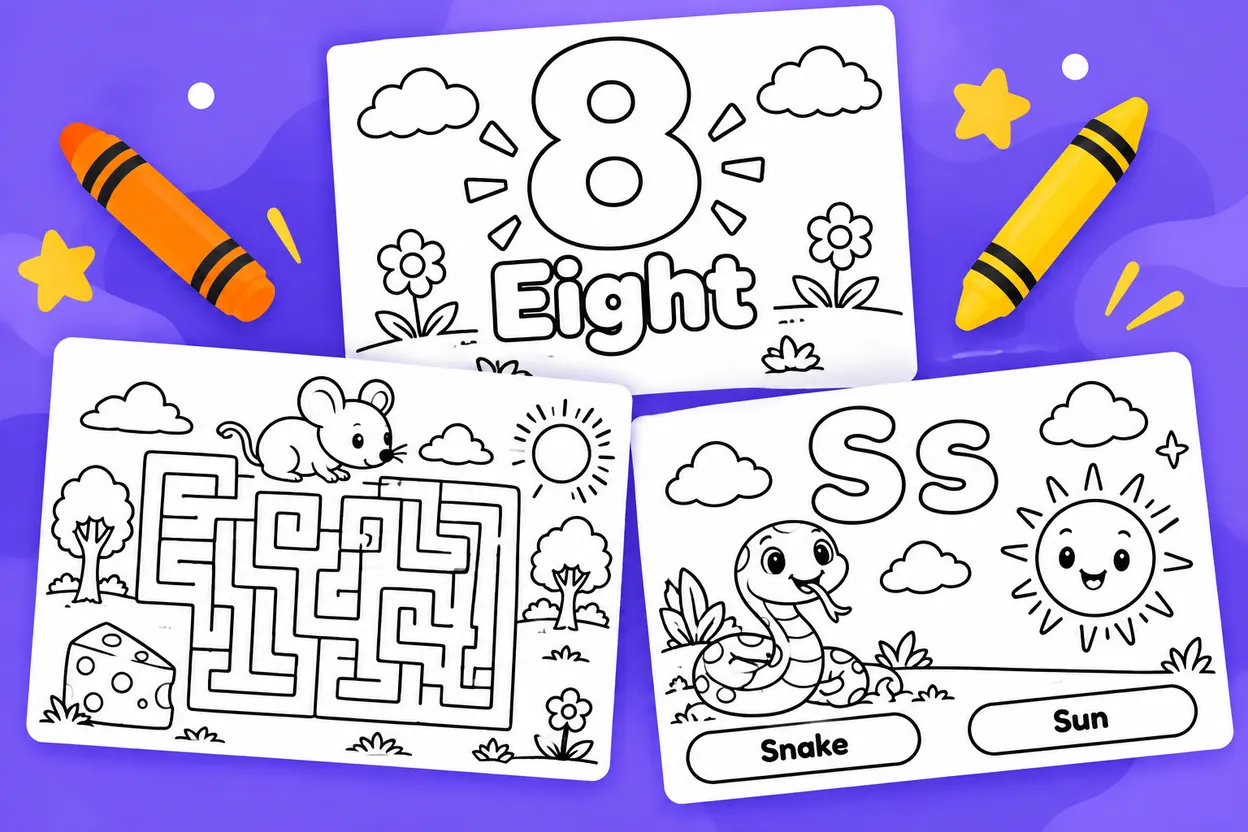
Concentration practice doesn't have to mean another screen. Keiki's free learning coloring pages — 145+ printable pages covering the alphabet, numbers, shapes, tracing worksheets, and mazes — ask for the same quiet, sustained attention as the paper-and-pencil games above, just with letters and numbers built right in. The maze pages in particular double as a genuine focus exercise: a child has to track a single path from start to finish without losing their place, which is attention to detail in its purest form. Tracing worksheets add a fine-motor layer on top, since staying inside the lines takes the same careful, unhurried concentration as "find the differences." Every page is free to print, there's no login, no ads, and no pressure for a "correct" result — just a calm, repeatable way to build focus one crayon at a time.
What Causes Poor Concentration in Kids?
You know the scene: birthday party, blue frosting, and five minutes later nobody can sit still long enough to open a present properly. That's not defiance — it's usually one of a handful of fixable daily-life factors, and checking these first is honestly more productive than reaching for another concentration game.
Sleep is the most common culprit. A child's brain needs real rest to process the day and reset for the next one — without enough of it, distractibility and irritability both spike.
Diet plays a bigger role than most parents expect. Heavy sugar and processed-food intake cause energy spikes followed by crashes (looking at you, birthday cake), and crashes make focusing genuinely difficult. Protein, healthy fats, and complex carbs give the brain steadier fuel to work with.
Gadget and information overload trains the brain to expect constant stimulation — fast cuts, instant rewards, endless notifications. When that same brain faces a slower, quieter task, it struggles to downshift. Limiting screen time and offering slower alternative activities gives attention room to rebuild.
Lack of physical activity matters just as much. Movement improves blood flow and oxygen to the brain and helps burn off restless energy that would otherwise compete with focus.
Anxiety and stress — from family tension, a new sibling, or just a hard day at school — can quietly eat up all of a child's mental bandwidth, leaving none left over for concentrating. A calm, predictable home environment does more for focus than any single game.
When Should You See a Specialist?
Take a breath — most concentration struggles are completely normal, and a squirmy 4-year-old is not a red flag. Here's how to tell the difference between typical kid behavior and something worth a professional opinion.
- Normal behavior. Mild concentration difficulty is expected, especially in preschoolers — their brains are still under construction. Five to ten minutes of real focus at that age is genuinely great. Start any puzzles for kids concentration practice with short sessions and built-in breaks.
- Warning signs. Pay closer attention if the inattention is constant and interferes with daily life — a child who can't sit through a meal, can't follow a simple one-step request, or can't stay focused even on an activity they love.
- Possible ADHD. Attention-Deficit/Hyperactivity Disorder is a diagnosis only a qualified professional can make. If a child is not just inattentive but consistently hyperactive, impulsive, and unable to wait their turn, a pediatrician, neurologist, or child psychologist is the right next step. It's not a life sentence — just a different starting point, and there are concentration exercises for kids with ADHD (short rounds, clear rules, fast feedback) that genuinely help.
Related Games in Keiki App







Tips for Parents Building Focus Through Play
None of this requires a perfectly planned "focus hour" on the family calendar. A few small habits do more than any single game ever will.
- Start smaller than you think you need to. A 3-year-old lasting 60 seconds at "What's Changed?" is a win — stretch the difficulty gradually instead of expecting a long attention span right away.
- Mix quiet and active games. Some kids focus best sitting still with cards; others need to move first. Rotating between the two covers more kids, and more moods, than sticking to one type.
- Keep sessions short and frequent. Ten minutes a day beats one long session a week — concentration builds through repetition, not duration.
- Rule out the basics first. Before assuming a focus problem, check sleep, screen time, and recent stress — often the "fix" isn't a new game at all.
- Praise the effort, not just the win. "You stuck with that even when it got tricky" teaches more than silence does when a game goes well.
- Let a wandering mind be normal. Not every distracted moment needs a correction — you've probably zoned out mid-email today too, and nobody revoked your library card over it.