Strategy Games for Kids: Ideas and Tips for Child Development

Strategy games teach kids to plan, think ahead, and handle wins and losses calmly. This guide highlights kid-friendly options that build patience, logic, and decision-making through enjoyable play.
Table of contents
- Key Takeaways
- What Are Strategy Games for Kids
- Why Strategy Games Matter
- Choosing Strategy Games by Age
- Strategy Games for Toddler/Preschooler
- Strategy Games for Older Children
- Strategy Games with Minimal Equipment
- Classic Named Board Strategy Games
- Family Strategy Board Games
- How to Choose The First Strategy Game?
- Digital Strategy Games

Key Takeaways
- Strategy games for kids build five specific skills: logical thinking, planning and forecasting, critical thinking, concentration, and problem-solving.
- Simple logic games for kids like Tic-Tac-Toe and Rock, Paper, Scissors need nothing but a sheet of paper or a pair of hands, making them the easiest starting point.
- Strategy games for 5 year olds, like Checkers and Battleship, work well once a child can hold a plan in mind for more than one move at a time.
- When choosing a game, match it to your child's age, interests, and attention span rather than picking the most complex option available — a game a child abandons halfway through teaches nothing.
- Family strategy board games like Connect 4, Sequence for Kids, and the children's version of Monopoly work well for mixed-age game nights, since they stay simple enough for a preschooler while still giving an adult a real decision to make each turn.
What Are Strategy Games for Kids?
Strategy games for kids are games that require planning ahead, anticipating another player's moves, and adjusting a plan based on new information — as opposed to games decided purely by chance or reflex. Games like chess or checkers are the clearest examples: a child has to plan their actions, anticipate opponent moves, and make thoughtful decisions rather than moving pieces at random.
Why Strategy Games Matter for Development
Strategy games matter for development because they build five specific skills at once.
1. Development of logical thinking and deduction. — In strategy games, children need to analyze situations, find hidden patterns, and draw conclusions. This trains their ability for logical thinking, which is the foundation for studying mathematics, science, and programming.
2. Improvement of planning and forecasting skills. — To win, a child needs to plan actions several steps ahead and anticipate possible opponent moves. This way children learn to think ahead and understand that each of their actions has consequences.
3. Development of critical thinking. — These can also be called problem-solving games for kids, since there's no single correct answer. Children learn to analyze different options, weigh pros and cons, and choose the most optimal solution.
4. Improvement of concentration and attention. — Strategy games require full immersion and focus. Children learn to concentrate on one task without getting distracted by extraneous things, a skill that's essential in school.
5. Strengthening problem-solving skills. — Each game is a new puzzle to solve. Children learn to find ways out of difficult situations and not give up even when something doesn't work out right away.
Help your child
grow with Keiki
We’ll help you turn everyday screen time
into real learning progress.
Choosing Strategy Games by Age
To start teaching strategy to kids, you first need to properly understand the workload the child is ready for. This takes into account their age, interests, and even developmental characteristics. But age is still the main marker for parents.
Strategy Games for Toddlers and Preschoolers (Ages 3-4)
The main rule for toddlers and even for strategy games for preschoolers is clarity and accessibility without unnecessary complexity. Your goal is to give basics, create interest, not permanently discourage the desire to think logically.
Tic-Tac-Toe
There are many logic games for kids, but this one enjoys unchanging popularity from generation to generation. It teaches children to think ahead and anticipate opponent moves. The game requires nothing but a sheet of paper and pencil.
Block Tower
Children take turns placing blocks on top of each other. The goal is to build the tallest tower without dropping it. This game teaches planning and being careful.
Rock, Paper, Scissors
This is a simple but effective game that teaches children to make choices and understand that each decision has consequences.
Puzzles and Jigsaw Puzzles
Puzzles require children to plan and be attentive to connect parts into a whole. There are also many online puzzle games that work similarly and have no limitations on the number of possible pictures.
Strategy Games for Older Children (Ages 5-6)
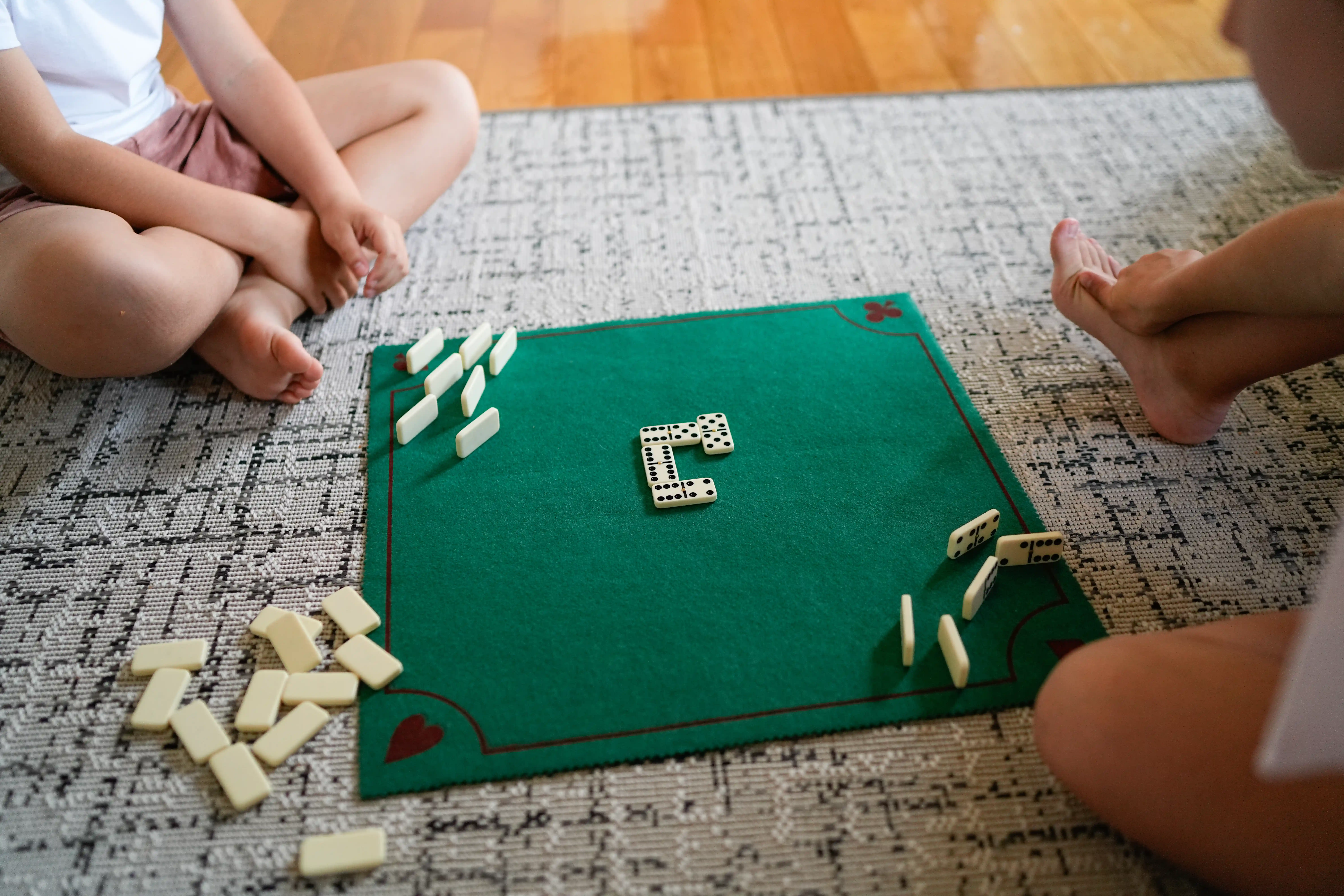
Strategy games for kindergarten are already a more serious challenge. They simultaneously prepare for school, train attentiveness and logic, concentration and creativity, but don't lack excitement and fun.
Checkers
Checkers is an excellent game for developing logic and planning. It teaches children to think several steps ahead and see different development scenarios. Chess or Go, for example, as strategy games for 5 year olds don't suit everyone, but checkers are an excellent compromise.
Battleship
This game requires logic and deduction from children to find opponent ships. It also develops spatial thinking.
Monopoly (Children's Version)
If you're looking for board games for kids, there's no better option than Monopoly with simplified rules. The children's version of this game teaches economics basics, counting, and planning.
Card Games
Fool, Memory, and many other entertainments help pass evenings. They develop memory, logic, and ability to anticipate opponent moves.
Strategy Games with Minimal Equipment
We all need no-equipment strategy games, we all keep looking for the simplest options so we don't suffer from long cleanup or preparation later. And such simple tasks really exist, requiring minimal things at hand.
Hot and Cold
One player hides an object while others must find it. The first player gives clues: "hot" (if close) or "cold" (if far). This game develops logic and deduction.
I Spy
One player thinks of an object while others must guess it by asking questions. This game develops observation skills, logic, and ability to ask the right questions.
Captain-Strategist
One player becomes captain and gives instructions to other players on how to move around the room. The goal is to reach treasure without bumping into each other. This game teaches planning and teamwork.
Build real skills through fun, educational games for your child
Try KeikiClassic Named Board and Card Strategy Games
Once a child has outgrown simple games like Tic-Tac-Toe and Checkers, these 6 well-known board and card games are some of the most recommended board games for kids for building deeper strategic thinking, typically from around age 5-8.
Connect 4
Players drop colored discs into a vertical grid, racing to line up four in a row while blocking their opponent from doing the same; a fast, clear way to practice planning several moves ahead.
Mastermind
One player sets a hidden color code and the other guesses it, using logic and deduction to narrow down the answer with each attempt — a pure logic games for kids classic with no reading required.
Sequence for Kids
A simplified, picture-based version of the classic Sequence game that lets younger children build rows of chips using cards, without needing to read.
Blokus
Players fit colorful puzzle pieces onto a shared board so that each new piece only touches their own color at the corners, which builds spatial reasoning alongside strategic blocking.
Stratego
Each player commands an army of hidden pieces and must deduce the opponent's ranks while protecting their own flag, combining memory, bluffing, and strategy.
Qwirkle
Players match tiles by color or shape to score points, weighing several possible moves each turn the way they would in other classic board games for kids.
Family Strategy Board Games for Game Night
Family strategy board games are strategy games built to work across a wide age range, so a parent, an older sibling, and a young child can all play together instead of the game being too easy for the adults or too hard for the kids. Connect 4, Sequence for Kids, Blokus, and the children's version of Monopoly all work well as strategy board games for family game night, since each one keeps simple enough rules for a preschooler while still giving an adult a real decision to make every turn.
For a slightly older group, Stratego and Qwirkle make excellent family strategy games once everyone at the table can read and plan a few moves ahead — both reward paying close attention to what other players are doing, which keeps every family member engaged instead of just waiting for their turn to come around.
How to Choose Your Child's First Strategy Game?
Choosing the right game is key to making your child love strategy games and not get disappointed. Approach searching for easy logic games for kids creatively, experiment. The following tips will also help:
- Consider age and interests. Start with simple games that match the child's age and favorite themes. For example, if they love dinosaurs, choose a game related to them.
- Duration and complexity. Choose games that won't take too much time so the child doesn't get tired. Start with tasks where rules are simple and clear.
- Reviews and recommendations. Study other parents' reviews and expert recommendations. This will help you find a game that will be interesting and useful specifically for your child.
- Even if you find an interesting option, change it from time to time. It's better to combine several types of activities and games so they don't bore the child.
Digital Strategy Games with Keiki
Educational apps for kids usually offer many tasks for strategic thinking, logic, memory, and attention. Keiki is no exception. This is an engaging and interactive way to develop logic and critical thinking. They can complement traditional games and motivate children to learn. The app offers such online strategy games for kids:
- Puzzles. Of course, we can't do without them. Simple, bright, interactive, not requiring purchase, and guaranteed that no element will be lost.
- Tetris Party. A bright and dynamic game, nevertheless directly related to strategic and spatial thinking. The child needs to think about how to properly arrange all elements so they assemble into a square.
- Continue the Series. Such tasks can be attributed to comprehensive child brain development games because they simultaneously train strategic approach, logic, memory, and attentiveness.
Digital strategy games are an excellent way to train logic as they offer endless options, bright visual effects, and sound accompaniment. Even time with a tablet or smartphone can be spent beneficially. Such games often include difficulty levels, allowing adaptation for the child's age and skills. Keiki offers safe and educational games for developing strategic thinking.
Strategy games for kids are not just a way to entertain children but an opportunity to create a solid foundation for their intellectual development. From simple puzzles to complex board games – every game contributes to developing logic, critical thinking, and problem-solving ability.