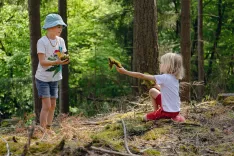
20 Gardening Activities for Kids

Gardening, working on a flower bed or tending garden beds with a child is both beneficial and challenging. On the one hand, working with soil and plants is an ideal foundation for children’s development. They find it interesting, and you know it is useful. On the other hand, once a child gets a scoop or small shovel in their hands, an ordinary flower bed instantly turns into a testing ground for your patience.
Key Takeaways
- Gardening is one of the best all-in-one activities for kids – it builds motor skills, patience, focus, and curiosity all at once.
- Mud, mess, and "wrong" watering are part of the process – letting go of perfect is what makes it actually fun.
- Start with fast-growing plants like radishes or cress so kids see results quickly and stay motivated.
Gardening rarely looks like an idyll with neat beds and conversations about nature. You need to be ready for scraped knees, puddles of mud and possible losses among flowers or bushes.
But you know what? This is absolutely normal. A garden is the perfect real-life training ground, the best open-air classroom for preschoolers. In this article, we have gathered the best gardening activities for kids to help reduce the chaos while making outdoor leisure more useful and interesting. Your garden beds are a laboratory, a playground and a huge world for discovery.

Help your child
grow with Keiki
We’ll help you turn everyday screen time
into real learning progress.
Why gardening is one of the best activities
Some parents think that muddy soil is far from the best leisure activity for young children, especially in an era with such a wide variety of toys and activities. But working in the garden is a comprehensive training tool for the developing brain, and even a dozen construction sets cannot always replace it. There are several reasons for this:
- Useful sensory experience. Modern children often suffer from sensory deprivation. In the garden, they get everything at once. Cool, damp soil under their fingers, rough leaves, the smell of wet grass, the buzzing of bees. No video or toy can replace this amount of data for the nervous system.
- Development of coordination and motor skills. It may seem simple to take seeds and place them in a hole. But when we are talking about small children, this is already a challenge for their coordination – and a useful one. There are many tasks and examples like this. For instance, simply carrying a watering can helps a child develop gross motor skills and the ability to keep balance.
- Training focus and patience. Garden work is somewhat like kneading the perfect dough for homemade bread. You cannot simply press a button and get a result. Nature takes time. Planting a seed today teaches a child delayed gratification – one of the most important skills of our time, which protects against clip thinking.
- Stimulating curiosity. What is hidden underground? Where is the worm crawling? Why is the root white? Where does a sprout come from? Questions appear literally like buds on trees in spring. Fortunately, the garden immediately gives answers, allowing children to explore everything around them through experience. For everything else, there are answers from parents.
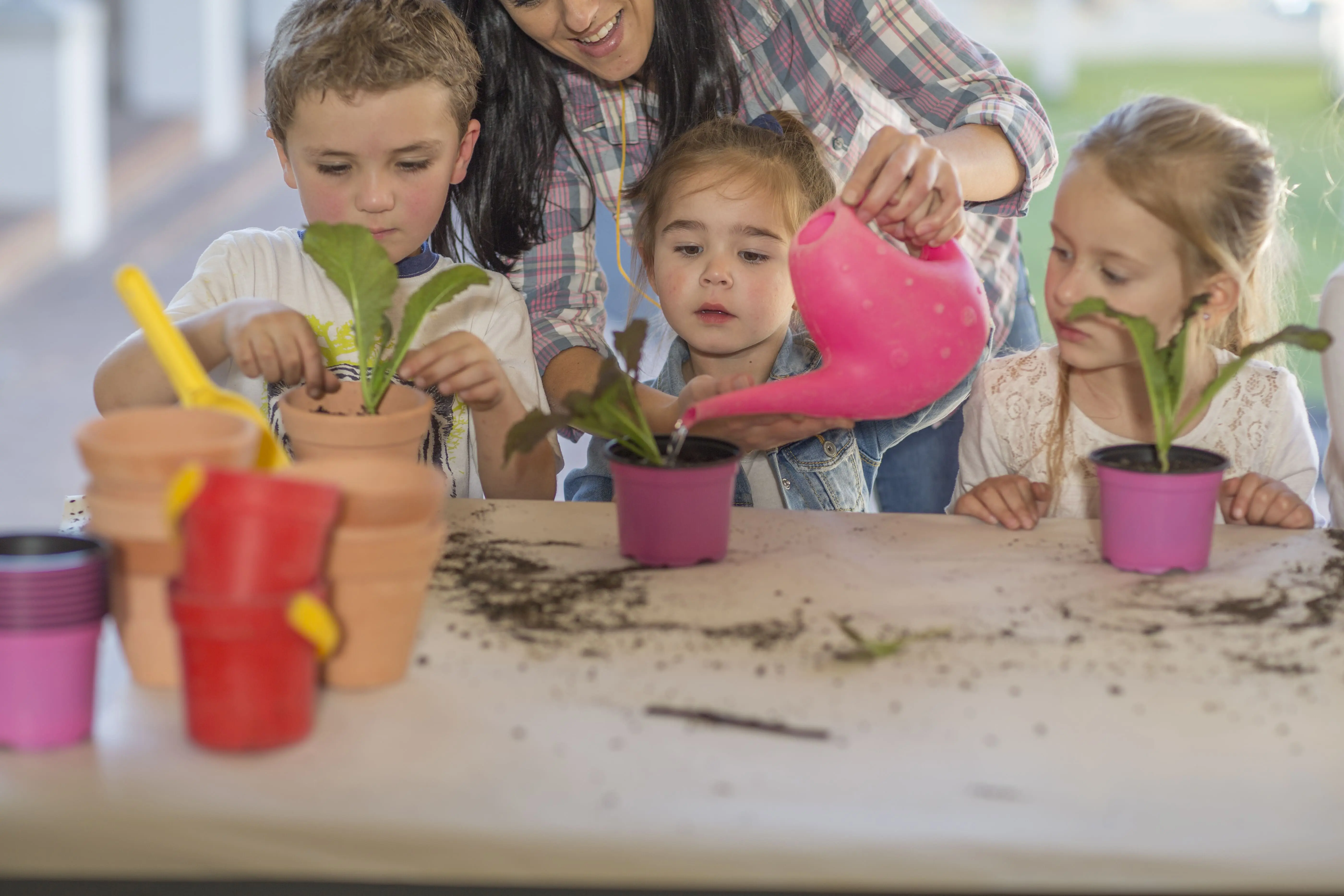
20 gardening activities for kids
We have selected a wide variety of kids garden activities for you. There are options for a lazy Sunday when the whole family is in no rush and enjoys the fresh air, for backyard parties when you need to keep a group of active children busy, and for activities focused on developing specific skills. All that is left is to use them and try something new.
The classic mud pie bakery
The first thing parents need to accept is that no garden activities for kids happen without mud. This is normal and not scary. Choose clothes you do not mind getting dirty, and everything else can be washed. For this idea, give your child some old dishes – bowls, whisks, muffin tins – and add soil and water. The child can knead dough or soup, decorate pies with flowers and stones. In fact, this is the simplest thing you can think of because there are no limits for imagination, while the amount of new sensory experience is enormous.
DIY seed bombs
Mix clay, a little soil and wildflower seeds. Today, almost any garden store sells ready-made sets with a wide variety of flowers and plants. You only need to shape the mixture into small balls and let them dry in the sun. Then go for a walk and throw these bombs onto empty, dull patches of ground. There you have guerrilla gardening in action! A great option if you are looking for fun planting activities for kids.
The watering can relay
If it is hot outside and you need active garden games for kids, there is nothing better than a relay race. Place a full bucket of water at one end of the yard and empty bottles at the other. The task is to scoop up water with a small watering can or sponge, run to the bottle and pour it in. Whoever fills their container first wins.
Build a fairy or dinosaur garden
Give your child an old basin or a wide pot. Add soil, moss, stones and twigs. Let them create a micro-world there for toy fairies or arrange a rugged Jurassic Park for plastic dinosaurs.
Painted rock plant markers
To remember where and what you planted, collect smooth stones in the yard. Give your child acrylic paints and let them decorate the stones: draw a carrot, a tomato or simply abstract patterns. Cover them with varnish and place them near the beds.
The great bug hunt
A real detective quest! Equip your child with a magnifying glass, notebook and pencil. The task is to find and sketch, or at least count, 5 different types of insects in the yard. You can easily develop attentiveness and, at the same time, reduce fear of various beetles and spiders.
Regrowing kitchen scraps
Some of the most visual gardening activities for children begin in the kitchen. In addition, if you do not have your own garden, live in an apartment or it is simply winter outside, sprouting experiments should not stop because of such small obstacles. Cut the top off a carrot or celery stalk, place it in a saucer with a small amount of water and put it on the windowsill. In just a few days, the child will see new green shoots appearing. Green onions can be regrown in exactly the same way – and even chopped straight into an omelet or spaghetti. Just place the bulb in a glass of water so that its lower part, where the roots are, is submerged. After some time, green shoots will appear.
The sensory herb touch-and-smell
Plant different aromatic herbs in a box: mint, basil, rosemary, thyme. Blindfold the child and ask them to guess the plant by smell, after rubbing a leaf between their fingers, or by texture – for example, fluffy sage is hard to confuse with anything else. Along the way, explain what these herbs are used for, what dishes they are added to or what they can help with, and whether they can be used to make lemonade or tea.
Sunflower growth race
Buy giant sunflower seeds. Plant them together with your child near a fence. Place a stake and mark the plant’s growth on it every week, or measure the flower against the child. Whose sunflower will grow taller?
Weeding boss battle
For us, weeding is routine. For a child, it is an epic battle, almost like in a fantasy story where dark forces in the form of weeds seize the lands of peaceful carrot residents. Put on gloves, hand over a children’s hoe and declare war on dandelions. Set a reward for every ten weeds pulled out by the roots.
Digging for treasure
Give your child a real grown-up task that requires active digging. If you need to dig up an empty bed, hide several treasures there in advance, such as pretty glass pebbles or plastic coins. The child will have an incentive to dig up almost the entire vegetable garden, and the value of the reward is not as important as the treasure-hunting moment itself.
Leaf art collages
In autumn or late summer, collect fallen leaves of different shapes and colors. Spread glue on a thick sheet of paper and use the leaves to create animal portraits, landscapes or simply beautiful mandalas.
DIY grass heads
Take an old nylon sock, pour lawn grass seeds into the toe, then tightly fill it with sawdust or light soil. Tie a knot. Glue on eyes and draw a mouth. If this little character is watered regularly, in a week it will grow a luxurious green hairstyle that the child can trim with scissors.
Seasonal scavenger hunt
A great idea for childrens garden games. Make a list of things to find in the garden depending on the season. For example, in spring: a yellow flower, a fluffy bud, an ant. In autumn: a red leaf, an acorn, a dry twig shaped like the letter “U”.
Composting in a bottle
Make a transparent composter to observe the magic of decomposition. Take a large plastic bottle and cut off the neck. Layer soil, dry leaves, vegetable scraps and pieces of newspaper. Moisten slightly. Observe for a month as organic matter turns into fertile soil.
Watering the alphabet
Write large letters of the alphabet with chalk on a paved path or fence. Give your child a spray bottle or water pistol. You name a letter or sound – the child must find it and wash it away with a stream of water. Learning letters and watering in one activity.
Vegetable stamping
Some vegetables from the garden can become excellent stamps. Cut a potato in half and carve a star into it, use the textured cut of napa cabbage, which looks like a rose, or half a bell pepper. Dip them in paint and print patterns on paper.
Night flashlight safari
Who said the garden is only interesting during the day? Take powerful flashlights and go outside after dark. You will be surprised by how life changes: moths, fireflies, hedgehogs if you are lucky, and spiders weaving webs. It is a real bedtime adventure.
Seed sorting challenge
If you have packets of different seeds left over – large beans, tiny radish seeds, sunflower seeds, pumpkin seeds – mix them in one bowl. Give your child tweezers and ask them to sort the seeds into different compartments, for example, in an ice cube tray. The child will be motivated to help you, while this task also requires a lot of concentration and calms even the most active children.
The barefoot path
Set up a path with different textures on the lawn: a strip of sand, a strip of smooth pebbles, dry leaves, soft moss, warm water in a shallow basin. Take off your shoes and walk along this path with your eyes closed, discussing the sensations.
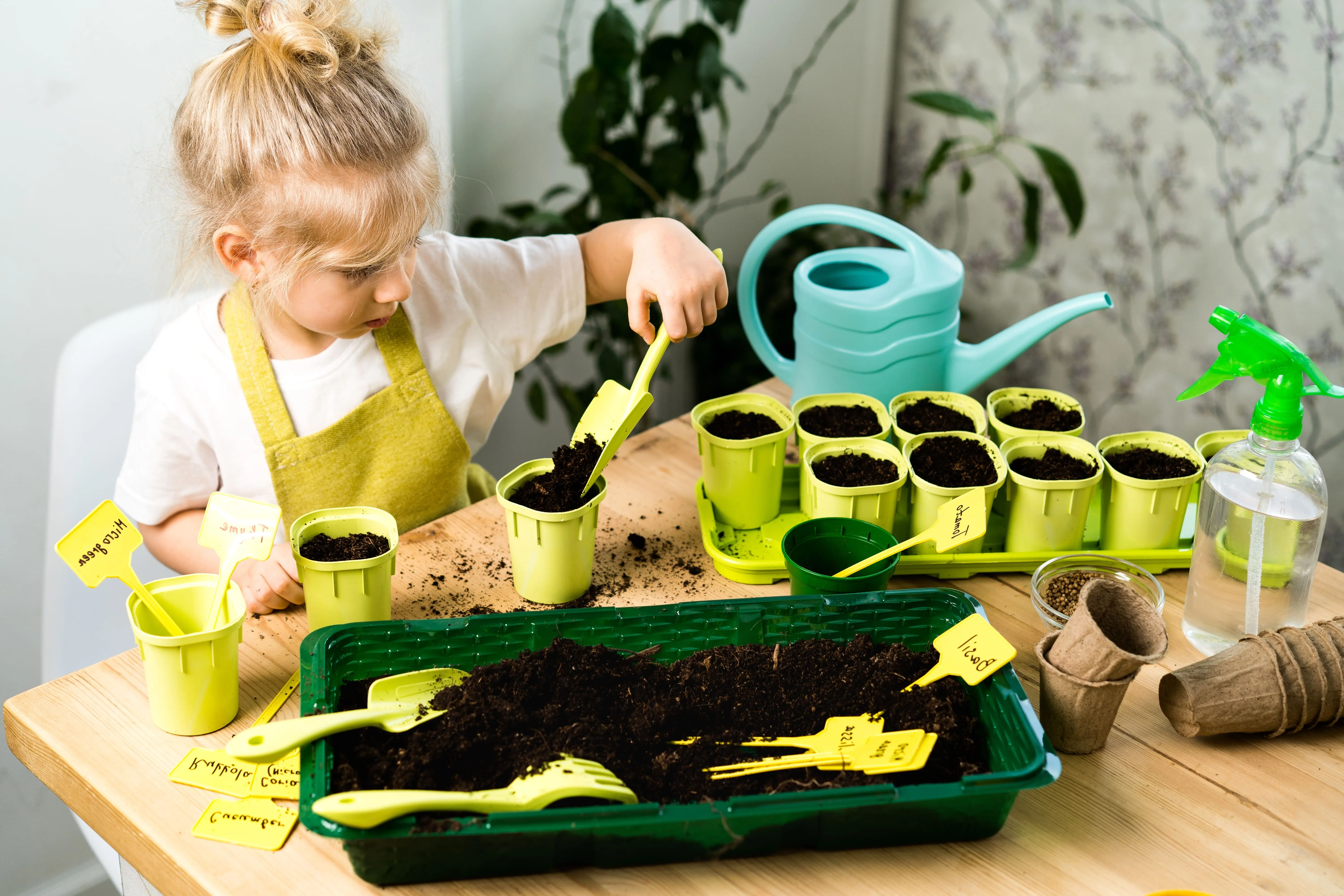
The easiest plants for kids to grow
Children’s enthusiasm fades as quickly as it appears. If they planted a seed, they want to see the result preferably by evening. To make sure the first garden activities for kids do not end in disappointment, choose fast-growing and low-maintenance plants:
- radishes – the absolute champion of low maintenance, sprouting in 3–4 days, with a crunchy harvest ready in just 3–4 weeks;
- cress – grows even on damp cotton wool on a windowsill and is perfect for observing the root system;
- beans and peas – they have large seeds that are easy for small hands to hold, and they grow very actively and visibly, clinging to supports with tendrils;
- cherry tomatoes – yes, you will have to wait, but picking small sweet tomatoes straight from the bush and eating them immediately is one of the best summer pleasures;
- mint – grows like a weed, smells incredible, can be touched, picked and added to lemonade.
How to balance outdoor and screen time with Keiki
After active and somewhat challenging work in the garden, it is time to go back indoors. Time for rest, relaxation and a change of activity. After working with their hands, children can work with their minds while the body recovers and rests. Usually, after gardening tasks, a child is overstimulated by the abundance of impressions, while you simply need 20 minutes of quiet to wash your hands and drink coffee.
This is where educational apps come in. Screen time is not harmful if it is used as the right tool for calming the nervous system after gardening games for kids while also developing useful skills. The Keiki app was created exactly for this purpose. As a replacement activity after the garden, the following tasks and types of content are suitable:
- Brain development games. They take a comprehensive approach to building logic, attentiveness and concentration. Moreover, this content category includes a game about green habits, which helps children stay a little longer with the theme of nature and the importance of ecology in a fun way.
- Memory development games. Remembering all these plant names, watering methods and instructions is not easy; children need to be able to hold information in their minds well. Special games collected in this category help with that.
- Drawing. In Keiki, you will find both coloring pages, including plant and flower themes, and other tasks related to creativity and fine motor skills.
Gentle animation and clear tasks help the child smoothly move from hyperactivity to a calm evening at home, developing logic and reinforcing new knowledge.
Help your child thrive with playful learning
Turn screen time into real growth with Keiki's educational games.
Try KeikiConclusion
You do not need to be a professional agronomist with a perfect lawn to instill a love of nature in your child. The best memories are formed where there is room for experiments and no fear of getting dirty. Let children dig in the soil with their hands, allow them to water weeds instead of flowers and do not scold them if they name every worm in the garden. Use our gardening games for kids, and you will see independence, respect for the living world and that sincere childhood joy grow in your child together with the radishes and sunflowers.