20 Running games for kids – the ultimate guide to active development

A child’s brain functions very differently from an adult’s. Children behave differently: they think, draw conclusions, and learn in their own way. A child’s brain develops through the body, as physical activity, sensory experience, and movement stimulate neural connections. Motor activity and exploring the world through the senses in early childhood (up to 6 years) form the foundation for higher mental functions and cognitive abilities, making physical development a priority.
This is where running games for kids come into play, becoming not just entertainment but a vital necessity. Running is a natural foundation built into us. For a preschool child, every movement is a building block in the foundation of future intelligence. When a child runs, they not only train muscles but also learn to process spatial information, develop the vestibular system, and strengthen neural connections responsible for coordination and concentration. In this article, we will explore the best running activities for kids that help your child grow strong, agile, and happy.
Key Takeaways
- Every sprint, turn, and chase builds neural connections responsible for coordination, spatial awareness, and concentration.
- You need almost nothing to get started — ribbons, a rope, colored sheets, and open space are enough for 20 different games.
- Toddlers thrive on simple imitation and chasing bubbles, preschoolers are ready for rules and story elements, while 5–6 year olds can handle real teamwork and strategy.
- Safety prep takes two minutes and matters — non-slip shoes, clear play boundaries, and water on hand make everything run smoother.
- After active running, a child's brain absorbs new information more effectively — it's the perfect moment to switch to a calm learning activity.
How to organize running games outdoor?
Before starting any running game for kids, it is important to properly prepare both the space and the child. This ensures safety and allows full immersion in the process without discomfort.
First, pay attention to equipment. Shoes should have non-slip soles and good heel support to prevent sprains during sharp turns in outdoor running games for kids. Clothing should be breathable and allow free movement.
Second, prepare the play area. If these are running games to play outside, make sure there are no deep holes, sharp stones, or broken glass. Clearly mark the boundaries of the “play area” so children can better orient themselves.
Third, do not forget hydration. Always bring water when planning running games outdoor. A short warm-up before starting – arm swings, jumps, and bends – prepares the joints for activity. Your task is to create a safe environment first, and only then move on to games and exercises.
Benefits of running for preschoolers
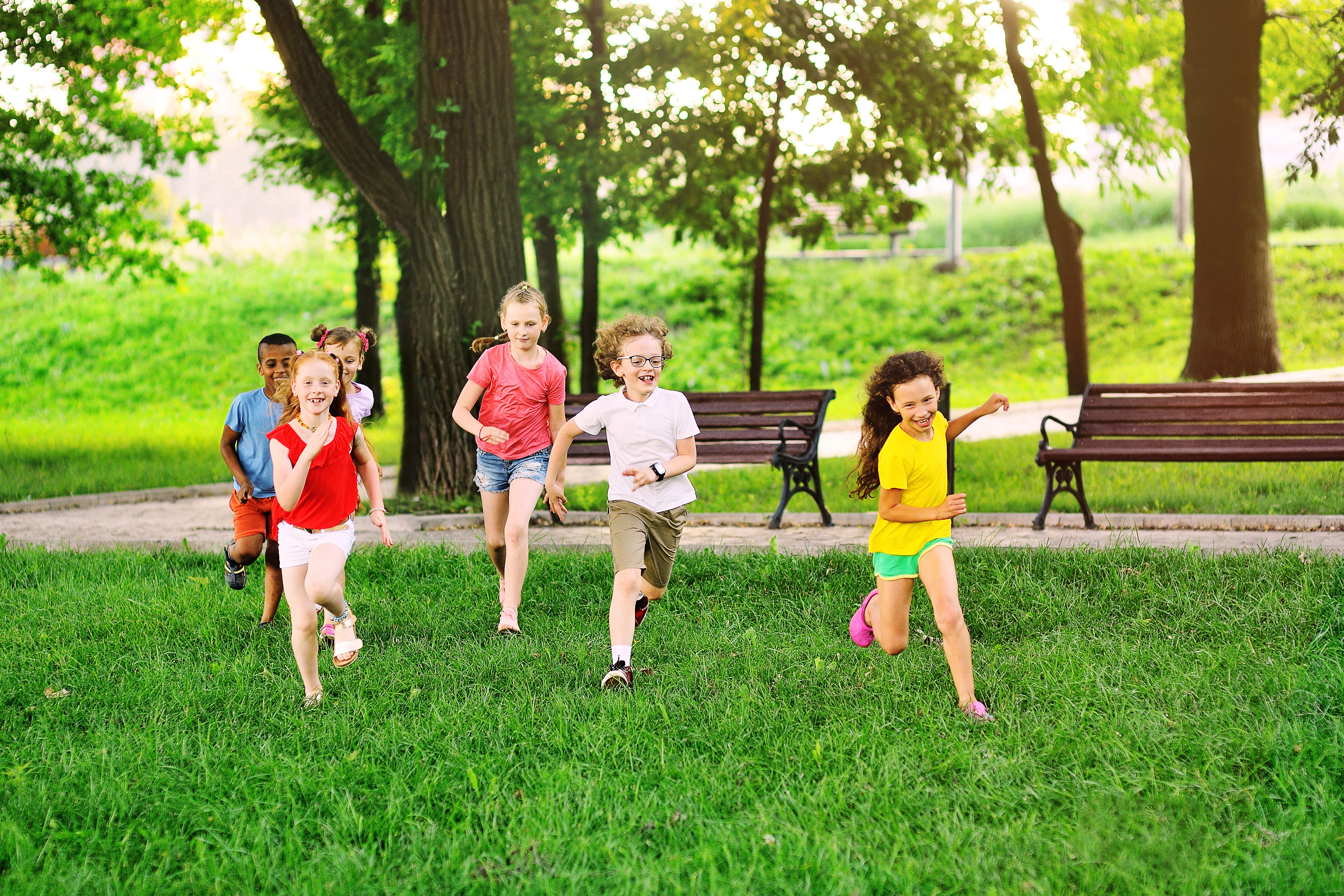
Before moving on to specific activities, let’s look at the benefits of any running activity for kids:
- Cardio training. Running is the most accessible form of cardio at any age. It strengthens the heart and lungs from an early age and positively affects muscles and joints.
- Cognitive development. To play kids running games, a child must make quick decisions, plan routes, and follow rules. Despite the focus on activity, well-designed games improve logic and memory.
- Sensory integration. Running on different surfaces (grass, sand, asphalt) provides a rich range of sensory input.
- Socialization. Most running games kids involve interaction, cooperation, and learning to handle winning and losing.
Help your child
grow with Keiki
We’ll help you turn everyday screen time
into real learning progress.
Running activities for toddlers – first steps at 1–3 years
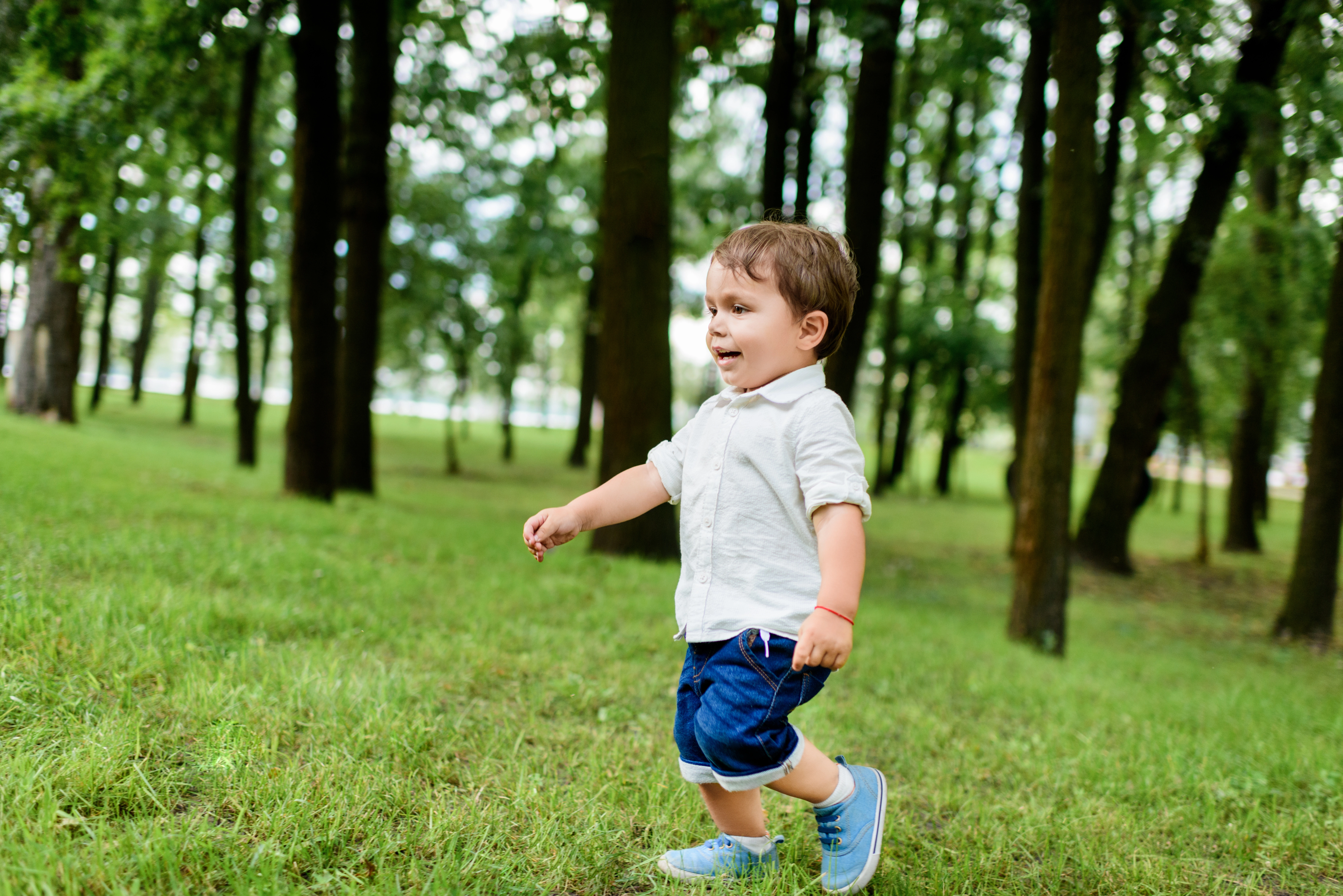
At this age, children are just discovering the joy of speed. Once a child learns to walk, they naturally seek movement. The body requires activity to improve coordination and precision, and running games for toddlers provide it. These games should be short, simple, and based on imitation.
Catch the bubble
A simple and effective game. Blow soap bubbles, and the child tries to catch them. Running after shimmering bubbles develops hand-eye coordination and encourages changing movement direction.
Lost teddy
Place a favorite toy 5–7 meters away. Ask the child to run to it, hug it, and bring it back. Such fun running games with favorite toys teach goal-setting and task retention.
Giant’s shadow
Try to step on each other’s shadows while running. This playful running game for kids teaches tracking moving objects and coordinating movements.
Run to the color
Place large colored sheets on the ground. On command “Run to blue!”, the child must reach the correct one. This combines physical activity with learning colors.
Train
The child holds onto your clothing or a rope, and you move together like a train. This is a foundation for future games that involve running, teaching rhythm and distance awareness.
Preschool running games – developing agility (3–5 years)
At this age, children become more resilient, and their imagination expands. Running games for preschoolers should include story elements and simple rules.
Red light, green light
A classic preschool running game that teaches reaction and self-control. On “Green” – run, on “Red” – freeze. This is an important exercise for impulse control.
Dragon tails
Each child tucks a ribbon into their waistband. These running games outside can involve dragons, mice, rabbits, or any characters. The goal is to collect others’ ribbons without losing your own, developing agility and peripheral vision.
Bee swarm
Children are “bees,” running and buzzing. When you shout “Bear!”, they must quickly run to their hive (a hoop or mat). These outside running games are ideal for small groups.
Color signals
Place different objects around the area. You name one, and children must run to it and touch it. This improves reaction speed and orientation.
Air patrol
The child runs while holding or pushing a balloon. This is a challenging running activity for kids that requires advanced coordination.
Running games for kindergarten – team spirit (5–6 years)
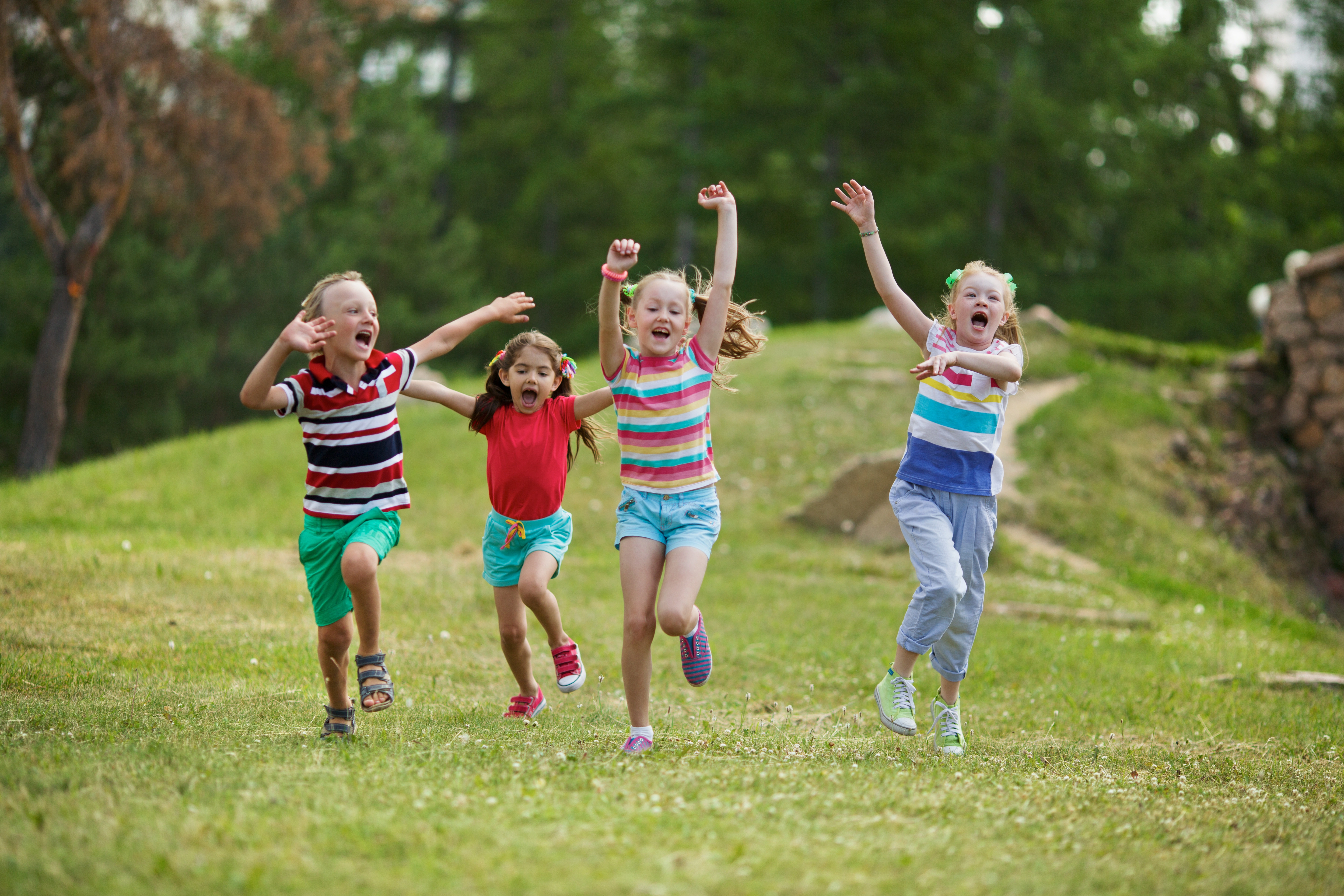
Older preschoolers are ready for competition and teamwork. Running games for kindergarten become more strategic and dynamic.
Obstacle relay
Divide children into teams. They run a distance, jump over a “stream” (rope), and pass a baton. These classic outdoor running games for kids build teamwork.
Wolf and sheep
One child is the “wolf” in the center. The “sheep” must run across the field without being caught. These fun running games for kids teach tactics and risk assessment.
Bridge
Children run freely. When tagged, a child freezes with legs apart. Another child can “unfreeze” them by crawling underneath. If you need running games for kids no equipment that also teach cooperation, this is ideal.
Capture the flag
A simplified version. Teams run to the opponent’s base to grab a flag. These running games in real life teach planning and can be played indoors or outdoors.
Treasure hunters
Hide 5 objects around the area. Children take turns running to find and bring them back. This keeps them engaged longer and builds endurance.
Outdoor running games – no limits and no equipment
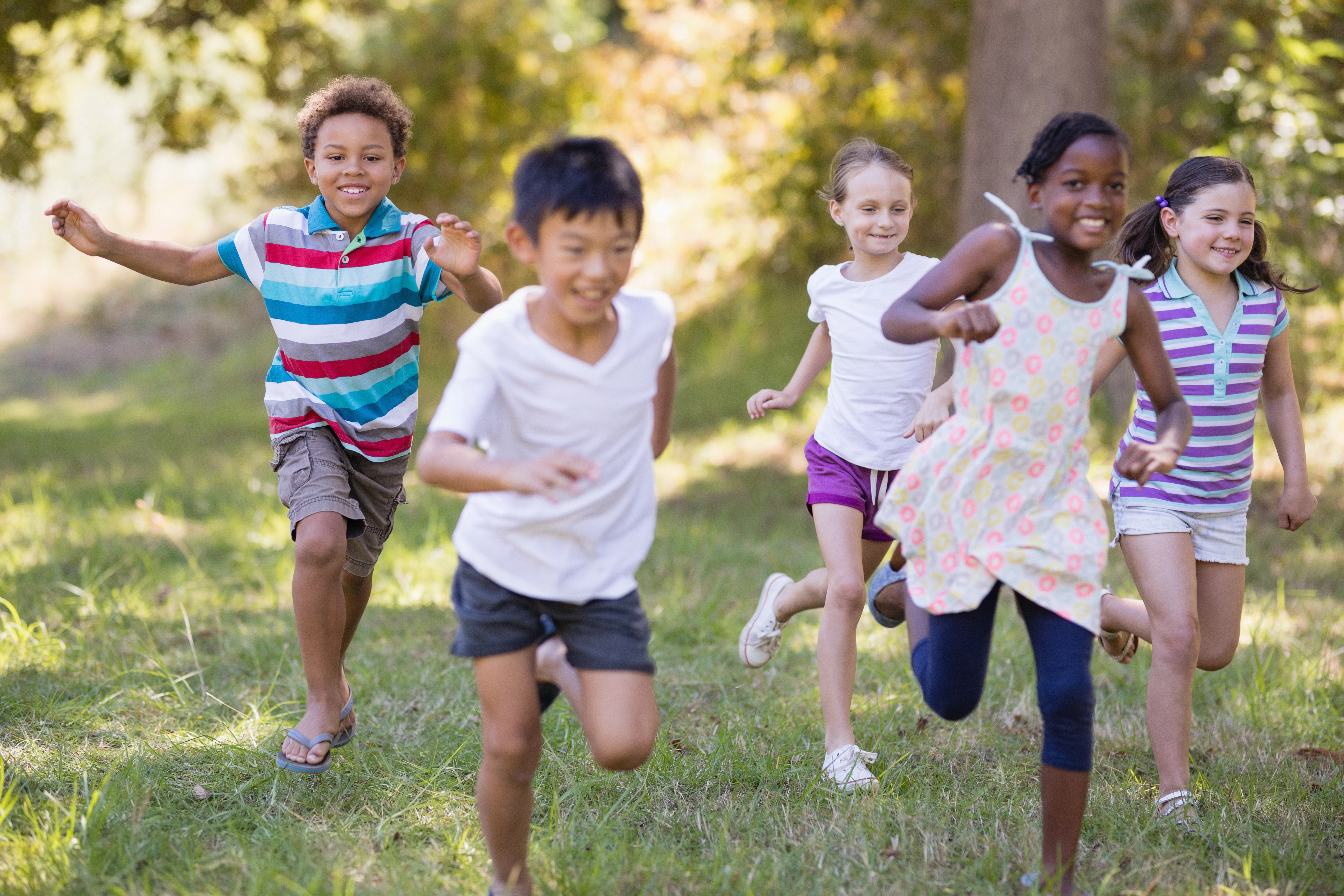
Sometimes the best running games for kids no equipment are spontaneous variations of tag. Open space allows for large-scale activities.
Sardines
One child hides, others search. Whoever finds them hides together. The last player must run and tag others to reach the base.
Ghost in the castle
One child is a ghost sleeping in the center. Others approach. When the ghost wakes up, everyone runs to a safe zone. Among all fun running activities for kids, this game brings the most excitement.
Forged chains
Two teams stand in lines. One player runs and tries to break the opposing chain. This develops strength and determination.
Feet off the ground
A variation of tag: if you climb onto something, you are safe. These outside running games develop spatial awareness.
Mirror run
Children pair up. One is the leader, the other the reflection. The leader changes speed and direction, and the partner must copy exactly. This game requires concentration, quick reactions, and precision.
Help your child thrive with playful learning
Turn screen time into real growth with Keiki's educational games.
Try KeikiHow apps can add balance to activity
In today’s world, gadgets cannot be completely excluded, and they do not need to be. Technology can support physical activity. Fun running activities for kids can be inspired by app characters, while digital games can serve as a calming break after active play. This helps reduce overstimulation and restore energy.
Coloring pages work especially well as a complementary activity. They provide creative engagement combined with focus and calm leisure, helping even very active children relax. Sorting games running games share similarities, as they also require quick reactions. In Keiki, for example, there is a game “Sea creatures,” where children must quickly select fish of a certain color.
This approach teaches that running games in real life and digital learning are two parts of one engaging experience. After 15 minutes of active running, a child’s brain absorbs new information more effectively in an app.