Clapping Games for Kids: Classic Childhood Favorites

It's 4pm, dinner isn't started, and your kid is bouncing off the walls with nothing to do. Enter the clapping game: zero setup, zero toys, zero batteries. Just two sets of hands and a beat.
Table of contents
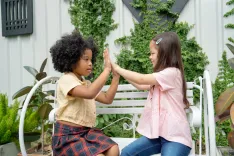
Chances are you already know one. Pat-a-cake. Miss Mary Mack. That half-remembered rhyme from third-grade recess you could probably still clap out in your sleep. These childhood clapping games have been handed down from kid to kid for generations, and it turns out they're not just filling time — they're quietly building rhythm, memory, and coordination while your child thinks they're just goofing around with you.
Key takeaways
- A clapping game needs zero equipment — just two sets of hands and a rhyme — which makes it one of the easiest hand clapping games to start right now, no prep required.
- Kids can start as young as 1–2 years old with something as simple as Pat-a-cake, and level up to faster classics like Miss Mary Mack by age five or six.
- Beyond rhythm, clapping games train bilateral coordination, memory, fine motor skills, and social skills like turn-taking — all at the same time, in under five minutes.
- Classic childhood clapping games like Miss Mary Mack, Down Down Baby, and Lemonade, Crunchy Ice are worth teaching specifically because other kids already know them.
What is a clapping game?
At its simplest, a clapping game is two people clapping their own hands and then each other's in a repeating pattern, usually timed to a rhyme or chant. That's it. No instructions booklet, no equipment to pack — which is probably why it's survived as the go-to for car rides, waiting rooms, and those dead five minutes before bedtime when nobody can find a toy.
Where childhood clapping games come from
Here's a fun fact for your next parent group chat: clapping games aren't some recent Pinterest trend. They're one of the oldest forms of kids' play there is, and they show up with their own regional twist almost everywhere. In African American communities, hand-clapping games have long been a way to teach rhythm through call-and-response. In Caribbean traditions, they sometimes grow into full performances that mix chanting, clapping, and dance. That's basically why the same childhood clapping games keep popping up in slightly different versions around the world — nobody owns them, so every generation of kids just adds their own twist and passes it on.
Benefits of clapping games for kids
Clapping games look like simple fun — and they are — but there's a lot happening under the surface. Here's what's actually getting a workout:
- Fine and gross motor skills. Clapping in a precise, repeated pattern strengthens the small muscles in little hands and fingers, which matters more than it sounds like it should, since those are the same muscles your child will use to hold a pencil later. That's why clapping games for toddlers are worth starting early, even before they're anywhere near ready to write.
- Bilateral coordination — using both sides of the body together, on purpose. Sounds technical, but it's the same skill behind tying shoelaces, riding a bike, or playing an instrument. Clapping games are basically free practice for a dozen other things your kid will need later.
- Memory and focus. Try memorizing a ten-step clap sequence while also singing the words, and you'll feel your own brain working overtime. Kids get the same workout, minus the mild panic.
- Social skills, because clapping games only work with a partner. Taking turns, reading someone else's rhythm, adjusting when they mess up — that's real nonverbal communication practice, dressed up as a game.
- Rhythm and musicality. Clapping to a beat is basically a kid's first music lesson. It lays the groundwork for dance or instruments later, and it means they won't be the one kid at the party who can't clap along to "Happy Birthday."
And this isn't just a feel-good claim. Dr. Idit Sulkin at Ben-Gurion University's Music Science Lab ran a ten-week study comparing kids doing hand-clapping games training against kids in a regular music program — and only the clapping group ended up with neater handwriting and fewer spelling mistakes (American Associates, Ben-Gurion University of the Negev, 2010). So next time someone side-eyes you for "just" playing clapping games, you've got science on your side.
Help your child
grow with Keiki
We’ll help you turn everyday screen time
into real learning progress.
Classic childhood clapping games everyone remembers
Before teaching your kid something new, it's worth handing down the ones you probably already know by heart. These are the childhood clapping games that show up on basically every playground, which means learning them lets your child jump straight into a game other kids already know — not just one invented at home.
- Miss Mary Mack. The reigning champion of hand-clapping rhymes. It's longer, faster, and more nonsensical than Pat-a-Cake, which makes it a natural "level two" once the basics are solid.
- Down Down Baby (Roller Coaster). Works as a circle game or with a partner, and speeds up partway through into a faster "roller coaster" chant. Great for groups, since everyone can lock into the same rhythm at once.
- Lemonade, Crunchy Ice. A call-and-response game that builds to a flurry of extra claps — "beat it once, beat it twice" — so it's a good pick for kids who like a little competitive edge.
- Say, Say, Oh Playmate (Miss Susie). Slower and more sing-song, which makes it an easy bridge between toddler games and the fast classics.
- A Sailor Went to Sea. The chant gets sillier each round as "sea" turns into new words, so it quietly doubles as a vocabulary game.
Simple games for beginners
If your child is still pretty new to this, start here. These are forgiving, low-pressure, and don't ask anyone to remember ten steps in a row.
Pat-a-cake
The original. Sing the song, clap your child's hands, then your own, and repeat. It's less about getting the choreography perfect and more about the eye contact and back-and-forth — for a toddler, that's basically the whole point.
Clap-stomp
Clap, then stomp. That's it to start — add jumps or turns once the rhythm clicks. Good for burning off energy on a rainy day when running around outside isn't an option.
Hello, hello
Stand facing each other, clap hands to a simple song, then your own. Easy as it looks, it's teaching your child to follow someone else's rhythm instead of just their own — step one for every clapping game that comes after this.
Repeat after me
You clap a short pattern, they copy it. Start with two claps and build from there. It's a memory game in disguise, and kids get weirdly competitive about beating their own record.
Rain
Start with soft finger taps, move to light claps, then go full thunderstorm with loud ones. It's a sneaky way to teach the difference between loud and quiet, and it doubles as a fine motor skills activity for little hands still figuring out how much pressure is too much.
Related Games in Keiki App

Games for developing memory and speed
Once the basics feel easy, these games add speed, sequence, or both — perfect for kids who've started asking to go faster.
Miss Mary Mack (extended version)
Add more verses and pick up the pace once the basic version is old news. Remembering both the words and the movements at speed is real memory training, even if it feels like showing off.
Little Monkey
Each round, add one new movement on top of all the old ones. By round five, someone always forgets a step — which, honestly, is half the fun.
Learning letters
Give each letter its own clap count: one clap for A, two for B, and so on. It turns alphabet practice into something a kid actually asks to play again, which is more than most flashcards can say.
Rhymed claps
Clap out a rhyme and invent the next line together: "Look, a truck is driving, it very quickly carried... a bagel?" Half the fun is seeing what ridiculous word your kid comes up with to finish it.
Movement chain
Player one shows a move, player two copies it and adds their own, player three repeats both and adds a third — and so on, until somebody cracks up trying to hold the whole sequence in their head.
Team games and games with a ball
Got more than two kids on hand? These are built for a group, and a couple use a ball to add an extra layer of coordination.
Passing the rhythm
Sit in a circle and pass a clap around like a hot potato, keeping the beat going. Simple, but it only works if everyone's actually paying attention — which is a small win on its own.
Clap your neighbor's hands
Everyone claps both neighbors' hands at once, left and right, at the same time. Takes a round or two of giggling before the group actually syncs up.
Claps with a ball
Clap before catching a tossed ball — once at first, then add more claps as they get the hang of it. A good one for the kid who's more into sports than songs.
Mirror claps
One player leads a sequence, the other mirrors it exactly, like looking in a mirror. Good practice for reading someone else's movements instead of just doing your own thing.
Name-clap
Each kid says their name with their own made-up clap, and the group claps it back. A solid icebreaker for a birthday party or the first day of a new class — nobody's a stranger after five rounds of this.
Build real skills through fun, educational games for your child
Try KeikiHow to teach a child clapping games?
Got the games — now how do you actually get your kid to try them without a meltdown? Six tips that actually work:
- Start stupidly simple. Pat-a-cake, not Miss Mary Mack. You can always level up later.
- Expect some fumbling. If they mess up, remember this is a game, not a test — treat it like one.
- Talk them through it. Say the moves and words out loud as you go; it makes remembering a lot easier.
- Don't force it. If they're not feeling it today, drop it and try again tomorrow. No game is worth a power struggle.
- Praise the trying, not the perfect run. "I love how hard you're trying" beats "you got it right" almost every time.
- Play along like you mean it. Kids can tell when you're faking enthusiasm, so actually enjoy it — they'll follow your lead.
How to use apps for child development?
Active play is great, but sometimes everyone needs a quieter stretch — and that's where the Keiki app can pick up some of the same skills in a calmer format. A few examples:
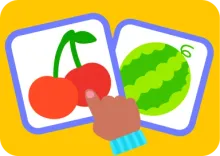
- Cards. Match pairs of everyday objects to train visual memory and attention. The game develops vocabulary along the way and helps with early reading.
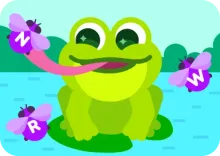
- Hungry Frogs. Letters appear on screen and your child catches them to form words — good practice for quick thinking and fast decisions.
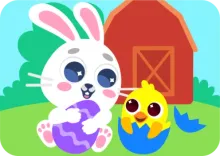
- Farm adventures. Catch eggs of a matching color, which trains color recognition and the kind of quick coordination a clapping game builds, just with a screen instead of a partner. It's part of Keiki's matching game collection.
No ads, built with child psychologists — one less thing to feel guilty about during screen time.