Kwanzaa Activities for Kids: One Easy Idea for Each Day

Got a toddler or a preschooler and a week of Kwanzaa coming up? You don't need a binder full of lesson plans. Kwanzaa runs from December 26 to January 1, every day has its own principle, and that's your whole theme. Light the candle, say the day's word, and do one small thing together.
Below you'll find Kwanzaa activities for all seven days, eight games for preschoolers, and six quiet ideas for the slow part of the evening. Everything is meant for ages 2 to 6, and most of it uses stuff already sitting in your house. Whether your family has celebrated for years or you're just learning about it this December, these fun Kwanzaa activities work for you. Crafts will get their own guide, so you won't find them here.
Key Takeaways
- Pick one activity a day and do it after you light that night's candle.
- Most ideas take between 5 and 20 minutes.
- Toddlers do best with colors, counting, and moving around.
- Battery tea lights are safer than real candles around small kids.
What Is Kwanzaa?
Kwanzaa is a week-long holiday that celebrates African American family, community, and culture. Dr. Maulana Karenga started it in 1966. It's a cultural holiday, not a religious one, so families of any faith can take part, and lots of families celebrate it right alongside Christmas.
The name comes from the Swahili phrase matunda ya kwanza, which means first fruits. It's a nod to harvest festivals in Africa. So what do you tell a 3-year-old who asks what Kwanzaa is? Keep it to one line: families light candles, eat together, and talk about treating each other well.
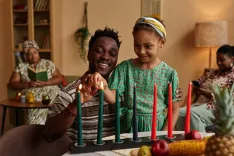
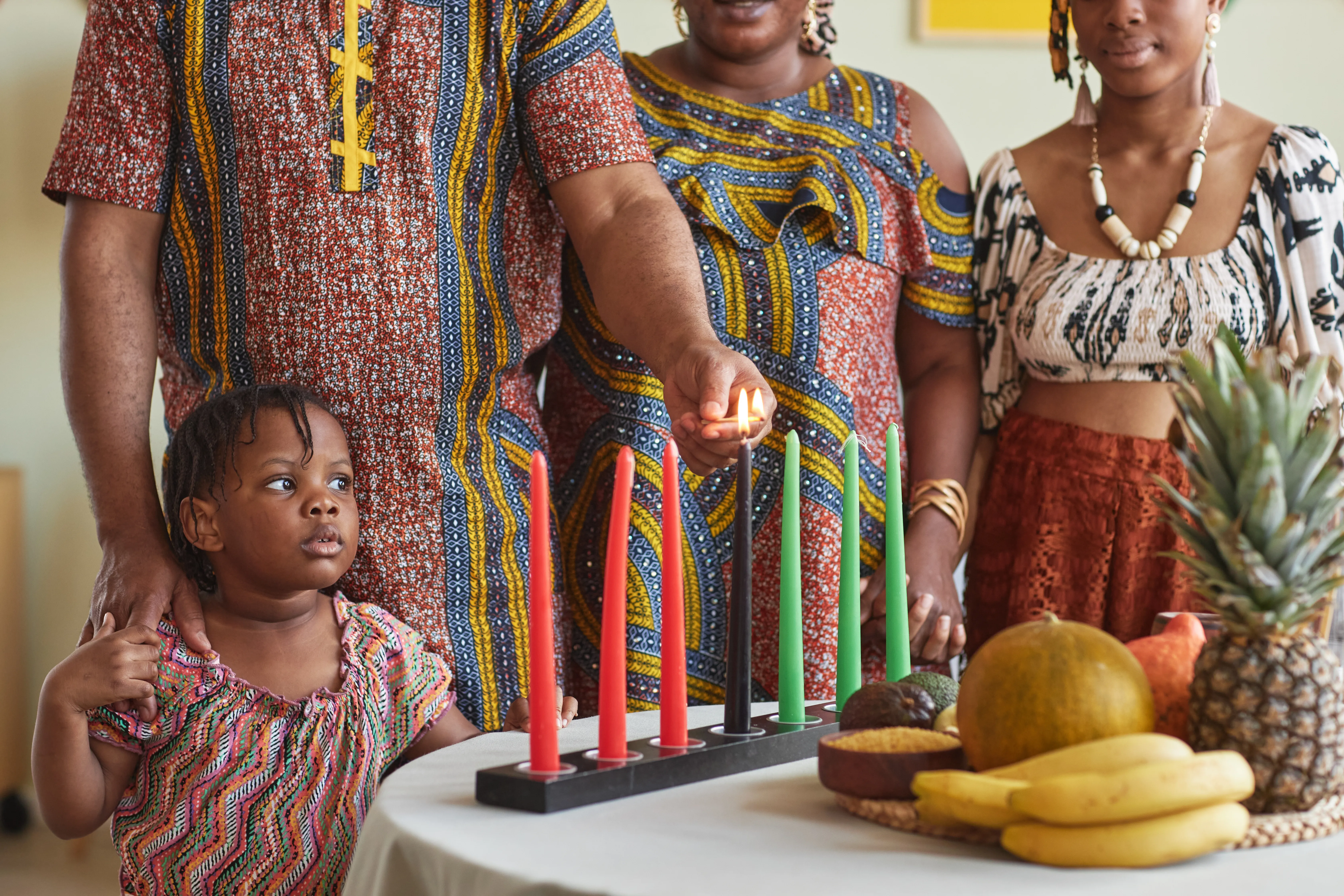
Each night, families light one more candle in a holder called a kinara. It holds seven candles, black in the center, three red on the left, and three green on the right. The black one goes first. Black stands for people of African descent, red for their struggles, and green for hope and the future.

Help your child
grow with Keiki
We’ll help you turn everyday screen time
into real learning progress.
The Seven Principles
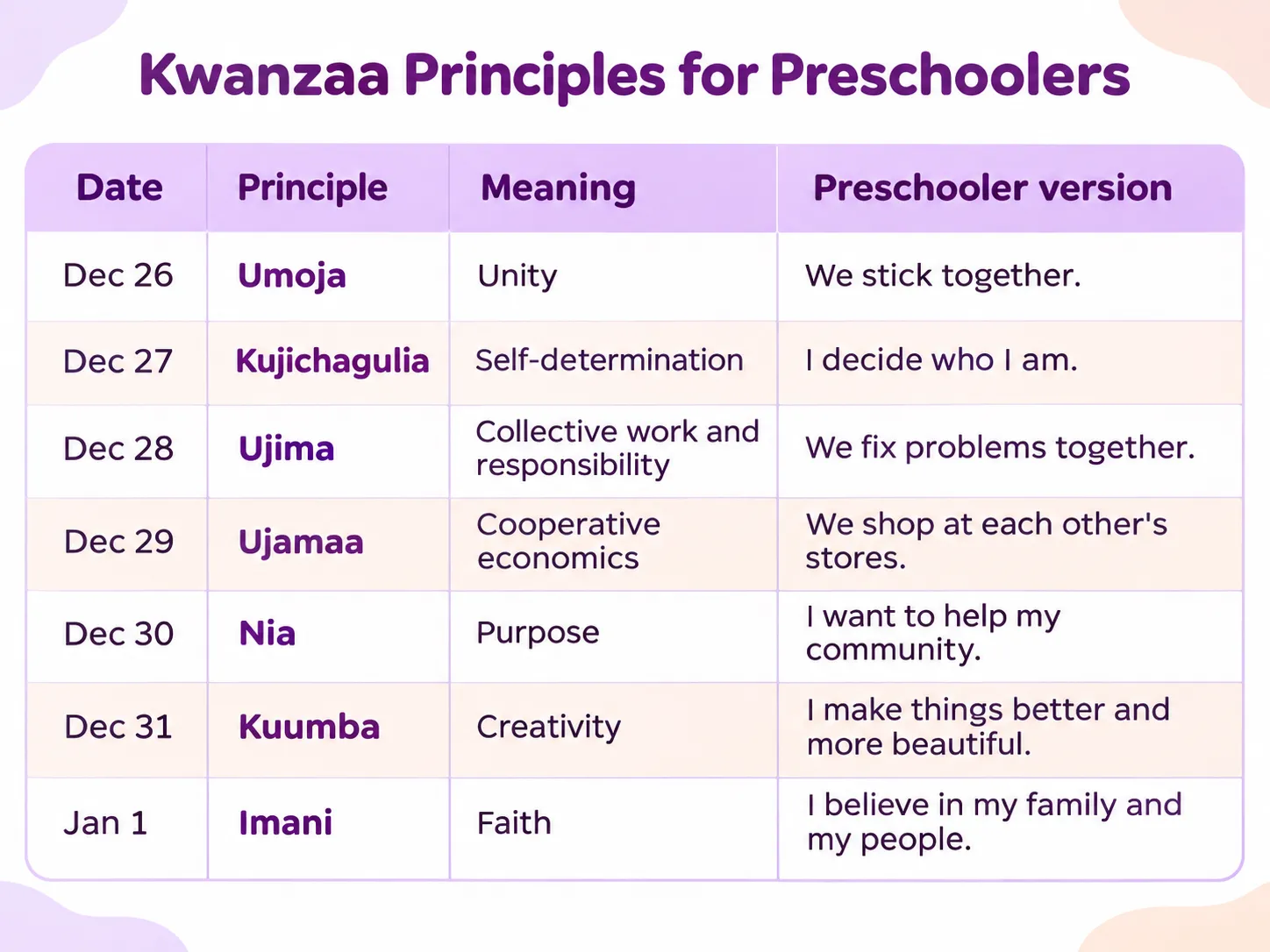
Kwanzaa has seven principles, called the Nguzo Saba, one for each day. The last column gives you a way to say each one to a preschooler.
Kwanzaa Symbols and Their Names
A Kwanzaa table usually has the seven symbols below. Pointing at each one and saying its name makes an easy first lesson for little kids.
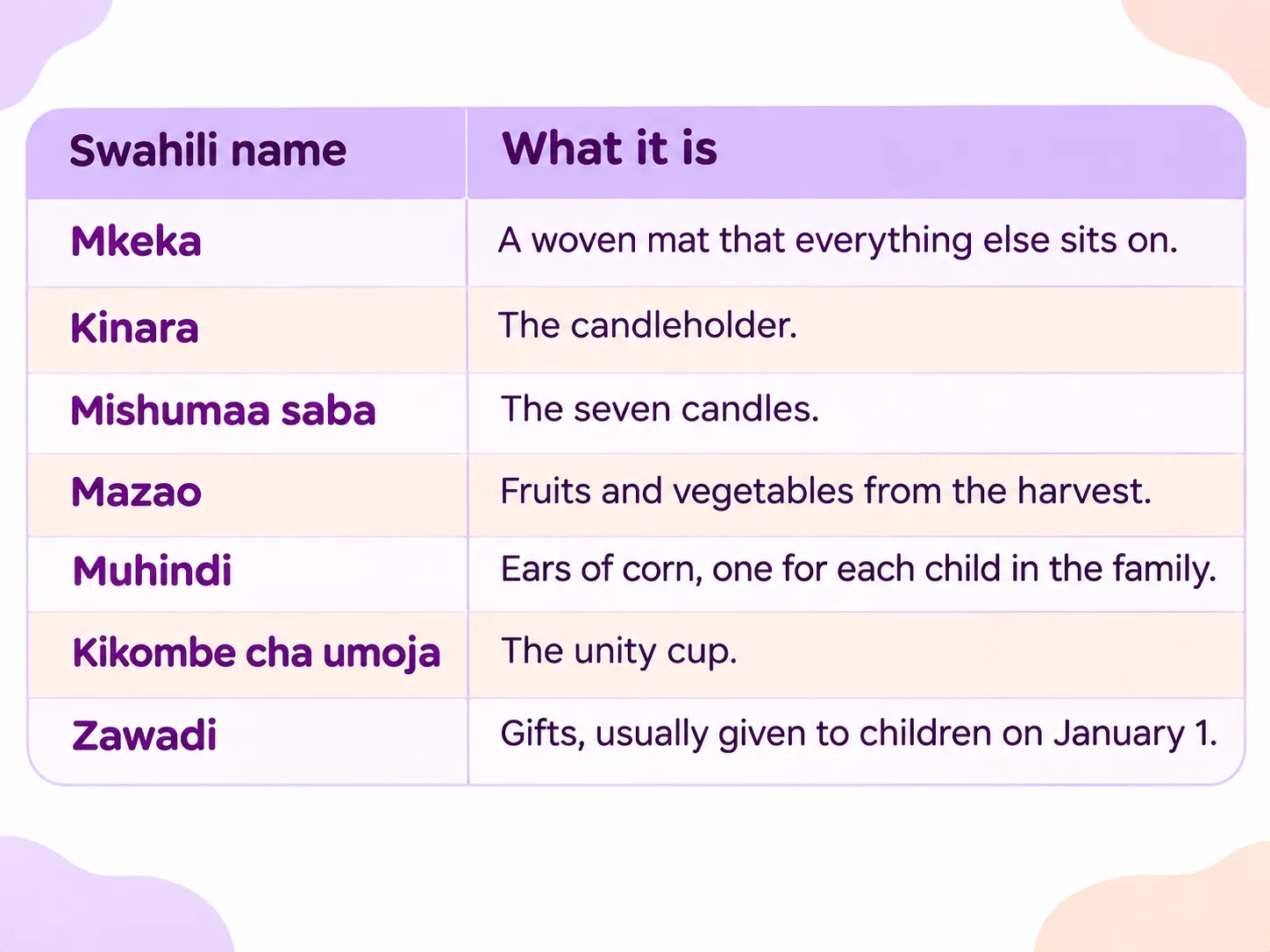
Most kids 4 and up pick these words up fast. If yours gets a kick out of that, vocabulary games are an easy way to keep it going after the holiday.
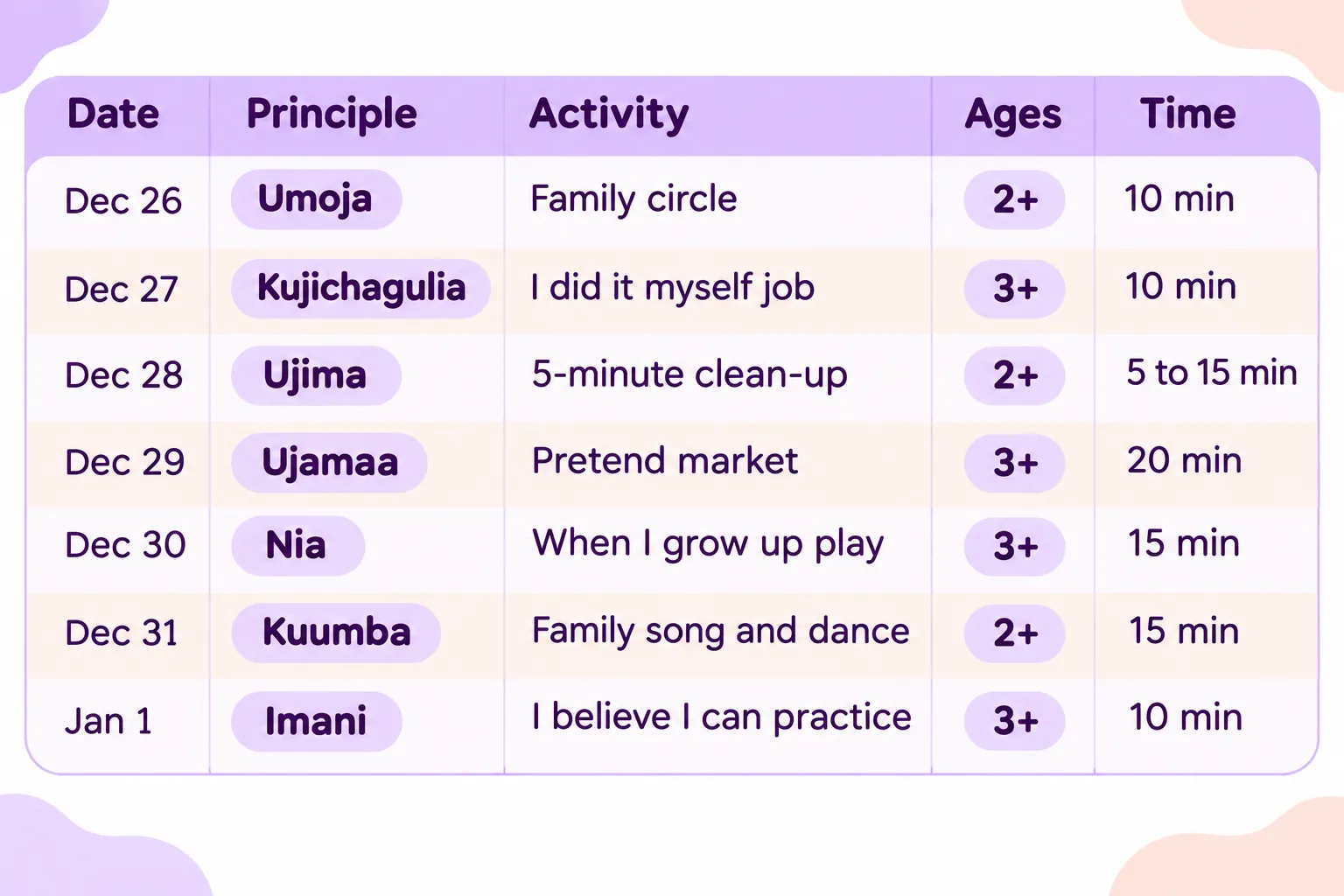
Activities for Kwanzaa (Day by Day)
Do one of these each day, matched to that day's principle. The table lists the whole week, and the notes below it explain how to run each one.
December 26, Umoja: Family Circle
Sit on the floor, hold hands, and go around the circle. Everybody names one thing they like about this family. If your toddler only says Mama, that still counts as a turn. Finish with a hand squeeze that travels from person to person around the circle.
December 27, Kujichagulia: I Did It Myself Job
Let your child pick one real job and finish it with zero help. Setting out napkins works, and so does feeding the dog. When they're done, they say their full name and then I did it! Kujichagulia means deciding who you are, and for a 4-year-old that starts with doing things alone.
December 28, Ujima: 5-Minute Clean-Up
Set a timer for five minutes and tidy one room together. Kids notice fast that the room gets clean way quicker when everybody helps, and that's the whole point of Ujima. Got a 5- or 6-year-old? They can also do a job for a neighbor, like carrying in groceries or dropping off a plate of food.
December 29, Ujamaa: Pretend Market
Turn the living room into a market. Each kid sets up a shop with toys, books, or play food. Hand out play money (buttons work fine) and shop at each other's stores.
Ujamaa is about supporting businesses in your own community, and a pretend market shows how that works. Five-year-olds can practice making change.
December 30, Nia: When I Grow Up Play
Ask how your child wants to help people someday, then act it out right there. A future vet can examine the stuffed animals, and a future firefighter can rescue the toy cat. Then ask who they're helping, because Nia is about having a purpose that benefits other people.
December 31, Kuumba: Family Song and Dance
Make up a Kwanzaa song together. Bang on pots, clap a beat, and let your kid invent the dance moves. Tonight is also Karamu, the Kwanzaa feast, so the song can be the show after dinner. For more ways to get moving, try these dance games for kids.
January 1, Imani: I Believe I Can Practice
Have your child finish the sentence I believe I can with something that's still tricky, like hopping on one foot or zipping a coat. Practice it and cheer every try. Then ask what your whole family can do together this year. Imani is faith in each other as much as faith in yourself.
Kwanzaa Coloring Pages
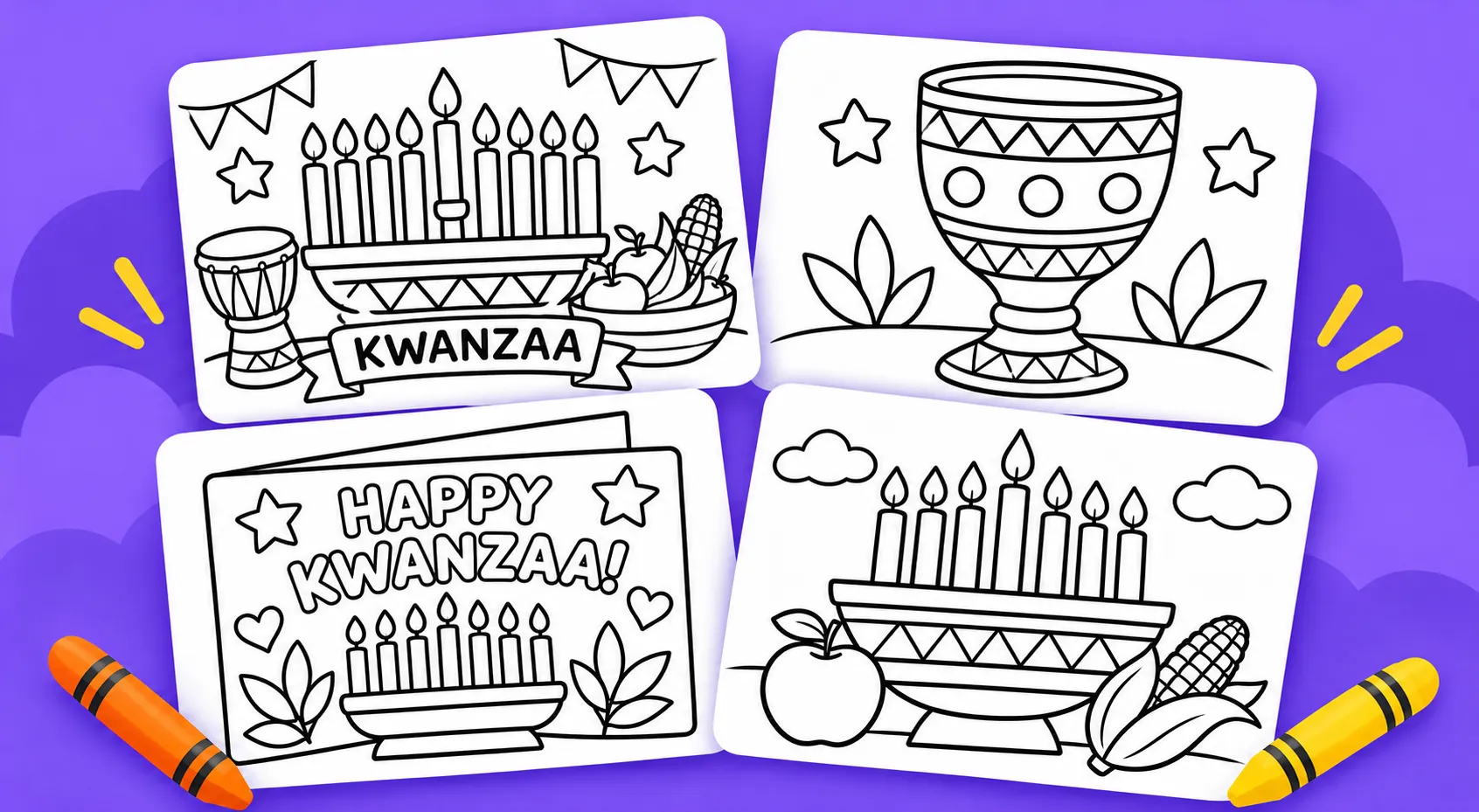
Coloring helps kids settle down after a loud game. Keiki World has Kwanzaa coloring pages on its website, so you can print a few and keep the evening screen-free.
Match the page to the day. Try a family picture after the Umoja circle, or a kinara after tea light counting. Then check the candles together: black in the middle, red on the left, green on the right.
Ask what each symbol means while your child colors, since saying it out loud helps the words stick. A stack of printed pages also keeps little ones busy at a crowded Karamu table.
Kwanzaa Games for Preschoolers
Preschoolers like games that are short and get them moving. These eight Kwanzaa games take 5 to 15 minutes each and work with one kid or a whole class.
1. Habari Gani
Habari gani? That's the Kwanzaa greeting in Swahili, and it means what's the news. The answer is the principle of the day. Ask it a bunch of times through the day, at breakfast, in the car, at bath time. Your kid yells back Umoja, or whichever one it is. With a 2-year-old, just say the answer together.
2. Color Hop
Tape red, black, and green paper squares to the floor. Call out a color and have your child hop onto it. Kids 4 and up can follow a pattern, like red, green, red.
3. Corn Counting
In Kwanzaa, one ear of corn (muhindi) stands for each child in the family. Lay out number cards from 1 to 7 and have your child put that many dried corn kernels on each card. Swap in yellow pom-poms for kids under 3, because loose kernels are a choking hazard.
4. Pattern Race
Line up red, black, and green blocks, or crayons, or socks, and ask what comes next. Start with red, green, red, green. Kids 5 and 6 can try longer ones, like red, red, black, green, green. Keiki World's pattern games give the same kind of practice when you want something quieter.
5. Unity Cup Thank-You Circle
At many Kwanzaa celebrations, an elder pours from the unity cup to honor the family's ancestors. For a kid version, pass an empty plastic cup around the circle. Whoever holds it names a grandparent or older relative they're thankful for.
6. Zawadi Treasure Hunt
Hide a small gift and build a trail of clues that leads to it. Draw picture clues for kids who can't read yet, like a shoe or the fridge. Five-year-olds can follow short written clues. It fits January 1, when children traditionally get zawadi.
7. Kwanzaa I Spy
Have you played I Spy with colors? Say I spy something green and let everybody hunt around the room, then switch to red and black. Keep a few easy ones in the mix for the 2-year-old so they don't melt down. It's a good one for the drive to a Karamu, too!
8. Basket Toss
Number seven baskets or bowls from 1 to 7. Kids toss rolled-up socks into them and call out the number they hit. Older kids can add up a running score.
Preschool Activities for Kwanzaa: Quiet Ideas
These calmer activities fit right before dinner or after the candle lighting. Teachers can use them as Kwanzaa activities for preschool classrooms, too.
Tea Light Counting
Set out seven battery tea lights beside one black, three red, and three green block. Count them together: 1 plus 3 plus 3 makes 7. Each night, your child switches on one more light to match the real kinara.
Harvest Sensory Bin
Fill a bin with corn cobs, small gourds, apples, and a wooden spoon. Kids scoop, sort, and name each thing. For kids under 3, leave out beans and loose kernels, and stay close.
First Fruits Kabobs
Kwanzaa gets its name from first fruits, so fruit fits right in. Thread strawberries, green grapes, and blackberries onto paper straws. The colors match the kinara. Take turns saying what you're thankful for while you build them, and find more ideas like that in these gratitude activities for kids.
Karamu Helper
Karamu is the Kwanzaa feast, held on December 31. Give your child a real job, like laying out the mkeka or handing out napkins. Kids get more excited about a meal when they helped get it ready.
Story Time
Read a Kwanzaa picture book each night after you light the candle. My First Kwanzaa by Karen Katz suits toddlers, and Seven Spools of Thread by Angela Shelf Medearis works for ages 5 and up. Libraries often put holiday books on display in December.
A Gift of Time
Zawadi are meant to carry meaning, so they're often handmade or educational. Your child can give time instead of a thing: a walk with Grandpa, a bedtime story for a little cousin, or a dance party with an aunt.
Help your child thrive with playful learning
Turn screen time into real growth with Keiki's educational games.
Try KeikiTips for Kwanzaa With Little Kids
- Let kids use battery tea lights. Real candles are for adults.
- Stop each activity at 10 or 15 minutes, before your child gets bored.
- Play a game again if it's a hit. Toddlers like repeats.
- Use the Swahili names from the start. Kids learn them faster than you'd expect.
- Two-year-olds can count and dance. Five- and 6-year-olds can talk about what a principle means.
- If Kwanzaa isn't your family's holiday, learn from books by Black authors, the official Kwanzaa website, or an event at a local library or museum.