Mexican Games for Kids – Fun Traditions Celebrating Culture

Traditional Mexican games introduce kids to cultural play with simple rules and big energy. These activities support movement, cooperation, and family-friendly fun while sharing traditions in an accessible way.
Key Takeaways
- Best for a party: the piñata and La Lotería are the crowd favorites — easy to run and fun for mixed ages.
- Easiest with zero materials: Las Escondidas (hide-and-seek) and El Gallito need nothing but space.
- Best calm or rainy-day option: making maracas or papel picado keeps little hands busy indoors.
- Great for culture and language: La Lotería and La Víbora de la Mar teach Spanish words and Mexican traditions as you play.
- Age range: most of these games work for children 3 and up, with easy tweaks for toddlers or older kids.
Traditional Mexican games for kids to learn through play
Games sometimes serve not just as entertainment or even development tools, they are also a window into another culture. Mexican party ideas are a vibrant immersion into the world of Mexican traditions, where each activity is infused with the spirit of celebration, family warmth, and joy. These entertainments develop physical skills, social interaction, and creative thinking, helping children better understand the world around them. In this article, we'll examine why traditional Mexican games are so important, study their history, and give practical tips on organizing a Mexican party. You'll also learn about Keiki – a platform with safe and educational games, including those for developing cultural perception.
The Benefits of Playing Traditional Mexican Games
Mexican games for kids improve physical coordination, develop social skills, and strengthen connection with culture. These activities bring enormous benefits for comprehensive child development, affecting such development aspects:
- Physical development. Many games, such as Carreras de Sacos or El Gallito, require active movements, which helps improve coordination, endurance, and motor skills. Children move a lot, increase agility and endurance.
- Social skills. Most Mexican games are team-based, which teaches children to cooperate, negotiate, and respect each other. This strengthens social connections and helps them feel part of a group.
- Cultural education. Traditional Mexican games are an engaging and interactive way to introduce children to traditions, history, and values of Mexican culture without resorting to boring lectures.
- Development of creativity. Many games can be adapted to your conditions, which stimulates imagination and creative thinking. Some tasks literally require unconventional solutions and scenarios, which also excellently affects creative potential.
- Strengthening family bonds. Joint participation is always about unforgettable moments and strengthening relationships between family members and friends.
Help your child
grow with Keiki
We’ll help you turn everyday screen time
into real learning progress.
Classic Mexican Games for Kids (and Their Rules)
These are the icons: the games most closely tied to Mexican celebrations. If you only try three from this whole list, start here.
Piñata
There's no more famous Mexican game than the piñata — and honestly, what's not to love about a game that ends in a rain of candy?
- Players: 3 or more
- Ages: 3+
- You'll need: a piñata, a stick or bat, a blindfold, and (optionally) music
- How to play: Hang the piñata where players can reach it. Each child is blindfolded in turn, sometimes spun gently, and given a few swings to try to break it open. Many families play music and let the current player swing until the music stops. When the piñata finally bursts, everyone dives for the candy.
- Tip: Safety first. Keep all other children well back from the swinging zone, and have an adult manage the line so no one wanders into range.
La Lotería
Think of La Lotería as Mexican bingo, but with beautifully illustrated cards instead of numbers — and a lot more personality.
- Players: 2 or more
- Ages: 4+
- You'll need: a Lotería deck, player boards (tablas), and tokens like dried beans
- How to play: One person is the caller, drawing cards and announcing each image — often with a traditional riddle or nickname. Players cover the matching pictures on their board with beans. The first to complete the agreed pattern (a row, or the whole board) shouts "¡Lotería!" and wins.
- Tip: It's a lovely game for mixed generations, and a sneaky way to build attention and Spanish vocabulary. For younger kids, play "full board wins" so no one feels rushed.
Ponle la Cola al Burro (Pin the Tail on the Donkey)
You may know a version of this one already — it's a fixture at Mexican birthday parties.
- Players: 3 or more
- Ages: 3+
- You'll need: a large drawing of a donkey (or burro) on cardboard, a paper "tail," tape or a pin, and a blindfold
- How to play: Tape the donkey to a wall at kid height. Blindfold each player in turn, spin them gently, and point them toward the picture. They try to stick the tail in the right spot while everyone calls out (helpful or not-so-helpful) directions. Closest to the mark wins.
- Tip: Use tape rather than a pin for younger children, and let toddlers skip the spin.
Active and Outdoor Mexican Games
Mexican outdoor games are perfect for parties and active recreation. Most need plenty of open space and not much else. For more outdoor options, our roundup of circle games for kids pairs perfectly with several of these.
El Gallito (Rooster Game – Keep Out Variant)
A fast, giggly circle game that's all about teamwork and quick reactions.
- Players: 5 or more
- Ages: 4+
- You'll need: nothing but space
- How to play: Players stand in a circle holding hands. One child — the rooster — waits outside and tries to break through the joined hands into the middle, while everyone else works together to keep them out. Once the rooster gets in, choose a new one. Add a second rooster to raise the challenge.
- Tip: Remind kids to hold hands, not yank arms — the fun is in the strategy, not the strength.
La Víbora de la Mar (The Sea Snake)
This singing chain game is a genuine Mexican classic — you'll even see a version of it played at weddings.
- Players: 6 or more (the more, the better)
- Ages: 4+
- You'll need: just a group and space to run
- How to play: Two children form an arch by joining raised hands, secretly choosing to each represent something (like "melon" or "watermelon"). Everyone else links up in a line — the "snake" — and weaves under the arch while singing the traditional song. On the last word, the arch drops and traps whoever is passing through. That child quietly picks one of the two sides to join, and play continues until everyone has chosen a team.
- Tip: Keep the arch low and gentle with little ones so the "trap" is playful, never rough.
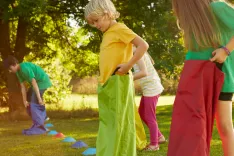
Carreras de Sacos (Sack Race)
A fair-day favorite that has kids hopping to the finish line inside a sack.
- Players: 2 or more
- Ages: 4+
- You'll need: a sack or old pillowcase per player and a clear stretch of ground
- How to play: Each child steps into a sack, grips the top, and hops toward the finish. First one across wins. You can also run it as a relay, passing the sack between teammates.
- Tip: Clear the track of stones and anything slippery first, and run it on grass if you can — there will be tumbles.
Las Escondidas (Hide and Seek)
The Mexican take on a game every child already loves — great for building patience and quiet focus.
- Players: 3 or more
- Ages: 3+
- You'll need: hiding spots
- How to play: One player counts while the others hide, then goes searching. To spice it up, add a "home base" that hiders can dash to for safety before being spotted.
- Tip: Set clear boundaries for where kids can and can't hide before you start.
La Cebollita (Little Onion)
A cooperative test of grip and gentle teamwork that always ends in laughter.
- Players: 4 or more
- Ages: 5+
- You'll need: nothing
- How to play: Players sit or stand in a line, each holding tightly to the child in front — the layers of an "onion." One player, the "farmer," tries to gently pull the front child free, "peeling" the onion one layer at a time. Everyone holds on as long as they can.
- Tip: Keep it soft and silly. Emphasize careful holding over hard pulling so no one gets bumped.
El Avioncito (Hopscotch)
Mexico's version of hopscotch — familiar in shape, but a great coordination builder all its own.
- Players: 1 or more
- Ages: 4+
- You'll need: chalk and a small stone
- How to play: Draw a numbered grid on the ground. Players toss a stone onto a square, then hop through the course — skipping the square with the stone — without stepping on lines. Miss, and it's the next player's turn.
- Tip: For toddlers, draw fewer squares and let them walk instead of hop.
La Cuchara y el Huevo (Spoon and Egg Race)
A steady-hands race that rewards patience over speed.
- Players: 2 or more
- Ages: 4+
- You'll need: a spoon and an egg per player (a potato or lemon works too)
- How to play: Each child balances the egg on a spoon and races to the finish without dropping it. If it falls, they pick it up and carry on.
- Tip: Swap real eggs for potatoes with younger kids to save the mess — and your patience.
Calm and Creative Mexican Games
When the party needs a breather or the weather keeps everyone inside, these quieter activities keep hands busy and imaginations working.
Making Maracas
A perfect fiesta game that ends with an instrument your child can actually play.
- Ages: 3+
- You'll need: empty plastic bottles or paired paper cups, dried rice or beans, tape or glue, and paint or markers
- How to play: Fill a bottle (or seal two cups together) with a handful of rice or beans, then decorate the outside. Shake to the beat of some music.
- Tip: Tape the lid down firmly so small pieces stay inside — important for younger children.
Papel Picado (Cut-Paper Banners)
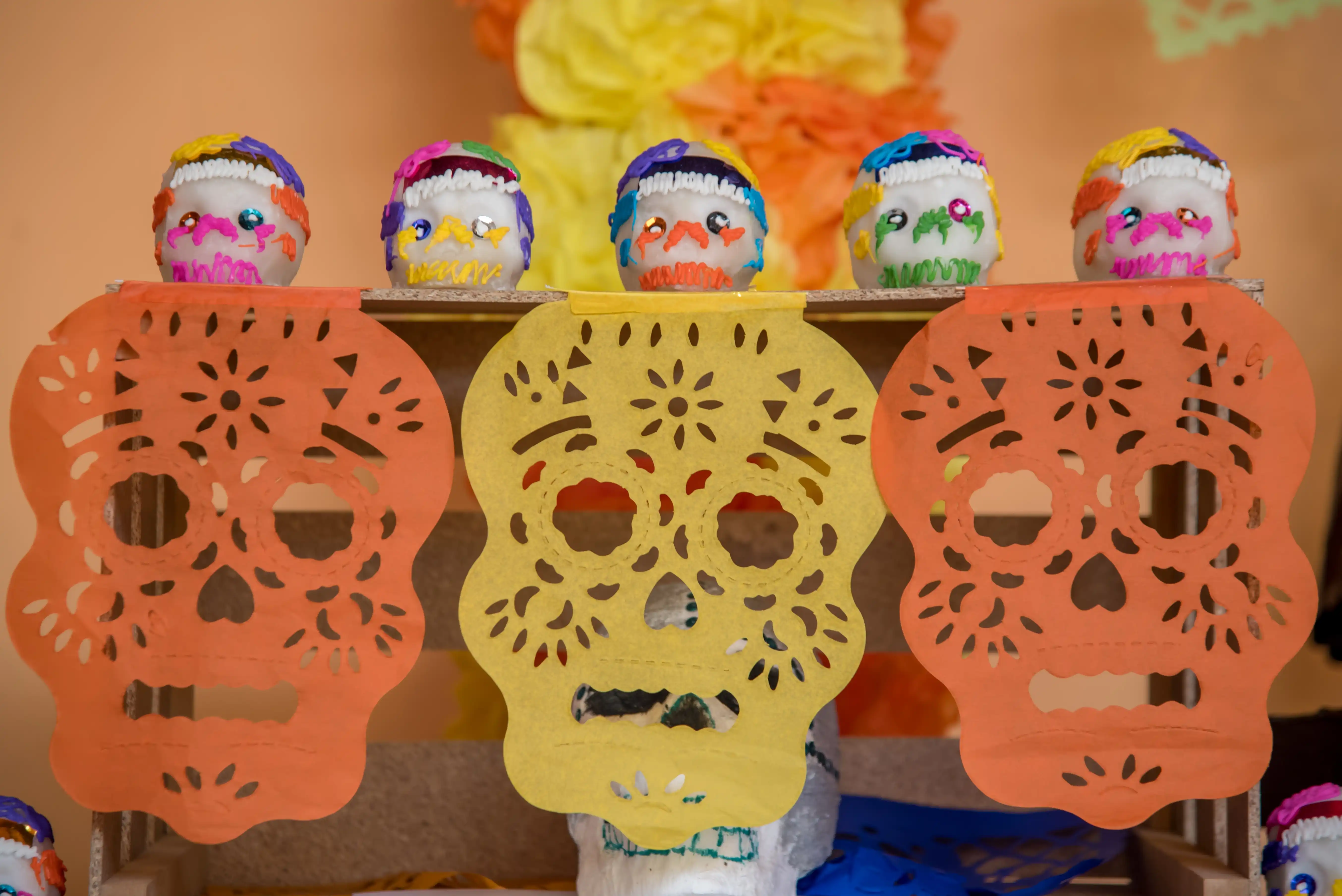
Here's the one worth getting right: papel picado is Mexico's traditional cut-paper folk art — delicate tissue-paper banners with patterns punched or snipped into them. (It's often confused with origami, but origami is the Japanese art of folding paper; papel picado is all about cutting.) The craft traces back to ancient Mexico, where the Aztecs cut designs into bark paper called amate.
- Ages: 5+
- You'll need: colored tissue paper, child-safe scissors, and string
- How to play: Fold a sheet of tissue paper several times, then snip small shapes along the folds — triangles, circles, half-moons. Unfold to reveal a lacy pattern, then string several together into a banner to hang up.
- Tip: Folding and cutting is also a hidden math lesson — talk about shapes and symmetry as the pattern appears.
Decorating Sombreros
Part craft, part costume — this one doubles as a party hat kids are proud to wear.
- Ages: 3+
- You'll need: plain sombreros (cardboard or straw), plus paint, feathers, beads, and glue
- How to play: Set out the supplies and let each child decorate their own hat however they like. Wear them for the rest of the fiesta.
- Tip: Cover the table and dress kids for mess — this is a joyfully messy activity.
Stringing Bean Necklaces
A simple, satisfying craft that quietly sharpens fine-motor skills.
- Ages: 4+
- You'll need: dried beans or large dried peas, thread, and a blunt needle (or tape the thread end into a stiff "needle")
- How to play: Cut a length of thread and have your child string the beans one by one into a necklace or bracelet.
- Tip: Larger beans are easier for little fingers and safer for this age group.
Toma Todo (La Pirinola)
A traditional spinning-top game of luck that kids find endlessly exciting — no money required.
- Players: 2 or more
- Ages: 5+
- You'll need: a pirinola (a six-sided spinning top) and tokens like beans, buttons, or candy
- How to play: Each player starts with a pile of tokens and puts one in the center pot. Players take turns spinning the pirinola and following whatever its landed side says — for example, "take one," "take all," "put one in," or "everyone pays." Play continues until one lucky player has won the whole pot.
- Tip: Use candy or buttons instead of money, and read the sides aloud together for younger players.
Build real skills through fun, educational games for your child
Try KeikiGame History: Where Did They Come From?
Many traditional Mexican games have a rich history rooted deep in centuries. Knowledge of their origin adds special meaning to entertainment and allows deeper immersion into culture. For example, contrary to popular belief, piñata is not a purely Mexican invention. It's believed to have originated in China, where it was used to celebrate New Year. Then it reached Europe, and from there was brought by Spanish missionaries to Mexico, where it began being used for religious purposes, and later for parties.
La Lotería has European origins but was adapted and popularized in Mexico in the 18th century. It became a symbol of Mexican culture and family gatherings. Each card in the game has a unique image and name that became part of Mexican folklore.
Sack races were popular in rural areas and often held at fairs and holidays. They were a way to test strength, agility, and endurance. El Palo Encebado has Aztec roots and was part of religious rituals. The pole symbolized ascension to gods. Nowadays it's a fun game of agility and strength.
How to Integrate Fun Mexican Games into Modern Celebrations?
You can integrate tradition into everyday life using Mexican party games for kids. We've selected several tips for you:
- Using games for themed parties. For example, organizing a Fiesta with piñata and La Lotería.
- Prepare tasks for different ages. Simplify rules for toddlers and add competitive elements for teenagers.
- Including music and food. Use mariachi music and serve tacos to create a real Mexican celebration atmosphere.
- Organizing a "mini-Olympics" of Mexican games. Create a tournament with prizes for winners.
- Tell stories and tales. Games for cultural education work well combined with traditional tales and beliefs.
Related Games in Keiki App



Online Games for Breaks During Active Games
Smartphone or tablet games can be viewed as a variety of calm Mexican activities. They can be directed toward useful purposes, using them as development and education tools. Keiki helps with this, serving as a bridge between a child's curiosity and knowledge they can gain. You can use the app for party breaks, with such educational games for kids:
- Food Names. Mexican cuisine is rich in unusual flavors and dishes – this is an important part of culture. With this word learning game, children will find it easier to expand their vocabulary to later use it including for joint culinary experiments.
- Sweet Words. Who said you can only play with piñata one way? This game uses its principle, and there's no less fun with it. Collect constructions from words and articles to break the piñata and win the round.
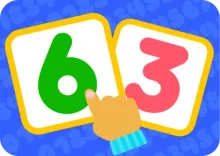
- Numbers. In the decorations of a festive candy cart, you can easily learn numbers and simple operations with them using visual examples with candies and cupcakes. Such number learning games show the greatest effectiveness thanks to clear and understandable examples.
Mexican games for kids are not only fun but also beneficial. This is a real foundation for understanding other cultures, customs, and views.
Conclusion
Traditional Mexican games give kids the best of both worlds: real fun and real growth. They build coordination and cooperation, spark creativity, and share a rich culture in a way that actually sticks — all with materials most families already have at home. Pick two or three Mexican games to play this week, whether that's a backyard sack race or a quiet afternoon making papel picado.
And when you need a calm, screen-based break between rounds, Keiki's word and number games can keep the learning going while little ones recharge — a gentle bridge from one burst of play to the next.