34 Best Circle Games for Kids: Group Activities for Preschool & Beyond

Get a group of kids sitting in a circle and something shifts — everyone can see everyone else, nobody's stuck in the back, and taking turns just makes sense. That's the whole appeal of circle games, one of the easiest group activities for kids to run: simple games played in a circle that need no special equipment, work for almost any group size, and quietly teach kids to listen, wait their turn, and pay attention to each other. Children's circle games like these show up in classrooms, daycares, and camps for exactly that reason.
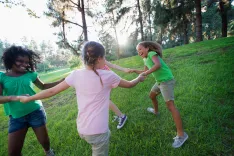
This guide rounds up 34 circle games for kids, split into five groups so you can find one that fits the moment: 8 active games for burning energy, 8 quiet games for calmer stretches, 6 built for toddlers, 6 circle time games for preschoolers, and 6 circle games for kindergarteners specifically. Every entry explains exactly how to play, so there's nothing extra to look up.
These games in a circle work in a classroom, a daycare room, a scout meeting, a birthday party, or a backyard — anywhere a group of kids needs an easy activity that includes everyone at once.
Key Takeaways
- Circle games for kids are group activities played in a circle, and their format naturally builds turn-taking, listening, and attention skills without kids realizing they're practicing anything.
- Most circle games need 5-15 minutes and use items already on hand — a ball, a bell, a scarf, or often nothing at all.
- Circle games for kindergarten work well with a bit more structure and rule-following than toddler games, since 5- and 6-year-olds can track slightly more complex instructions.
- Mix active and quiet circle games back to back — a high-energy game followed by a calm one keeps a group regulated instead of overstimulated.
What Are Circle Games?
Circle games are group activities kids play while sitting or standing in a circle, which keeps every child visible and gives everyone an equal turn. The circle format is what makes these games work so well for groups: there's no "back of the line" and no child left out of view, so passing an object, taking a turn, or watching a demonstration all happen naturally. Whether the game is active (running, chasing, tossing) or quiet (listening, guessing, memory), the shared circle shape is what ties them together.
Why Circle Games Work
Circle games do more for kids than fill a few minutes between other activities — the format itself teaches real skills.
1. They build social skills. — Circle games teach kids to communicate, negotiate, wait their turn, and respect other people's turns and ideas.
2. They create a sense of belonging. — Taking part in one shared circle activity gives a group a quick, real feeling of togetherness.
3. They sharpen attention and observation. — Many circle games only work if kids watch closely — a missed cue means missing your turn.
4. They build gross motor skills. — Active circle games that involve movement or passing objects give kids' coordination a real workout.
5. They grow leadership. — Circle games naturally rotate who's "it," who's leading, or whose turn it is, which lets every child practice both following rules and taking the lead.
Help your child
grow with Keiki
We’ll help you turn everyday screen time
into real learning progress.
Active Circle Games for Kids
Active circle games for kids burn off extra energy while keeping the group contained and easy to supervise — no one runs off in a random direction. These 8 need some open floor space but very little else.
1. Hot Potato — Kids sit in a circle and pass a small object (a ball, a bean bag, or even a real potato) quickly around while music plays; whoever holds it when the music stops is out for that round.
2. Fisherman and Fish — One child, the "fisherman," stands in the center holding a long rope with something soft tied to the end, and swings it low around the circle while the other kids jump over it as it passes.
3. Musical Chairs (Circle Version) — Kids walk around the circle to music, and when it stops, everyone has to sit down on the floor as fast as possible — no chairs needed.
4. Mirror — One child stands in the center as the "mirror," and the rest of the circle makes movements that the mirror has to copy exactly and quickly.
5. Duck, Duck, Goose — One child walks around the outside of the circle tapping heads and saying "duck" until they say "goose" — that child chases them around the circle back to the empty spot.
6. Cat and Mouse — Kids hold hands in a circle, one child is the "cat" outside the circle and another is the "mouse" inside; the cat chases the mouse in and out of the gaps between kids, who can raise or lower their arms to help the mouse escape.
7. Roll and Call — Kids roll a ball across the circle to a specific person, calling out that person's name right before it reaches them, so the game doubles as name practice.
8. Circle Relay Pass — Time how fast an object can travel hand-to-hand all the way around the circle, then try to beat that time on a second round.
Quiet Circle Games for Kids
Quiet circle games for kids slow things down after an active stretch, relying on listening, memory, or observation instead of movement. These 8 work well indoors or right before a transition to a calmer activity.
1. Telephone — The first child whispers a short phrase into a neighbor's ear, that phrase gets passed around the whole circle, and the last child says out loud what they heard — usually nothing like the original.
2. What's in the Bag? — Kids take turns reaching into a bag without looking and guessing what an object is by touch alone.
3. What's Missing? — Arrange a handful of objects in the middle of the circle, let kids study them, have everyone close their eyes while one object is removed, then see who can name what's gone.
4. Word Carousel — The first child says a word — "sun," for example — and the next child has to say a new word that starts with the last letter of the word before it.
5. Statues — Kids move freely to music, and the instant the music stops, everyone has to freeze completely still like a statue until it starts again.
6. I Spy — One child picks an object they can see without naming it, gives the clue "I spy something [color/shape]," and the rest of the circle guesses.
7. Air Writing — One child "writes" a letter, number, or simple shape in the air with a finger while the rest of the circle tries to guess what it was.
8. Freeze and Find (Eye Contact Game) — Everyone looks down at the floor, and on a count of three, every child looks up and locks eyes with someone; anyone who makes eye contact with another child sits out that round.
Circle Games for Toddlers (1-3 years)
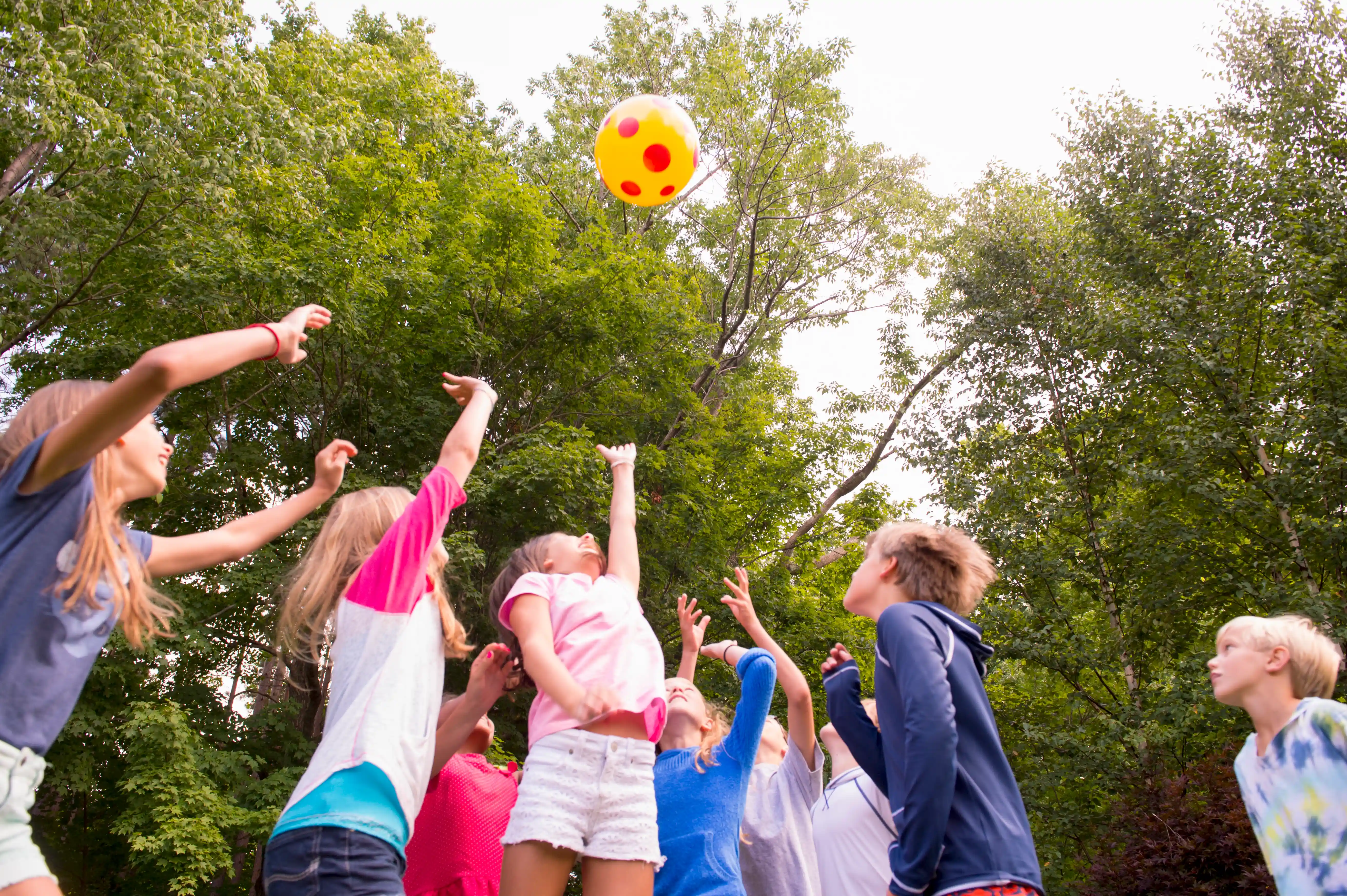
Circle games for toddlers need to be simpler and shorter than games for older kids, since 1- to 3-year-olds are just learning how a group activity even works. These 6 use songs, simple repetition, and very short attention spans in mind.
1. Pat-a-Cake — Toddlers clap their own hands, then clap a partner's hands, following a simple repeating rhythm.
2. Carousel — Kids hold hands and walk slowly in a circle while singing an easy, repetitive song.
3. Bell — A bell gets passed from child to child around the circle, and each one gives it a gentle ring before passing it on.
4. Stomp-Stomp — An adult leads with a simple movement — stomping feet, clapping hands, snapping fingers — and the toddlers copy it right after.
5. Peekaboo Circle — Kids take turns covering their eyes with their hands and popping them open while everyone says "peekaboo!" together.
6. Shaky Egg Pass — Pass a shaker egg or small maraca around the circle while music plays, with each toddler giving it one good shake before handing it to the next child.
Build real skills through fun, educational games for your child
Try KeikiCircle Time Games for Preschoolers
Circle time games for preschoolers, ages 3-5, work well as part of a daily classroom routine and usually run a little longer than toddler games, since preschoolers can sit and focus for a few more minutes at a stretch. These 6 fit naturally into a morning circle time slot.
1. Apple on Head — The first child starts a story with one sentence, and each child after them adds one more sentence, building the story all the way around the circle.
2. What Changed? — Cover a few objects in the middle of the circle with a cloth, uncover them for 10 seconds, cover them again, then quietly change or remove one before revealing them and asking who can spot the difference.
3. Pass the Emotion — One child makes a face showing an emotion — joy, sadness, surprise — and passes that same expression around the circle, child by child.
4. Bug in a Rug — One child hides under a blanket in the middle of the circle while the others guess who it is based on clues or a quick peek.
5. Nursery Rhyme Actions — The group sings a familiar rhyme together while acting out the matching hand and body movements.
6. Weather Watchers — Each child guesses what today's weather might be before the group checks together, which turns the daily weather check into a quick prediction game.
Circle Games for Kindergarteners
Circle games for kindergarten work best with a bit more structure than preschool games, since 5- and 6-year-olds can follow multi-step instructions and start playing games with real rules. These 6 lean into early listening, memory, and literacy skills.
1. Simon Says — Kids follow an instruction only when it starts with "Simon says," and sit out for a round if they move on an instruction that doesn't.
2. Categories Circle — Pick a category — animals, foods, colors — and go around the circle with each child naming one item until someone repeats an answer or can't think of a new one.
3. Magic Word — Announce a secret word for the day, and every time it's said out loud, the whole circle has to do a specific action, like clapping once.
4. Tap Your Name — Each child claps out the syllables in their own name for the group, which sneaks in some early phonics practice.
5. Alphabet Animal Round — Going around the circle, each child names an animal that starts with the next letter of the alphabet.
6. Keeper of the Keys — One child sits in the center with eyes closed guarding a set of keys (or any noisy object) while another child tries to sneak up and grab them without being heard.
How to Use Keiki for Circle Games?
Online apps can become an excellent addition to traditional games, offering new ideas and interactive content. Team building games for kids can also be implemented online with a little imagination.
- Flash Cards. Always a good idea that can be used for both toddlers and older children. Flash cards not only serve as memory development games but also as a means for associative group games.
- Coloring and Drawing. Drawing doesn't have to be done alone. It's much more pleasant when a picture is created together. Each participant can choose a color or material, or make one stroke at a time.
- Short Stories. When children get tired of active games, you can gather them in a circle for a story. Interactive stories in Keiki are supplemented with pictures and running text animation, which helps train reading skills.
- Reading Train. Older children can handle this task, taking turns forming complete sentences from word-trains.
Many tasks from Keiki are suitable as cooperative games for kids. They have no advertising, no links, but many different directions and even worksheets for printing.
Related Games in Keiki App






Tips for Leading Circle Games
A handful of things separate a circle game that clicks from one that falls apart halfway through:
1. Keep rules clear and simple. — Explain each game in a sentence or two that every child in the circle can follow.
2. Join in yourself. — An adult playing along builds trust and makes the game feel safe rather than like a test.
3. Switch games before interest fades. — The moment kids start losing focus, move to something new instead of pushing through.
4. Use music when it fits. — Music is one of the easiest tools for grabbing attention and setting the mood for an active game.
5. Notice every child's effort, not just the winner's. — Circle games work best when nobody feels like they're competing to avoid losing.
6. Read the room's energy. — If the group is tired or overstimulated, switch to a quiet circle game instead of pushing another active one.