Outdoor Scavenger Hunt for Kids: Fun Ideas for Every Walk

Modern childhood looks different from the version that was familiar in the past. There are too many screens, artificial light, and fast-paced forms of content. There is nothing inherently wrong with devices – they can even become valuable allies in preschool development. However, everything is best in moderation, so screen-based activities should be balanced with active play.
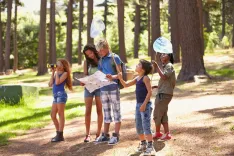
This leaves parents searching for ways to get children outdoors, where they can run, breathe fresh air, and simply be children. But what should you do when an ordinary nature walk no longer excites your child? The solution is simple – turn it into an engaging game.
Organizing an outdoor scavenger hunt for kids is one of the gentlest, most nature-friendly, and enjoyable ways to interest children in the world around them. Searching for objects or going on a “treasure hunt” outdoors requires no complicated preparation or expensive equipment. All you need is a little imagination, comfortable shoes, and a willingness to make small discoveries.
In this article, we will explain how to prepare the ideal activity and share ready-made lists and clues that can turn an ordinary trip outside into a genuine expedition.
What is an outdoor scavenger hunt?
At its core, a kids outdoor scavenger hunt is a game in which participants receive a checklist of specific objects they need to find outside. These can include anything from a yellow autumn leaf to a smooth stone or a singing bird. The child takes the list, begins searching, and marks each discovery.
Why is this game so highly valued by early childhood development specialists? First, it develops observation skills. The ability to focus on one task, notice a tiny detail in the grass, or examine a pattern in tree bark is an invaluable skill. Children learn to remain present, concentrate, and analyze their surroundings.
Second, it provides excellent motivation for physical activity and outdoor play. Children absorbed in the search may walk for kilometers without even noticing that they are tired. They squat to examine a beetle, stand on tiptoe to reach an interesting branch, jump over puddles, and balance on logs. This is natural exercise that strengthens muscles and develops gross motor skills.
Third, it encourages exploration. A well-planned kids nature scavenger hunt outdoors motivates children to ask questions. Why is this leaf red while another one is green? Where are the ants going? Why does moss grow on only one side of a tree? You are not simply taking a walk – you are discovering the world in its most interactive and vivid form.

Help your child
grow with Keiki
We’ll help you turn everyday screen time
into real learning progress.
Outdoor scavenger hunt ideas for kids
The main advantage of this game is its flexibility. You can adapt it to any location, weather, or mood. There is no need to travel to a national park to find adventure – sometimes the most surprising discoveries are hidden directly beneath your feet.
Here are several ideas that can make your fun outdoor scavenger hunt for kids unforgettable.
Classic backyard hunt
When you have little time or your child is still very young, your backyard is an ideal place to begin. It is a safe, familiar environment where the child feels confident.
Create a simple visual list:
- Find something green.
- Find a flower.
- Find a long stick.
- Find a stone.
This activity can be organized five minutes before dinner while the food is being prepared.
Neighborhood safari
An ordinary walk through your neighborhood can become an engaging quest. Prepare a list of objects you are likely to encounter along the way:
- A red car.
- A mailbox.
- A dog on a leash.
- A brick house.
- A traffic light.
- A bicycle.
This is also a useful way to pass the time when walking to a shop or preschool.
Color palette
Collect several paper paint sample cards from a hardware store or simply color a sheet of paper in different shades. Give the palette to your child.
The task is to find objects in nature that match the selected colors. Finding something green is easy, but discovering the perfect turquoise or terracotta object is a genuine challenge for a young explorer.
The miniature world
Give your child a plastic magnifying glass – it immediately makes the expedition feel much more serious. This time, the goal is insects.
Look for:
- Ants.
- Butterflies.
- Ladybirds.
- Caterpillars.
- Spiders.
An important rule for these expeditions is that children may observe but should not touch the creatures or take them home. This helps develop respect for wildlife.
Sensory hunt
Use not only sight but all the other senses as well.
Sensory development is important during early childhood, as is the development of senses beyond vision. Give children tasks such as the following:
- Find something you can touch – something soft, such as moss; something prickly, such as a spruce branch; something smooth, such as a stone; or something wet, such as morning dew.
- Find something you can hear – a bird singing, wind moving through leaves, dry branches crunching underfoot, or a distant car horn.
- Find something you can smell – a flower, freshly cut grass, or rain on pavement.
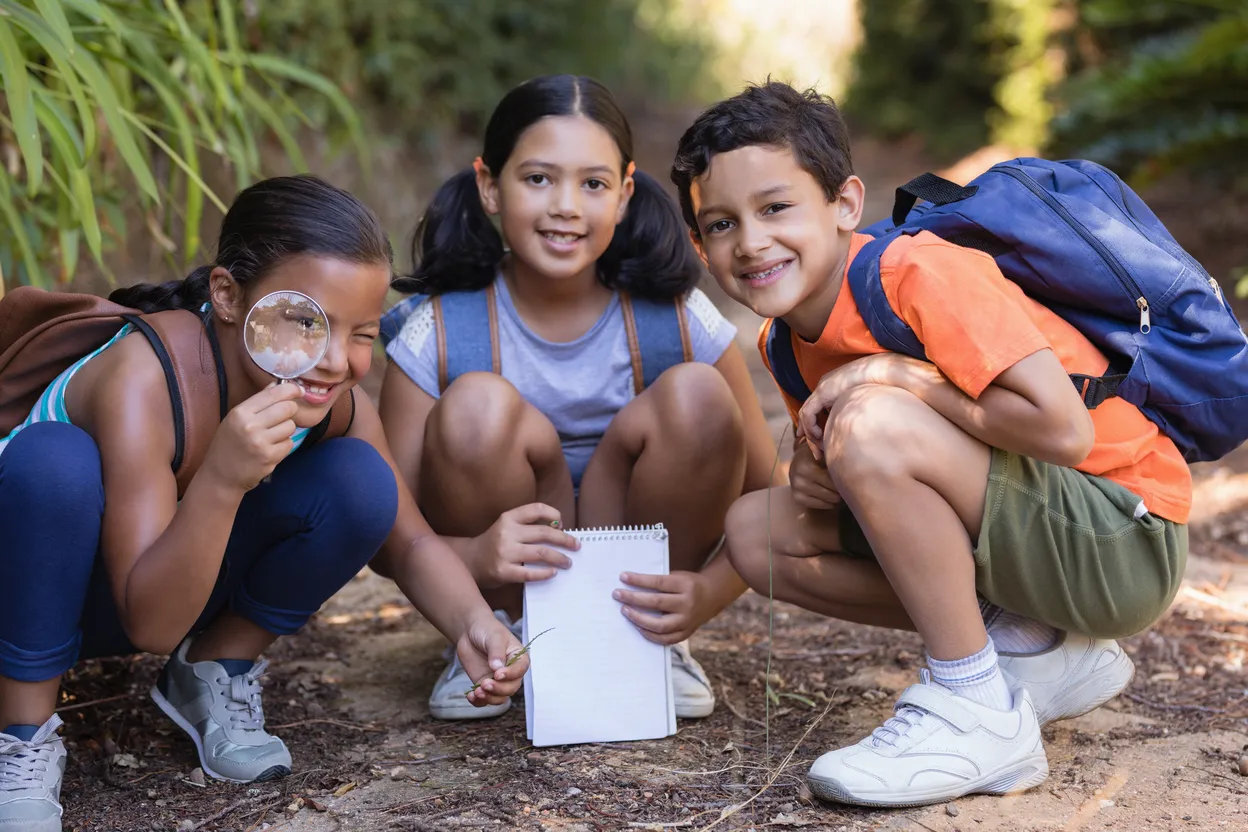
Outdoor scavenger hunt items to find – sample list
To make it easier to begin, we have prepared a ready-made foundation. Older children may enjoy solving riddles instead of simply searching for items on a list. Using outdoor scavenger hunt clues for kids turns the activity into an intellectual exercise.
Below is a detailed list of objects you can include in your checklist, together with sample clues.
Basic natural finds
- Leaves – ask children to find leaves of different shapes or colors: yellow, green, dry, or with serrated edges.
Clue: I grow on trees and dance in the breeze. In autumn I fall, yellow, red, and all. What am I?
Answer: A leaf. - Pinecone – an excellent object for exploring texture. Discuss why it closes in wet weather and opens when the air is dry.
Clue: I fall from a tall tree, I am brown and spiky. Squirrels love to play with me. What am I?
Answer: A pinecone. - Rocks – find one perfectly round stone, one flat stone suitable for skipping across water, and one shiny stone.
- Twigs and sticks – find a stick shaped like the letter “Y,” a stick longer than the child’s arm, and a twig with buds.
Living things
- Insects – an ant carrying something heavy, a bee on a flower, or a spider web, even when the spider is not there.
- Birds – a bird in the sky, a bird on a branch, or a feather on the ground.
Clue: I have feathers and wings, high in the sky is where I sing. What am I?
Answer: A bird. - Animals – a squirrel, a cat sitting on a fence, or a dog out for a walk.
Interesting textures and shapes
- Something round, such as a berry or an acorn cap.
- Something soft, such as moss or dandelion fluff.
- Something that leaves a mark, such as chalk or clay.
- Something that makes a sound when stepped on, such as a dry leaf.
You can combine these items for a kids scavenger hunt outdoors depending on your destination. When planning a long forest hike, add animal tracks, fungi growing on tree bark, and ferns to the list.
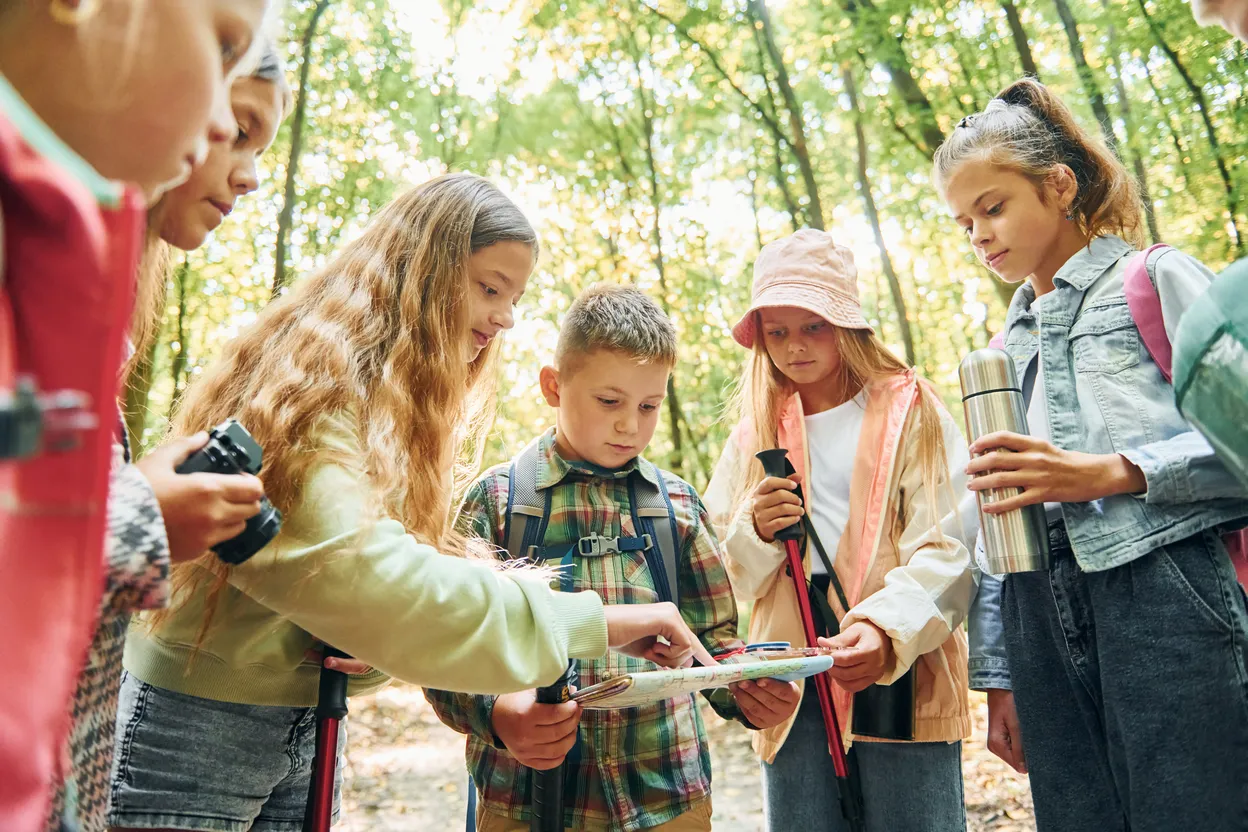
Make outdoor exploration part of learning with Keiki
We believe that learning should be closely connected with play and real life. Outdoor scavenger hunt ideas for kids provide an excellent foundation, and the experience can later be reinforced at home in a calm setting.
A scavenger hunt develops attention, memory, and logic. These same abilities can also be supported with Keiki after outdoor play, when the family is ready to relax comfortably at home.
The app includes printable materials for games and activities. Mazes, spot-the-difference exercises, matching tasks, and dozens of other activities can keep children engaged while they rest.
For digital activities, choose games that develop the same abilities as a scavenger hunt. These may include brain-training tasks with cards, sorting exercises, and spot-the-difference activities. Collecting illustrated insects or fish according to color is another form of searching.
These activities also involve sorting, identifying the main characteristics needed to make a choice, and noticing differences. Matching games are especially useful in this context. Keiki offers a large library of such activities that develop important skills through engaging play.
Build real skills through fun, educational games for your child
Try KeikiConclusion
Childhood is a time of magic, muddy knees, pockets full of chestnuts, and genuine wonder at the enormous world. By creating small adventures such as an easy outdoor scavenger hunt for kids, you give children more than entertainment. You teach them to be attentive and notice beauty in ordinary things.
A scavenger hunt is a versatile activity that encourages children to ask questions and appreciate nature without demanding anything in return.
These activities also become vivid childhood memories. For you, it may be an ordinary walk, but for your child, it is time spent with the people closest to them and one of their first exciting adventures.
Let children lead the way. Do not rush them when they spend ten minutes examining an earthworm, and celebrate every discovered twig as though it were a real bar of gold. Take your list, go outside, and let every day be filled with new discoveries.