24 Sand Games for Kids: Beach, Sandbox, and Indoor Activities for Every Age

Sand games help kids explore textures, build structures, and play creatively outdoors. This guide shares easy activities that support fine motor skills, cooperation, and calm, focused play with minimal materials.
Key Takeaways
- Sand play builds fine motor skills, sensory awareness, early math and science thinking, and — physical therapists say — even balance and coordination.
- No beach nearby? No problem. Kinetic sand and a shallow bin turn a kitchen table into an indoor sandbox.
- Most sand activities for preschoolers use things you already own: cups, spoons, molds, small toys.
- Sand is safe for most kids past the mouthing stage — just supervise, and rinse eyes or mouths fast if sand ends up somewhere it shouldn't.
What Are Sand Games?
Sand games are any activity built around sand — wet, dry, kinetic, or colored — for building, digging, sorting, drawing, or pretending. It could be a toddler scooping sand into a bucket. It could be a preschooler solving a sand maze. It could be a rainy-day sensory bin with kinetic sand on the kitchen table. What connects all of it is the material itself: sand pours, holds a shape when wet, and behaves like nothing else kids get their hands on, which is exactly why it never seems to get old.
Why Sand Play Is So Good for Kids
It looks like simple fun. It's actually doing a lot more than that. Here's what's happening every time your kid digs in:
- Sensory development. Wet, dry, coarse, fine — every texture gives your kid's brain fresh information about how the world feels.
- Fine and gross motor skills. Scooping and molding sand strengthens the small hand muscles kids will need for holding a pencil. Digging and hauling buckets works the bigger muscles too.
- Creativity. Sand doesn't come with instructions. It becomes whatever your kid decides — a castle today, a volcano tomorrow.
- Problem-solving. Why does a dry sandcastle collapse while a wet one holds up? Kids figure that out themselves, one failed tower at a time.
- Calm, regulated play. Sifting sand through fingers is oddly soothing — which is exactly why it shows up so often in occupational therapy for kids who need help settling down.
Experts back this up. Doctor of Physical Therapy Erynn Weston points out that sand play sharpens fine motor skills and eases tactile defensiveness, since grabbing, building, and tracing in sand all fine-tune small hand movements. Physical medicine specialist Dr. Justin Burton adds that digging and building in sand builds real strength and endurance — and once other kids join in, it becomes a language and social workout too.
Help your child
grow with Keiki
We’ll help you turn everyday screen time
into real learning progress.
Sand Games for Toddlers (Ages 1-3)
Keep it simple at this age. Toddler sand games work best when they're about feeling the texture, not following rules.
Sand Castles
Let your toddler dig into wet sand and feel it hold a shape for the first time. There's no wrong way to play this one — a bucket and shovel are all it takes to keep small hands busy for a good while.
Sand and Water Mix
Hand over a bucket, a shovel, and a cup of water, then step back. Watching sand change texture as water gets added is a toddler's first real lesson in how materials behave — dressed up as pure, happy mess.
Footprint Art
Make footprints or handprints in wet sand and talk through the shapes together. It's an easy way to build vocabulary — "big," "small," "toes" — without it ever feeling like a lesson.
Sand Cake Bakery
Give your toddler sand molds and a few old kitchen tools, and let them "bake" sand cakes and cookies. It's part role-play, part creative play, part vocabulary practice — and a reliable go-to whenever you need ten quiet minutes.
Sand Games and Activities for Preschoolers (Ages 4-6)
These activities with sand for preschoolers bring in a bit more structure and teamwork, since 4- to 6-year-olds can follow steps and wait their turn without much reminding.
Sand Target Throwing
Draw circles in the sand and give each one a point value, then let kids toss pebbles or shells at the targets. It's a simple beach game that sneaks in some counting while everyone tallies scores.
Sand Maze
Dig a maze together, then guide a small ball or pebble through it with a stick or a finger. Want more of a challenge? Build the maze right into a sandcastle's grounds.
What's Hidden in the Sand?
Bury small, safe objects — toys, smooth stones, shells — and let your kid dig them up, name them, and describe them. It's a scavenger hunt that quietly builds focus and vocabulary at the same time.
Sand Volcano
Mound up sand with a hollow top, add baking soda, then pour in vinegar for a fizzy eruption (a drop of food coloring makes it extra dramatic). Keep an adult close by for this one — it's one of the best games with sand for turning a science idea into something a preschooler won't forget.
Sand Relay
Set up a relay where kids scoop sand into a bucket, carry it a short distance, and dump it at a marker. Simple, and a great way to burn off extra energy when it's building up fast.
Sand Olympics
Best saved for an actual beach with room to run: long jump, wet-sand shot put, sprints, or a "deepest hole" digging contest. A strong, full-body finish after the calmer games above.

Indoor Sand Games for Kids
Rain outside? Freezing cold? Doesn't matter. Kinetic sand and a shallow bin bring most of the sandbox experience indoors, minus the actual sand tracked through the house.
Kinetic Sand Sensory Bin
Fill a shallow, lidded container with kinetic sand — it holds a shape like wet sand but never dries out or turns into mush. Toss in cookie cutters, small figures, and scoops, and it's a self-serve activity your kid can come back to on their own.
DIY Indoor Sandbox on a Tray
Line a baking sheet with foil, color part of it blue for an "ocean," then add kinetic sand, pebbles, and small figures. It's a compact indoor beach that keeps a toddler and preschooler happily busy at the same table.
Kinetic Sand Dinosaur Dig
Bury small plastic dinosaurs in a bin of kinetic sand and hand over a brush or spoon for careful digging. It plays like a real fossil excavation, and kids tend to stick with it far longer than most sensory bins.
Sand Car Tracks
Mold kinetic sand into a flat road, then carve grooves with a fork for tire tracks. Driving toy cars down it turns simple sensory play into a full small-world scene.
Sand Foam Mix-In
Stir shaving foam into a bin of dry sand and let your kid feel the texture shift as more goes in. A five-minute setup that makes plain sand feel brand new again.
Learning Games in the Sand: Letters, Numbers & Early Skills
Sand is a seriously underrated teaching tool. Mistakes vanish with one swipe of the hand, which makes it a much lower-pressure place to practice than a worksheet ever is.
Sand Letter Tracing
Smooth out a tray of sand and let your kid trace letters or their own name with a finger. Getting it "wrong" costs nothing — just smooth it over and try again.
Sand Number Line
Draw a number line in the sand and have your kid hop along it while counting out loud, or place pebbles at specific numbers. Works just as well shrunk down to a small tray with a toy figure walking the line.
Sand Sorting Station
Bury shells, buttons, pebbles, and small toys, then have your kid dig them up and sort by color, size, or type. A screen-free way to build the categorizing skills that show up later in math.
Measuring and Pouring
Give your kid a few cups and containers of different sizes and let them guess (then test) how many small cups fill a bigger one. This is one of the easiest sand activities for preschoolers for introducing early measurement — and it works just as well with rice or beans indoors.
Alphabet Sand Hunt
Hide plastic letters in a sand bin and call one out for your kid to dig up, then have them say a word that starts with it. Digging for a letter feels nothing like schoolwork, even though that's exactly what it is.
Help your child thrive with playful learning
Turn screen time into real growth with Keiki's educational games.
Try KeikiSand Art and Sensory Recipes to Try
Sand isn't just for building — add some color or glue and it turns into a genuine art material.
Colored Sand Bottle Art
Layer different colors of sand into a clear bottle with a small funnel, building stripes or waves. The finished bottle makes a display-worthy souvenir from a beach day, or just an afternoon at home.
Sand Collage
Spread glue on cardstock in a shape, sprinkle colored sand over it, then shake off the extra. A low-mess craft with a finished piece of art in under ten minutes.
Sand Painting on Paper
Draw a thin line of glue on paper, sprinkle on sand, let it dry, then add a second color. Kids can freehand it or trace a simple outline first if they want a guide to follow.
Natural Material Sand Mosaic
Collect leaves, flowers, and twigs on a walk, then press them into smoothed sand alongside sprinkled color for a mosaic. It stretches one nature walk into a whole extra activity.
Play and Learn More with Keiki
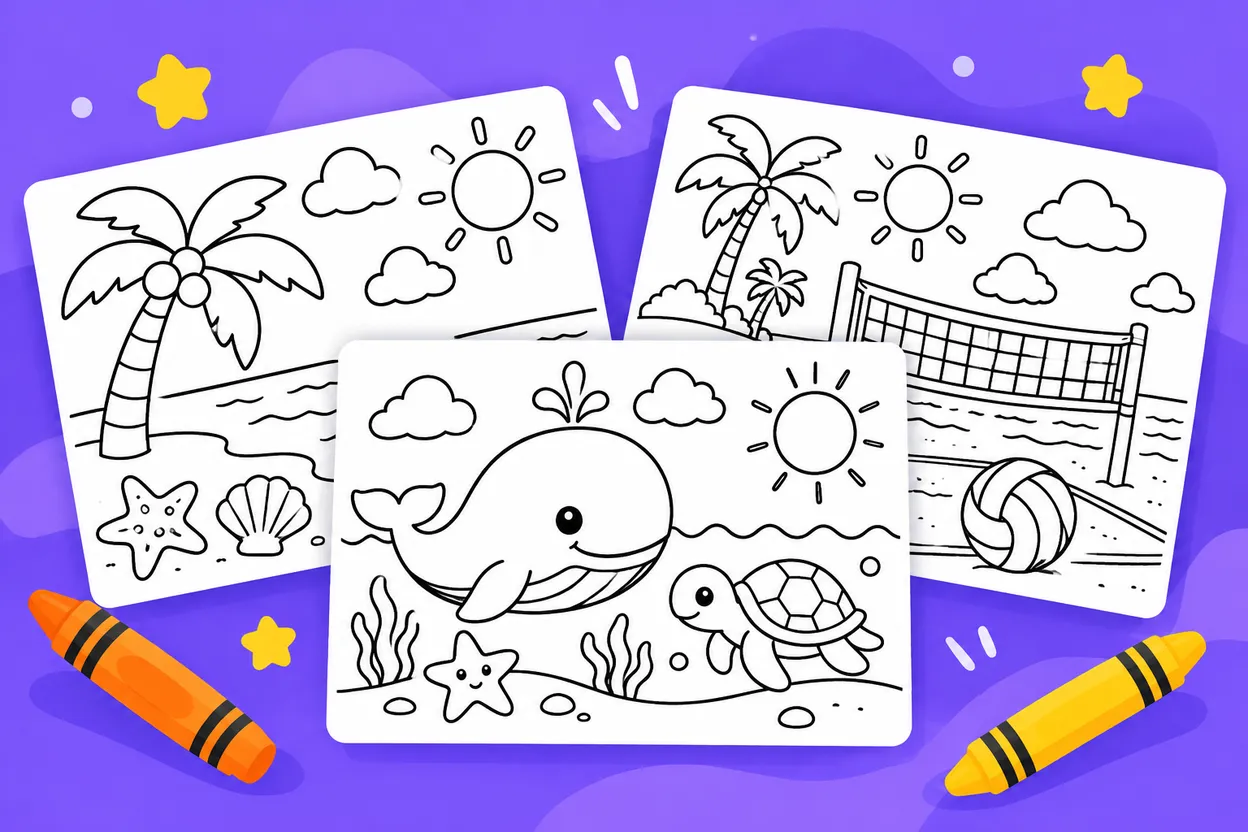
A day of sand play pairs naturally with Keiki's free ocean and beach coloring pages, which bring back the same sandcastles, waves, and shells from the sandbox in a calmer, seated activity for when everyone's ready to slow down. The collection is printable, free, and made for ages 2-5, with simple, clear-outline scenes even the youngest sand-play fans can color on their own. It's an easy way to stretch the beach theme into quiet time — a sandcastle or lighthouse coloring page works just as well after a real beach trip as it does on a day when actual sand isn't an option.
Tips for Safe, Easy Sand Play
A little prep turns sand play from a stressful cleanup job into an easy afternoon.
- Pack a dedicated sand bag. Keep molds, buckets, and shovels away from snacks and other toys.
- Bring sun protection and wipes. Sunscreen, hats, and both wet and dry wipes cover almost everything an outdoor session throws at you.
- Watch hands near the face. Keep sand out of eyes and mouths, and have water ready to rinse fast if it happens anyway.
- Check the play area first. Glass, sharp pebbles, and forgotten toys like to hide in sand — a quick scan before digging saves trouble later.
- Choose fitted, light clothing. Loose shorts and skirts collect way more sand than fitted leggings or swimwear ever will.
- Keep a towel and baby powder handy. A little dry powder rubbed on sandy skin makes sand fall right off — a small trick that saves a lot of frustration before the ride home.
- Download offline content before you go. If an app is coming along for quieter stretches, grab everything you need before you lose signal.