20 Paper Games for Kids: Classic and Creative Pen and Paper Games

You’re at a restaurant table, the food hasn’t come yet, and your kid has already asked twice how much longer. This is exactly what paper games for kids are for: pull a napkin and a pen out of your bag, and a five-minute wait turns into a round of Tic-Tac-Toe.
Key Takeaways
- Paper games for kids are the ultimate low-cost, no-prep entertainment. A pencil and a sheet of paper turn a car ride, a waiting room, or a rainy afternoon into playtime.
- Pen and paper games build fine motor control, logic, focus, and early reading, and your kid won’t notice any of it happening.
- Toddlers go for crumpling and tearing paper, preschoolers like mazes and connect-the-dots, and older kids get hooked on Battleship, Word Chain, and MASH.
- Classic games earn their reputation for a reason: Tic-Tac-Toe, Dots and Boxes, and the paper fortune teller take under a minute to learn and never really get old.
What Are Paper Games for Kids?
Paper games for kids are games played with nothing but paper and a pen, pencil, or crayon, no boards, batteries, or apps required. They range from quick two-player showdowns like Tic-Tac-Toe to solo creative activities like tearing or folding paper, and most take under a minute to explain. That’s what makes pencil and paper games for kids so useful in the first place: they travel in a bag, cost nothing, and work anywhere there’s a flat surface, whether that’s a restaurant table, a car seat tray, or the kitchen counter on a rainy day. Some people call the same thing paper and pencil games for kids, and both names point at the exact same shortlist of low-cost, no-prep activities.
Why Paper Games Are Good for Kids
Fun paper games for kids aren’t just a way to kill time. They’re doing real developmental work, even when it looks like your kid is just scribbling.
- They build fine motor skills and hand strength for writing. Drawing, tracing, and folding paper (origami included) all train the small muscles in fingers and hands, which directly affects how easily a kid holds a pencil and forms letters later.
- They build logical thinking and strategy. Games like Battleship and Tic-Tac-Toe ask kids to think a few moves ahead and adjust when a plan doesn’t work, while creative games like storytelling build a different kind of thinking: pure imagination with no wrong answer.
- They build focus and follow-through. A maze or a full game of Dots and Boxes takes sustained attention to finish, which is exactly the kind of low-stakes practice that builds patience over time.
- They build early reading and writing skills. Word Chain, Hangman, and any game that puts letters on the page give kids a reason to sound out words and recognize letters outside of a workbook.
Help your child
grow with Keiki
We’ll help you turn everyday screen time
into real learning progress.
Classic Pen and Paper Games for Kids
These classic paper games for kids have survived decades of being handed down from one generation of bored kids to the next, and they still work. Most count as easy paper games for kids to learn in under a minute, which is half of why they’ve lasted this long.
Tic-Tac-Toe
A quick two-player game: draw a 3x3 grid, take turns placing X’s and O’s, and the first to line up three in a row wins. It’s the simplest way to teach a young kid what “thinking ahead” even means.
Battleship
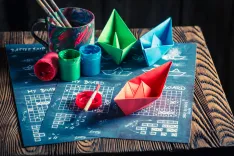
Each player draws a hidden 10x10 grid, places their ships, then calls out coordinates trying to sink the other player’s fleet. It runs longer than Tic-Tac-Toe and rewards kids who track what they’ve already guessed, so it suits older kids better than a first-timer.
Hangman
One player picks a word and draws a blank line for each letter; the other guesses letters, filling in correct ones and losing a piece of the gallows sketch for each wrong guess. Swap in silly words, or a category like “things in this car,” to keep it fresh.
Word Chain
The first player writes a word, and the next has to write a new word starting with its last letter: cat, then tiger, then rabbit, and so on with no repeats. Let younger kids use any word at all, and raise the difficulty for older ones by picking a single category like animals or food.
Dots and Boxes
Draw a grid of dots, then take turns connecting two neighboring dots with a line. Whoever draws the fourth side of a box claims it with their initial and gets another turn, and whoever has the most boxes once the grid fills up wins. Talking through which box “chains” are worth giving up is a gentle first lesson in playing a few moves ahead.
Paper Memory
Draw two identical small pictures on separate slips of paper, then repeat with a few more pairs so you have a full set. Shuffle everything face down, and take turns flipping two at a time looking for a match.
MASH
Write “MASH” (Mansion, Apartment, Shack, House) across the top of the page, then fill in short lists under categories like future job, number of pets, and where they’ll live. Count out a random number, then cross off options in a loop around every list until one choice remains in each category. The result is a delightfully silly predicted future, and letting kids invent their own categories only makes it sillier.
Paper Fortune Teller
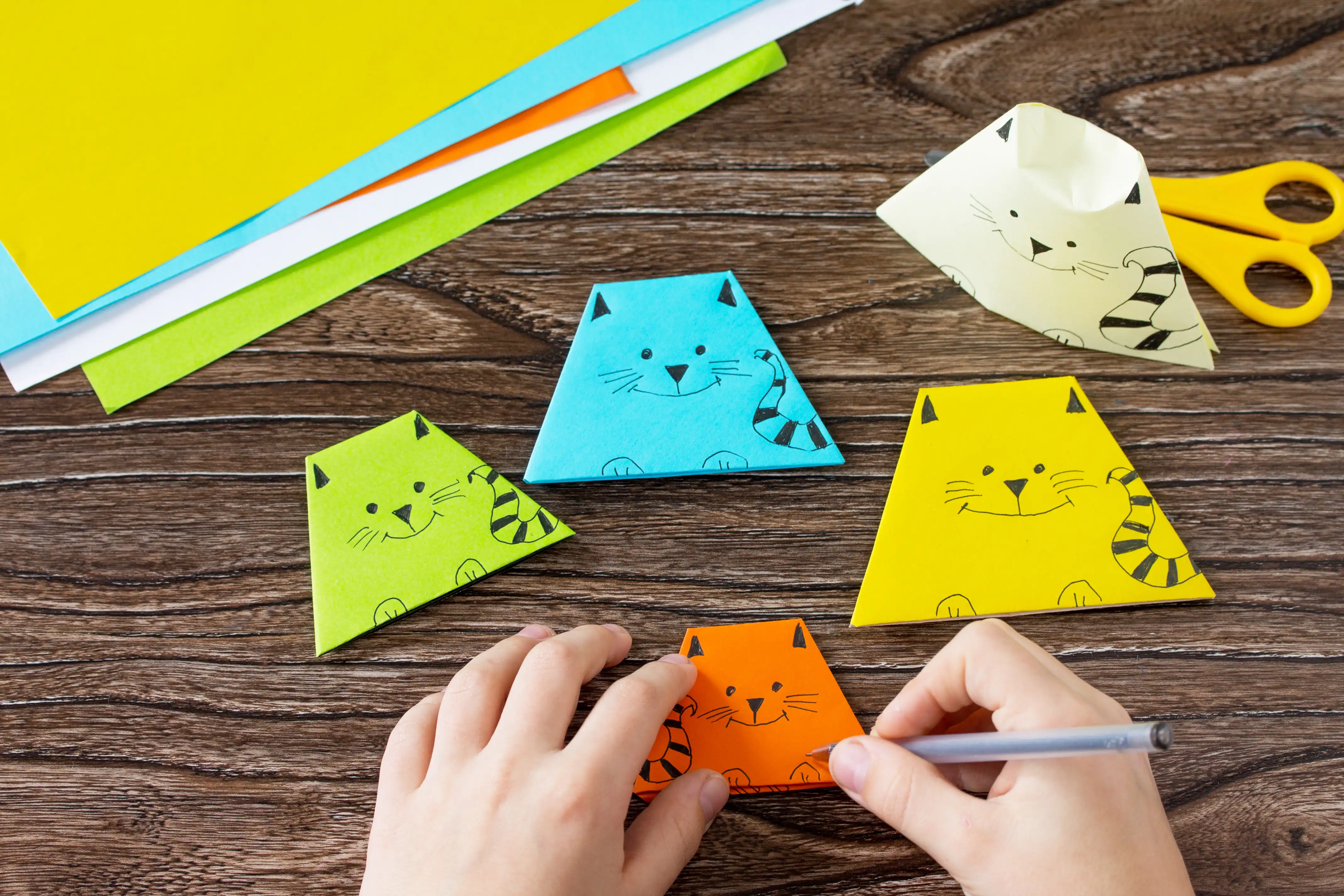
Fold a square of paper into the classic pinch-and-open shape (also called a cootie catcher), write numbers on the outer flaps and fortunes or dares underneath. One kid picks a number, you open and close the fortune teller that many times, and whatever’s hiding under the flap they land on is the answer. It’s as much a folding project as it is a game, which is part of the appeal.
Creative Paper Games for Kids
Creative games to play on paper trade winning and losing for pure imagination, which makes them a good pick when a kid needs to unwind rather than compete.
Origami
Start with something simple, like a paper airplane or a boat, before working up to trickier folds. The repetition of folding along precise lines builds the same fine motor control and patience that formal handwriting practice does, minus the workbook feel.
Paper Airplanes
Fold a few different plane designs, then hold friendly contests for distance, air time, or accuracy through a target. Tweaking the folds and testing what actually flies farther turns into a hands-on physics lesson nobody has to call “a lesson.”
Make Up a Story
One player writes or draws the opening line of a story, then everyone takes turns adding a sentence or a picture. Read the finished story out loud at the end; it’s almost always wonderfully absurd. Because there’s no wrong answer, it builds writing confidence without any of the pressure a blank page usually carries.
Blindfolded Drawing
One player names an object quietly, and another, blindfolded, tries to draw it while everyone else watches and eventually guesses what it’s supposed to be. The results are reliably funny, and that’s really the whole point.
What Is It?
One player draws an object without naming it out loud, and everyone else has to guess what it is. Half the fun is in how the artist chooses to hint at it without giving the answer away outright.
Paper Dolls
Draw a doll shape on thicker paper and cut it out, then draw and cut a small wardrobe of outfits to dress it in. It’s a slower, quieter creative game than most on this list, and a nice change of pace from anything competitive.
Help your child thrive with playful learning
Turn screen time into real growth with Keiki's educational games.
Try KeikiPaper Games for Toddlers (1-3 Years)
Paper games for toddlers this young don’t need rules at all, just paper they’re allowed to actually destroy.
Paper Balls
Hand your toddler a sheet of paper and let them crumple it into a ball, then set up a basket or bowl a few feet away to toss it into. It’s a simple way to work on hand strength and aim at an age when both are still developing.
Tearing Paper
Let your toddler tear a sheet of paper into as many small pieces as they want. There’s no wrong way to do it, and the repetitive pulling motion is genuinely good strengthening work for small fingers.
Coloring
Once a toddler is a little steadier with a crayon, usually somewhere around age 3, coloring and scribbling become their own kind of paper game. Nobody needs to stay inside the lines for it to count.
Paper Games for Preschoolers (4-6 Years)
Paper games to play for preschoolers can start carrying real rules, since 4- to 6-year-olds are ready for a bit more structure than a toddler can handle.
Mazes
Draw (or print) a simple maze and hand your preschooler a pencil to trace a path through it without touching the walls. It’s a quiet way to build focus and the kind of visual tracking that reading will eventually demand.
Connect the Dots
Draw a picture made of numbered dots and let your preschooler connect them in order to reveal the image. It sneaks in number recognition and counting practice alongside pencil control.
Drawing Monsters
One player draws a head at the top of a folded paper, folds it over to hide the drawing, then passes it along for the next player to add a body, and so on down the page. Unfold it at the end to see the mismatched monster everyone built together.
Related Games in Keiki App



Tips for Organizing Paper Games
A few small habits make paper games easier to reach for on the fly instead of a once-a-year novelty.
- Keep paper and pens on hand. A small notebook and a pen or two in your bag turns any unexpected wait into an opportunity instead of a meltdown risk.
- Play alongside your kid, not just as the referee. Taking a turn yourself makes the game feel like shared fun instead of a task assigned to keep them busy.
- Let the drawings be bad. Don’t correct a wobbly monster or a lopsided doll; the point is free expression, not a finished piece worth framing.
- Change the rules once a game gets stale. A 4x4 Tic-Tac-Toe grid instead of the usual 3x3 is enough to make a familiar game feel new again.
- Alternate creative and competitive games. Following a strategy-heavy round of Battleship with something loose like Blindfolded Drawing keeps energy from tipping too far in either direction.
- Hang onto a few of the drawings. A stack of “What Is It?” sketches or finished mazes doubles as a rough record of how your kid’s drawing and thinking have changed over a few months.
- Reach for pencil over pen when you can. Mistakes erase clean, which matters more than it sounds like when a 6-year-old is three moves into a Dots and Boxes grid.