

About this collection
Printable crab coloring pages for kids — instant download and print
Explore crab coloring pages starring hermit crabs, claws and beach crabs. Great for quiet time, rainy days and screen-free creativity.
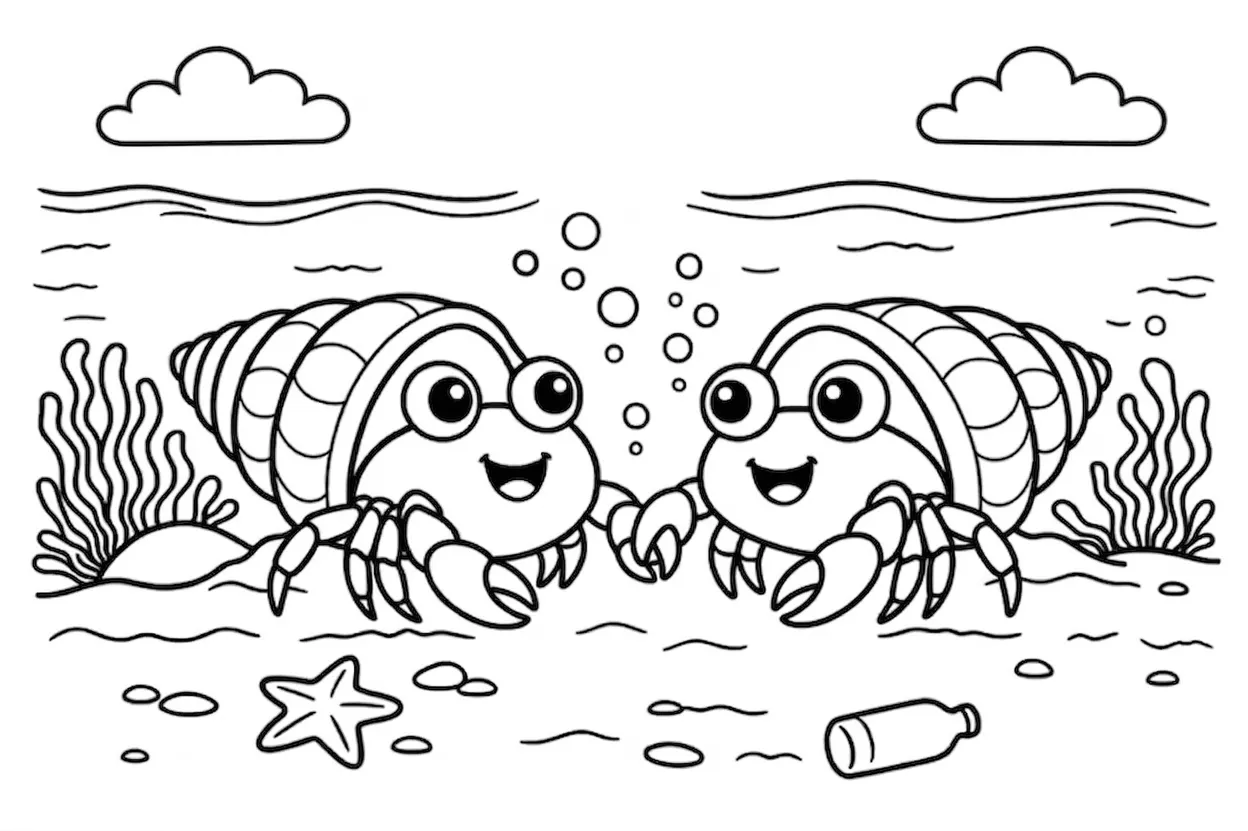

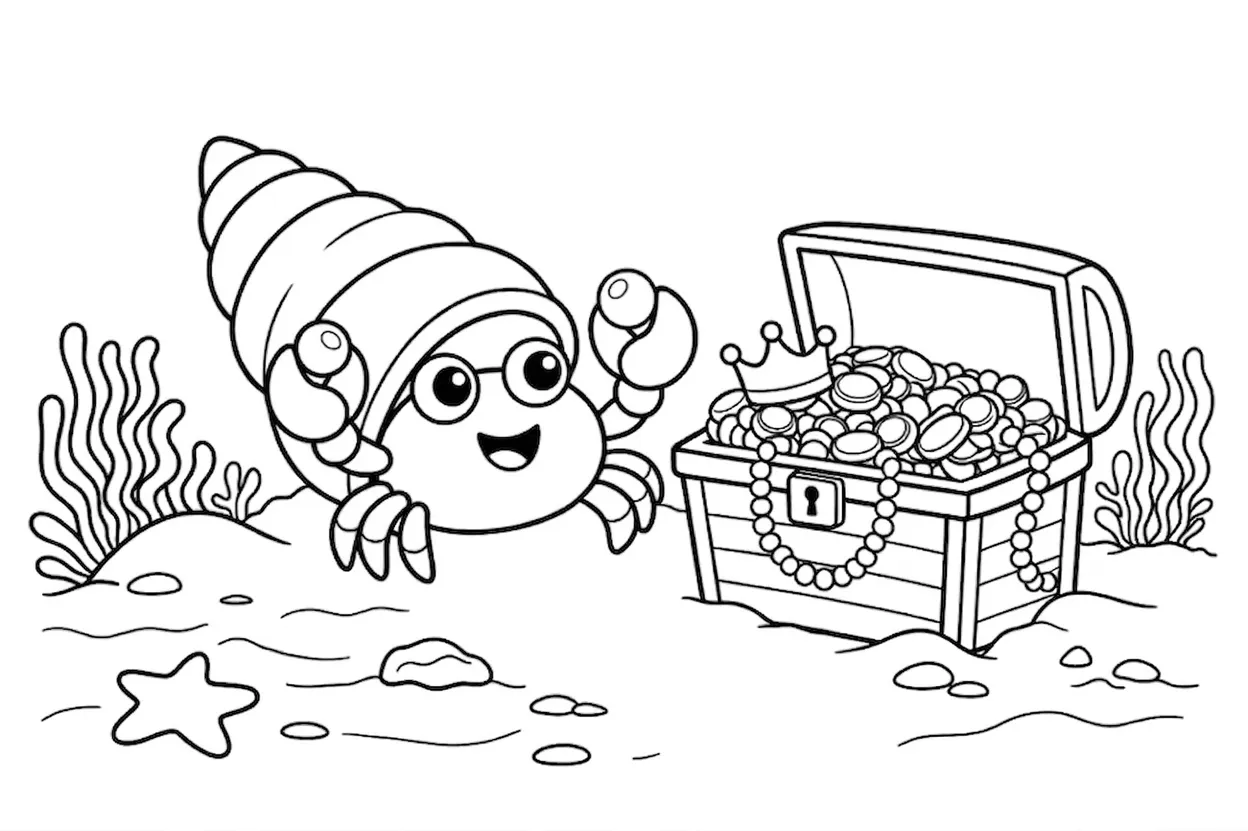
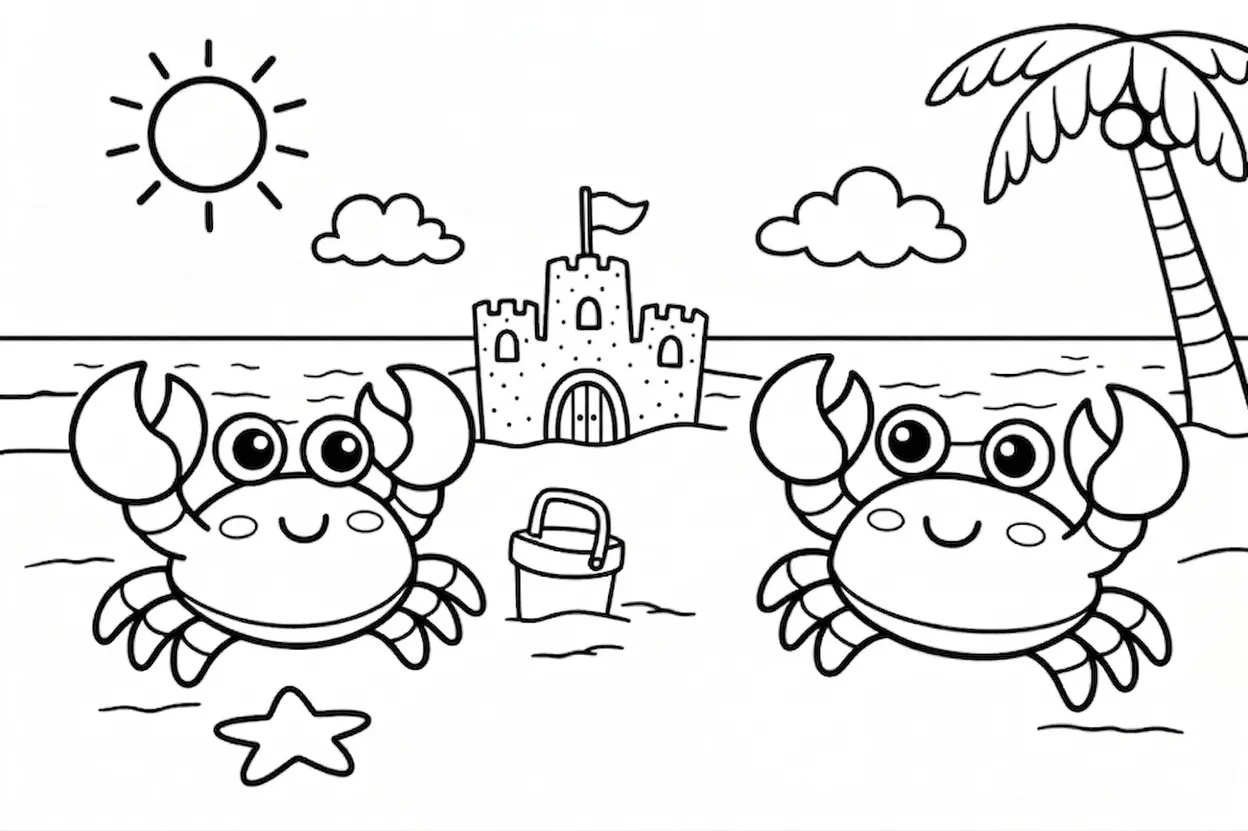
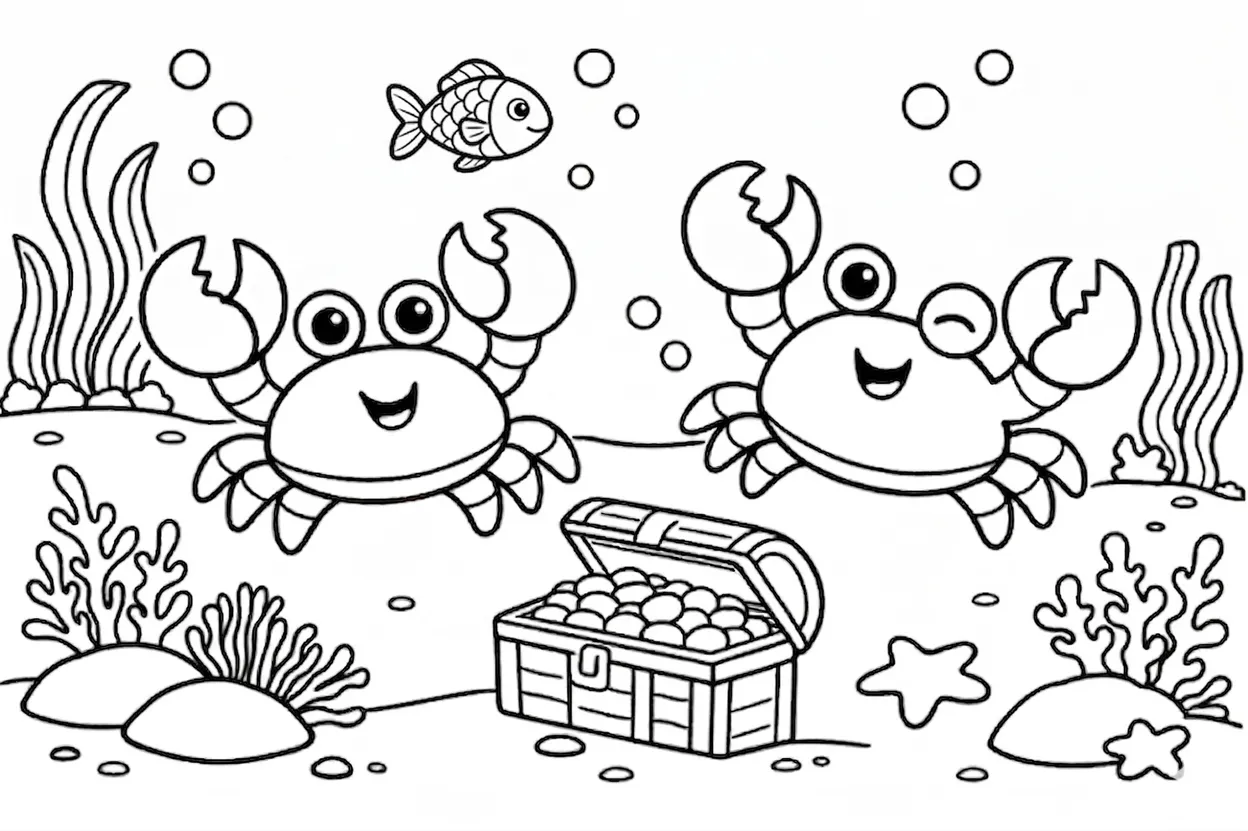
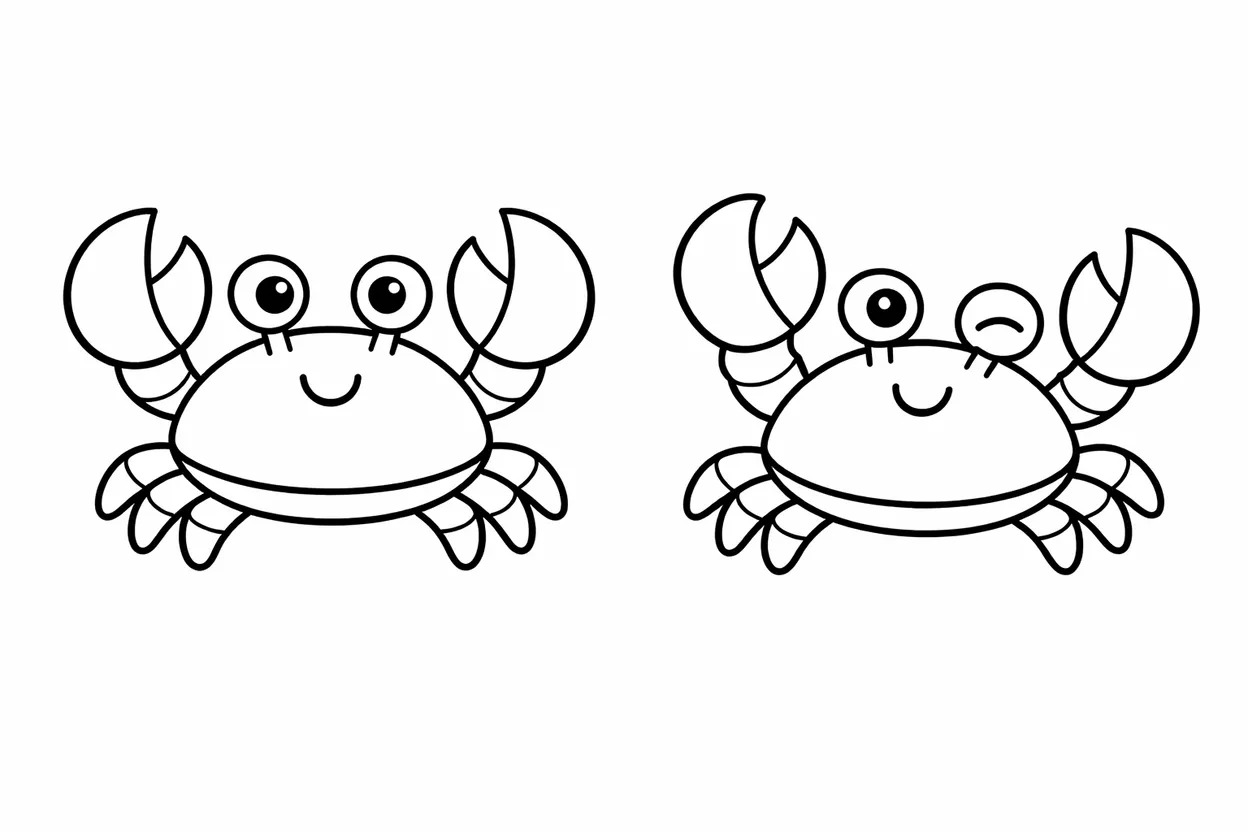
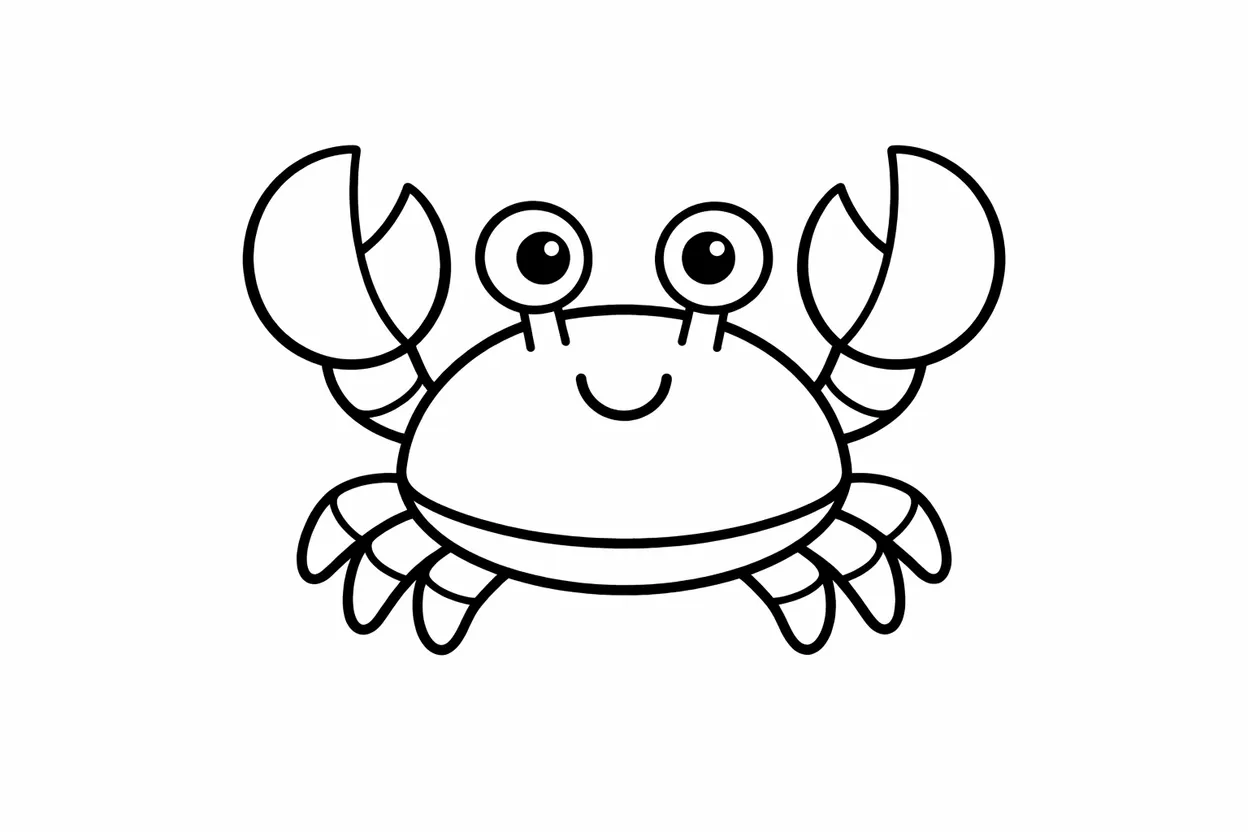
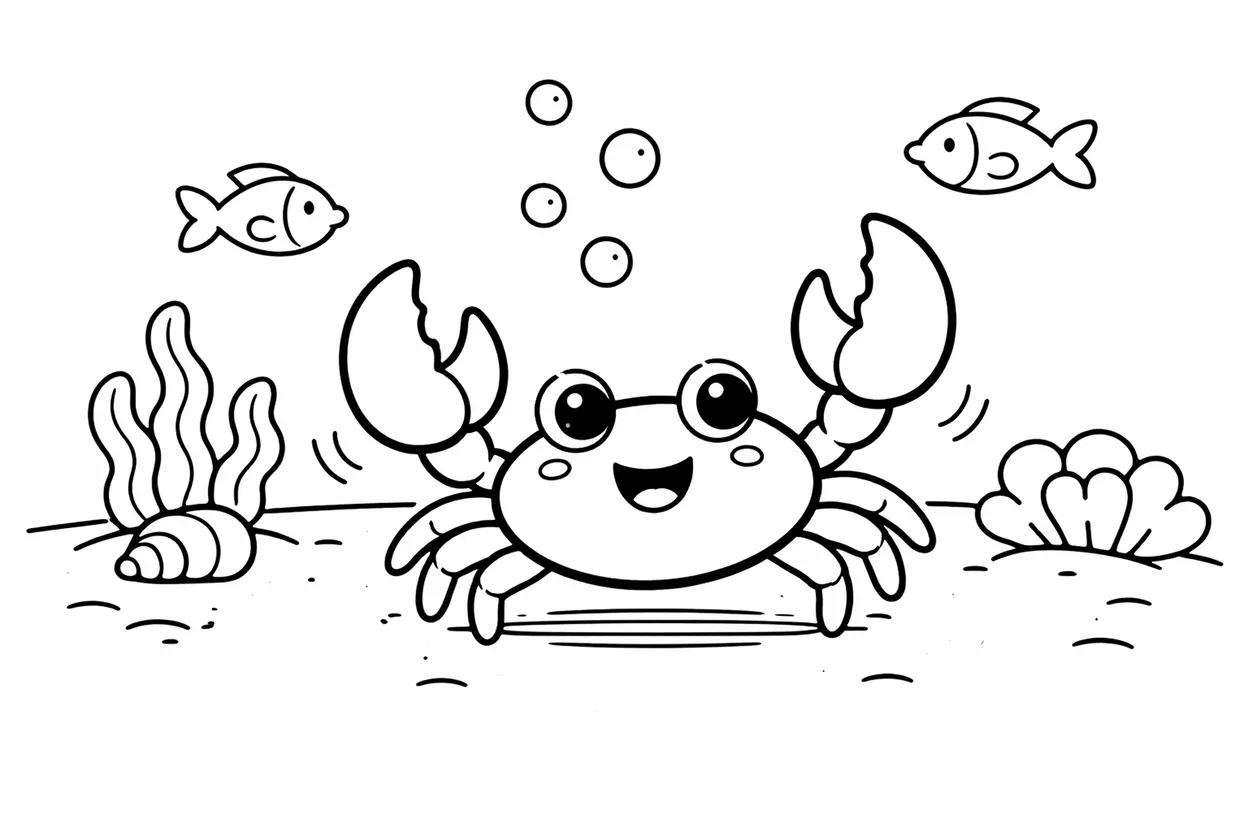
Claws, shells, and eyes – Crab coloring pages
Unlike fish or dolphins, a crab is a resident of two worlds: both land and water. But even that isn't what makes it so special. For a child, it will be a real discovery to see how powerful a crab's shell and claws are. These crustaceans are known for being brave, smart, and fast. By opening a crab coloring page, a preschooler gets the chance to closely examine this unusual coastal resident. At Keiki, we create illustrations that help children develop their fantasy and creative skills in a calm atmosphere.
Training little fingers – the benefits of coloring crabs
For a child's harmonious development, parents can offer pictures with various shapes and outlines. The advantage of a crab coloring sheet lies in the abundance of small details – those very claws and legs that stick out in different directions.
- For the youngest. If your child is 1.5–3 years old, choose simple crab coloring pages. A large round or oval shell is a great base for a toddler to boldly scribble with wax crayons without fear of going outside the lines.
- For older preschoolers. Children aged 4–6 will find it interesting to color the legs and segmented claws. By coloring these elements, children train their pincer grasp and coordination, which will be very helpful for writing in the future.
Creative experiments with the shell
Who says crabs have to be red? In nature, there are blue, green, purple, and even spotted crabs! Let your little one choose any shades for their cute crab coloring pages. This allows them to create a strong emotional bond with their creation and enjoy the process without overstimulation. Furthermore, the freedom to choose colors is great for developing creative thinking and relieving tension.
You can use crab coloring pages printable as a base for tactile games. Print the picture and suggest the child decorate the crab's shell using collage techniques: use pieces of colored paper, playdough, or even real sand glued with PVA to capture the atmosphere of a real sea beach.
New knowledge while coloring
Crab coloring is not just a way to pass the time; it’s a great excuse to broaden your child's horizons. While they color and draw, share a few interesting facts. Tell them that crabs can only walk sideways and that their shell is a sturdy "armor-house" that protects them from danger.
Conversations on the topic don't just develop vocabulary. By coloring and directly interacting with the object being discussed, a toddler's brain absorbs information better because associations are literally created on the go.
People often ask
A crab has as many as 10 legs (including claws), making it visual material for math practice. In a crab coloring sheet, you can suggest the child color the legs one by one while saying the numbers from one to ten. These exercises are suitable for children from age 3.
Yes, you can easily save crab coloring pages printable to your mobile device and print them on thick paper. This will allow you to use watercolors, gouache, or finger paints.
A crab's legs and claws have a broken, segmented shape. Carefully coloring such details teaches a child to control pressure and stop the pencil's movement right before the contour line.
Working with kind and friendly illustrations (like cute crab coloring pages) helps with gentle desensitization. The child sees the image of a crab in a safe environment, which sparks curiosity rather than fear.
Yes, this is a basic feature in the app. In Keiki's online coloring pages, there is a button to undo the last action. This saves the child from frustration if they accidentally go outside the lines or pick the wrong color.