

About this collection
Simple onion coloring pages for kids — download and print free
Discover onion coloring pages packed with round onions, green tops and slices. Simple outlines that turn a blank page into proud artwork.
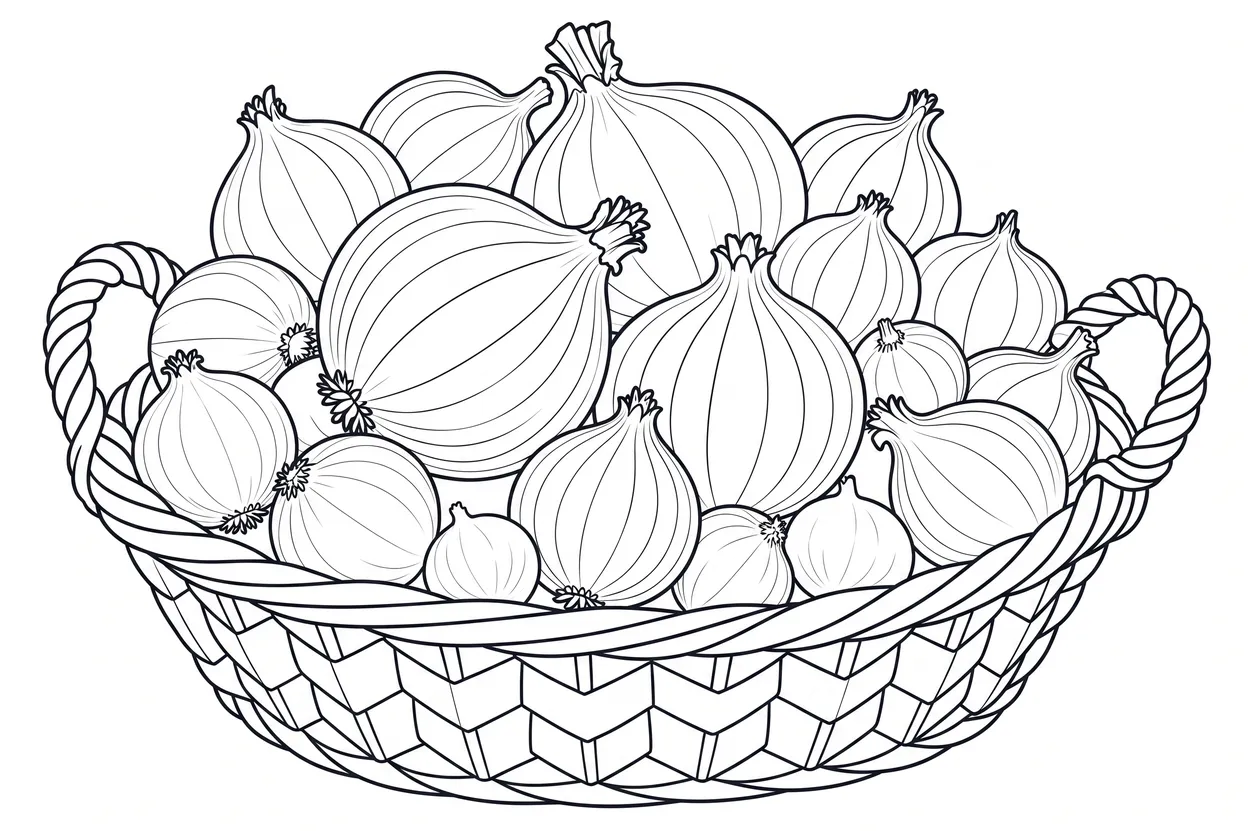

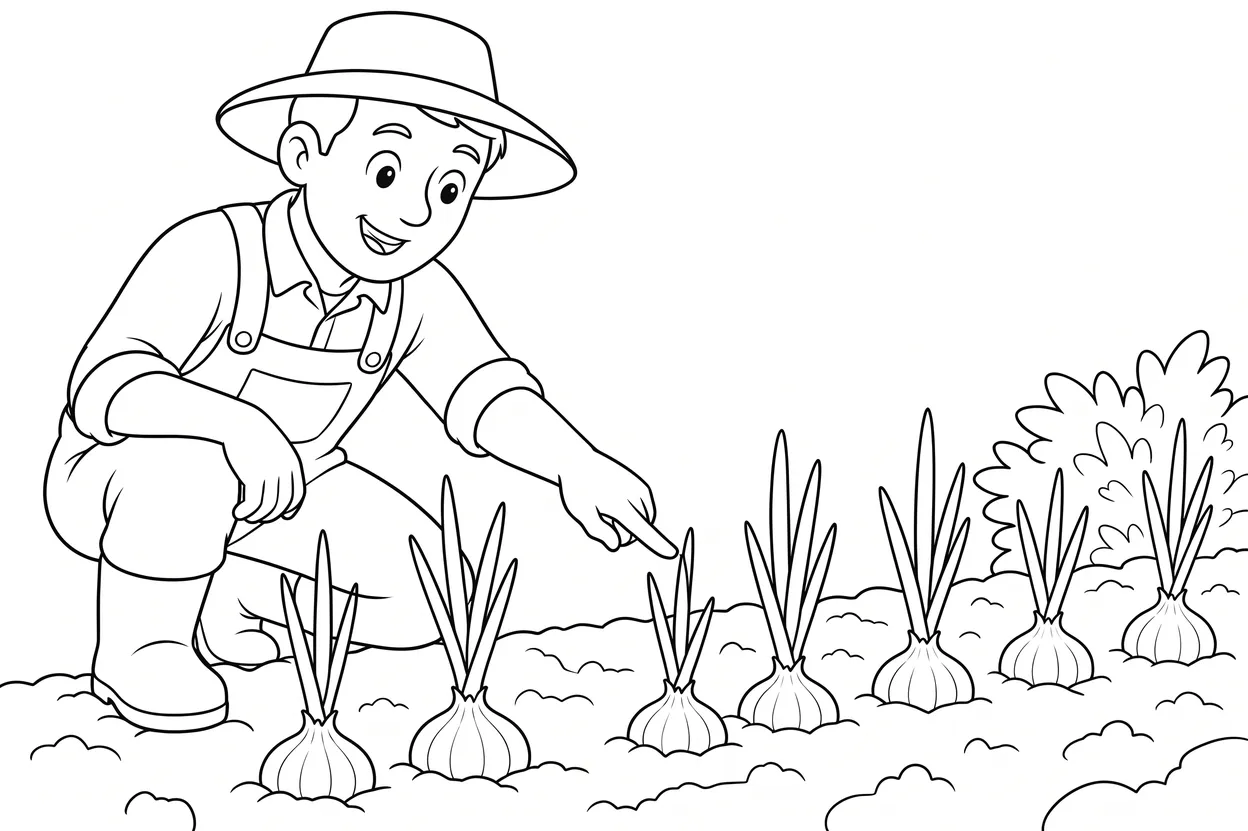
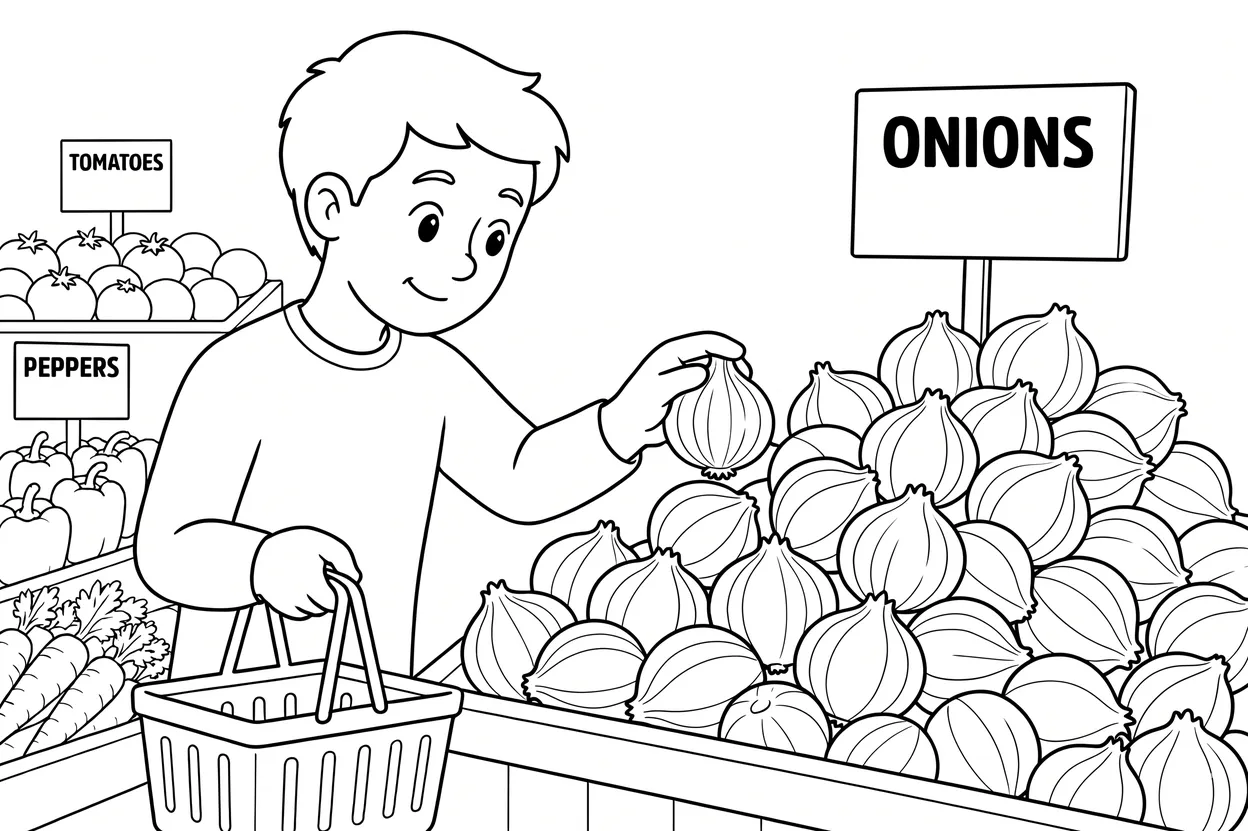
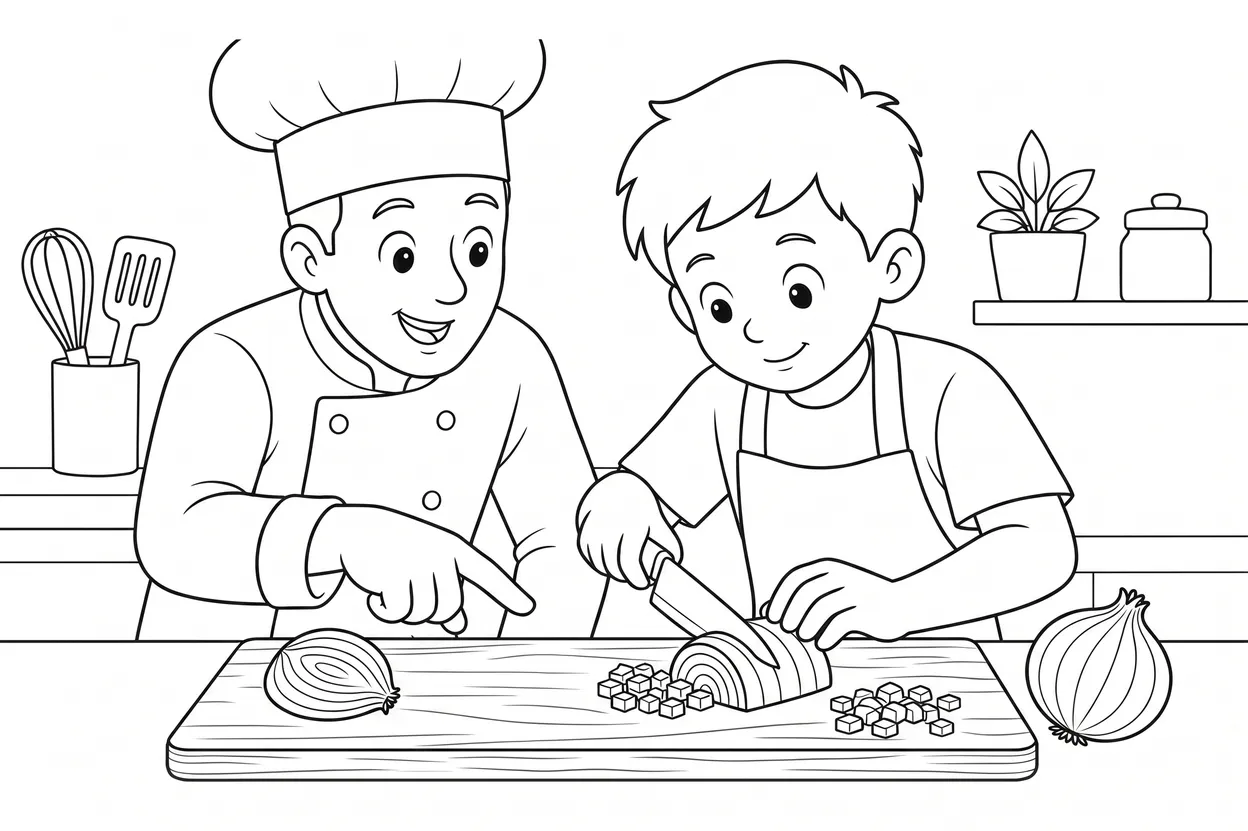
Onion coloring pages – layers of fun
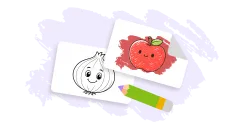
The most familiar feature associated with onions is their many layers. Just as an onion hides dozens of layers beneath its skin, onion coloring pages contain considerable developmental potential.
Coloring these pictures provides excellent practice for children’s hands and imagination. Onion-themed creativity becomes a calm, quiet activity that can engage a child and provide quality rest after active play. These coloring pages can also help reduce apprehension about the vegetable’s sharp taste.
What children learn from onion coloring pages
An onion has the shape of a simple circle or teardrop, but this simplicity provides an excellent foundation for well-rounded practice. While working with onion coloring pages, children enjoyably and naturally develop many useful skills:
- Smooth lines – the onion’s characteristic elongated tip requires the strokes to narrow carefully, which may later help when writing complex letters.
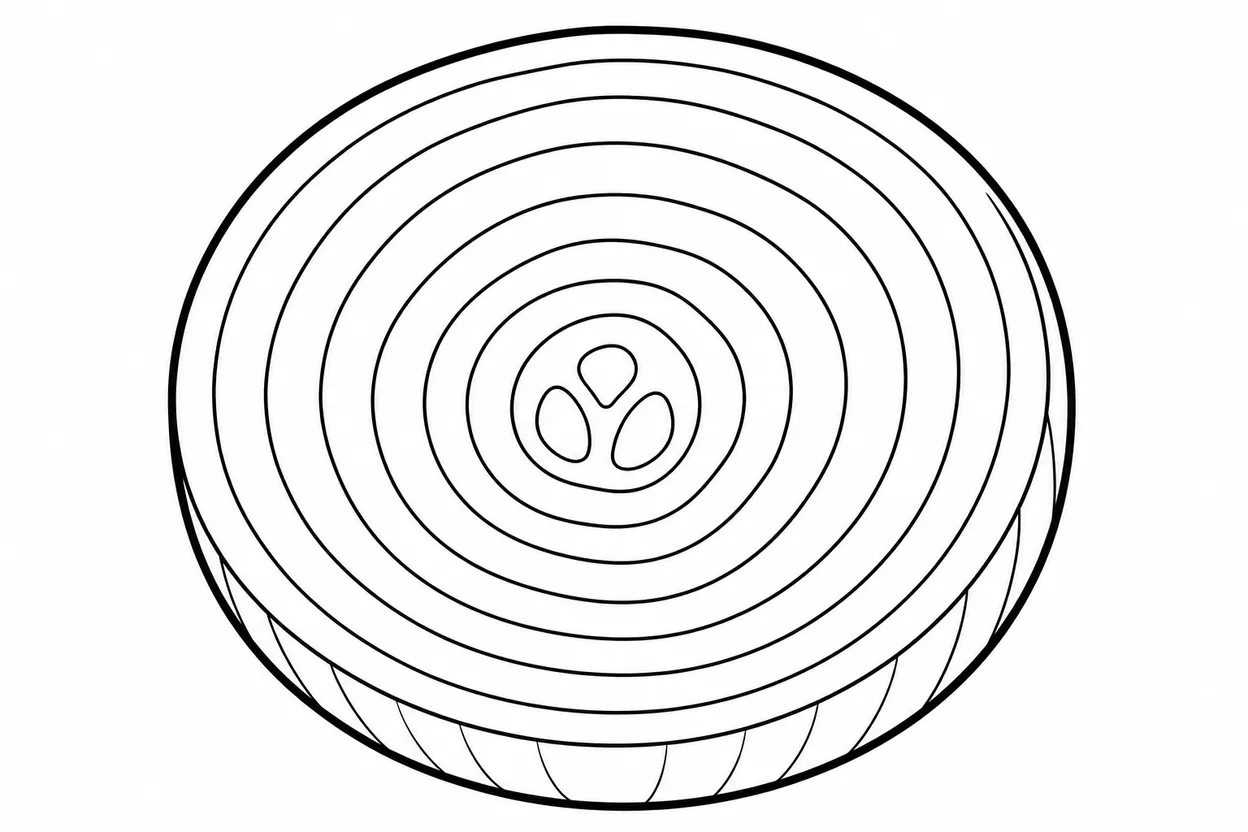
- Understanding layers – by adding inner rings or scales, children practise visual estimation, logic, and spatial thinking.
- Color transitions – to make the vegetable look realistic, children learn to blend yellow, orange, brown, and golden shades, expanding their palette.
- Concentration – carefully coloring the thin, intertwined roots at the base requires considerable perseverance and attention to detail.
This activity also calms the nervous system and helps channel energy into creativity.
Fun facts about onions to share while your child colors
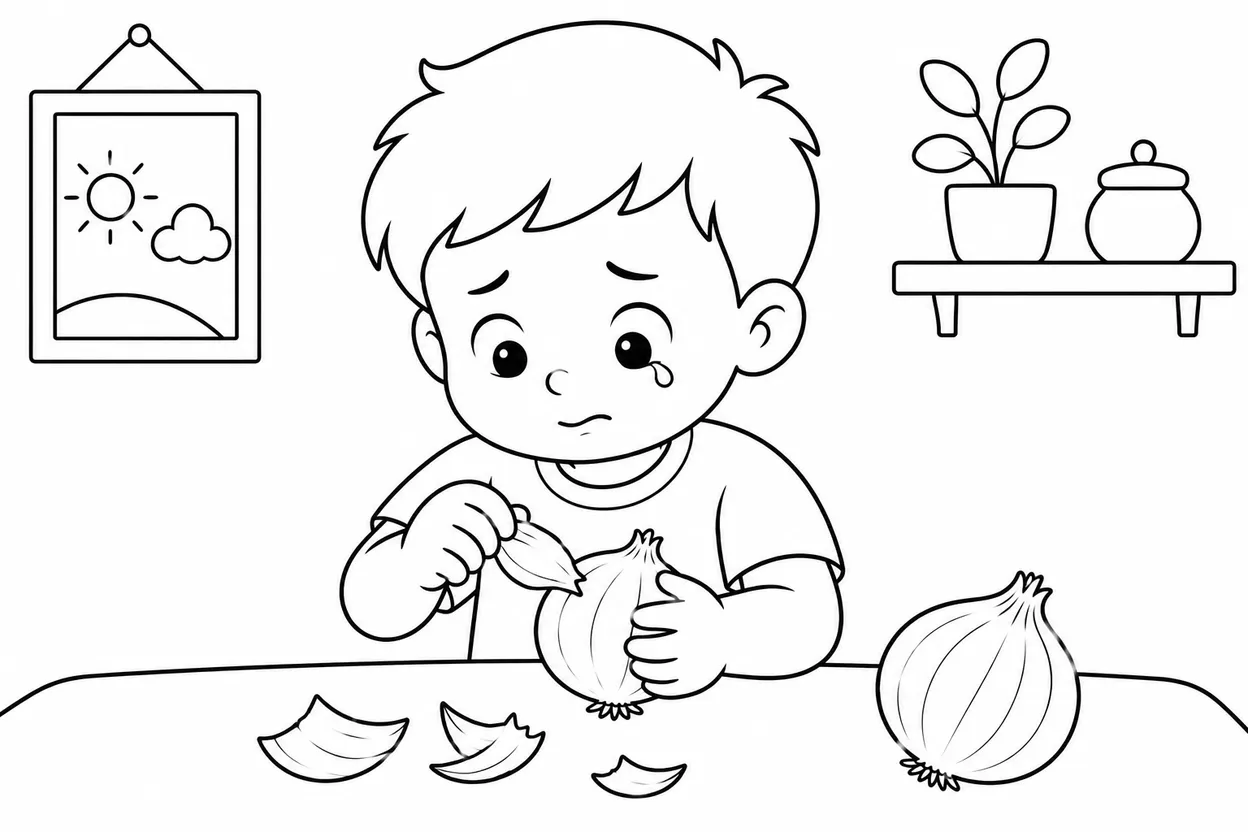
To keep the creative process from becoming routine, add a little real science. You can explain why onions so often make people cry.
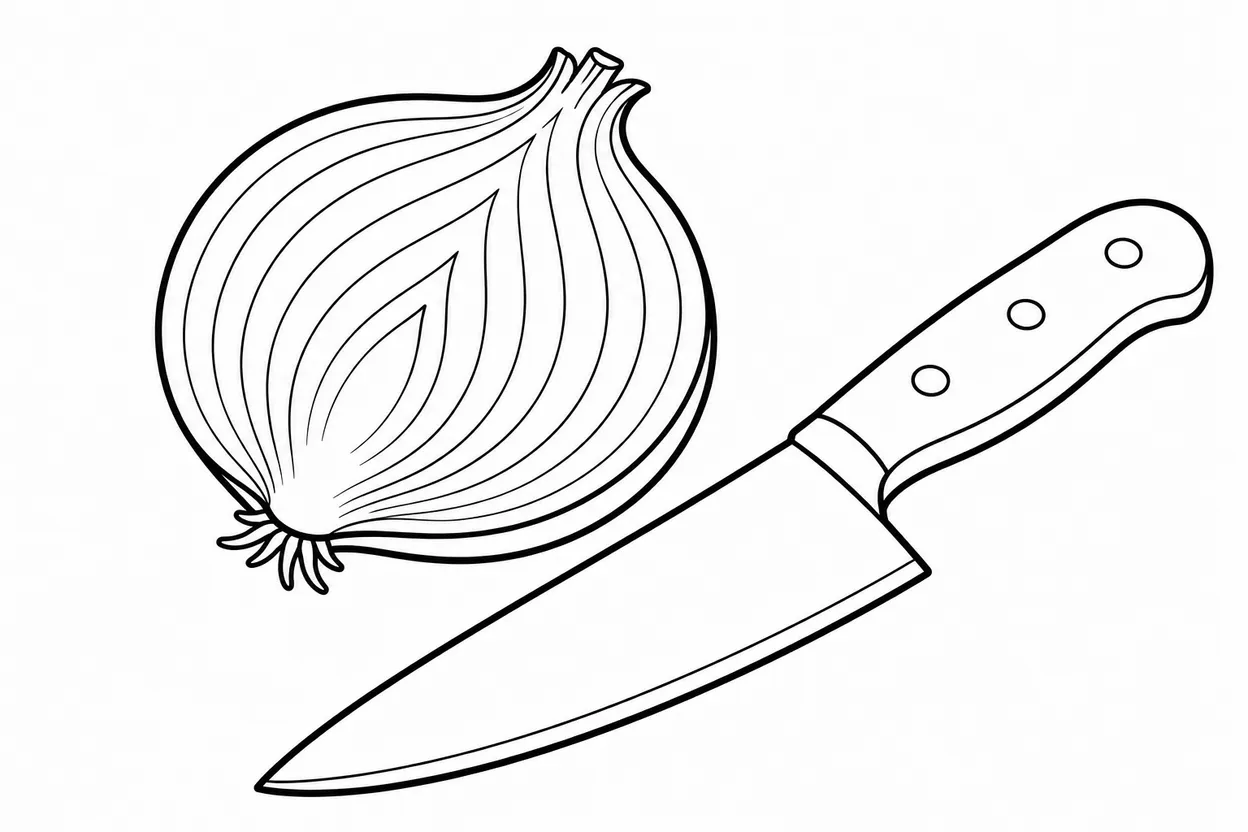
Invisible “floating clouds” of irritating juice are hidden inside. When we cut the vegetable with a knife, this cloud rises towards the eyes, irritates them, and causes tears. A colored onion, however, is completely safe and created only for smiles.
You can also surprise your child with a historical fact – thousands of years ago, the builders of the Egyptian pyramids regularly ate this vegetable to remain strong and healthy.
Fun activities to try with onion coloring pages
A downloaded onion coloring page is an ideal starting point for creative and unconventional crafts. Here are several easy ways to make an ordinary printed sheet more interesting:
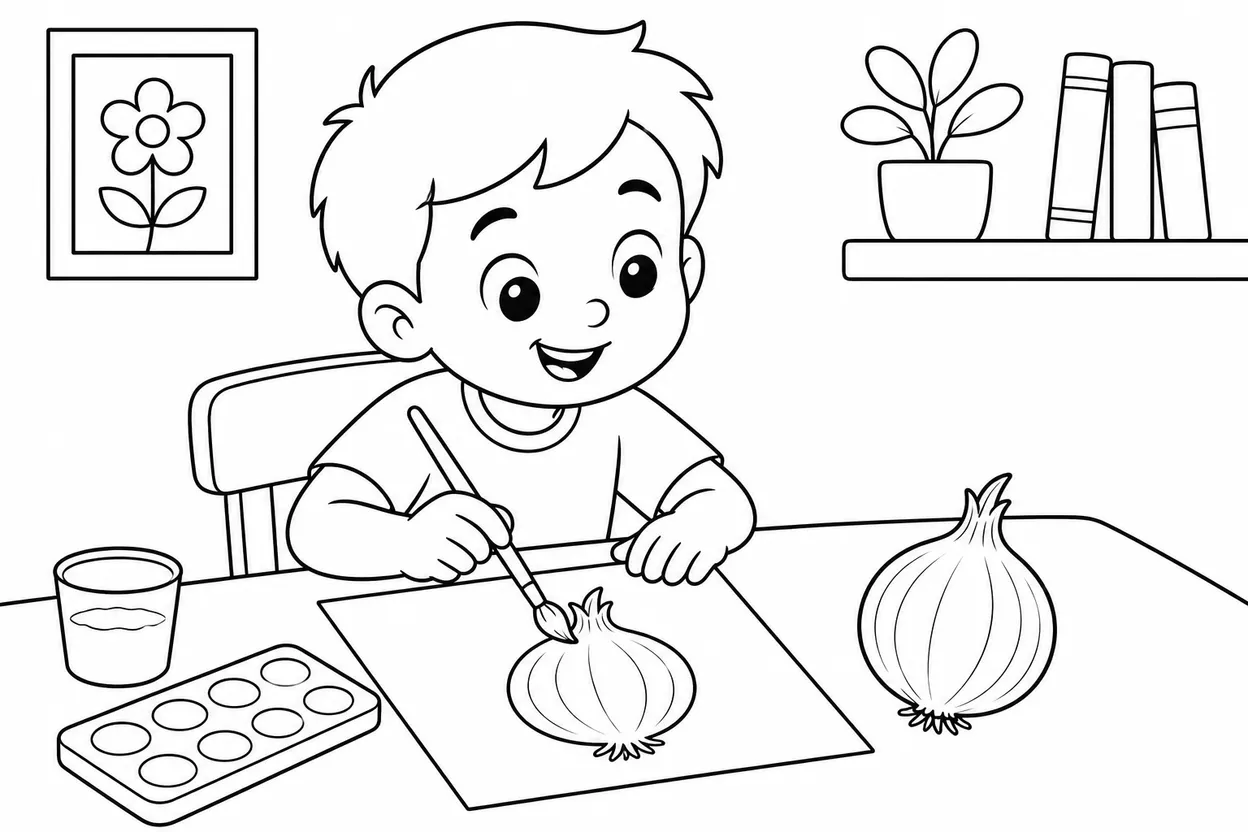
- Onion skin. When real dry onion skin is left in the kitchen, invite your child to cover the picture’s outline with glue and attach the skin on top. You can also boil it in a small amount of water and use the liquid as paint – onion skin is a natural dye that produces pleasant orange and red shades.
- Ring stamps. Cut a small onion crosswise and use it as a stamp. By dipping the cut surface into paint, the child can decorate the background around the main character with circular prints.
- Layered appliqué. Print several identical pictures, cut them out, and attach them on top of one another to show your child how an onion is structured inside.
People often ask
These materials are suitable for children aged 1 to 6. Large, rounded shapes without complicated curves appeal to toddlers who are only beginning to explore colors.
Older children may enjoy working with gradients to create the effect of smooth, glossy skin, carefully drawing the thin roots, and giving the character its own personality.
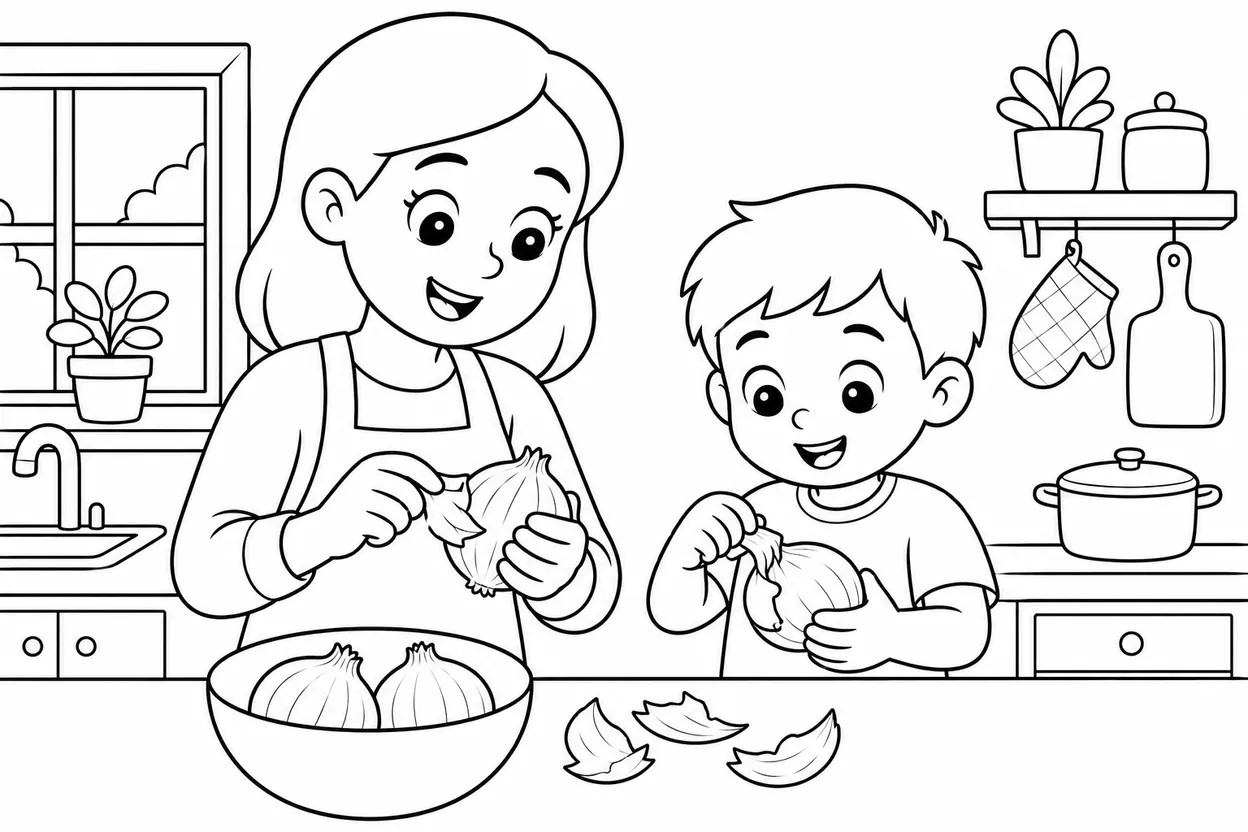
Creativity reduces the distance between a child and “grown-up” food. When a sharp vegetable becomes a paper friend, the child begins to view it more positively.
This is a gentle step towards helping children stop picking cooked onion out of their soup.
Yes. They can be used to study the structure of root vegetables and bulb plants during nature lessons.
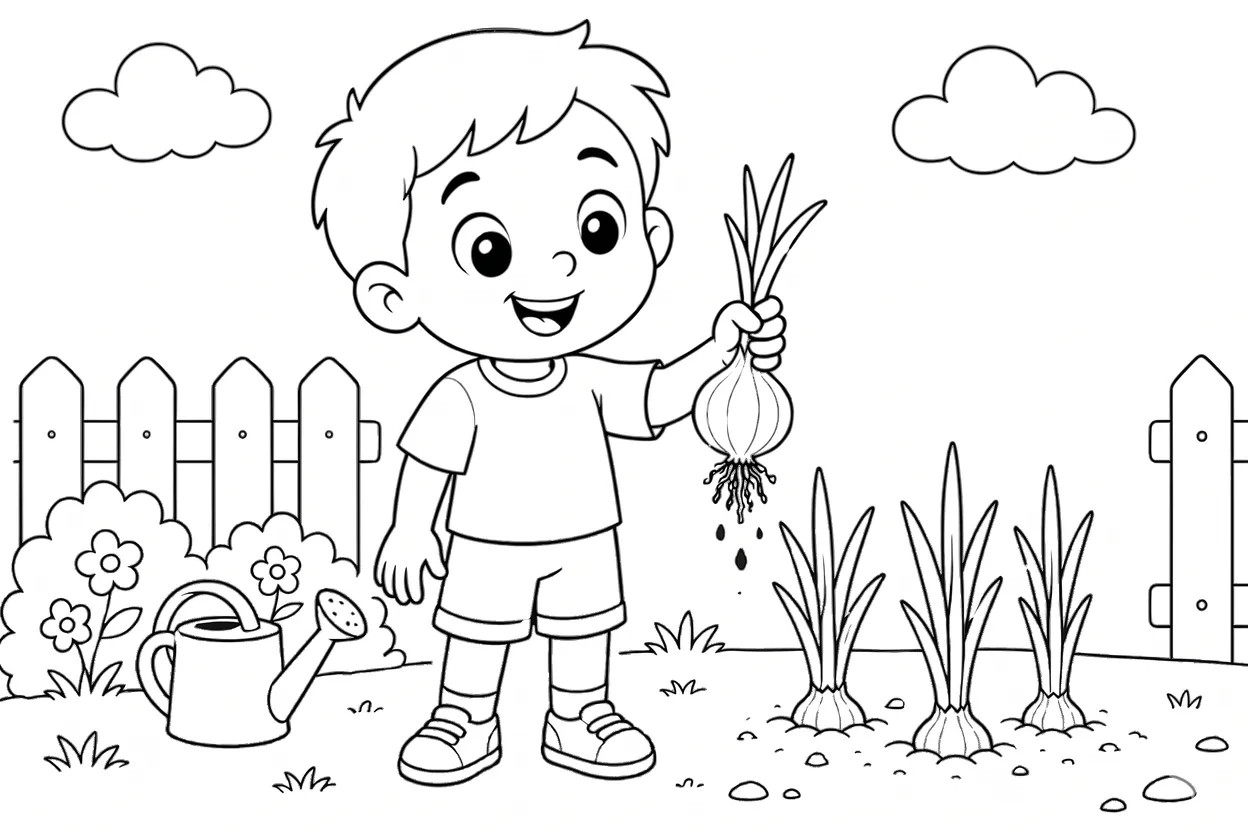
Coloring pages make it easier for children to remember how the vegetable grows in the soil and how it receives the nutrients needed for growth.
Of course. All our coloring pages are available on the website. Simply choose the illustrations you like, download them in a convenient PDF format, and print them using a home printer. All materials are free.