25 Best Impulse Control Games for Kids

Ever watched your kid grab a cookie the second you said "wait," or blurt out an answer three seconds into a game of Simon Says? That's not a discipline problem — it's a skill still under construction. Impulse control, the ability to pause before acting, is one of the last brain skills to fully mature (it's not even finished by adulthood, honestly), so a 4-year-old who can't resist poking their sibling one more time is doing exactly what's developmentally normal.
Table of contents
- Key Takeaways
- What Is an Impulse Control Game
- Why Impulse Control Games Matter
- Impulse Control for Preschoolers
- Impulse Control for Kindergarten
- Self-Control Games for Older Kids
- Quiet, Attention-Building Games
- Everyday Impulse Control Practice
- Games for Kids with ADHD
- Tips for Parents
- Build Focus Through Play

The good news: impulse control is trainable, and the best training tool you already have on hand is play. This guide rounds up 25 impulse control activities for kids and self-control activities for kids, sorted by age and setting — preschool, kindergarten, quiet focus-building games, everyday moments, and games designed specifically with ADHD in mind. Every one of them turns "stop and think" into something that's actually fun to practice.
You don't need a therapist's toolkit or a stack of worksheets to start. A few of these use nothing but your voice and a starting line.
Key Takeaways
- Impulse control games for kids work by turning "pause before you act" into a game with rules, not a lecture — that's why they stick better than reminders do.
- Preschoolers (ages 3-4) and kindergartners (ages 5-6) benefit from different versions of the same games, since attention spans and rule-following ability grow a lot in that one-year window.
- Research on Walter Mischel's classic "marshmallow test" found most preschoolers struggled to wait even a few minutes for a bigger reward — but kids who practiced waiting went on to show stronger academic performance and coping skills later on.
- Quiet, attention-building games (puzzles, "quiet hunter," waiting games) build the same self-control muscle as movement games, just at a slower pace.
- Games for kids with ADHD work best with clear rules, fast feedback, and short rounds — several games below are specifically suited to that.
- You can fold impulse control practice into daily routines — walks, meals, bedtime, the grocery store — without adding a single extra activity to your day.
What Is an Impulse Control Game (and Why Does It Work)?
An impulse control game is any game built around pausing, waiting, or resisting an automatic reaction — freezing on command, waiting your turn, or holding back an urge until a signal says go. That's the whole mechanism: these games for impulse control take a skill that's genuinely hard to explain to a 4-year-old ("use your self-control!") and turn it into something concrete they can practice, fail at, laugh about, and try again.
That's actually the real advantage over talking it through. A kid who hears "you need better self-control" has no idea what that means in the moment. A kid who's played fifty rounds of Red Light, Green Light has a body that already knows what "freeze" feels like — and that muscle memory transfers to the moments that actually matter, like waiting their turn at the dinner table or not grabbing a toy from a sibling.
Why Impulse Control Games Matter for Kids
Better academic performance. Kids who can pause and focus get distracted less, which translates directly into finishing tasks and following multi-step instructions in a classroom.
Stronger social skills. Turn-taking, sharing, and handling "you lost this round" without a meltdown are all impulse control in disguise — and games are low-stakes practice for all three.
Lower anxiety and stress. Kids who can self-regulate bounce back from disappointment faster, since they're not stuck in the initial wave of frustration as long.
Better handling of disappointment. Losing a board game is a safe, small-scale rehearsal for the bigger disappointments life throws at every kid eventually.
Early planning and goal-setting skills. Any game that requires waiting for a signal (rather than reacting instantly) is quietly teaching a kid to think one step ahead instead of just reacting.
According to research summarized by the psychology resource PositivePsychology.com, roughly two-thirds of preschool-age children in Walter Mischel's original "marshmallow test" studies couldn't wait 20 minutes for a larger reward — but the children who did manage to wait went on to show stronger academic performance and better stress-coping skills later in life. That's not a reason to worry if your kid can't wait yet; it's the whole reason these games exist.
Help your child
grow with Keiki
We’ll help you turn everyday screen time
into real learning progress.
Impulse Control Activities for Preschoolers (Ages 3-4)
At this age, keep it short, physical, and repeatable — preschoolers are just starting to connect a rule to an action, so simple freeze-and-go games work best.
- Red Light, Green Light. One person faces away as the "traffic light" while everyone else runs toward them on "green light" and freezes on "red light." Anyone caught moving goes back to the start line.
- Musical Statue (Freeze Dance). Kids dance freely to music and have to freeze completely the instant it stops. It's a fast, funny way to practice switching from full motion to total stillness on command.
- Simon Says. Give instructions, but kids should only follow the ones that start with "Simon says" — anyone who moves on a command without it sits out that round.
- Bubbles Challenge. Blow soap bubbles and have your preschooler wait for a signal word ("catch!") before popping any — resisting the urge to pop on sight is surprisingly hard at this age, and that's the point.
Impulse Control Activities for Kindergarten (Ages 5-6)
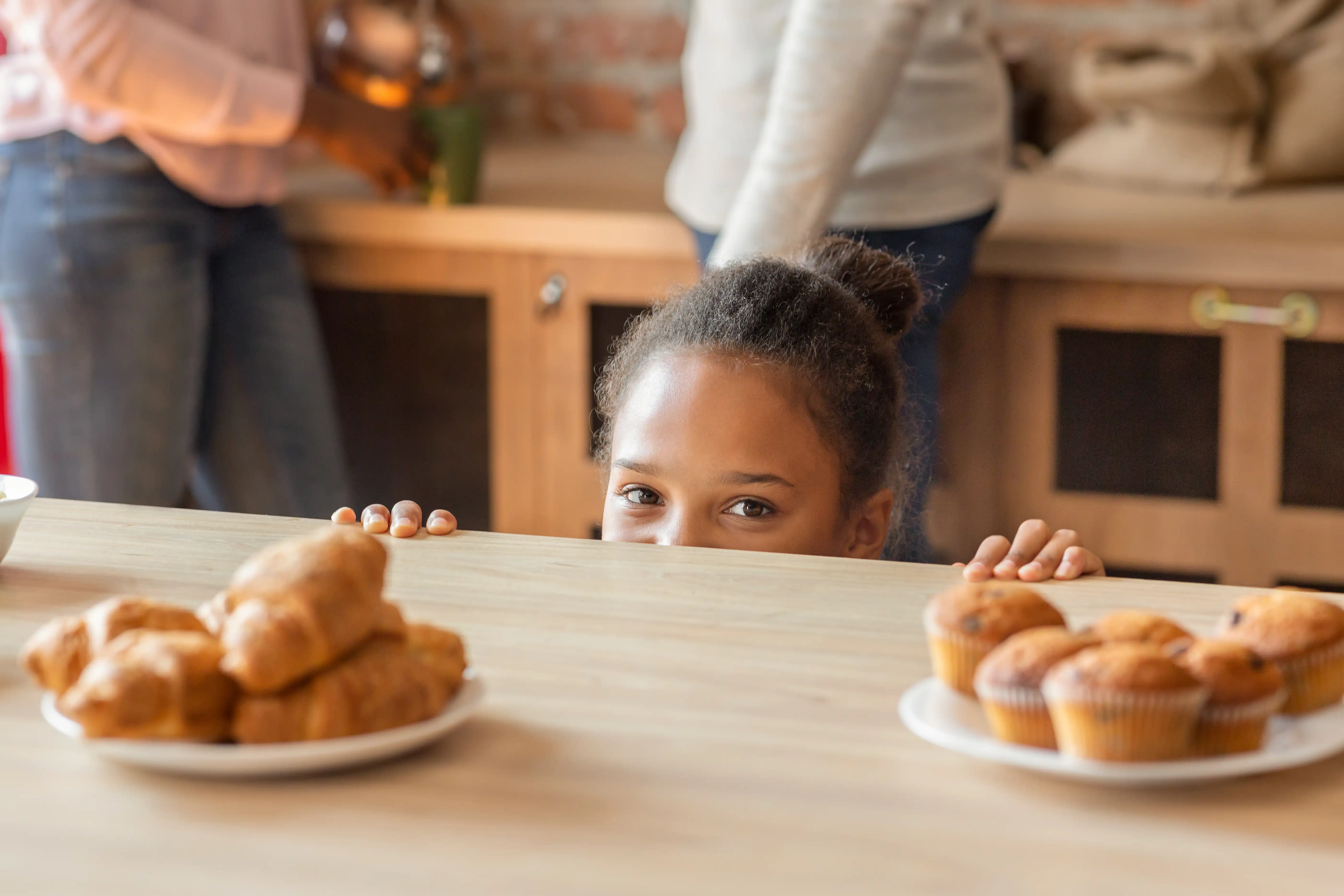
Kindergartners can handle a bit more nuance — games with an added twist, or ones that ask them to hold two rules in mind at once.
- Opposites Game. Call out an instruction and have your kindergartner do the exact opposite — sit when you say "stand," freeze when you say "dance." It forces a beat of thinking before reacting, instead of an automatic response.
- Wait for It (a kid-friendly marshmallow test). Offer one small treat now or two if they wait five or ten minutes. It's a low-stakes, at-home version of the classic delayed-gratification experiment, and a genuinely useful habit to practice on purpose.
- The Mirror Game. Pair up and have one child slowly move or make a face while the other mirrors it exactly, in real time. Slow, controlled movement is a lot harder to copy accurately than fast movement — which is exactly the skill being built.
- Talking Stick (Raise and Speak). Pass an object around a circle and only the person holding it may speak; everyone else raises a hand and waits their turn. Great for a classroom or a family dinner table with more than one kid trying to talk at once.
Self-Control Games for Older Kids & Group Settings
Once kids are comfortable with the basics, these work well in a bigger group — a classroom, a birthday party, or a family game night with mixed ages.
- Board and Card Games. Uno, Go Fish, and Jenga all quietly demand patience, turn-taking, and handling a loss without flipping the table (literally, in Jenga's case).
- Taboo Game (for older kids). Describe a word without saying any of the "forbidden" words on the card — a genuinely tough exercise in holding back the most obvious answer.
- Secret Keeper Game. Tell your kid a harmless "secret" (like what's for dessert) and see how long they can hold onto it before blurting it out. Low stakes, but it's real practice in resisting the urge to share everything immediately.
- Orchestra. Hand out simple instruments (shakers, drums, bells) and have kids play only on a specific cue or beat, staying silent the rest of the time — trickier than it sounds once the music gets going.
Quiet, Attention-Building Games
Not every impulse control game needs to be loud. These build the same self-control muscle at a slower, calmer pace — good for a rainy afternoon or right before a transition to something quieter.
- Timed Puzzles. Let your kid finish a puzzle at their own pace first, then try it again against a timer. The goal isn't speed — it's staying careful and focused even with the clock running.
- What's in the Box? Place a few small objects in a box and set a specific day to open it. Waiting it out, sometimes for several days, is a genuine patience workout.
- Quiet Hunter. Everyone sits completely silent and still for a set stretch of time, starting around 20 seconds and building up gradually. Simple, but harder than it sounds for a wiggly kid.
- Build by Sample. Give your kid a set of building blocks and a picture to copy exactly, resisting the urge to build whatever they feel like instead.
- Counting Back. Before reacting to something frustrating, have your kid count backward from ten. It's a two-second pause that's genuinely enough to interrupt an automatic reaction.
- Deep Breathing. A few slow breaths — in for four counts, out for four — before responding to something upsetting. Simple, portable, and works just as well for the adult in the room.
Everyday Impulse Control Practice
Some of the best self-control practice doesn't need a dedicated "activity time" at all — it just piggybacks on stuff you're already doing.
- On walks. Play Red Light, Green Light at crosswalks, or try "who spots it first" — naming an object without running ahead to grab it.
- During meals. Try the "wait a minute" game before your kid eats their favorite part of the meal, or hand over chopsticks for a dish that usually gets a fork — the extra concentration required does double duty.
- Before bed. Swap a wound-up bedtime routine for something calmer: quiet reading, a "who falls asleep first" game, or just a few minutes of quiet play to help wind down energy before lights-out.
- At the store. Hand your kid the shopping list (or a picture version for pre-readers) and have them stick to it instead of asking for extras — a real-world planning and self-control exercise disguised as a helpful errand.
Build real skills through fun, educational games for your child
Try KeikiGames for Kids with ADHD
Kids with ADHD often struggle to sustain attention through longer or vaguer activities, so games with clear rules and fast feedback tend to work better than free play for building focus.
- Fisherman and Fish. A fast-reaction chasing game where the "fisherman" tries to tag "fish" before they reach a safe zone — the quick pace and instant feedback make it a strong fit for kids who need fast-moving structure.
- One-Leg Balance. Balancing on one leg for as long as possible is a surprisingly effective concentration exercise, since it demands constant, active body control rather than passive stillness.
- Colors and Shapes. Scatter colorful shapes and call out a specific combination to find ("all the blue circles"), gradually increasing the complexity as your kid gets faster at it.
Tips for Parents Supporting a Child's Self-Control
- Model it yourself. Kids learn self-control largely by watching how the adults around them handle frustration — narrating your own pause ("I'm taking a breath before I answer") does more than any lecture.
- Stay consistent with the rules. Impulse control practice works best when the rules don't shift based on your mood or how tired you are — kids notice, and inconsistency undoes the training.
- Praise the effort, not just the win. "You waited so patiently!" teaches more than silence does when they succeed, and it's far more effective than punishing the moments they don't.
- Explain the why, briefly. A short, age-appropriate reason ("we wait so everyone gets a turn") helps the rule make sense instead of feeling arbitrary.
- Start small and build up. Ten seconds of "quiet hunter" is a win for a 3-year-old — stretch the difficulty gradually instead of expecting adult-level patience overnight.
- Let mistakes happen without shame. A blurted-out answer or a grabbed cookie is a practice rep, not a character flaw — a quick, calm redo teaches more than scolding ever will.
Related Games in Keiki App







Build Focus and Self-Control Through Play with Keiki
Impulse control practice doesn't have to stop when screen time starts. Keiki World's games are built with an adaptive pace and are specifically designed to support neurodivergent kids, including those with ADHD, autism, or speech delay — so a puzzle or memory game on Keiki asks for the same kind of careful, unhurried focus as the offline games above, without overwhelming a kid who's still building that skill. With 1,500+ interactive games and lessons and no ads to interrupt concentration, it's a genuinely calm way to reinforce focus and self-regulation between rounds of Red Light, Green Light.