Day of the Dead Activities for Kids: Toddlers, Preschoolers, and Beyond

Late October hits, the marigolds show up at the grocery store, and your kid wants to know what "Day of the Dead" even means. Good news first: activities for Dia de los Muertos are some of the most colorful, low-stress fun you'll find all fall. No spookiness required. This is a holiday about celebrating people you love, not ghosts jumping out of closets.
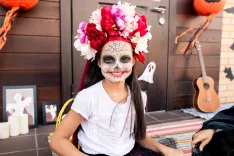
Maybe you're trying to fill a Saturday. Maybe you're a teacher with a unit due in two weeks. Either way, you'll find Dia de los Muertos activities for kids below, sorted by age, with a few honest notes on how to explain the holiday without it turning into a Big Serious Talk nobody asked for.
Key Takeaways
- Day of the Dead (Dia de los Muertos) is a Mexican holiday, celebrated November 1-2, built around color, music, food, and memory, not fear.
- Toddlers do best with sensory, copy-cat activities: marigold painting, simple dancing, playdough.
- Preschoolers can handle a short craft with real meaning behind it, like a paper marigold or a mini ofrenda.
- Kindergarten and elementary kids can take on bigger projects: sugar skull art, a classroom altar, baking pan de muerto, basic Spanish vocabulary.
- Experts recommend explaining death to young kids simply and concretely, rather than dodging the topic entirely.
- A good Day of the Dead activity builds fine motor skills, vocabulary, and cultural awareness without ever feeling like homework.
What Is Day of the Dead for Kids?
Day of the Dead, or Dia de los Muertos, is a Mexican holiday held on November 1st and 2nd that honors family members and friends who've died. It grew out of Indigenous traditions from Mexico and Central America and picked up Catholic influences along the way. Today it's celebrated across Mexico and by Mexican and Mexican American communities everywhere.
The idea itself is simple enough for a 4-year-old to follow: spirits come back for a visit, so families build them a welcome. That welcome is an ofrenda, basically an altar with photos, favorite foods, candles, and marigolds. The flower is called cempasuchil, and its color and strong smell are supposed to help guide spirits home. Families also bake pan de muerto, a sweet bread with a faint orange-blossom scent, and hang papel picado, paper banners with patterns cut into them that flutter when the wind picks up.
None of this is meant to scare anybody, and that's worth saying up front. If your kid's whole mental image of a skeleton comes from a plastic Halloween prop on the neighbor's lawn, that's the misconception to clear up before anything else. Think of it more like a birthday party for someone you miss.
Why Day of the Dead Activities Are Good for Kids
A lot is happening while your kid glues tissue paper onto a paper marigold, more than it looks like from the outside.
- Fine motor practice. Cutting papel picado, threading marigold petals, rolling playdough skulls — same hand muscles your kid will need for writing and buttoning a coat.
- Early cultural literacy. Learning that families grieve and celebrate differently around the world builds empathy earlier than most lessons manage.
- Vocabulary growth. Words like "ofrenda," "cempasuchil," and "calavera" are new sounds and new ideas in one go, which helps language development whether or not Spanish is spoken at home.
- A gentle entry point into talking about death. Kids ask about it eventually. A holiday built around flowers and food is a softer way in than an out-of-nowhere hard conversation.
- Family storytelling. Building an ofrenda tends to open the door to "tell me about your grandma" in a way that doesn't happen on an ordinary Tuesday.
Help your child
grow with Keiki
We’ll help you turn everyday screen time
into real learning progress.
Day of the Dead Activities for Toddlers (Ages 1-3)
Toddlers don't need the history lesson. They need color, texture, and something to copy. Keep it to 5-10 minutes, and make peace with the fact that glue is going to end up somewhere unexpected. It always does.
- Marigold Finger Painting. Orange and yellow paint, a tray, go. Or just let them make orange blobs — nobody's grading this. One of the easiest Dia de los Muertos activities for toddlers around, since there's no wrong way to do it.
- Sugar Skull Playdough. White playdough, pressed into a round "skull" shape, decorated with sequins or buttons. Local libraries run almost this exact program for ages 2-5.
- Marigold Petal Sorting. Real or silk marigolds, pulled apart and sorted into a bowl by a toddler who just wants to rip things up anyway. Decent pincer-grip practice in disguise.
- Dance Like a Skeleton. Put on music, shake around like a wiggly skeleton. It's a goofy, low-effort way to plant the idea that Day of the Dead skeletons dance and smile, which honestly does more for a 2-year-old than any explanation would.
- Photo Point-and-Name. Pull out a few family photos and just name faces: grandma, great-grandpa, maybe the dog who passed last year. No pressure for a reaction, just familiarity.
Day of the Dead Activities for Preschoolers (Ages 3-5)
Preschoolers can follow a two- or three-step craft and start sensing that the holiday actually means something, which opens up more Day of the Dead activities for preschool than you'd think.
- Paper Marigold Craft. Layer circles of orange and yellow tissue paper, twist the center. One of those crafts that looks far more impressive than the effort it took.
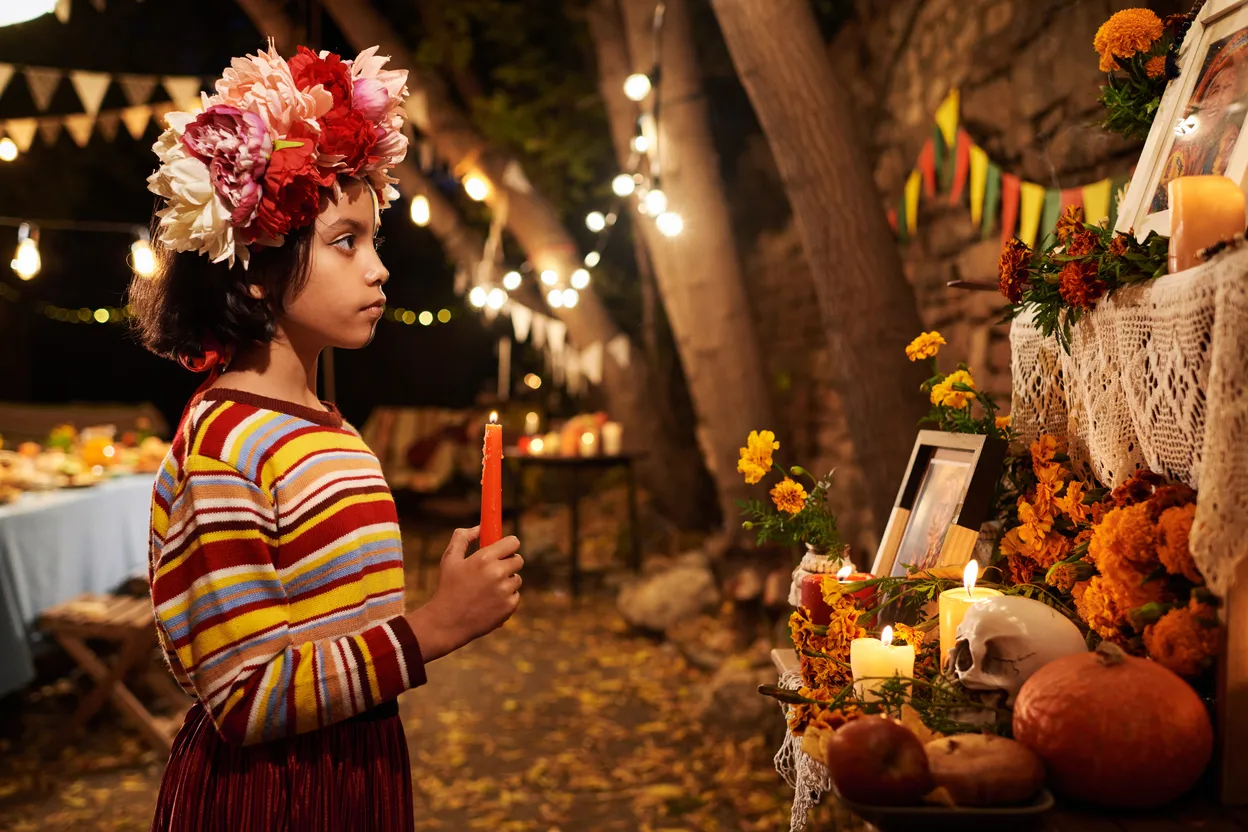
- Simple Family Ofrenda. Clear off a shelf, add a photo, a battery candle (skip real flames around little kids), and the paper marigolds from the craft above. Out of everything on this list, this is probably the one that lands hardest, since it turns an abstract idea into something your kid actually built.
- Papel Picado Banner. Fold tissue paper in half, cut simple shapes along the fold with safety scissors, unfold. String a few together and that's your classroom or living-room decor, done.
- Handprint Skeleton Craft. White paint, a small hand, black paper, a face added once it dries. Shows up in basically every Day of the Dead for preschoolers roundup because it's fast, easy, and ends up on the fridge.
- Sugar Skull Coloring Pages. Print simple calavera (skull) outlines with big open sections for coloring — flowers and swirls, nothing remotely spooky.
- Marigold Number Match. Draw marigolds numbered 1-10, have your preschooler match the right number of petals or pom-poms to each. Counting practice, hiding inside a holiday craft.
Day of the Dead Activities for Kindergarten and Elementary Kids
By kindergarten, kids can handle a multi-step project and start connecting activities for the Day of the Dead to what the holiday's actually about, not just the craft part.
- Classroom or Family Ofrenda Project. A bigger, group version of the preschool ofrenda. Each kid adds a photo, a drawing, or a written memory of someone (a pet counts). Works well stretched across a week, with a reveal at the end.
- Bake Pan de Muerto. With help, bake this slightly sweet bread together. Measuring ingredients and shaping the traditional bone-shaped strips on top is early math and fine motor work wearing a disguise, and the smell alone is half the motivation.
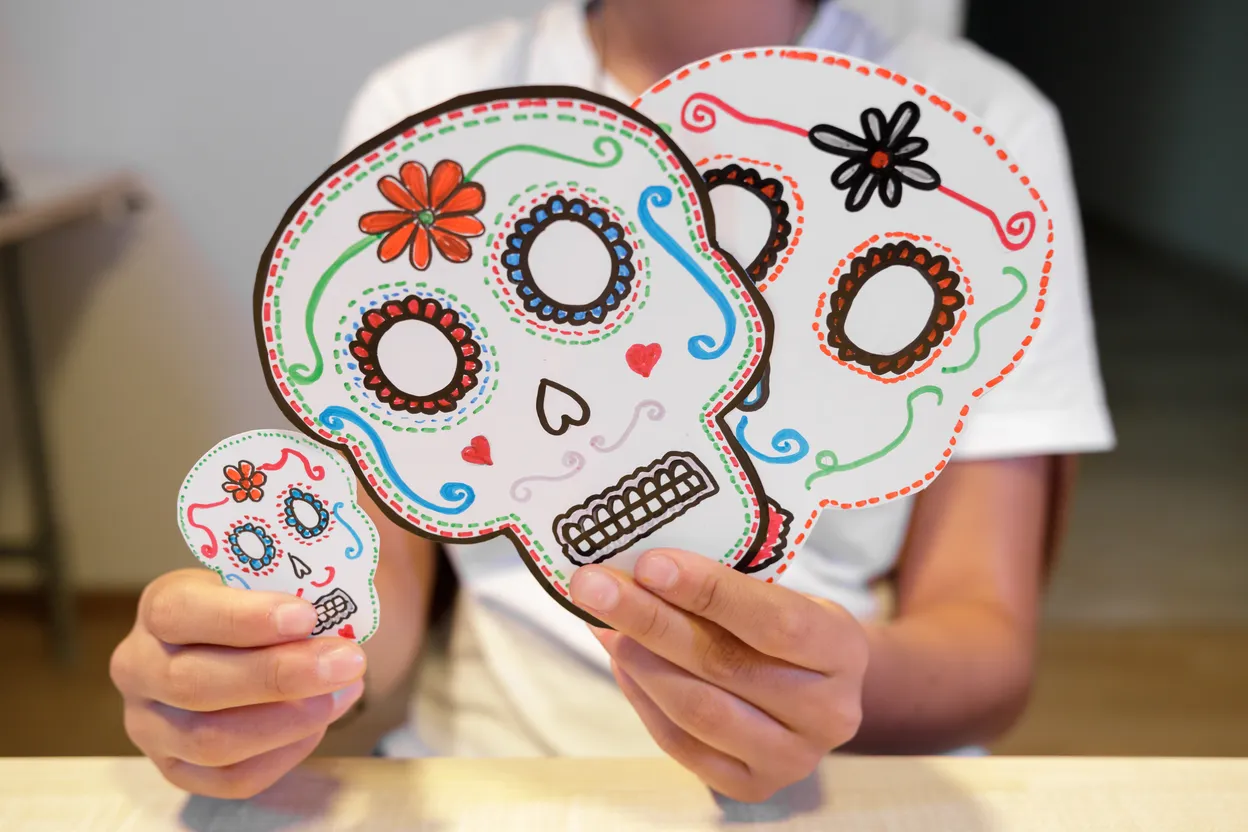
- Sugar Skull Art (Mixed Media). Hand over a blank calavera template and let older kids loose on it with markers, glitter glue, or paint. Flowers, swirls, dots, whatever they want.
- Papel Picado with Real Patterns. Elementary kids can manage trickier cutting. Teach one repeating pattern, then let them design their own instead of copying a template.
- Spanish Vocabulary Scavenger Hunt. Cards with key words (ofrenda, calavera, cempasuchil, pan de muerto) hidden around the room, matched to pictures.
- Marigold Garden in a Cup. Plant real marigold seeds in small cups and track growth for a couple of weeks leading up to November 1st. A craft that quietly becomes a science project.
- "Who Would You Remember?" Writing Prompt. A few sentences or a drawing about someone, or a pet, a kid would put on an ofrenda and why. This is where the holiday really lands for older kids — it was never really about the craft.
How to Talk to Young Kids About Day of the Dead
Keep it simple, keep it factual, and don't tiptoe around the word "death" itself. Michigan State University Extension's early childhood guidance recommends plain, concrete language over euphemisms, since something like "they went to sleep" tends to confuse young kids more than it comforts them.
A few things that actually help: lead with the celebration, not the loss. "This is a day families remember people they loved and share favorite foods and pictures" lands a lot better than opening with death itself. Expect odd questions — "can grandma still eat the bread?" is completely normal from a 4-year-old, not a sign something's wrong. Answer plainly and keep moving.
Skip the real flame and the scary skull faces, too. None of the activities of the Day of the Dead above need an open candle or a frightening calavera design. Bright and happy is the actual tradition here, not a kid-friendly edit of it. And if a grandparent or pet has passed recently, let your child set the pace on how much they want to talk about it. A craft table isn't the place to force a big conversation nobody's ready for.
Play and Learn More with Keiki World
If your kid gets hooked on marigold crafts and sugar-skull coloring, that same pull toward color and pattern carries right over into Keiki World's drawing and coloring activities, where little ones keep building fine motor control at their own pace.
Keiki World offers 1,500+ interactive games and lessons for kids ages 2-6+, including creative tools that make a nice, quiet follow-up to a craft-heavy afternoon. It's 100% ad-free and KidSAFE certified, so it's an easy next step once the glue sticks get put away.
Help your child thrive with playful learning
Turn screen time into real growth with Keiki's educational games.
Try KeikiTips for a Day of the Dead Celebration with Kids
- Start with one activity, not ten. A single, well-done ofrenda teaches more than five crammed into one exhausted Tuesday evening.
- Use real marigolds if you can find them. The scent is part of the tradition, and it makes the whole thing feel less like a worksheet.
- Read a book first. A quick picture book about Dia de los Muertos gives kids context before the glue comes out.
- Let siblings of different ages work side by side. A toddler finger-painting marigolds next to a sibling cutting papel picado still counts as "together," even doing totally different things.
- Save a photo of the finished ofrenda. Next year's version quietly becomes its own family tradition, which is kind of the whole point to begin with.