20+ Infant activities: fun ways to play and learn

A baby’s first year is a time of incredible, rapid transformation. Only yesterday, you brought home a tiny sleeping bundle, and today, this little person is already reaching for toys, cooing, and trying to crawl. As the baby grows, each wake window becomes longer and longer. Parents may feel unsure about how to occupy a child who cannot yet do very much.
Key Takeaways
- Your voice, face, and touch are a baby's best developmental tools in their first year.
- Every sound, texture, and game of peek-a-boo sparks millions of vital neural connections.
- Keep it calm and high-contrast for newborns; add crawling, stacking, and cause-and-effect for 9–12 month-olds.
- Eye-rubbing, looking away, or fussiness means it's time for a break —overstimulation happens fast.
- The true goal of year one is helping your baby feel safe and curious about the world.
Introduction to infant activities
You do not need expensive gadgets or complicated equipment to support your baby’s development. The best infant activities are simple, understandable games centered around you. Yes, you – because during infancy, no one is more important or meaningful to a baby than their parents. Contact and time together are among the most important things for an infant.
In this article, we have collected more than 20 excellent, easy-to-prepare ideas for every developmental stage from 0 to 12 months. These baby activities will help you enjoy time together, strengthen your bond, and support your child as they develop new skills at a comfortable pace.
Why play matters for infant development
For adults, play is a way to relax. For an infant, however, play is serious work. Every minute spent exploring a new texture, sound, or a parent’s face creates millions of new neural connections in the developing brain.
When you choose activities for infants, you support several areas of development:
- Cognitive development. Games teach babies to understand cause and effect. A spoon falls – it makes a sound. A face disappears behind hands – then appears again.
- Physical growth. Every activity, even simply lying on a play mat, exercises the muscles. Gross motor skills include holding up the head, rolling over, and crawling. Fine motor skills involve grasping objects with the fingers.
- Bonding and emotional connection. Your voice, touch, and smile give your baby a basic sense of security. In this environment, every new milestone becomes easier and more enjoyable.
You do not need to be a professional educator to create activities for babies. The main thing is to follow your baby’s interests and enjoy the process.
Help your child
grow with Keiki
We’ll help you turn everyday screen time
into real learning progress.
Best activities for babies
We have divided our ideas into four age groups. Remember that every child is unique. If your baby is seven months old and still enjoys infant games designed for six-month-olds, that is completely normal.
From 0 to 3 months – discovering the world
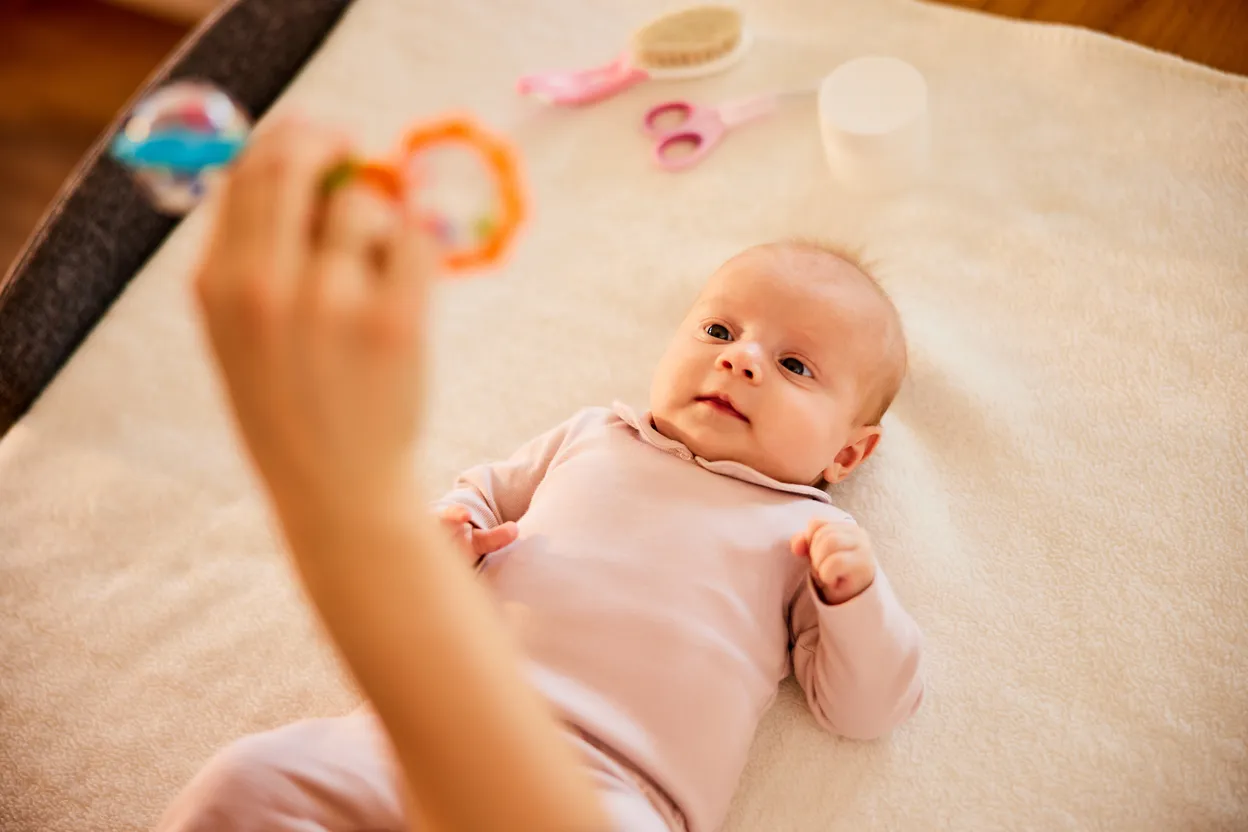
At this age, babies are only beginning to focus their eyes and control their bodies. The best activities to do with babies during this period should be calm and should not overstimulate the nervous system.
High-contrast vision
Newborn vision is still developing, and babies distinguish black-and-white contrasting patterns most easily. Show your baby black-and-white pictures from a distance of 20–30 cm from their face, moving them slowly from side to side.
Chest-to-chest tummy time
Tummy time is important for strengthening the neck, but many babies do not enjoy it. Place your baby on their stomach against your chest, lean back against pillows, and talk to them. A parent’s face is the best motivation to lift the head, making this activity for infants a genuine must-have.
Mirror play
Place a safe baby mirror in front of your child. Infants love looking at faces, even before they understand that they are seeing themselves.
Singing and babbling
Sing songs, recite poems, and respond actively when your baby begins making their first vowel sounds. This is also known as babbling, and it lays the foundation for speech.
Baby massage
Use light stroking movements on your baby’s arms and legs after bathing. This develops tactile sensitivity and helps the baby relax before sleep.
From 3 to 6 months – a time of discovery
The baby begins reaching for objects, holds their head more confidently, and prepares to roll over. This is the time to introduce more active games for infants.
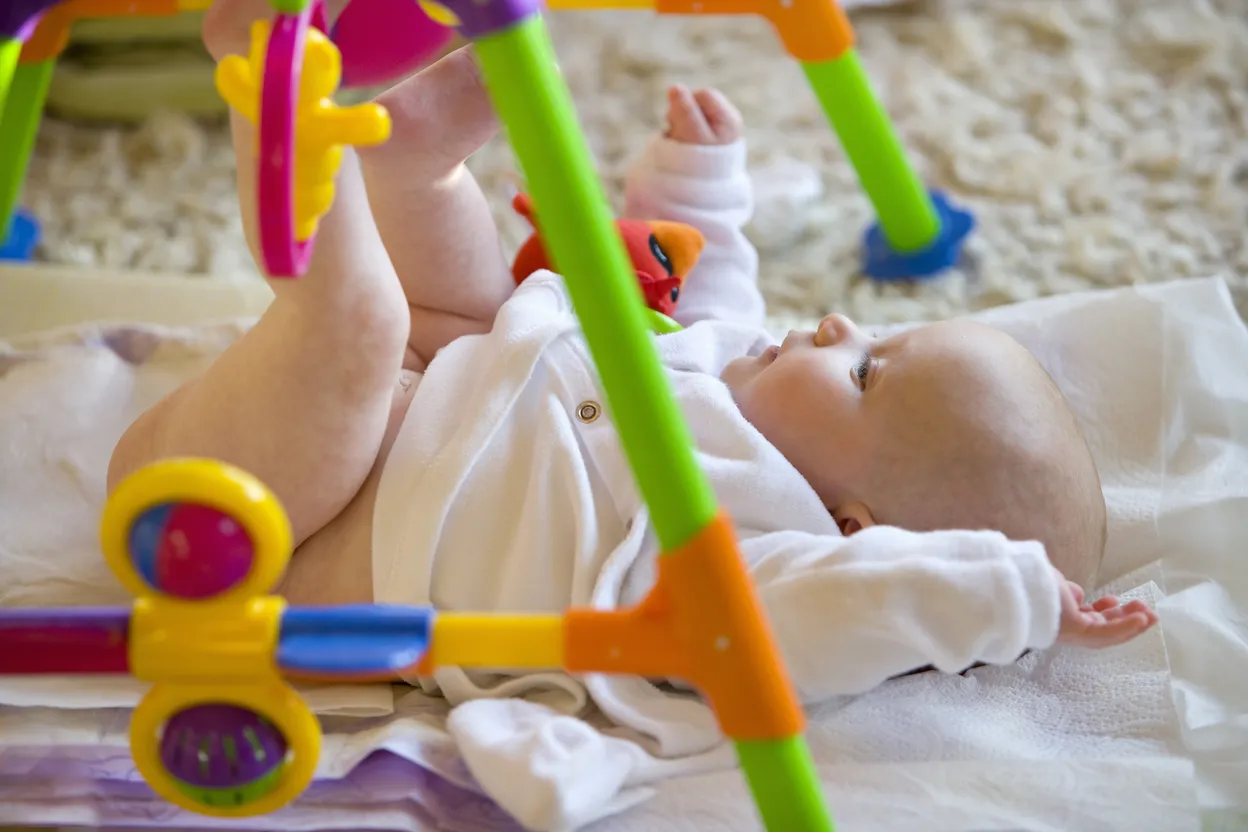
Play gym reach
Place your baby on a play gym with arches. Hang toys where the baby can first touch them accidentally and later begin reaching for them deliberately.
Water sensory bags
Pour a small amount of water into a strong zip bag and add glitter or large buttons. Seal the bag securely with tape and attach it to the floor. Let your baby pat it with their hands during tummy time.
Airplane rides
Place your baby on their stomach across your lower legs while supporting their arms, then gently raise and lower your legs. The activity is enjoyable and also exercises the vestibular system.
Peek-a-boo
This classic game teaches object permanence. Cover your face with your hands or a light cloth, then reveal yourself with a smile.
Touch and feel
Let your baby touch objects with different textures, such as a silk scarf, wooden spoon, or silicone teether.
Rolling practice
Place a bright toy slightly to one side of your baby to encourage them to reach for it and roll from their back onto their stomach.
From 6 to 9 months – movement and logic
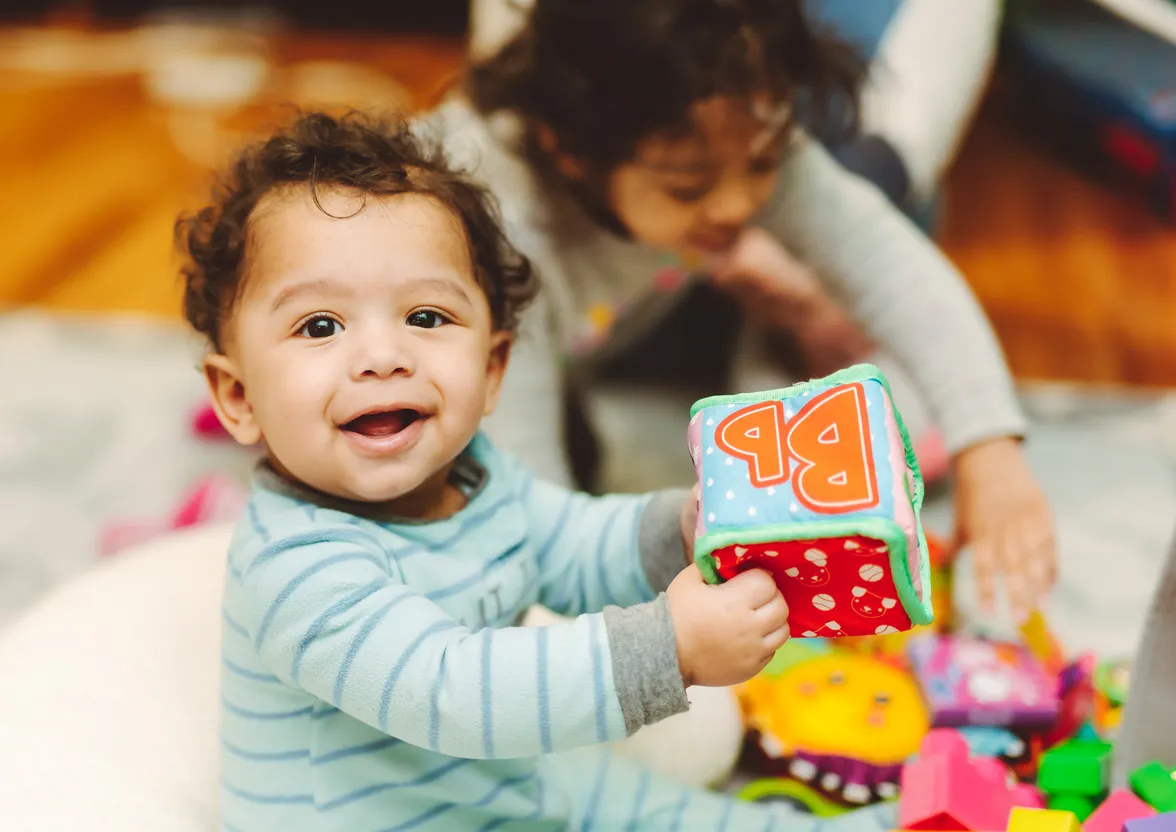
The child is learning to sit and beginning to crawl. Activities to do with infants become more dynamic.
Safe sensory bin
Babies put everything into their mouths, partly because of teething. Create a safe sensory bin with items that cannot be swallowed and are safe to explore with the mouth.
When complementary feeding has already begun, you can boil vegetables, cut them into suitable pieces, and place them in a tray for sensory exploration.
Crawling obstacle course
Arrange sofa cushions, rolled blankets, and bolsters on the floor. Encourage your baby to crawl over them and move towards a favorite toy.
Kitchen drumming
Give your child a plastic bowl, saucepan, and wooden spatula. Show them how to make sounds. It may be noisy, but it is extremely valuable for understanding cause and effect.
Tissue box pull
Place pieces of fabric or handkerchiefs tied together inside an empty tissue box. Babies love pulling them out one after another.
Hidden toy
While your baby watches, cover a favorite toy with an opaque plastic cup. Invite them to find it.
From 9 to 12 months – little explorers
The baby begins pulling up on furniture, sits confidently, and develops the pincer grasp – the ability to pick up small objects with two fingers. This is the right time to introduce new activities to do with babies.
Toy rescue
Attach several small toys to a baking tray or the floor with ordinary masking tape. The child will need to make an effort and use fine motor skills to “rescue” them.
Stacking
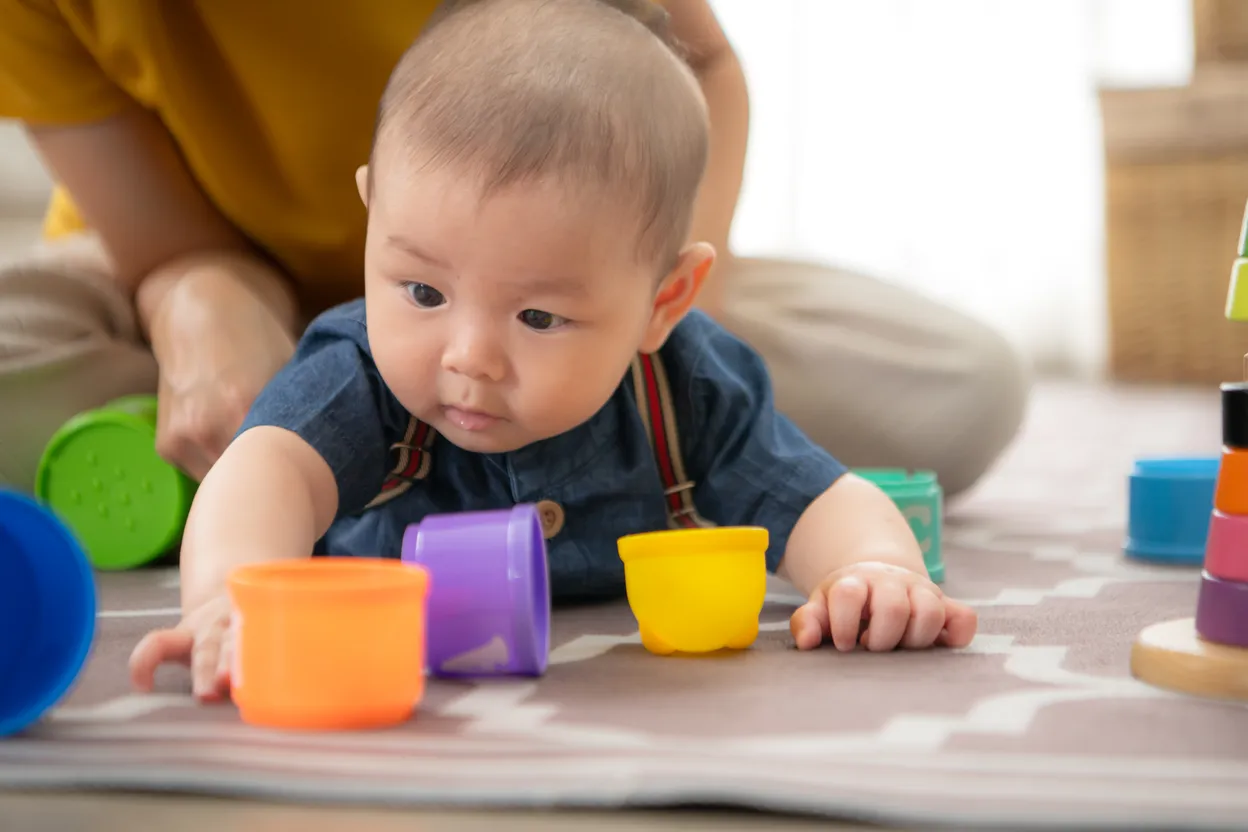
Teach your baby to place plastic cups or lightweight blocks on top of one another. The most enjoyable part of the game is knocking them down afterwards.
Drop in the bucket
Take a plastic bucket and several balls or blocks. Show your child how to place the objects inside and then tip them back out.
Cruising station
To encourage walking while holding on to furniture, place interesting objects along the sofa with a small distance between them. The baby will need to take sideways steps to reach each one.
Rolling a ball
Sit on the floor opposite your baby with your legs spread apart and roll a soft ball towards them. Encourage the baby to push it back.
Sticky notes peel
Attach several bright sticky notes to a wall or refrigerator door at the eye level of a sitting or standing baby. Let the child try to lift the edges with their fingers and pull them off.
Safety tips for infant play
Safety is the foundation of all infant activities. Remember these essential rules:
- Constant supervision. Never leave an infant playing alone, especially during activities involving water or sensory materials.
- The cardboard tube rule. If a toy part fits completely inside a cardboard toilet paper tube, it is too small and presents a choking hazard for a child under three.
- Safe materials. Babies under one explore the world mainly through their mouths. Make sure that all paints, including finger paints, are food-safe and that toys contain no toxic substances.
- Watch for signals. When your baby turns away, rubs their eyes, yawns, or becomes fussy, they are tired of stimulation. Stop the game and move on to relaxing bedtime routines.
Make playtime a learning adventure with Keiki
We understand that new parents often lack sleep and free time. Creating activities from scratch every day can be exhausting. Keiki’s learning games can help. They are specially developed with child development specialists and psychologists to avoid excessive stimulation and overload.
Young children and devices are always a sensitive subject, so we recommend limiting games to 15–20 minutes.
Many activities in the app are suitable for very young children. You will find infant games that correspond to their developmental level and help them acquire important skills gently and gradually.
Babies are not yet ready for counting exercises or handwriting practice, but cards are an excellent choice. They are a versatile tool for gradually practising early sounds, reactions, memory, and visual focus.
Bedtime stories are also suitable because it is never too early to read stories before sleep, calm the nervous system, and help a baby relax. A format featuring gentle music and a large collection of stories is well suited to infants.
Help your child thrive with playful learning
Turn screen time into real growth with Keiki's educational games.
Try KeikiConclusion
The first year passes in an instant. Do not try to turn every day into an early learning lesson. Your goal is not to raise a genius by 12 months, but to give your child confidence that the world is an interesting and safe place where they are loved.
Use these infant activities as inspiration. Experiment, laugh when the contents of a sensory bin end up on the floor, and celebrate every new skill your child develops.
Remember that the best, most interesting, and most educational toy in the world for your baby is you.