Easy painting ideas for kids – creative fun without limits

Every child is a bit of an artist. Do you disagree? What about their incredible imagination, their ability to see the most ordinary things from an unexpected perspective, their sincere delight in something new, and their openness to experimentation? Young Picassos may still lack a bit of technique and neatness, but that comes with practice. For an adult, painting is about the result. About a picture that can be finished and hung on the wall, about artistic value. But for a preschooler, this activity is a grand exploration and an unfolding of their potential, which is already hidden inside and waiting for its moment.
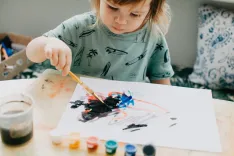
Painting is a chance to build many skills, develop creative thinking, and simply have fun. At Keiki, we believe in learning with joy. Painting should not feel like a lesson with rules such as “stay inside the lines.” It is a free process where easy painting ideas for kids become a tool for developing speech, logic, and fine motor skills. In this article, we will look at how to turn ordinary creative time at home into an exciting adventure that lays the foundation for future success without any rote learning.
Why is painting a foundation for preschoolers?
Give a child a toy, and they will be busy for 10 minutes. Give a child paints and a sketchbook, and they will stay engaged again and again, always coming back to it. Painting has no limits, and it never gets boring, because on paper or on a tablet you can literally create more and more stories, objects, and characters. That is why we selected easy painting ideas for kids that greatly expand your opportunities for a preschooler’s development, acting as a powerful training tool.
The benefits of beginner painting for children are enormous. It is a universal way to explore many topics and skills in a fun and creative format. Here are just a few of the benefits different painting activities provide:
- Development of fine motor skills. This is the main strength and biggest advantage of the activity. Controlling a brush or finger trains the hand muscles, which will later help a child master writing with ease. Painting always goes hand in hand with fine motor development. In preschool years, its connection with brain development is especially important.
- Sensory perception. Different paint and paper textures provide rich tactile experiences. Experimentation means courage, freedom in decision-making, and a search for unconventional patterns. Sensory play supports all of this especially well.
- Cognitive skills. Understanding shapes, colors, and space happens intuitively. The creative process literally pushes the brain to generate new ideas and questions. Through it, a child also learns new words by naturally interacting with the different objects of their creative thinking.
- Creative potential. There is nothing more powerful for imagination and creativity than creative painting for kids. There are no instructions in this process – the child invents them independently. There is no rigid control, but there is a sea of inspiration without limits. For a child’s brain, this means flexibility, resilience, and even curiosity.
Painting can take many forms. On paper, on a tablet, or on more exotic and unusual surfaces. But first, it is worth understanding which easy painting ideas for kids suit different ages so the challenge is manageable and realistic for the child.
Ideas for the youngest children from 1 to 3 years old
Before the age of three, painting is first and foremost a sensory experience. A child is not trying to create a masterpiece – they are exploring the properties of materials. Your task is to organize “exploratory creativity,” where the result matters less than the neural connections being built in the process.
Below, we describe five ideas for painting for toddlers that help gently develop motor skills, explore the world, and build new neural connections.
Finger painting
There are countless finger painting ideas, all based on the same principle – using fingers instead of pencils or brushes. The differences lie in the details. For example, children can create different pictures or use only certain fingers.
In any case, this is the most natural and easiest way to open the world of creativity to a little one. Give your child just two contrasting colors, such as yellow and blue. Let them simply smear them around and watch a new one appear – green. Without extra theory, you can increase sensory input and build an understanding of basic colors. If we are talking about a 3-year-old, the tasks can be more complex. For example, make a base with prints and then add extra elements. This way, you can create birds, flowers, where each petal is one print, or tree crowns made of many random prints.
Painting with “edible” paints
Children aged 1–2 have a habit of putting everything in their mouths. And that is absolutely normal. Children explore the world through taste, treating it as one more way of getting to know their surroundings. Many are also teething, so these actions become partly reflexive.
Worried that your young artist might accidentally lick the paint? Make it from thick yogurt and natural food coloring. It is a safe way to bring creative painting for kids to life, where a child can literally taste art. A plate works well as a canvas. Here, your imagination has no limits. You can use beet juice, which strongly stains surfaces red or purple, or juice from squeezed grated carrots for a rich orange tone.
Painting in a bag
Many parents look for mess-free painting ideas that do not end with cleaning the whole room, ordering sofa dry cleaning, and washing the child from head to toe. If you still think that little children and painting always mean chaos, this method is for you. Pour a few drops of paint into a sturdy zip bag, seal it, and tape it to the table. The child will knead the paint through the plastic with their fingers. Hands stay clean, but the excitement is real.
The magic of a wet brush
A common request is water painting for kids. That is no surprise – water, as part of sensory practice, is very helpful and, even through mess and stains, gradually teaches children neatness and precision of movement. You can use special water mats or simply a brush with water on dark cardboard. The child sees a dark mark appear and then disappear. It also becomes a creative first lesson in cause and effect.
Ideas for preschoolers from 4 to 6 years old
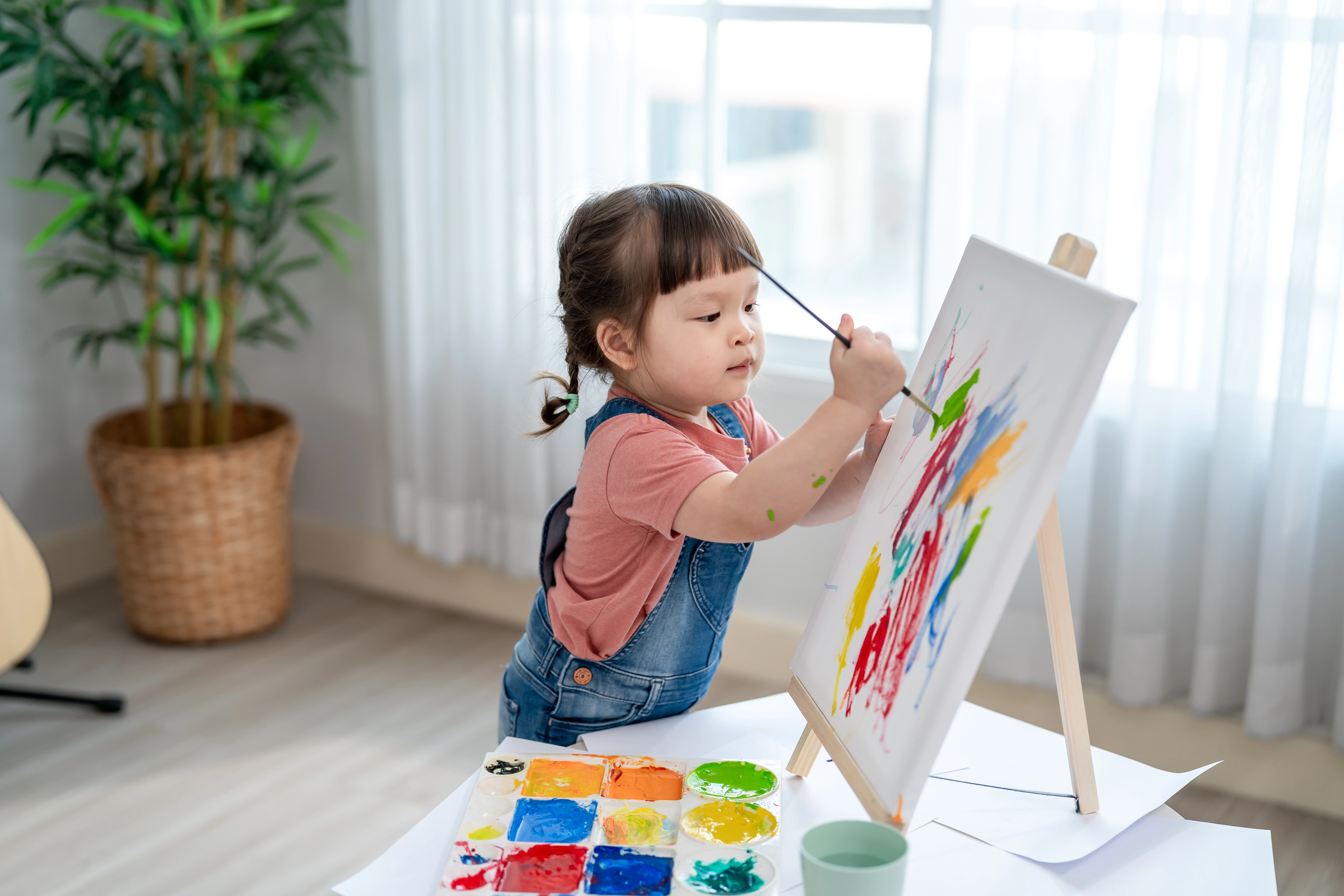
By the age of four, the hand becomes steadier and the imagination richer. So rich, in fact, that a child can already create whole masterpieces – perhaps not in terms of composition and skill, but certainly in terms of imagination. During this period, it is important both to provide the right developmental challenge and to support the desire to experiment and stay curious. You can already move on to techniques that stimulate creative thinking and prepare the hand for writing through simple art projects for preschoolers.
Painting invisible patterns
Draw something on a sheet of paper with a white wax crayon, then invite the child to cover the sheet with watercolor. The hidden drawing will appear like magic in white lines. Among many preschool art ideas, this one stays fresh for a long time because of the endless variety of patterns and pictures you can draw with the crayon. By the way, if you do not have a crayon, you can use an ordinary candle, rubbing it firmly over the paper several times.
Blowing paint blots
Drop some liquid paint onto a sheet and give the child a straw. The young artist can blow on the drop, turning it into a whimsical tree or a monster’s hairstyle. Blots can be used both for complete standalone drawings and to add to ready-made templates with tree trunks or character heads. This activity is not only fun – speech therapists also recommend it because it develops breathing for speech.
Painting with masking tape
Stick geometric shapes made of tape onto paper. After the child colors over the whole surface, you remove the tape together, and crisp white outlines remain on the sheet. This idea works well for 4-year-olds, when painting itself may still be challenging, but the desire for experimentation and variety is already strong. Coloring the whole sheet is a simple and clear task.
Splatter technique
With an old toothbrush and a comb, you can create entire galaxies. This is an exciting way to explore beginner painting for children, where random splashes turn into a starry sky or other parts of a picture. Stars, snowfall, falling leaves in the park, or a fluffy dandelion flower – there are many ways to use it.
Salt painting
Draw an outline with PVA glue, sprinkle it with salt, and then add drops of watercolor. The paint will spread beautifully along the salt crystals. It requires careful action, which means fine motor skills are developing too.
Creative lab – even more easy painting ideas for kids
An unconventional approach to creativity gives the best results when it comes to gentle development and creative growth in children. Who said you can paint only with brushes? You and your child can confidently use everyday objects you already have at home.
- Vegetable stamps. Half a potato, a carrot, or even the core of napa cabbage, which leaves a print resembling a rose, can all be turned into creative tools. Cover the vegetable surface generously with paint and press it onto paper. The result is unusual patterns and textures.
- Bubble painting. Mix soap bubbles with paint and blow them directly onto paper. When the bubbles pop, they leave delicate watercolor circles. Still, we recommend saving this idea for sunny spring and summer days so you can try it outdoors.
- Painting with a fork. Painting with everyday objects is a great way to diversify creative tools. The tines of a fork are perfect for drawing hedgehog spikes or blades of grass.
Experimentation is the best way to show a child that creativity has no boundaries. That is the essence of development – finding unusual uses for ordinary things.
Help your child
grow with Keiki
We’ll help you turn everyday screen time
into real learning progress.
Unusual techniques for little explorers
We dedicated this section to techniques that make children sincerely say, “Wow!” These are exactly the moments that shape a child’s belief that learning is cool, exciting, and fun.
- Living handprints. Use the palm as a base. Make a print, and once it dries, invite the child to think about what it looks like. Add a beak and it becomes a bird. Add fins and it becomes a fish. This kind of creative painting for kids develops associative thinking.
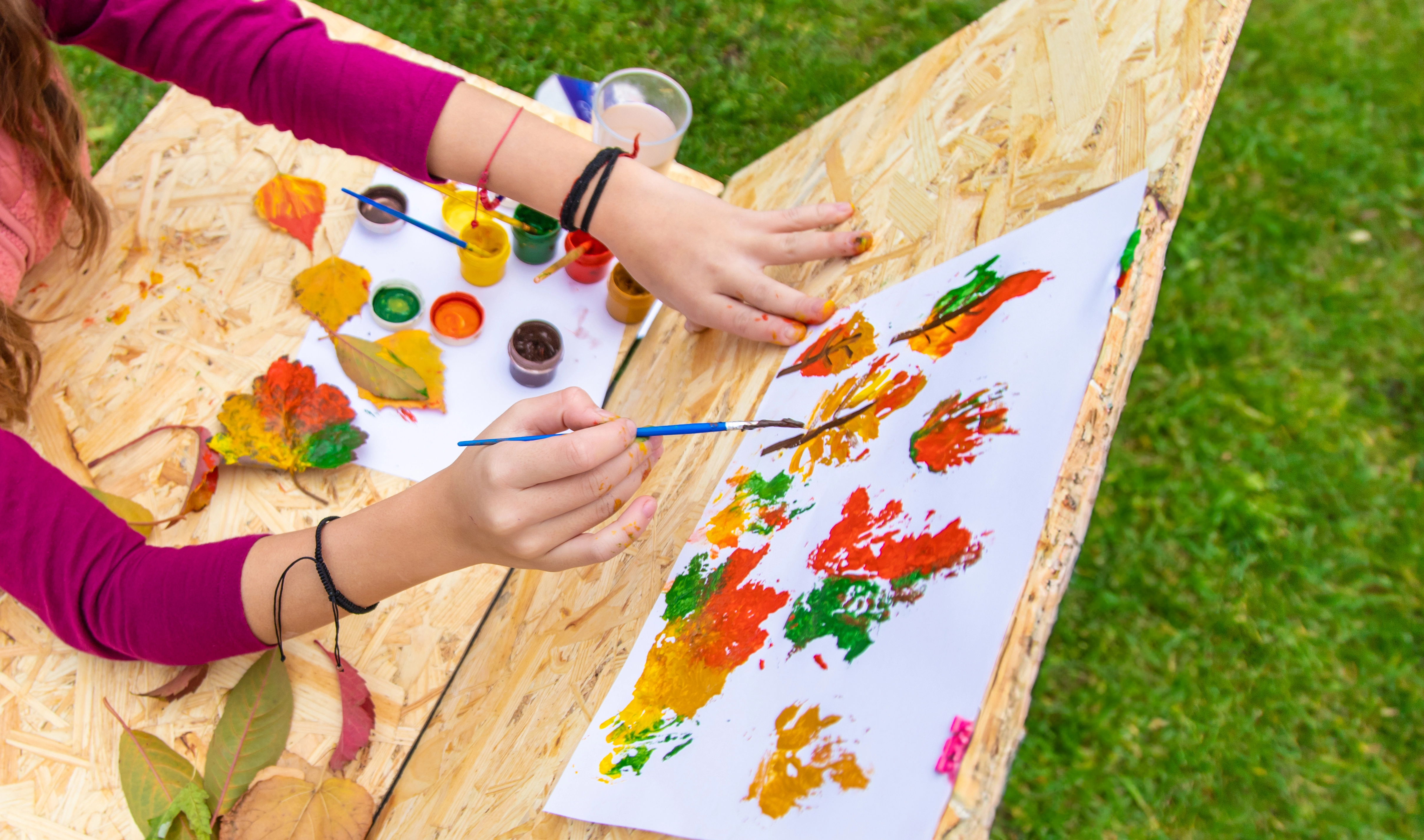
- Herbarium on paper. You can paint not only on a canvas but on nature’s gifts themselves. Try coloring dry leaves or using them as stamps by covering them with paint and pressing them onto paper. This teaches a child to notice the beauty in natural details.
- Cotton swab crafts. Use cotton swabs instead of a brush. By placing dots with them, children can create whole mosaics. If only one activity had to be chosen as the perfect foundation for fine motor development, this could be it. It also works well as simple art projects for preschoolers, because even simple drawings made with this technique look very striking.
- The blotting napkin trick. Fold a napkin in half. On the top layer, draw only an outline with a marker, for example a cloud, and on the inside add colored spots. Put the napkin in water – and like magic, the picture instantly becomes colorful.
- A cardboard castle of creativity. And what happens if you combine two of children’s passions – painting and homemade playhouses? To find out, do not throw away large boxes. Make a little house or a rocket out of them and hand it over to the child with paints and markers. Painting in 3D, directly on an object, can be much more exciting than painting on a sheet of paper.
By the way, the last option also helps prevent those awkward situations when a young artist, carried away by success in painting, quietly moves on to the walls or furniture without the parents noticing. In the moment, it feels very exciting, and the child wants to make the space brighter and more noticeable. But if they have a house they are allowed to color legally, without harming the interior, that is the height of childhood dreams.
From paints to the app: Keiki as the perfect addition
Sooner or later, there comes a moment when parents cannot pull out the paints – while traveling, waiting in line, or simply in the evening when everyone wants some quiet and there is no energy left to clean up creative chaos. This is where Keiki comes in. Who said you can paint only on paper? Today, the demonization of tablets and smartphones in children’s hands has reached its peak, but with a reasonable approach and a science-based perspective, they can complement traditional creative development. The benefits of digital creativity include:
- Development without stress. There is no fear of mistakes, because in the app you can simply tap “back” and try again. The child builds confidence and can also try different approaches and techniques.
- Learning through interest. Our educational painting activities inside the app are built into game-based stories. Keiki has a separate category of games and tasks for learning to draw, and these also include coloring pages. That means you do not have to constantly invent what to do with your child today or how to engage them this time – early development specialists have already created many options.
- Clean and portable. Parents are constantly looking for mess-free painting ideas when there is no time or energy to clean up after painting at home, or when they need to keep a child busy while traveling or away from home. In that sense, a digital canvas is an ideal option.
- A safe environment. No ads. Only educator-approved content that gently guides a child’s attention.
Do not be afraid of apps – they often have enormous potential for development and creativity, offering coloring pages for every taste and tools with every shade and color imaginable.
Help your child thrive with playful learning
Turn screen time into real growth with Keiki's educational games.
Try KeikiHow to organize the workspace – tips for parents
To make beginner painting for children joyful rather than stressful because of a stained carpet, follow these simple rules:
- Zoning – art experiments should take place in one specific designated spot, for example at a table or in a corner where making a mess is allowed. Clear boundaries also help prevent the child from later moving on to the walls throughout the house, knowing that they are not on the list of approved places for creativity.
- Limit the choices – a 2-year-old does not need 24 colors. Two or three at a time are enough, and that makes it easier to focus on the process.
- Praise the process, not the result – from early childhood, it is important for a child to understand that creativity can be enjoyed in the moment, not only for producing drawings that earn adult praise.
- Do not scold over stains and chaos – easy indoor activities for kids can be messy. Children simply do not yet know how to be neat, and they create chaos not to annoy anyone but because they are deeply absorbed in what they are doing.
- Prepare everything you need in advance – including things that help keep order. For example, you can spread a protective cover under the table, place a pack of wet wipes on the table itself, and dress the child in clothes that can safely get stained.
Painting is a child’s first and most sincere language – the language they use to speak to the world before they learn to write fluently. By using easy painting ideas for kids, you give your little one the chance to explore, make mistakes, and create something of their own.