How to Get Kids to Read: A Complete Guide

Books are truly unique things – devices that ignite imagination and open portals to hundreds and thousands of worlds we could never visit otherwise. Reading knows no age, gender, limitations, or restrictions. It is available to everyone, including children who are separated from this magical process only by not knowing how to read yet.

Key Takeaways
- Building a love of books should start from birth, while formal reading instruction is best introduced around ages 5–6
- Short, consistent daily reading sessions are far more effective than occasional long ones
- Following a child's own interests is more powerful than pushing "worthy" literature
- Pressure and reading-as-punishment reliably backfire; curiosity, choice, and cozy rituals are what actually make children reach for books
Many parents probably know this feeling: you buy an amazing, expensive book with beautiful illustrations that still smells like fresh print. You imagine cozy evenings on the couch, reading together, laughing, and discussing fairy-tale heroes. But reality looks different. Your toddler tries to chew the corners of the book, your three-year-old slams it shut at the most exciting moment and runs away, and your five-year-old rolls their eyes and asks for cartoons instead.
Of course, you want something different. You want your child to discover that imagination has no limits inside books. If you are here, your search history is probably already full of desperate questions like how to get kids to read or how to encourage reading in kids. You are absolutely not alone.
In the era of bright screens, endless scrolling, and quick dopamine from short videos, a regular paper book can seem painfully slow and quiet to a preschooler.
But reading is a foundational skill – the code that unlocks everything else in life. Mathematics, empathy, logic, creativity, concentration – all of it begins with stories. In this article, we will explore how to get children interested in reading without tears, pressure, or manipulation. We will discuss psychology, routines, motivation, and even how to make screen time work in your favor.
Help your child
grow with Keiki
We’ll help you turn everyday screen time
into real learning progress.
Is it too early, and when should you start?
The question how to get a child to read often leads to another important question: when should you begin? Where is the line between “too early” and “too late”? First, let us separate two different ideas: teaching reading mechanics and developing a love for books.
When should you start building a love of reading? From birth. Show high-contrast pictures, let babies touch and flip pages, even chew them, and read nursery rhymes during bath time. This is exactly how to develop a love for reading in a child during the earliest stage of life.
When should you teach reading itself – letters, syllables, and decoding? Neuropsychologists recommend not rushing. For most children, the brain becomes physiologically ready for abstract symbols only around ages 5–6. Yes, some children can memorize words visually at three years old, but that is usually mechanical recognition rather than meaningful reading.
How much should a kid read?
The rule “less is more” works perfectly here. If you are wondering how to encourage reading in children, forget marathon reading sessions.
- For toddlers aged 1–3: 3–5 minutes at a time is enough, several times per day.
- For preschoolers aged 4–6: the golden standard is 15–20 minutes of daily read-aloud time.
The secret lies in consistency, not duration. If reading becomes as routine as brushing teeth, you will no longer wonder how to get kids excited about reading.

10 tips to get kids to read more
Alphabet games and word exercises do not automatically create a love of books. They only provide a foundation. If you are looking for the best ways to encourage kids to read, you need to change the atmosphere at home. Here are strategies that actually work.
1. Stop being a “book snob”
This is the most important point. You may dream about your child loving Andersen fairy tales or classic poetry, while your child only wants encyclopedias about garbage trucks, superhero comics, or Minecraft books. Unfortunately, Andersen may have to wait.
How to get your child interested in reading? Follow YOUR CHILD’S interests, not your own. Children fall in love not with page-turning itself but with information they care about. If your five-year-old is obsessed with dinosaurs, let every shelf overflow with T. rex books. Interests constantly evolve, and one dinosaur book may eventually lead to curiosity about plants, nature, science, and beyond.
2. Use the magic of “15 extra minutes before bedtime”
How to develop a love for reading in a child? A small trick helps. Children often want whatever feels slightly forbidden. Tell your child: “It is bedtime. Lights out. But if you want, we can stay awake for 15 more minutes and read together in bed.”
Most preschoolers will happily choose the book just to delay sleep. Reading then becomes a privilege instead of an obligation.
3. Read advanced books aloud
One major reason children dislike reading independently is that their reading skills lag behind their intellectual interests. They may still read simple words syllable by syllable while craving more exciting and complex stories.
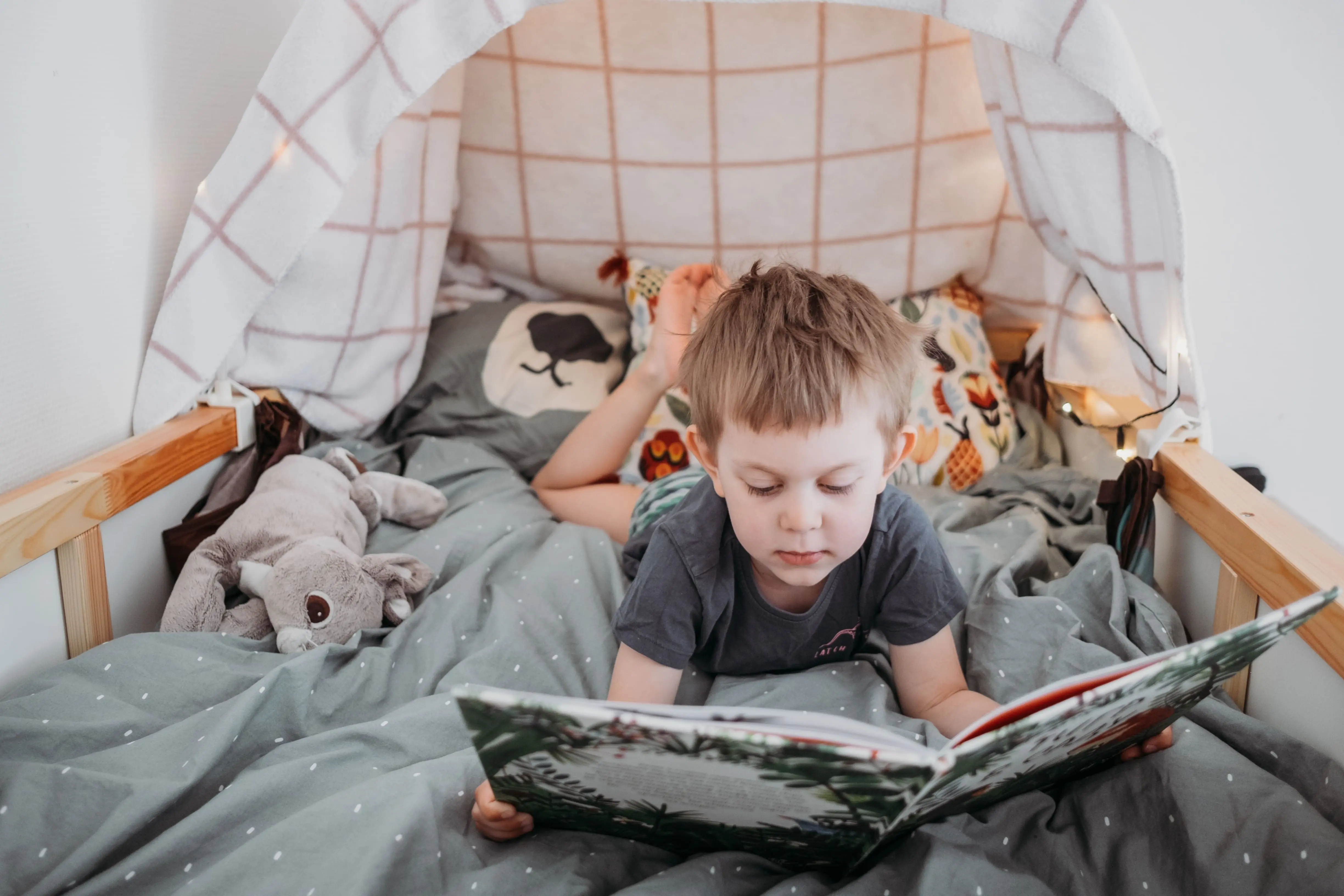
If you want to solve how to get kids excited about reading, become their storyteller. Read long, thrilling books aloud – stories they cannot yet read themselves. This creates powerful motivation: “I want to learn to read well enough to discover these stories on my own!”
4. Create a cozy reading nest
Reading should feel physically comfortable. Organize a special reading corner at home. It should not look like a strict study desk. Add bean bags, soft blankets, warm lights, and a basket of books nearby. Call it your reading cave or book nest.
A cozy environment works for reading encouragement for kids far better than lectures or persuasion.
5. Keep books within reach
Look around your living room. Where are your child’s books? If they are arranged perfectly on a high shelf that requires a chair to reach – you already lost.
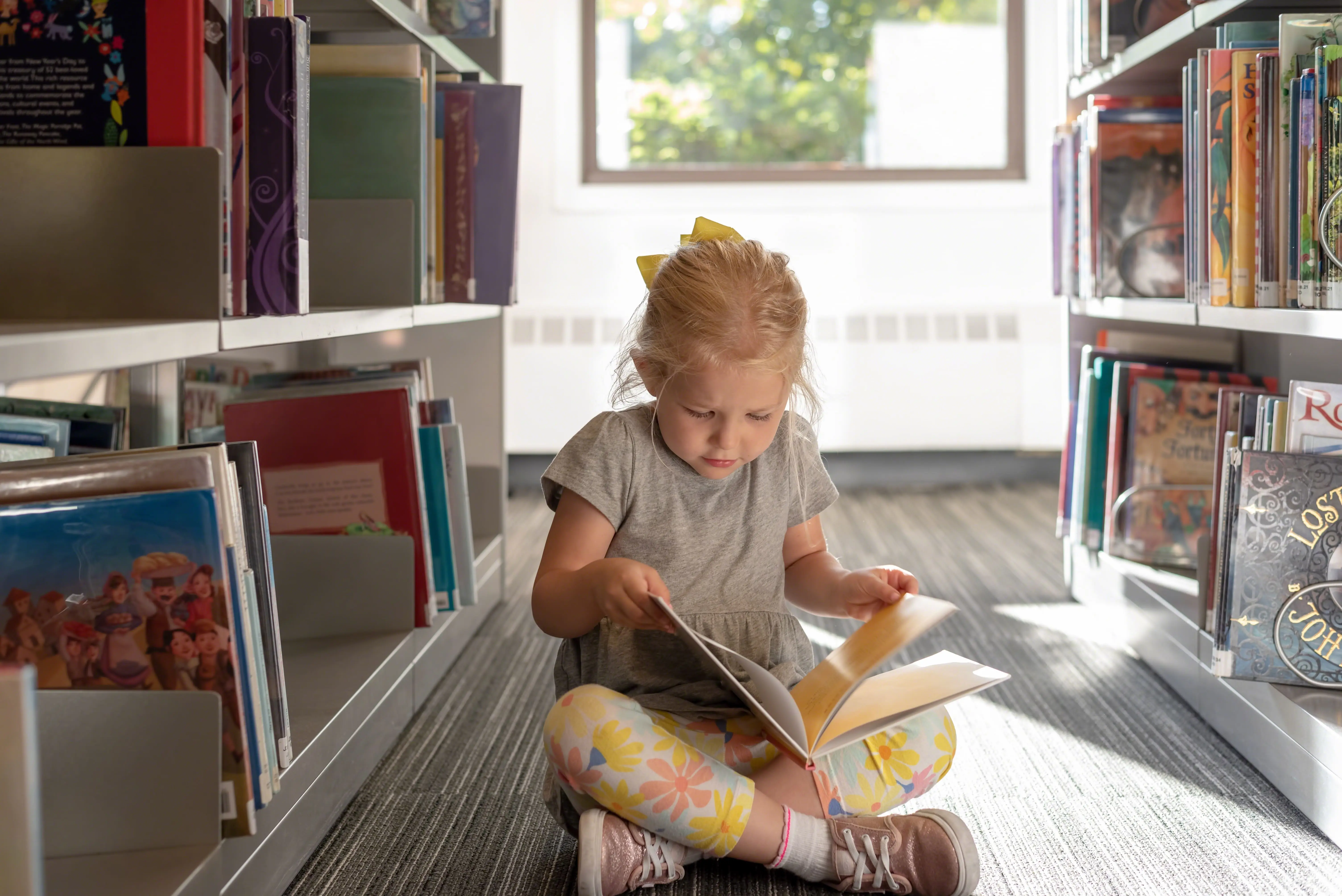
Books should exist everywhere children spend time: on low shelves, couches, toy baskets, even in the car. Accessibility is one of the key answers to how to get a child to read.
6. Become a reading role model
If you are searching for the secret to how to get my child to read, look at yourself first. Does your child ever see you reading? Or do they mostly see endless scrolling on your phone while hearing lectures about books?
Children mirror adult behavior. Let them see you laughing over a book or saying: “I cannot stop reading this chapter – give me five more minutes!”
7. Connect books with screens
Do not fear cartoons and movies – use them as bridges. Does your child love Paw Patrol? Find books with those characters. Watched a movie together? Say: “Did you know there is a book version with scenes that were not in the movie?”
This is one of the simplest and smartest answers to how to encourage your child to read.
8. Do not fear comics and graphic novels
Many parents see comics as “lesser literature.” That is a huge mistake. Comics and wordless search books are ideal bridges for preschoolers. Visual support reduces fear of dense text and gives children a quick sense of success.
9. Allow children to stop reading boring books
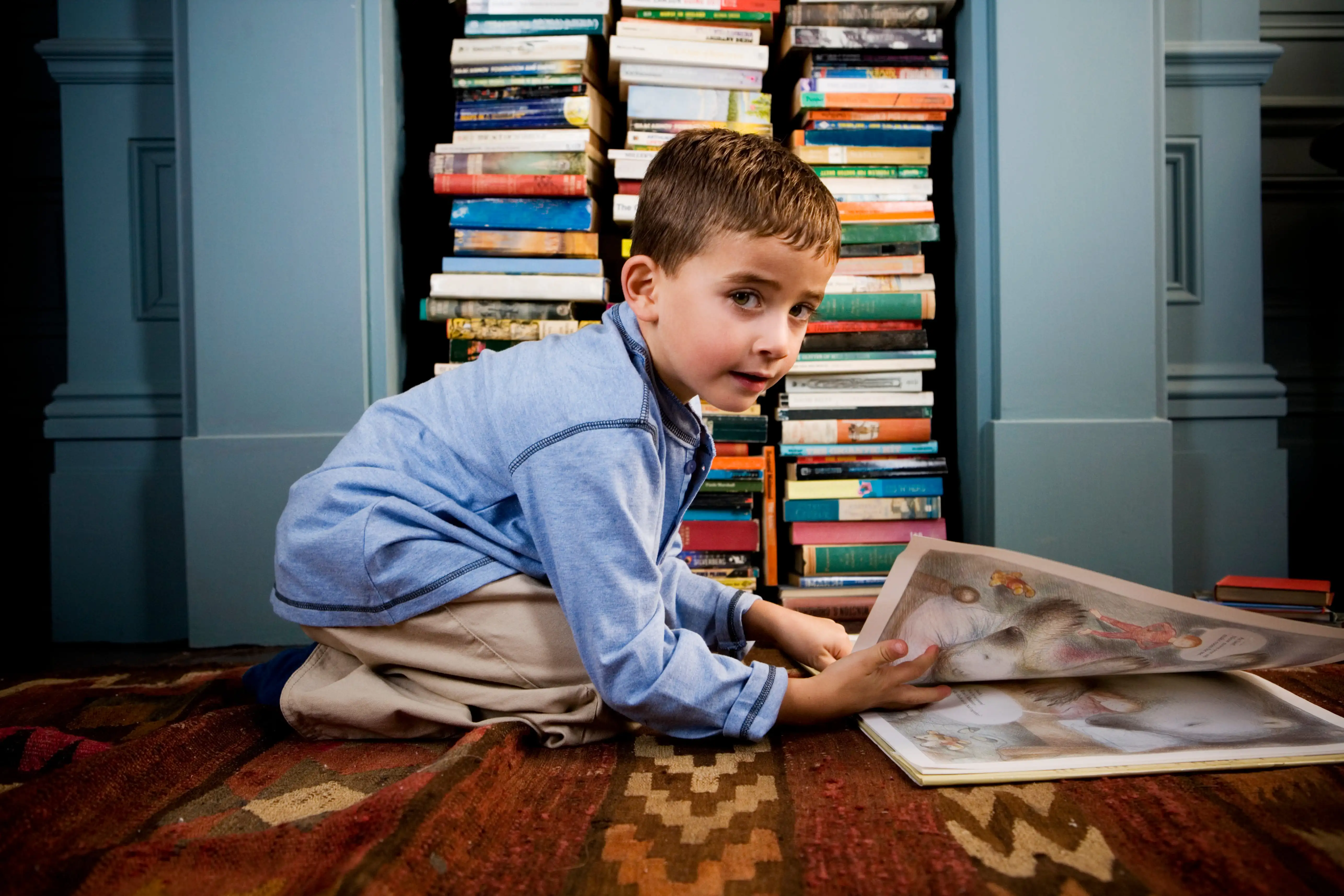
Adults often believe that every book must be finished. Do not pass this mindset on to children. If your child dislikes a new book and becomes restless, simply close it and say: “This story is not very interesting. Let us try another one.”
The freedom to stop reading boring books prevents children from seeing reading as a trap.
10. Discuss books instead of testing children
When adults meet fellow readers, they do not quiz each other or demand summaries. They discuss emotions, ideas, and theories. The same approach works with children.
There are many ways to encourage kids to read, but genuine interest in the child’s thoughts remains one of the strongest tools. Instead of checking memory, create real conversations. Involve children in the story and make them co-authors.
Why forcing children to read never works
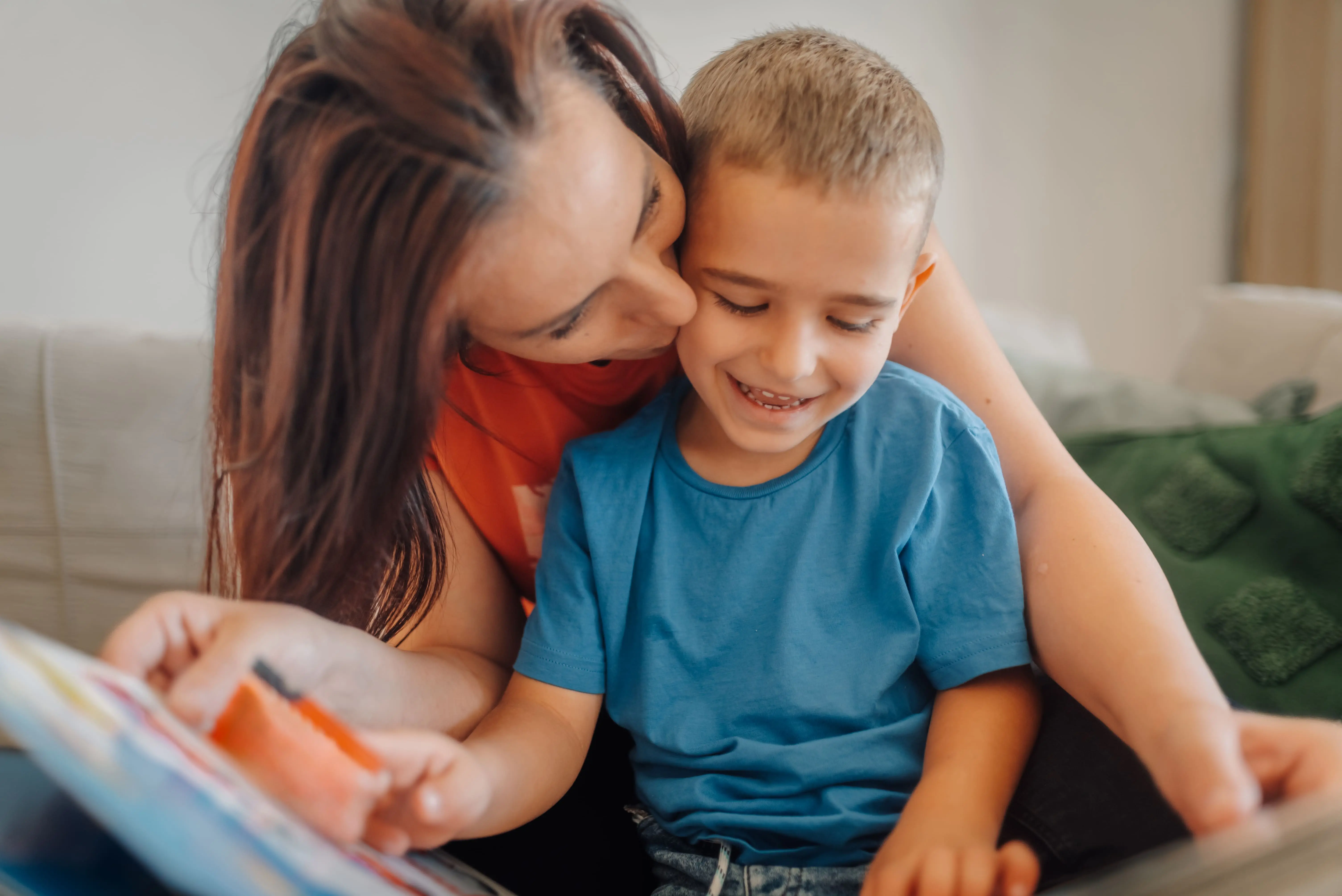
The first and most important rule of raising book lovers: love cannot be forced. How to encourage kids to read? Do not pressure them.
One of the biggest mistakes is using reading as punishment. Your goal is encouraging reading in kids, not turning books into obstacles. Phrases like “You cannot go outside until you finish this chapter” or “No tablet until you read for 15 minutes” create the wrong association. In the child’s mind, the book becomes a barrier standing between them and happiness. It turns into work, duty, or a tax they must pay to earn something enjoyable.
How can children fall in love with reading under those conditions?
Ways to encourage kids to read should be based on curiosity, joy, and freedom of choice. Your goal is to make books compete with cartoons because they are genuinely interesting – not because a parent demands it.
Help your child thrive with playful learning
Turn screen time into real growth with Keiki's educational games.
Try KeikiDigital tools that help children love reading
The truth is simple: we live in a world full of smartphones and tablets. Hiding screens forever is unrealistic. But screen time can become helpful instead of harmful when used wisely and in moderation.
If you are struggling with how to get kids to enjoy reading, do not dismiss high-quality educational apps. Apps like Keiki are carefully designed using modern early-development research. Their friendly interfaces, calm colors, and gentle reward systems help create genuine interest in learning.
Many of these apps include reading activities and developmental tools:
- Letter tracing. Children trace letters with their fingers while animations and praise make learning feel playful.
- Sound games. Reading starts with phonemic awareness. Activities where children pop bubbles with sounds, catch letters, or feed syllables to funny monsters help connect symbols with sounds. How to encourage a child to read? Begin with sound awareness.
- Sorting games. Children group objects based on their starting letters, strengthening vocabulary and early literacy skills.
How to get child to read with the help of a tablet? Simply make educational apps like Keiki part of a balanced daily routine – around 15–20 minutes a day – and you may be surprised how quickly children begin recognizing letters on street signs and packaging.