25+ Sensory Games for Kids: Simple Activities That Build Big Skills

Your kid doesn't need a lecture on how the world works — they need to touch it, shake it, smell it, and occasionally taste something they probably shouldn't. That instinct is exactly what sensory games for kids are built on. Instead of fighting the urge to poke, squish, and investigate everything within reach, these activities turn it into real, brain-building play.
Key Takeaways
- Sensory games for kids build real neural connections through touch, sound, sight, smell, and taste — this isn't just busywork, it's how young brains organize information about the world.
- Sensory activities for kindergarten work best as short, rotating stations rather than one big free-for-all — a sealed bin and a 5-minute timer go a long way in a classroom of 20 kids.
- Never force a child to touch, smell, or taste something that scares them; even 10-15 minutes of willing sensory play a day makes a real difference.
Why Sensory Games for Kids Matter
Sensory games for kids matter because a child doesn't just think about a new object — they touch it, look at it, and gather every sensory detail they can before they really understand it. Each new sensation, warm versus cold, soft versus hard, loud versus quiet, helps form the neural pathways a child will rely on for learning long after the game itself is over.
According to occupational therapist Suzanne Messer, MS, OTR/L, quoted by Cleveland Clinic, "when your child engages in sensory play, they're helping their brain develop and learn from certain aspects of their environment," and "with sensory play, your child is working on problem-solving skills." Recreational therapist Leah Young, CTRS, adds that "tactile play is a great way to address and home in on using a child's fine motor skills in a fun way" — which is exactly why sensory ideas for kids show up so often in occupational therapy, not just in classrooms.
Sensory play activities for kids build a specific set of skills, not just general "development":
- Brain and nervous system growth. New sensations build the neural pathways behind future learning, one warm-cold or loud-quiet contrast at a time.
- Fine motor skills and coordination. Pouring rice, kneading dough, or sorting beans strengthens the small hand muscles a child will later need for writing.
- Emotional regulation. Repetitive sensory actions like pouring sand or playing with water genuinely calm an anxious or overstimulated kid, according to Messer.
- Curiosity and creativity. New textures and materials naturally invite questions and experimentation, without you having to prompt either one.
- Speech and vocabulary. Describing a sensation as "rough," "smooth," or "sour" gives a child real reasons to reach for more precise words.
Help your child
grow with Keiki
We’ll help you turn everyday screen time
into real learning progress.
Tactile Sensory Games for Kids
Touch is the first sense a child really has access to, long before sight or hearing fully develop, so these 5 tactile sensory games for kids lean on hands-on exploration above everything else.
Sensory Box
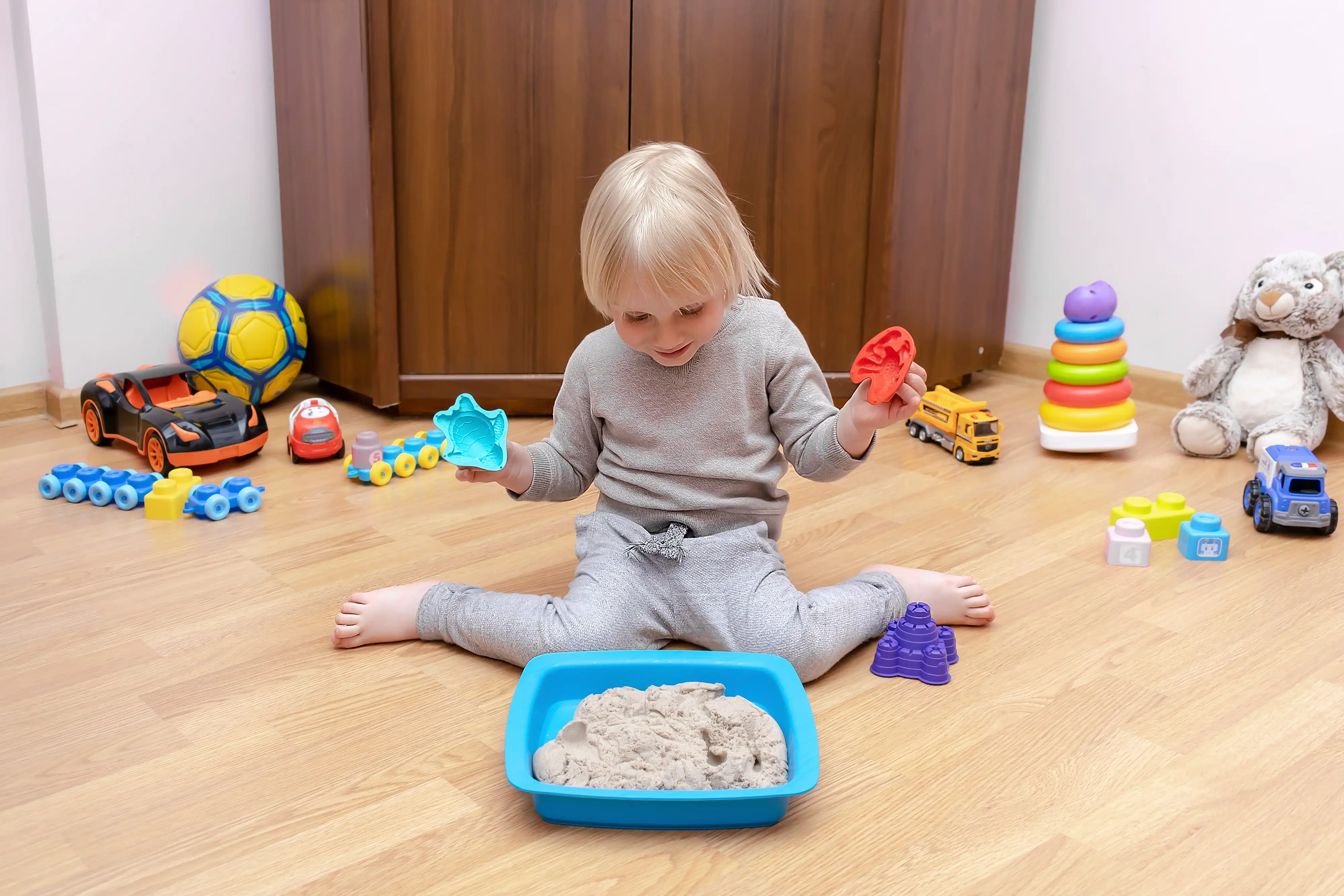
Fill a container with rice, sand, beans, or pasta, then add scoops, funnels, and small toys for scooping and pouring. Hide plastic letters or small animal figures inside so your kid has to find them by touch alone, which turns a simple pouring exercise into a genuine treasure hunt. The mix of textures keeps this one from getting boring even after the tenth time you pull it out.
Play Dough
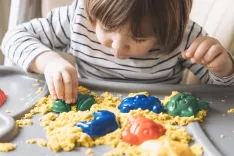
Squish, roll, and sculpt with store-bought or homemade dough, and press in dry pasta, buttons, or stamps for extra texture. This builds the same tiny hand and finger muscles your kid will need for holding a pencil later, and adding food coloring or glitter is basically free entertainment. It's also one of the most forgiving sensory activities for kids since there's no real way to do it "wrong."
Water Play
A big bowl of water, some foam, colored ice cubes, and a few small toys is really all it takes. Try warm water one day and ice-cold the next so your kid feels the contrast directly, and hand over sponges or droppers to turn splashing into genuine fine-motor practice. It's a reliable go-to for sensory activities for toddlers specifically, since almost nothing here is a choking risk.
Guess by Touch
Blindfold your kid and have them guess an object — a pinecone, a smooth stone, a cotton ball, a spoon — using touch alone. Ask them to describe what they feel before they guess: is it rough, cold, soft, spiky? That extra step sharpens sensory awareness and stretches their descriptive vocabulary well beyond "it's weird."
Sand Traces
Pour semolina onto a tray and let your kid draw with fingers or palms, then smooth it flat like a reset button before starting again. It's a genuinely mess-free way to practice drawing shapes, lines, or early numbers, and most kids find the smoothing-over part almost as satisfying as the drawing.
Auditory Sensory Games for Kids
Hearing shapes communication, concentration, and musical ear just as much as touch shapes motor skills, and these 5 sensory play games work that sense specifically.
Noise Boxes
Fill small jars or plastic eggs with rice, coins, or beads, then shake and guess what's inside based on sound alone. Make matching pairs so your kid has to find the two jars that sound identical — a small pairing challenge that trains real auditory discrimination, not just guessing at random.
Guess the Melody
Play or hum short fragments of familiar songs and see if your kid can name them. Tapping the rhythm on a table works just as well as playing a recording, and once they've guessed correctly, encourage them to sing along or act out the lyrics to connect hearing with physical expression.
Music from Nothing
Turn pots, spoons, and glasses into instruments and build your own kitchen orchestra. Show how a wooden spoon and a metal spoon sound completely different against the same pot — it's a genuinely hands-on way to introduce volume, tempo, and rhythm without buying a single instrument.
Sounds Around Us
Play recordings of rain, birdsong, or city traffic and see if your kid can name them, or just sit together in silence for a minute and list every real sound in the room. Either version sharpens mindful listening and helps a kid filter meaningful sound from background noise — a skill that's genuinely useful in a noisy classroom.
Quiet Whisper
Whisper a word and have your kid repeat it back, then gradually step further away to test how well they can still hear you. Turning it into a "broken telephone" chain with the whole family adds plenty of laughing while still practicing focused listening.
Visual Sensory Games for Kids
These 5 visual sensory games for kids train the brain's ability to process what it sees, building attention and hand-eye coordination along the way.
Color Sorting
Sort blocks, balls, or toys by color into separate containers, and hand over tweezers or tongs to add a pincer-grip challenge on top of the sorting. For an older kid, sort by shade instead of color — light blue versus dark blue is a surprisingly good way to make an easy game harder without changing the materials at all.
Color Bottles
Fill clear bottles with water, food coloring, and glitter, then shake and watch the swirl settle. Mixing in a little baby oil makes the liquids separate into slow, floating layers, and watching glitter drift down works almost like an instant calm-down button for an overstimulated kid.
Light Table
A box with backlighting and translucent shapes turns into an instant pattern-making station. Stacking colored plastic cups or tiles on the glowing surface shows your kid how overlapping colors blend into new ones, and the glow alone tends to grab attention faster than almost anything else on this list.
Drawing with a Flashlight
Draw on a dark wall with a flashlight beam, or build a simple shadow theater with finger shapes or cut-out paper figures. Stretching colored plastic wrap over the lens changes the beam's color, and moving the light closer or farther teaches how shadows scale in size, almost by accident.
Book of Different Fabrics
Sew or glue fabric samples — smooth silk, rough burlap, soft fleece, shiny sequins — onto pages of a simple book, and add strings, bells, or crinkly elements for extra contrast. It bridges what your kid sees with what they feel, which is genuinely useful for a child still connecting the two.
Smell and Taste Sensory Games for Kids
Smell and taste rarely get the spotlight in most sensory play activities for kids, but they build real vocabulary and can even nudge a picky eater toward trying something new.
Secret Smells
With eyes closed, have your kid guess a spice, fruit, or flower by smell alone. Cotton balls soaked in mint or orange extract inside small jars with poked holes work well, and asking "is it sweet, sharp, or warm?" before they guess builds sensory vocabulary they'll reuse elsewhere.
Flavors of the World
Offer a taste of lemon, honey, and banana, and talk through what makes each one sour, sweet, or neutral. Keep a small cup of water on hand to reset the palate between tastes, and ask where on the tongue each flavor seems strongest — a surprisingly effective way to ease picky eating without turning it into a fight.
Scents of Nature
On a walk, stop to smell flowers, soil, or fresh grass, and rub a leaf or pine needle between your fingers to release its scent. Comparing how the air smells before and after rain turns an ordinary walk into a genuine mindfulness exercise, no extra effort required.
Food Smells
Blindfolded, have your kid guess a food by smell alone — toasted bread, fresh cucumber, ripe strawberries all work well. This sometimes gets a kid to finally try something they rejected before, since a familiar smell can make an unfamiliar texture feel much less risky.
Guess the Drink
Offer juice or herbal tea in an opaque cup with a straw so color can't give it away, and see if your kid can identify it by taste and smell alone. Trying it warm versus chilled adds another layer, and it's a genuinely fun way to introduce a new drink without any pressure to finish it.
Related Games in Keiki App









Sensory Activities for Kindergarten and the Classroom
Sensory activities for kindergarten need a different setup than the same games at home, mostly because one bin now has to work for twenty kids instead of one.
Running sensory bins as rotating stations, rather than one shared free-for-all, keeps a classroom from turning into chaos — a lidded bin per table group with a 5-minute timer works better than a single bin the whole class crowds around. Auditory games like Guess the Melody or Sounds Around Us make genuinely useful whole-class transition activities between lessons, since they need no setup and reset attention in under five minutes. Taste-based sensory ideas for kids are best left at home given classroom allergy policies, but scent-only "sniff jars" using the Secret Smells setup are an easy swap that keeps the same vocabulary-building benefit without the food. A quiet sensory corner — a small bin of smooth stones or a stress ball, away from the noise of the main activity — gives any kid who needs a break somewhere to go without leaving the room. None of this needs new games so much as a different rhythm: shorter rotations, sealed containers, and a clear signal for when a station's turn is over.
Adapting Sensory Play for Sensory-Sensitive Kids
Sensory games for kids aren't one-size-fits-all, and a child who's sensory-avoidant needs a genuinely different approach than one who's sensory-seeking.
A sensory-seeking kid tends to want more input — deeper pressure, louder sound, brighter light — so activities like Music from Nothing or a heavier sensory box with dried beans instead of rice tend to land well. A sensory-avoidant kid, on the other hand, gets overwhelmed by exactly those same inputs, so starting with something low-intensity, like a book of different fabrics or a quiet light table session, keeps the activity from backfiring into a meltdown. For a child on the autism spectrum or with ADHD, keep sessions short and predictable, warn before switching activities, and always let them opt out of a texture or sound without needing a reason. Keiki's app is built to support neurodivergent kids — including those with ADHD, autism, or speech delays — through an adaptive pace, so it's worth remembering that a "good" sensory session for one kid can look completely different from a good one for another, and both are still working.
Help your child thrive with playful learning
Turn screen time into real growth with Keiki's educational games.
Try KeikiSafety Rules for Sensory Games
Sensory play is genuinely fun, but a few ground rules keep it safe rather than stressful.
- Supervise closely. Never leave a child alone during sensory games, regardless of age.
- Choose materials carefully. Skip anything small enough to swallow, especially with toddlers, and keep "hot-cold" games within a safe, moderate range.
- Consider age and allergies before tasting. Skip anything too spicy, hot, sweet, or salty, and check for known allergies first.
- Keep things clean. Wipe down shared materials and wash reusable toys regularly.
- Never force it. If your kid refuses to touch a texture, let it go — trying again another day works better than pushing through resistance.
- Explain what's off-limits to eat. Be clear about which materials are for touching and looking only, especially with younger kids who explore with their mouths.
Explore More Sensory Learning with Keiki
The same sensory engagement that makes tactile and auditory games effective also shows up in Keiki World, where short audio stories build listening focus the way a "Guess the Melody" game does, and interactive tracing activities give fingers the same kind of workout as play dough or a sensory box. Keiki offers 1,500+ interactive games and lessons that adapt to a child's own pace, including support for neurodivergent kids who need a different rhythm than a typical sensory session offers. It's a solid way to keep that same sensory engagement going on days when setting up a physical activity just isn't in the cards.