22 Fun Hula Hoop Games for Kids: Solo & Group Hula Hoop Activities

Pull a stack of hula hoops out of the garage and something almost magical happens: kids who were bored out of their minds five seconds ago are suddenly spinning, jumping, crawling through, and inventing rules nobody asked for. Honestly, it might be the best return on investment in the entire world of kids' toys — a $5 plastic ring that turns into a tunnel, a target, a steering wheel, a jump rope, or (if your kid's imagination is doing its job) a spaceship hatch, depending on the day.
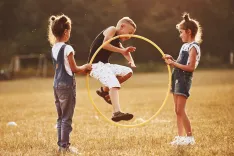
This guide rounds up 22 hula hoop games for kids, from simple toddler moves to group games you can run at a birthday party or a classroom recess. You'll find solo games, games to play with hula hoops as a full-blown team, and a handful of creative, almost-no-prep ideas for the days when you genuinely just need ten quiet minutes and one hoop.
We've sorted everything by age so you're not scrolling past a bunch of ideas that don't fit your kid, but honestly, rules are made to be broken here — raid the "older kids" section for a 4-year-old who's ready for a challenge, or slow things down for a 6-year-old with a toddler favorite on a low-energy day. There's no wrong way to play with a hoop.
Key Takeaways
- Hula hoop games work for kids as young as 1, long before they can actually hula hoop around their waist — early games just use the hoop as a tunnel, target, or prop instead.
- A hula hoop game is any activity that uses a hoop as its main tool, whether that's spinning it, jumping through it, tossing it, or using it as a boundary marker — it doesn't require any actual hooping skill.
- Group games with hula hoops (relay races, hoop tag, hoop pass) sneak in teamwork and turn-taking practice right alongside the physical benefits.
- The CDC recommends kids ages 6 and up get at least an hour of moderate-to-vigorous physical activity a day, and active hula hoop games are a genuinely fun, low-cost way to chip away at that.
- You only need one or two hoops for most of these games — the creative, low-prep section works with a single hoop and literally nothing else.
- Hula hoop play builds gross motor skills, balance, coordination, and (for group games) social skills like waiting your turn without dissolving into tears.
What Is a Hula Hoop Game?
A hula hoop game is simply any game or activity built around a hula hoop — whether or not it involves actual hooping (spinning the hoop around your body). That's a common mix-up, by the way. A lot of parents hear "hula hoop games" and immediately assume every single one requires a kid who already knows how to hula hoop, but most of the games below don't ask for that at all. A hoop can be a tunnel to crawl through, a target to toss beanbags into, a steering wheel for pretend play, or a boundary line for a game of tag. The hoop is just the tool; the game is whatever you build around it.
That's genuinely good news if you've got a toddler or a younger preschooler at home, since most kids can't sustain a spinning hoop around their hips until somewhere around age 6 or 7. Your kid can enjoy hula hoop games for years before they ever master the classic waist-spin — and plenty of the games here don't need that skill at all, so nobody's left out of the fun while they wait to "get it."
Why Hula Hoop Games Matter for Child Development
Gross motor skills. Jumping in and out of a hoop, crawling through it, or running with one takes coordinated whole-body movement — the same skills your kid needs for running, climbing, and sports later on.
Balance and core strength. Even the games that skip the waist-spin entirely (tunnel crawls, hoop hopscotch, target throws) build the core and balance control kids will eventually need to actually hula hoop.
Hand-eye coordination. Rolling a hoop in a straight line, tossing beanbags through it, or catching a hoop mid-spin all sharpen the same coordination your kid uses for catching a ball or, eventually, writing their name.
Turn-taking and cooperation. Group games like hoop relays or hoop tag are quick, low-stakes ways to practice waiting for a turn, following shared rules, and cheering for a teammate instead of just themselves — a genuinely tough skill for a 4-year-old, honestly.
Sensory and self-regulation benefits. The repetitive motion of rolling, spinning, or jumping through a hoop can be surprisingly calming for kids who need to burn off extra energy before they can settle down for anything else.
According to the CDC's physical activity guidelines, children and adolescents ages 6 and older should get at least an hour a day of moderate or vigorous aerobic activity. A round of hula hoop relay races or hoop tag is a genuinely fun way to knock out a chunk of that without it feeling anything like "exercise" to your kid.
Help your child
grow with Keiki
We’ll help you turn everyday screen time
into real learning progress.
Hula Hoop Games for Toddlers (1-2 years)
At this age, forget spinning entirely — it's all about crawling through, stepping in and out, and just plain exploring the hoop as an object. Keep sessions short (think 5-10 minutes) and stay close by, since toddlers can wander off — or faceplant — faster than you'd think.
Tunnel
Hold the hoop upright on the ground like a tunnel entrance and let your toddler crawl through it. Add a second or third hoop in a row for a longer "tunnel" — bonus points if you narrate it like a very small train.
Rolling the Hoop
Roll the hoop gently across the floor while your toddler chases it. Dead simple, but it builds real excitement about motion and cause-and-effect.
Jump in the Hoop
Lay the hoop flat on the ground and encourage your toddler to jump in and out, or just step in and out if jumping isn't happening yet — no rush.
Where's the Hoop?
Hide a small hoop partially behind furniture or under a blanket and let your toddler find it. It's an early game of hide-and-seek that quietly doubles as an object-permanence exercise.
Hula Hoop Games for Preschoolers (3-4 years)
Preschoolers have the coordination for a bit more speed and a little friendly competition, even if actual waist-hooping is usually still a year or two off.
Running Through Hoops
Lay several hoops flat in a line or scattered pattern and have your preschooler run and jump from hoop to hoop without touching the ground outside them.
Musical Hoop
A hula-hoop spin on musical chairs — lay out one fewer hoop than the number of kids playing, put on music, and have everyone dive into a hoop the second it stops.
Chase Me Hoop!
Roll the hoop and have your preschooler race to catch it before it falls over. Great for sprint speed, reaction time, and general giggling.
Who Can Spin Longer?
A friendly first attempt at real hooping — see who can keep the hoop spinning around their waist the longest, no judgment for a two-second attempt (or, let's be honest, a zero-second one).
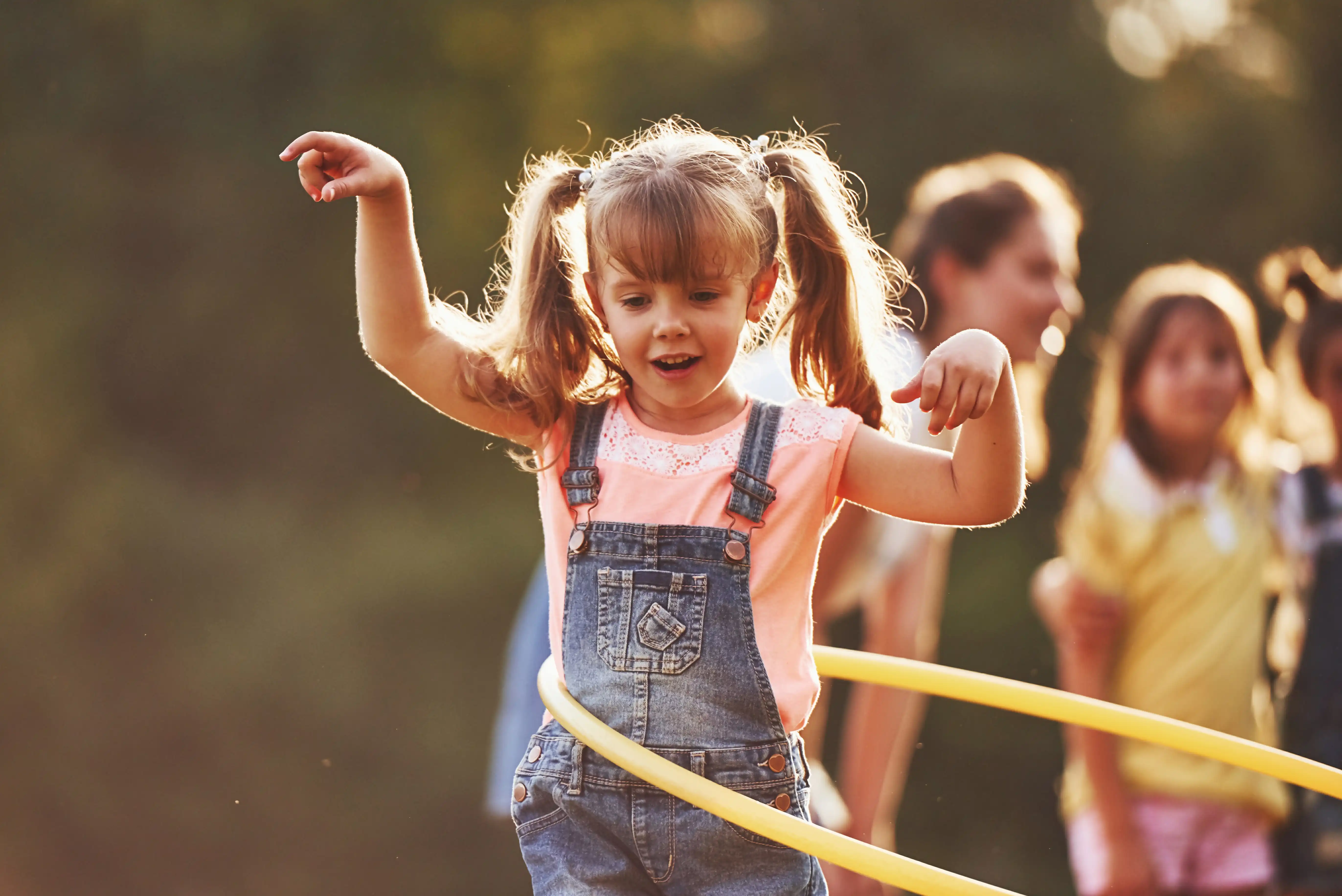
Hula Hoop Games for Older Kids (5-6 years)
By 5 or 6, most kids have the balance and stamina for longer games, more rules, and a bit of real competition — this is where things start getting fun for everyone, not just the kids.
Hula Hoop Relay
Split into teams and race to hula-hoop (or just run holding a hoop, no shame) to a marker and back, passing the hoop to the next teammate.
Target Throw
Lay hoops on the ground at different distances and toss beanbags or small balls, scoring points based on which hoop they land in.
Twister with Hoops
Lay out several hoops as "spots" and call out instructions like "left hand in the blue hoop, right foot in the yellow hoop" for a DIY Twister game that costs nothing.
Pass the Hoop
Have kids hold hands in a circle and pass a hoop all the way around without letting go of each other's hands — trickier than it sounds, and honestly a great laugh to watch.
Build real skills through fun, educational games for your child
Try KeikiGroup & Team Games to Play with Hula Hoops
These are the ones worth pulling out for a birthday party, a classroom brain break, or a backyard that's suddenly overrun with cousins — they're built for four or more kids and work well as games with hula hoops that everyone plays together rather than solo.
Hoop Circle Pass
The whole group holds hands in a circle with one hoop looped over two joined hands. Everyone has to pass the hoop all the way around without unclasping their hands — a classic team-building warm-up that doubles as a great classroom icebreaker.
Hula Hoop Tag
One or two kids are "it" and carry a hoop — instead of tagging with a hand, they have to drop the hoop over another player to "freeze" them.
Team Hoop Toss
Partner up and toss a hoop back and forth like a ring, taking a step back after every successful catch to see which pair can stretch the gap the farthest.
Hoop Limbo
Two people hold a hoop horizontally (or lean it against a stand) and kids take turns ducking under without touching it — lower the hoop after each round until someone's basically crawling.
Creative and Low-Prep Hula Hoop Activities
No extra supplies, no big group needed — these are your go-to ideas for a single hoop and ten spare minutes, even if that's literally all you've got.
Hoop Frame
Hold the hoop up like a picture frame and have your kid strike a pose, make a silly face, or "frame" a favorite toy for a photo. Easy win, great for a laugh.
Artist
Lay the hoop on paper or the driveway (with chalk) and trace around it to create an instant circle for drawing suns, faces, or wheels.
Ball Trampoline
Two adults or older kids hold a hoop taut with a lightweight scarf or fabric stretched across it, then bounce a ball on top like a mini trampoline.
Shadow Games
On a sunny day, hold the hoop up and watch its shadow — kids can jump on the shadow, trace it in chalk, or guess how it changes as the sun moves. Cheap, weirdly mesmerizing, works every time.
Maze
Lay several hoops on the ground in a winding path and have your kid navigate through by stepping only inside each hoop.
Hula Hoop and Soap Bubbles
Dip a length of yarn or ribbon looped through the hoop into bubble solution and wave it through the air for genuinely giant, dreamy bubbles — five minutes of pure magic, we promise.
Related Games in Keiki App

Tips for Hula Hoop Games That Actually Go Smoothly
- Pick the right hoop size. A hoop that's too big is a nightmare for little hands to control; a good rule of thumb is a hoop that reaches somewhere between the belly button and chest when stood on end.
- Clear the space first. Hoops fly further than you'd expect once kids get excited — take thirty seconds to check for breakables, other kids, and pets before any game with a lot of tossing or rolling.
- Let younger kids skip the spin. If a toddler or preschooler just isn't ready to hula hoop around their waist, don't push it — tunnels, jumping, and rolling games are every bit as valuable developmentally.
- Keep group games short and re-explain often. Attention spans are short at this age; a 5-minute round of hoop tag with a quick rule recap beats a 20-minute game nobody remembers the rules to halfway through.
- Rotate between active and calm games. Sandwich a high-energy relay race between two lower-key activities like Hoop Frame or Artist so kids don't overheat or spiral into overstimulation meltdown territory.