Parallel Play: What It Is and Why It Matters for Kids

Picture a typical scene at the playground or in a playroom. Two two-year-olds sit in the same sandbox. Each has their own shovel and their own bucket. They sit close to each other, and yet... they ignore each other. One is busy digging a hole, the other is building a tower. They don't talk, don't swap toys, and each seems to be in their own little world.
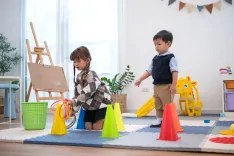
Key Takeaways
- Parallel play is when toddlers play side by side with the same materials but run their own separate games, and it's a healthy, normal stage.
- It typically peaks between ages 2 and 3 and gradually gives way to more interactive play around 3.5–4.
- The stage builds language, imitation, sharing, and lower social anxiety, laying the foundation for cooperative play later.
- You can't rush it; the best support is a safe space with plenty of duplicate toys and no pressure to play together.
Parents, of course, start to worry that something is wrong with their child. "Why doesn't my child want to play with others?", "Maybe they're too withdrawn?", "How do I teach them to make friends?". Let us reassure you: take a breath and relax! What you're seeing is a normal, healthy, and important stage of growing up that specialists call parallel play.
In this article, we'll break down what is parallel play, why this stage is a crucial step toward real friendship, how it fits into the bigger picture of early childhood development, and how we, as parents, can gently support little ones on this remarkable journey.
What Is Parallel Play?
In scientific terms, answering the question of what is parallel play in child development, it's a specific stage in a child's social evolution during which children play next to each other (so-called side-by-side play) but don't try to influence each other's play and don't interact directly.
Simply put, it's playing "next to, but not together." At this moment the child is aware that another person is a meter away from them. What's more, they enjoy that person's presence. They may even secretly peek at what their neighbor is doing and start copying their actions; this process is called imitation. But they're not yet ready to suggest to their neighbor, "Let's build this road together."
This stage is a kind of bridge between complete isolation and active social interaction. Your child uses toddler parallel play as a safe training ground. They observe social rules from a safe distance. They don't need to solve complex tasks right now: how to share, how to negotiate, how to react if someone takes their toy. They simply enjoy the company while keeping their independence and full control over their own play.
Help your child
grow with Keiki
We’ll help you turn everyday screen time
into real learning progress.
The 6 Stages of Play
To truly understand the depth and importance of parallel play, we need to look at the whole picture. In 1932, sociologist Mildred Parten developed a theory that is still considered the gold standard in psychology and pedagogy. She identified 6 sequential stages of children's play, the so-called stages of play. Every child goes through them at their own pace:
- Unoccupied Play, or uninvolved behavior, 0–3 months. The infant moves their arms and legs chaotically, exploring the world around them. Their movements seem random, but in fact they're discovering the possibilities of their body.
- Solitary Play (0–2 years). The child plays on their own and pays no attention to other children. Their own rattle or blocks are enough. They're fully focused on their own actions.
- Onlooker Play (2 years). The child starts to take an interest in how other children play. They may come close, stand and watch, even ask questions or comment, but don't join the play themselves.
- Parallel Play (2–3 years). The very stage this article is devoted to. Children play in the same space, with the same materials, but each runs their own game.
- Associative Play (3–4 years). Children start to interact. They may swap toys and discuss what they're doing, but they still don't have a shared goal.
- Cooperative Play (4+ years). The peak of a preschooler's social evolution. Children unite for a common goal. They assign roles, build a shared tower, agree on rules, and resolve conflicts.
When Does Parallel Play Start and End?
One of the most frequent questions from parents is: when does parallel play start? The first signs of this stage begin to appear between 18 months and 2 years. This is a time of rapid toddler development, when a little one starts actively recognizing themselves as a separate person ("Me myself!"), while at the same time being drawn toward the company of other children.
The peak of parallel play in toddlers falls at ages 2–3. During this period you can safely take your child to play centers or invite peers over. They can sit on the same rug for hours, doing different puzzles, and feel perfectly happy, even if the children don't talk to each other.
As for when do kids stop parallel play, there's no clear boundary here. Usually by 3.5–4 years, parallel play begins to be gradually replaced by more complex forms of interaction. The key word here is gradually. All children are different. Some give it up faster; others need more time to adapt and build the courage to communicate with others.
But parallel play doesn't disappear forever! Even adults sometimes engage in it. Think of how you and your partner sit on the same sofa, each on your own phone or with a book; that's also a form of being "next to, but not together." For older children, returning to parallel play in children often serves as a way to rest from the heavy social load at kindergarten.
What Comes After Parallel Play?
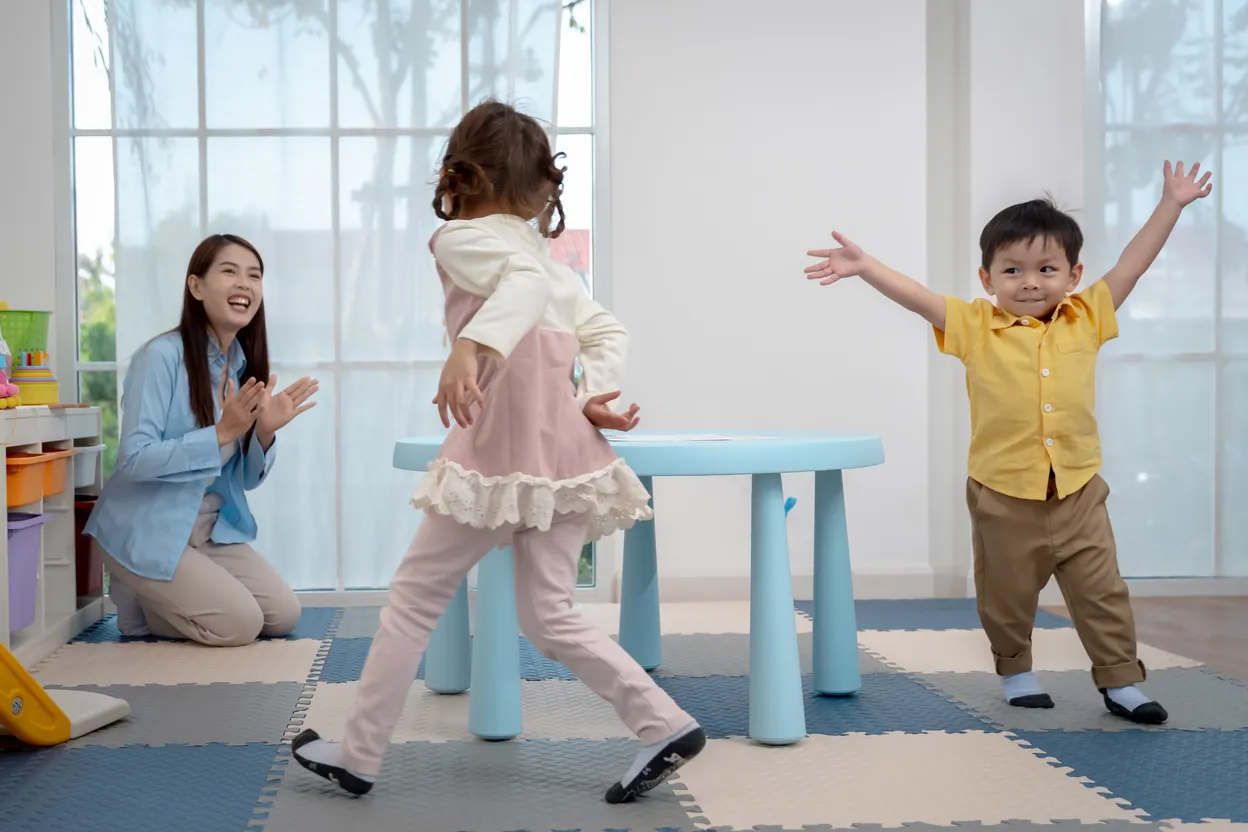
If parallel play is a safe rehearsal, then what comes after parallel play? As we mentioned in Mildred Parten's stages, the next step is associative play.
The transition happens smoothly. You'll notice it when your child, sitting in the same sandbox with their bucket, suddenly holds out their favorite shovel to their neighbor. Or says, "Look what a toy I have." At this moment children begin to practice sharing and the first communication skills. They don't have a complex storyline yet, they're not building one castle for two, but they already acknowledge the importance of a partner.
And after associative play comes the period of cooperative play, real teamwork. This is exactly where important social skills are laid down: the ability to negotiate, give way, lead, and empathize. But remember: you can't skip a stage. Without the solid foundation of parallel play, it will be hard for a child to move straight to cooperative interaction.
Types of Parallel Play
Parallel play for toddlers can take a wide variety of forms. Watching children, you may notice several main scenarios in which this type of interaction shows up:
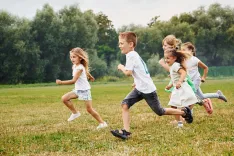
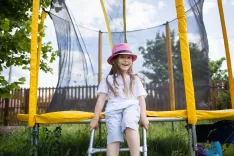
- Physical play. Two children run around the lawn or jump on a trampoline. They do it at the same time, feeding off each other's energy, but each jumps on their own, without trying to set up a competition or agree on rules.
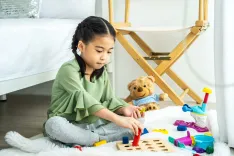
- Constructive play. Children sit at the same table with Lego. They take pieces from one shared box, but each builds their own garage or house.
- Creative play. Little ones sit next to each other and paint. Imitation often kicks in at such moments. If one child starts smearing the sheet with blue, the second, glancing at their neighbor, will probably also grab the blue paint, even if they'd planned to paint with green before that.
- Pretend play. Two little ones push their doll strollers around the same room. They may "feed" their dolls at the same time but won't offer to feed their neighbor's doll.
In any of these variations, parallel play in toddlers creates an atmosphere of a calm, relaxed community, but without obligations.
Benefits of Parallel Play
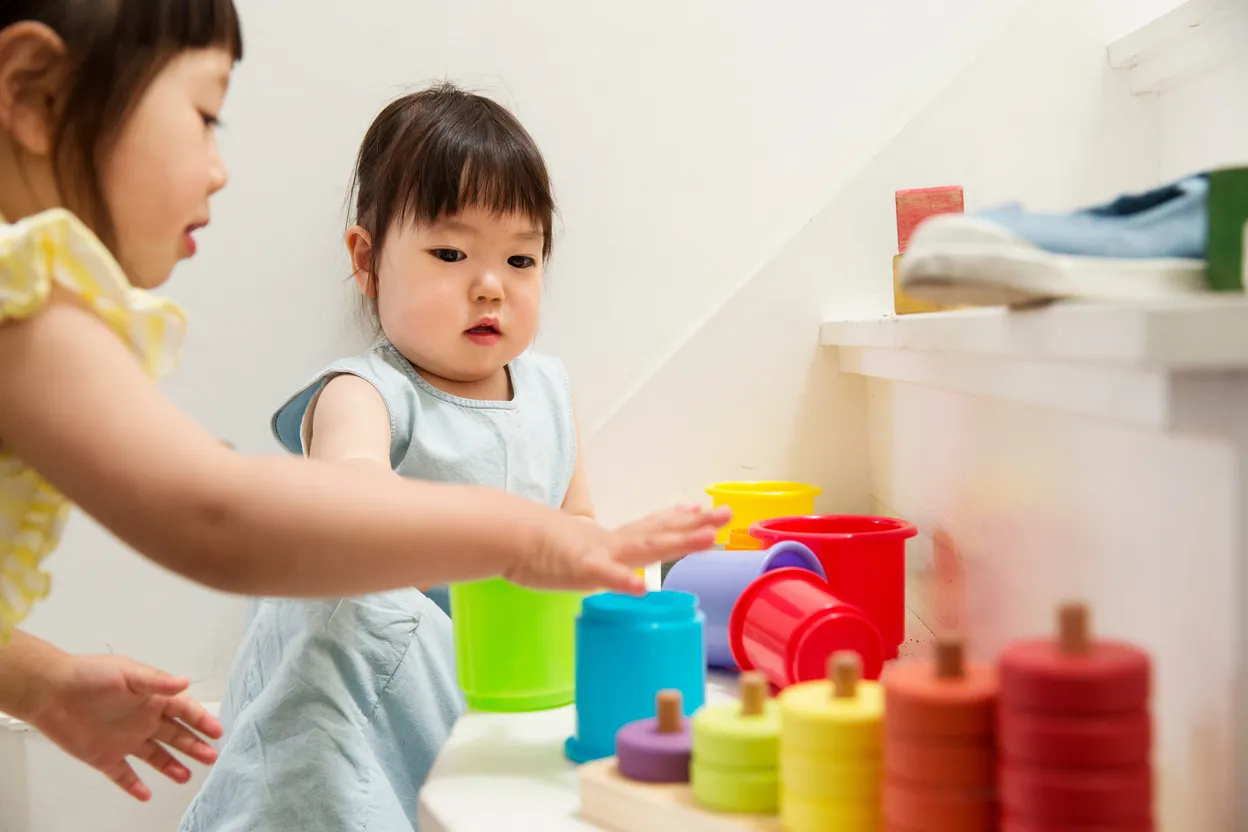
Although from the outside it may seem the children are simply ignoring each other, at that very moment they're doing a huge amount of work related to their own development. Let's look at the main benefits of parallel play:
- Lower social anxiety. Interacting with another person is hard. You have to read emotions, defend your boundaries, understand others' wishes. Parallel play lets a child get used to company without pressure and stress.
- Development of speech and communication. Playing side by side, children constantly listen to each other. One little one mutters: "The car is going, brrr." The second hears this and picks up a new word or onomatopoeia.
- Safe learning through imitation. If a child doesn't know how a new, complex shape-sorter toy works, they won't ask. They'll sit next to someone who already knows how and watch carefully, then try to repeat it.
- A natural approach to sharing. We often make the mistake of forcing two-year-olds to share toys. At this age children don't yet understand the concept of time and that a toy will be given back. Playing in parallel, they learn to be near others' things without taking them, and to use their own materials on shared territory. In other words, this is exactly where the foundations of understanding personal boundaries are laid.
- Forming the first friendships. Even if they don't talk to each other, children often choose the same partners for side-by-side play. They remember the ones they feel comfortable and safe being next to.
Support Social Development Through Play With Keiki
Modern parenting requires flexibility from us and the ability to use the best tools to support early childhood development. Although social skills form on the playground, developing the cognitive base, logic, and attention is the foundation a child brings into society. The Keiki platform was created precisely to help parents develop little ones harmoniously.
Learning with the app can be seen as a form of parallel play too. If each child is absorbed in their own activity in Keiki while all the children are nearby, that also gives a sense of safety and belonging. Puzzles, for example, are perfect for this. They show their best side in parallel play, so what's stopping you from launching them in the app, especially when there are so many different options that train logic and attentiveness? Joint creativity works too. Drawing games not only train fine motor skills but also develop creativity and unconventional, imaginative thinking.
Help your child thrive with playful learning
Turn screen time into real growth with Keiki's educational games.
Try KeikiConclusion
Childhood isn't a race where you need to check off every skill as fast as possible. If your two-year-old prefers to build their own pyramid with their back turned to a noisy group of peers, smile. They're doing a huge amount of inner work.
Now that you know what is parallel play, you can become a calm observer and a reliable support for your child. Don't force little ones to play together and be friends. Simply create a safe space for them, provide them with enough toys, and let them just enjoy this kind of play.