Preschool Letter Activities That Actually Stick

Your preschooler can belt out the alphabet song start to finish. Then stare blankly at the letter M on a cereal box five minutes later. Singing and recognizing are two different skills, and preschool letter activities build the second one. The good ones don't look anything like a worksheet.
Kids this age learn through their hands and their whole bodies, not by sitting still and repeating something back. Below you'll find more than 20 alphabet recognition activities for preschool, sorted by type, most of them built from stuff you already have lying around the house. Pick a few, rotate them through the week, and don't feel like you need to get through the whole list.
Key Takeaways
- Preschoolers learn letters through touch, movement, and everyday repetition, not worksheets.
- Mixing sensory, fine motor, movement, and craft activities hits the same letter from different angles.
- Short, frequent sessions beat long ones, and letting your child choose keeps their interest up.
- A quiet activity like coloring pairs well with more active games to round out the day.
Why Hands-On Letter Activities Work Better Than Worksheets
A three- or four-year-old's brain is still wiring together three separate things: what a letter looks like, what sound it makes, and what it means. Tracing a letter in sand handles one of those. Spotting it on a cereal box handles another. Jumping on a chalk letter taped to the floor handles the third. A worksheet, by comparison, really only hits one: the eyes.
Letter recognition carries more weight than it might seem. According to the National Center for Education Statistics, 67% of children can already recognize the letters of the alphabet by the time they start kindergarten. That number climbs to 95% by spring of the same year. It's one of the clearest predictors of how smoothly reading goes later on, so the groundwork actually matters.
None of this means turning every afternoon into a lesson, though. A few real minutes with a letter, spread across different activities and different days, beats one long session that ends in tears. Keep it short. Let your child choose the letter or the activity. Treat repetition as the plan, not a sign something's broken.

Help your child
grow with Keiki
We’ll help you turn everyday screen time
into real learning progress.
Sensory Activities for Letter Recognition
Mess is kind of the point here. A tray of rice, a dripping paintbrush, a fistful of shaving cream: all of it gets a preschooler's hands doing the work in these letter activities for preschoolers. Kids remember what their hands did way longer than what their eyes only looked at. It's part of why sensory play in general works so well at this age.
Letter tracing in a sensory tray. Fill a shallow tray with sand, salt, rice, or shaving cream. Write a letter in it with your finger, then let your child trace over it with theirs while saying the sound out loud.
Alphabet ice melt. Freeze plastic letters inside ice cubes. Hand your child warm water and a dropper, and they'll name each letter as it melts free.
Playdough letter mats. Draw a big letter outline and have your child roll playdough snakes to fill it in. It's a surprisingly good hand-strengthener, and it doesn't feel like one.
Watercolor letter reveal. Write a letter on white paper with a white crayon, pressing hard so the wax really sits on the page. Hand over watercolor paint and a brush, and watch the hidden letter show up as they paint over it.
Shaving cream letter bath. Spread shaving cream across a tray or tabletop. Let your child write letters with their fingers, wipe clean, and start over as many times as they want. The mess is half the fun, honestly, and the smooth texture makes a letter's shape easy to feel.
Fine Motor & Tracing Letter Activities
Before a preschooler can hold a pencil with any real control, their hand needs practice gripping, pinching, pressing. That's what these letter identification activities for preschool are actually building, even on days the activity doesn't look anything like writing. They overlap a lot with general preschool writing activities, since both train the same small muscles.
Pipe cleaner letters. Pipe cleaners bend easily, which makes them great for small hands shaping letters. Start with straight-line letters like L, T, and H before trying anything curved.
Letter bead stringing. String alphabet beads onto yarn or a pipe cleaner to spell a name or a short word. Say each letter out loud as it goes on.
Sticker letter outlines. Draw a big bubble letter and hand over small stickers to fill in the outline. Good for a low-energy afternoon when you still want some letter exposure.
Clothespin letter match. Write letters around a paper plate's edge, then clip matching letters onto wooden clothespins. The squeeze-and-release motion builds the same pincer grip a pencil needs later.
Tracing with a paintbrush and water. Chalk big letters on a driveway or chalkboard. Give your child a paintbrush dipped in water to trace over each one. They vanish in a minute or two, so one round turns into five.
Movement & Game-Based Ways to Learn Letters
Not every preschooler wants to sit at a table for letter practice. Fair enough. These letter recognition games for preschoolers get the whole body moving instead of just the eyes and hands, and they adapt to whatever space is available, indoors or out.
Letter hopscotch. Swap the numbers on a chalk hopscotch grid for letters. Call one out, your child hops to it, then switch and let them call the letters for you.
Letter scavenger hunt. Tape letters around a room or yard, one at a time, and send your child off to find a specific one. Older preschoolers can handle a short list in order.
Alphabet freeze dance. Dance to music together. When it cuts out, call a letter, and your child freezes into its shape with their arms or whole body before the next song kicks in.
Letter bean bag toss. Lay large letters across the floor or driveway. Call one out and let your child aim a bean bag at it. Sidewalk chalk works just fine outdoors too.
Simon Says, letter edition. A familiar game, new focus: every instruction involves a letter, like "Simon says touch the letter B" instead of "touch your nose."
Everyday-Life Letter Spotting
You don't actually need a dedicated activity for this one. Letters are already on the cereal box, the mail, the tub wall. These abc activities for preschoolers just point your child toward what's already there. No setup, no cleanup.
Grocery store letter spotting. While you shop, ask your child to spot a specific letter on a cereal box, a street sign, a price tag. Real print sticks better than a flashcard ever will.
Name recognition at every meal. Put a card with your child's name at their spot at the table. Point out the first letter each time they sit down, and once that one sticks, move to a sibling's or parent's name.
Letter of the week on the fridge. Tape one letter to the fridge for the week. Add a small picture of something starting with that letter each day. By the end of the week, it's a little collage.
Mail sorting by letter. Hand over the mail, or a stack of packages, and let your child sort by the first letter of each name. It's a real job. Preschoolers take real jobs seriously.
Bath time foam letters. Stick foam letters to the tub wall. Ask your child to name or find specific ones during bath time. A routine your family already does every day builds way more repetition than any one-off activity could.
Help your child thrive with playful learning
Turn screen time into real growth with Keiki's educational games.
Try KeikiArt & Craft Letter Activities
Hand a preschooler scissors, glue, and a stack of old magazines, and a single letter can hold their attention for twenty minutes straight. These alphabet activities for preschoolers take longer than glancing at a flashcard, which makes them a good fit for a slower, quieter afternoon.
Letter collage. Print a large letter. Gather magazine pictures or stickers of things starting with its sound, and let your child glue them on to build a themed collage.
Torn paper letter art. Skip the scissors for this one. Draw a big bubble letter and have your child tear small pieces of colored paper to fill it in. It works a different hand muscle and suits younger preschoolers well.
Sponge-stamped letters. Cut a few sponges into simple letter shapes. Your child dips them in paint and stamps the same letter across a page as many times as they want.
Letter puppet craft. Googly eyes, yarn hair, a paper tongue. A large paper letter can turn into a puppet based on whatever its shape suggests. An S makes a convincing snake. An O works well as an owl's face.
Q-tip painting on letter outlines. Print a large letter outline. Hand over Q-tips dipped in paint and let your child dot along the lines instead of tracing with a brush. The dotting motion builds precision, with no pressure to stay perfectly inside the lines.
Keep the Learning Going With Free Alphabet Coloring Pages
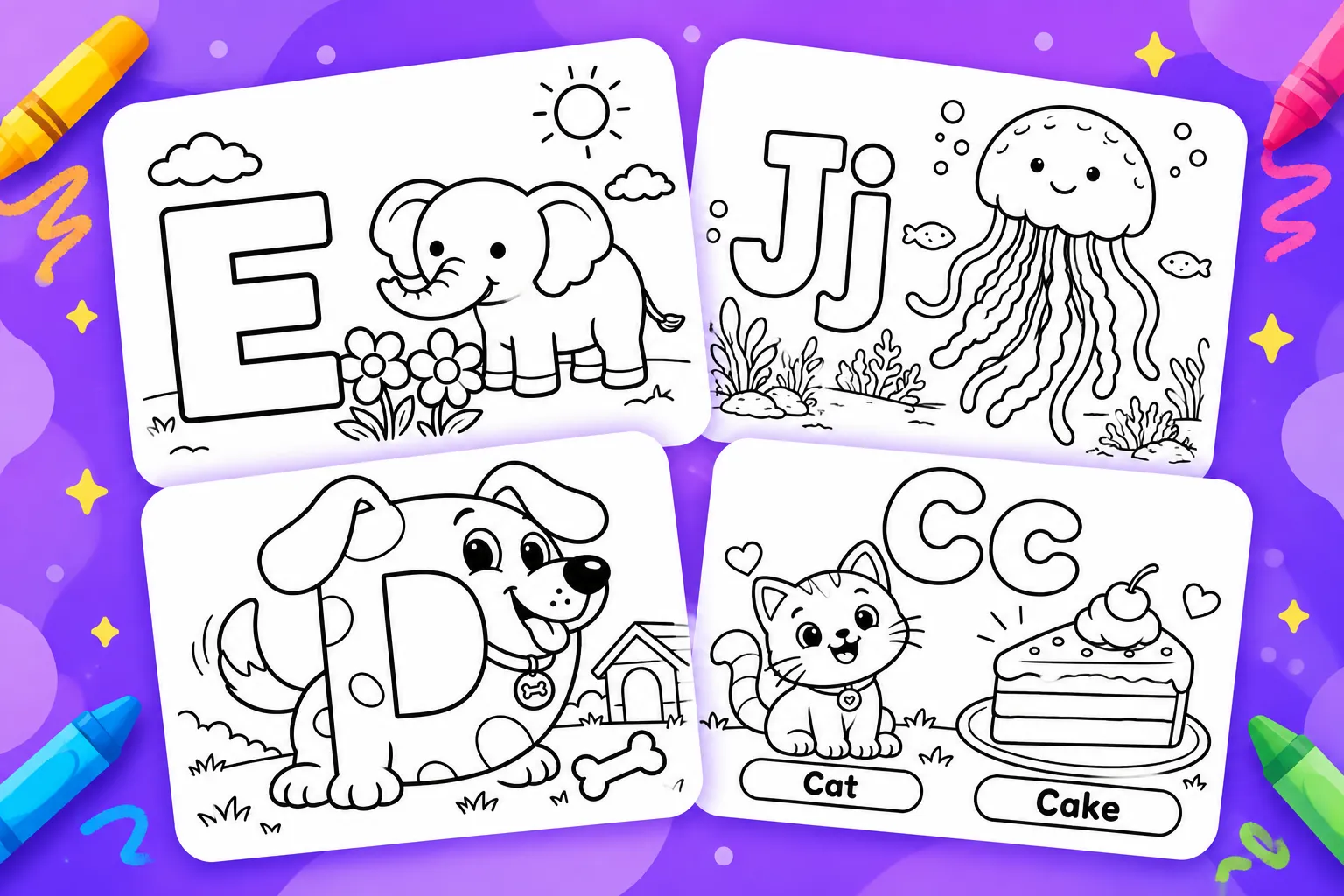
After a busy sensory activity or a round of letter hopscotch, sometimes a quieter option helps. Keiki World has a full set of free, printable alphabet and letter coloring pages on the website. Each one pairs a letter with a simple picture: a letter A next to an alligator, a letter B next to a bison.
You can download and print them any time you want something screen-free. Coloring works well as a bridge between the more active games above and actual quiet time. Your child is still looking at and naming a letter, just at a slower pace.
Pair a coloring page with the letter's sound, the same way you would with any activity above. That way the quiet moment still reinforces what the active ones built.
How to Choose the Right Letter Activity for Your Child
The right letter activity has more to do with your child's mood that day than any fixed plan. A wiggly afternoon calls for hopscotch or a scavenger hunt. A tired evening suits a coloring page or a sticker outline better.
Keep a small rotation of four or five go-to activities instead of trying to work through this entire list. Let your child pick which one when you sit down together. A preschooler who feels some control over the activity tends to stick with it longer. If a letter isn't clicking after a few tries, switch the activity type instead of repeating the one that isn't working.
Keep sessions short above everything else. A few focused minutes most days teaches more than one long session that ends in tears. Preschool is about familiarity, not mastery, and familiarity grows out of small, repeated, actually enjoyable moments.
On days when screen time is already part of the plan, Keiki World's alphabet games can slot into the same rotation as the hands-on ideas above. The letters your child is working on stay the same, whether you're at the table or handing over a tablet for ten minutes.